
Roof Replacement & Installation: Repair or Replace? How Whitney Homeowners Decide
Most “repair or replace” advice starts with the roof’s age, and that’s the first thing we’d tell you to ignore. A 15-year-old roof with a solid deck and one bruised slope is a repair. A 12-year-old roof with soft spots underfoot, lifted flashing, and two prior patch jobs is a replacement – even though it’s younger. Plenty of contractors will quote both as full tear-offs because replacements pay more. Here’s the framework we actually use, and how you can run it yourself.
Why the Age of Your Roof Tells You Almost Nothing
Shingle warranties talk about 25 to 30 years, and homeowners in Whitney reasonably read that as a countdown clock. It isn’t one. That number assumes ideal ventilation, one layer of shingles, correct nailing, and a climate with gentler swings than ours. Miss any of those and the clock runs fast. Hit all of them and a roof can outlast its label.
We’ve pulled shingles off Whitney roofs that were 11 years old and completely shot, and we’ve walked roofs at 22 years that only needed flashing work at the chimney. Same town, same sun. The difference almost always came down to two things: attic ventilation and what was happening underneath.
So instead of asking “how old is it,” ask “what’s it sitting on, and how many layers are up there?” Those two answers steer the whole conversation. If you’d rather have someone look before you guess, call (844) 797-9455 and we’ll come out.
The Deck Inspection Is the Real Decision Point
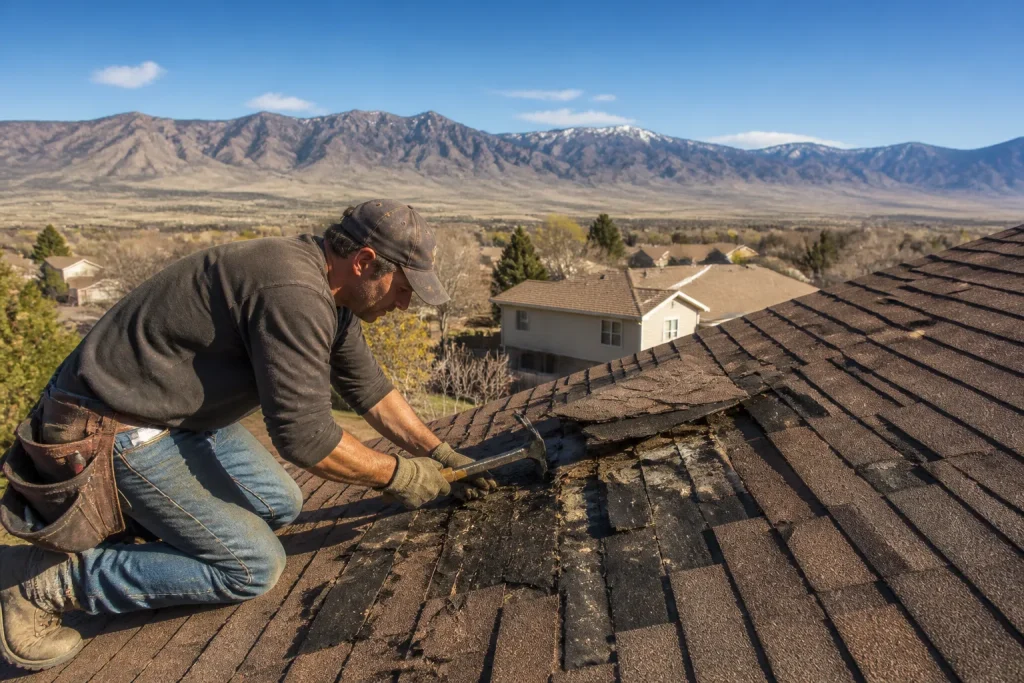
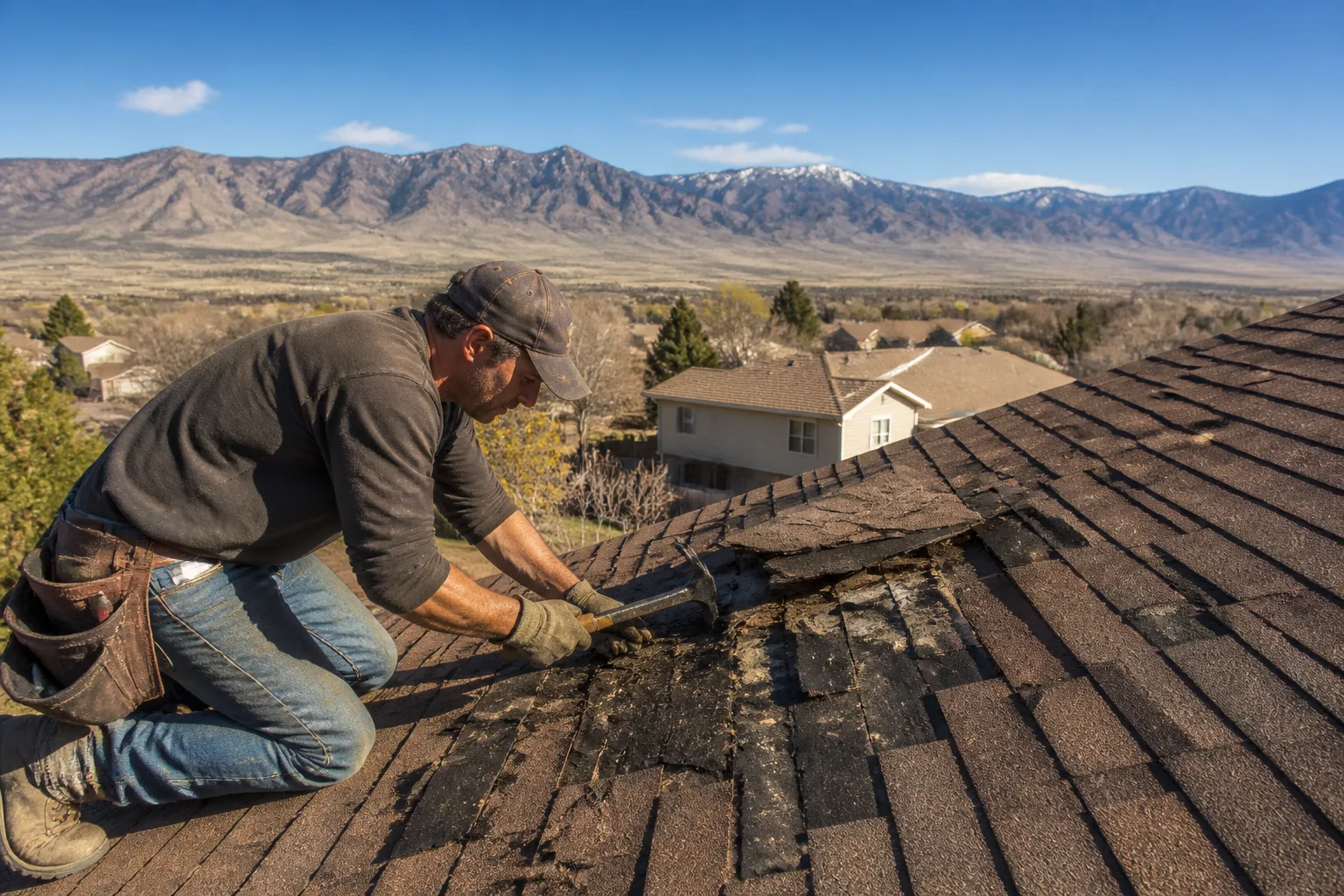
Before we talk about a single shingle brand, we get up on the roof and check the decking underneath. The deck is the plywood or OSB sheathing nailed to your rafters, and it’s what the whole roof is fastened to. A beautiful shingle job over a rotting deck is money spent to hide a problem.
Here’s what we’re looking for, and what you can partly check from the ground and the attic:
- Soft spots underfoot. If the roof feels spongy when walked, the sheathing has taken on moisture. That’s a replacement signal, not a repair one.
- Sagging between rafters. Visible dips along the roofline usually mean the deck or the framing has lost integrity.
- Daylight or staining in the attic. Look at the underside of the sheathing on a sunny day. Dark staining means water has been sitting there a while.
- Lifted or rusted flashing. Flashing at the chimney, valleys, and vents is where most leaks start, and re-flashing is often a modest repair – unless the deck around it has softened.
- Number of existing layers. Two or more layers of shingles means a full tear-off regardless, because code and good practice won’t let you stack a third.
In our experience, this 20-minute inspection settles the repair-or-replace question nine times out of ten. It also tells you whether a repair will actually hold.
The Cost-Per-Year Math Whitney Homeowners Can Run Themselves
This is the part most bids skip. Instead of comparing a repair price to a replacement price, compare what each costs per year of life it buys you. The math is simple and it changes the answer fast.
Say a targeted repair runs $900 and realistically buys you three more years before the next failure on that slope. That’s $300 a year. A full replacement at, say, $14,000 that lasts 25 years is $560 a year – but it also ends the cycle of calling someone out every spring. The cheaper-looking repair is often the more expensive path once you divide it out, especially if you’re paying for it twice.
Run the numbers this way:
- Get the repair price in writing, with a realistic estimate of how many years it buys.
- Divide repair cost by those years.
- Get the replacement price in writing, divided by the roof’s expected life in your conditions.
- Compare the two yearly figures – and factor in how many repairs you’ve already paid for.
The rule of thumb we pass along: if a repair costs more than about a third of what replacement would, and the roof is past the halfway mark of its realistic life in Whitney, replacement usually wins the math.
How Nevada’s Temperature Swings Change the Repair Math
This is where Whitney roofs live differently than roofs back East. Our summers push the surface temperature of a dark shingle well past the air temperature, and our winters still drop cold enough to freeze. That daily and seasonal expansion-contraction cycle works on every seam, every nail, and every bead of sealant.
What that means practically: sealant-based and patch repairs don’t last here the way they do in a mild climate. A tube of roofing cement that might hold three seasons in a stable climate can crack and let go in a single hot summer on a Whitney roof. Adhesion fails faster, granules shed sooner, and the thermal cracking around fasteners is more aggressive.
So when we quote a repair, we quote it honestly – including how long we expect it to hold in our conditions, not in a brochure. GAF and CertainTeed both publish wind and impact ratings, but those ratings assume the shingle was installed right. The nailing pattern earns the wind rating, not the shingle wrapper. That’s true on a repair patch and even more true on a full install.
Three Repairs That Almost Always Become Replacements Within Two Years
Some repairs are worth doing and some are a band-aid on a wound that needs stitches. In our experience on Whitney roofs, these three scenarios almost always turn into a replacement inside 24 months – so it’s worth spotting them before you spend the money:
- Multiple active leaks in different areas. One leak is a problem. Three leaks on three separate slopes means the whole system has aged out together, and you’ll chase them one at a time.
- Soft decking around any leak. If the sheathing has gone soft where water got in, the repair can’t be trusted no matter how neat the patch looks. The deck has to be sound for anything above it to hold.
- Granule loss across the whole roof plus lifted flashing. Bald patches in the valleys and curling edges mean the shingle field is at end of life. Re-flashing one area won’t stop the rest from following.
We pulled a roof apart over in the Whitney area not long ago where the homeowner had paid for two separate patch jobs in three years. Both patches looked fine from the ground. When we got the shingles up, the deck underneath was soft across two full slopes. That’s the exact scenario where a repair is money spent to delay the inevitable. A short Roof Repair in Whitney visit can at least tell you which side of that line you’re on.
What the 90-Day Done Right Promise Means for a Repair vs. a Replacement
We put the same written promise on every roofing job: the 90-Day Done Right Promise. If it’s not done right, we make it right – in writing. But what that promise covers looks a little different depending on the job, and it’s worth understanding the difference before you sign anything with anyone.
On a repair, the promise covers the work we did and the area we touched. If the patch we set starts leaking inside 90 days, one call brings us back. It doesn’t promise the rest of an aging roof won’t fail next – and we’ll tell you that up front rather than let you find out in the spring.
On a full replacement, the promise covers the whole system we installed: the deck work, the underlayment, the flashing, and the shingles. That’s a broader safety net, and it’s one reason a replacement is sometimes the more honest recommendation even when a repair is cheaper today. When we quote a Roof Replacement & Installation in Whitney, the promise rides along on the entire job.
We also install metal systems when the situation calls for it – Boral and standing-seam products have their place on Whitney homes that get hammered by sun. If you’re weighing that against shingle, our Metal Roofing in Whitney page covers the trade-offs.
The Bottom Line
Repair or replace isn’t an age question. It’s a deck question, a layers question, and a cost-per-year question – and the honest answer sometimes costs a contractor a replacement sale. Here’s the short version:
- Check the deck and the attic before you talk shingles.
- Run the cost-per-year math; the cheapest repair is often the priciest path.
- Remember Nevada’s swing cycle makes patch repairs shorter-lived here than elsewhere.
- Three active leaks, soft decking, or widespread granule loss plus lifted flashing usually means replacement.
- Know what any written promise actually covers on a repair versus a full install.
If you’re in Whitney and want a straight answer before you spend a dime, Shepherd & Sons Roofing Whitney offers free estimates – and a free second opinion on any written estimate you’ve already got. Call (844) 797-9455.
Related services in Whitney: Shepherd & Sons Roofing Whitney home · Roof Repair in Whitney · Roof Replacement & Installation in Whitney · Metal Roofing in Whitney
Frequently Asked Questions
Most targeted roof repairs in Whitney run a few hundred dollars for a small flashing or shingle fix, and climb into the low four figures for larger sections with deck work. The exact number depends on how much decking is soft and how many layers are already up there. Call (844) 797-9455 for an exact quote – estimates are free.
It can if the repair is done incorrectly or with the wrong materials. Manufacturer warranties like those from GAF and CertainTeed generally require proper installation and approved components, so a sloppy patch can put coverage at risk. A qualified roofer will repair it to spec and tell you what the warranty does and doesn’t still cover.
A typical repair is a half-day to a day. A full replacement on a standard Whitney home usually runs one to three days depending on size, pitch, and how much decking needs replacing. We give you a realistic timeline in writing, not a phone-call guess.
It shouldn’t, and with us it doesn’t – we quote in writing after we’ve seen the deck, not from the driveway. If we find hidden damage mid-job, we stop and talk to you before touching it, rather than springing a change order at the end. Call (844) 797-9455 for a free estimate and a second opinion on any bid you’ve already got.
Written by the team at Shepherd & Sons Roofing Whitney.
Need Roofing Help?
Call Shepherd & Sons Roofing Whitney - the local pro we connect you with is licensed and insured, here with fast after-hours help in Whitney.
(844) 797-9455