
5 Mistakes to Avoid With Metal Roofing
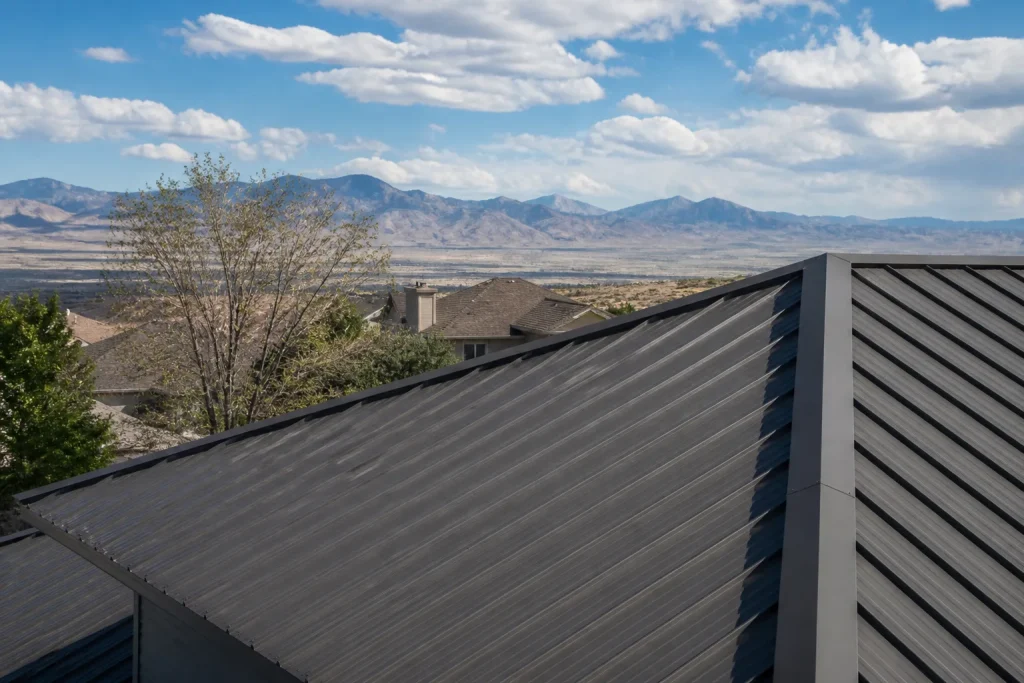
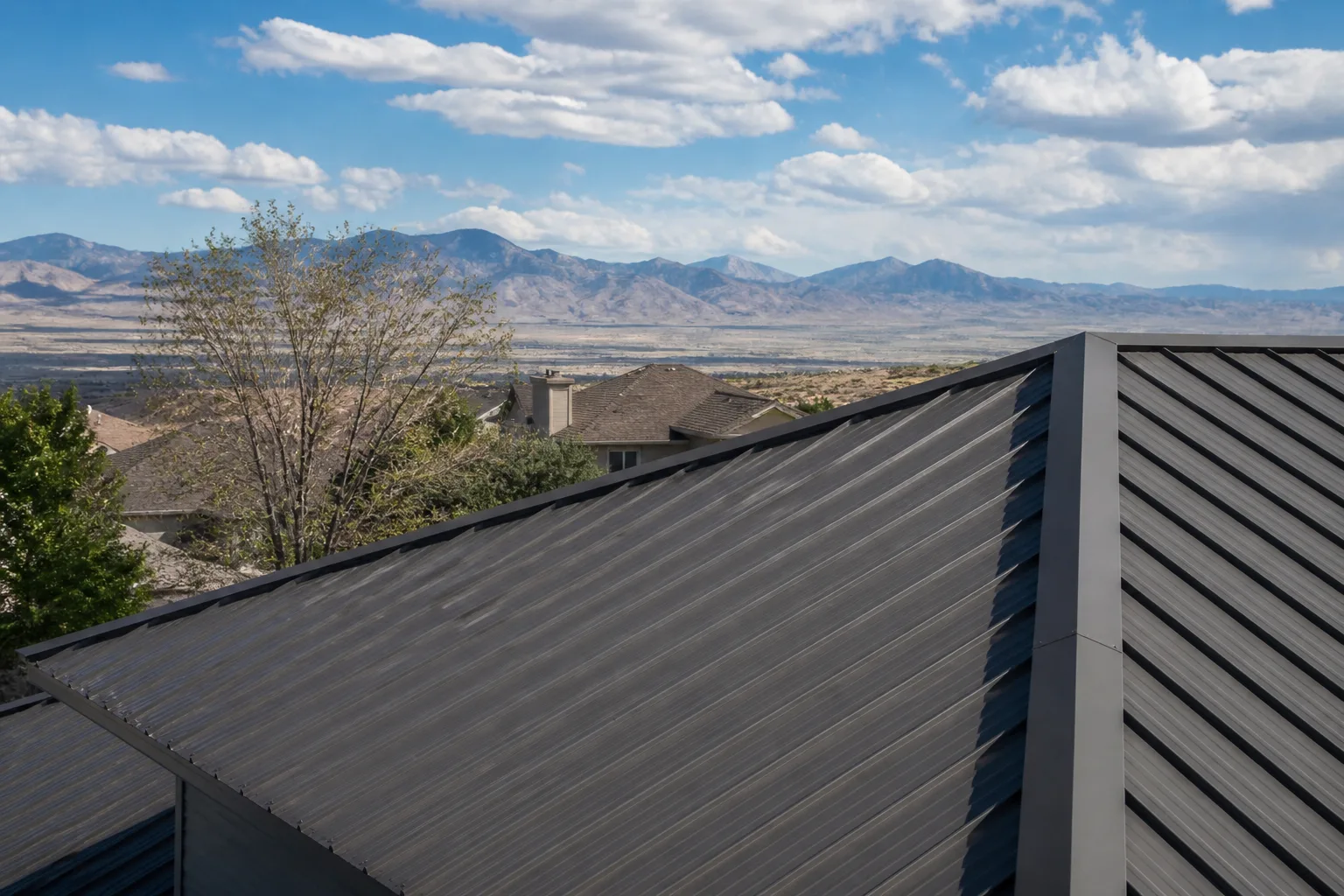
The call-back we get most often on metal roofs isn’t a leak. It’s oil-canning, the wavy, buckled look that sets in when panels go down without room to move, and by the time a homeowner spots it from the driveway the fasteners have already been stressed. Metal roofing lives or dies on details that look cosmetic but carry the whole system. Here are the five mistakes that show up most on Whitney homes, and how to catch them before the crew packs up.
If you’d rather not climb up there with a clipboard, call (844) 797-9455 and we’ll take a look.
1. Installing Panels With No Room to Expand
Nevada swings hard between seasons. A metal roof out here can move a quarter inch or more over a 40-foot run as the panels heat and cool, and if they’re locked down tight with nowhere to go, that movement has to come out somewhere. Usually it comes out as oil-canning across the flats, then as slotted fastener holes that widen a little more each year. Most of the specs a crew brings are written for milder climates, and those standard fastening patterns don’t leave enough gap for a Whitney summer. Ask any bidder what expansion gap they’re leaving and how they’re detailing the ridge and eave to allow movement. If the answer is vague, that’s your answer. Panels need to float, not sit in a vise.
2. Sealants That Bake Off in High-Desert Sun
Sealant is the cheap part of the job and the first thing that fails. Standard butyl and many off-the-shelf caulks dry out and crack under UV within 18 months out here, and once they do, the penetrations they were protecting start taking on water. The products that hold up in this sun are the ones rated for high UV and movement: quality silicone and EPDM gaskets on the fasteners, not the bargain tubes from the big-box aisle. We saw a two-year-old metal roof over near the older section of town where every vent boot had been sealed with a caulk that turned to chalk. The panels were fine. The sealant was the whole problem. Ask what brand of sealant and what fastener washers your bidder is using before you sign anything.
3. Skipping the Right Underlayment
Metal roofing in Whitney sits on top of a very hot, very dry roof deck, and the underlayment underneath is doing two jobs you can’t see once the panels are on. It’s your second line of defense against water that gets past a fastener, and it’s what keeps rain noise from turning your living room into a drum. Standard felt works on older, milder roofs, but on metal it dries and tears. A metal-compatible synthetic underlayment handles the heat, lets condensation escape, and dampens sound. Skipping it, or using felt because it’s cheaper, is one of those mistakes a homeowner only discovers the first hard rain or the first loud afternoon thunderstorm. Ask to see the roll before it goes down. We’ll show you ours.
4. Mixing Metals and Building a Corrosion Path
This one is sneaky because it doesn’t show up for years. When a steel fastener touches an aluminum panel, or a copper flashing sits against a galvanized piece, the two metals create a small electrical current whenever they get wet. That’s galvanic corrosion, and it eats the softer metal from the inside out. You won’t see it at year one. Around year three or four the fasteners start to go, and then you’ve got a roof that’s rusting from the wrong direction. The fix is simple: match the metals, use insulated or coated fasteners where they touch the panel, and keep dissimilar metals separated. Every panel maker from GAF to Boral has a spec on this. A crew that knows metal roofing knows not to mix. Ask them, and if they shrug, walk away.
5. Laying Panels Without Thinking About the Valleys
Valleys are where metal roofs fail first. They carry the most water in a Nevada monsoon and they need a clear path to the gutter. When panels are run into a valley without a proper W-shaped valley metal or without the correct overlap and underlayment beneath it, water backs up, gets under the panel edge, and finds the deck. You can often spot a bad valley from the ground: look for panels that stop short of the valley center, or a valley that looks like a flat piece of metal slapped over the seam. It should be a real channel, metal over metal with the water path clear. On Whitney roofs we look at valleys before we look at anything else, because that’s where the next leak is coming from.
When to Call a Pro
A metal roof isn’t a weekend project, and it isn’t a place to save a few hundred dollars on labor. The work is up high, the panels are long and heavy, and one wrong fastener pattern can mean a repair bill later. If you’re in Whitney and something on this list sounds familiar, or you’re getting a metal roof quoted and want a second set of eyes on the bid, that’s what we’re here for. Our technicians have up to 30 years of experience, and we’ll show you the deck photos before we talk money.
Related Services in Whitney
If you’re weighing a metal roof against other options, start with our Metal Roofing in Whitney page. For repairs on an existing metal roof, see Roof Repair in Whitney. Planning a full tear-off and replacement? That’s Roof Replacement & Installation in Whitney. And for anything else, our Shepherd & Sons Roofing Whitney home page has the rest.
What happens when you call
- 1
A real person answersNo phone trees – you reach a local pro.
- 2
You get an upfront price rangeHonest numbers before anyone is dispatched.
- 3
A background-checked tech heads outLicensed & insured, dispatched right away.
- 4
You approve before work beginsNothing starts until you say go.
The Bottom Line
Metal roofing is one of the best investments a Whitney homeowner can make, but only when it’s installed with the local climate in mind. The mistakes above all share one thing: they’re invisible once the job is done, and they show up later as oil-canning, cracked sealant, corrosion, or a valley that leaks. Ask your bidder about expansion gaps, sealant brands, underlayment, metal compatibility, and valley detailing. A straight answer on those five is worth more than a lower quote.
If you’re in Whitney and need help, Shepherd & Sons Roofing Whitney offers free estimates – call (844) 797-9455. A live person answers, day or night, and you’ll get a written quote with no surprises.
Frequently Asked Questions
That’s oil-canning, and it usually means the panels were installed without enough room to expand and contract. Whitney’s temperature swings force the metal to move, and if it’s locked down tight, the movement shows up as waves across the flats. It’s fixable, but catching it early matters. Call (844) 797-9455 for an inspection.
A properly installed metal roof can last decades here, but the sealants, fasteners, and valley details are what determine whether you actually get that life. Panels outlast the small parts around them. Call (844) 797-9455 if you want us to look at the details on yours.
Most metal roof problems are repairs, not replacements. Cracked sealant, a failed fastener, or a leaking valley can often be fixed without pulling panels. We’ll tell you straight which one you’re looking at. Call (844) 797-9455 for a free second opinion on any written estimate.
A metal-compatible synthetic underlayment, not standard felt. It handles the heat, manages condensation, and cuts down on rain noise. Ask to see the roll before it goes down. If you’re not sure what’s under yours, call (844) 797-9455.
Written by the team at Shepherd & Sons Roofing Whitney.
Need Roofing Help?
Call Shepherd & Sons Roofing Whitney - the local pro we connect you with is licensed and insured, here with fast after-hours help in Whitney.
(844) 797-9455