
Tile Roofing: Repair or Replace? How Whitney Homeowners Decide
Concrete and clay tile can last 50 years in Nevada’s climate, but the felt underlayment beneath them usually gives out in 20 to 25. That gap is the whole story. A Whitney home roofed in 1998 can look perfect from the street and still be one hard rain away from a wet ceiling. If your tile roof is in that window, the decision isn’t really about the tiles at all. It’s about what’s under them.
So here’s the short answer: if your tile is 20 years old or older, replace. If it’s newer and the damage is isolated, repair. If you’d rather have someone look before you commit, call (844) 797-9455 and we’ll come out.
Why the Underlayment Age Is the Real Clock on Your Roof
Tile is the face of the roof. The underlayment is the waterproofing. In Whitney, sun, heat cycling, and dry air cook that felt layer every summer. By the time it hits 20 to 25 years, it’s brittle, cracked, and no longer shedding water. The tile above it hides all of that.
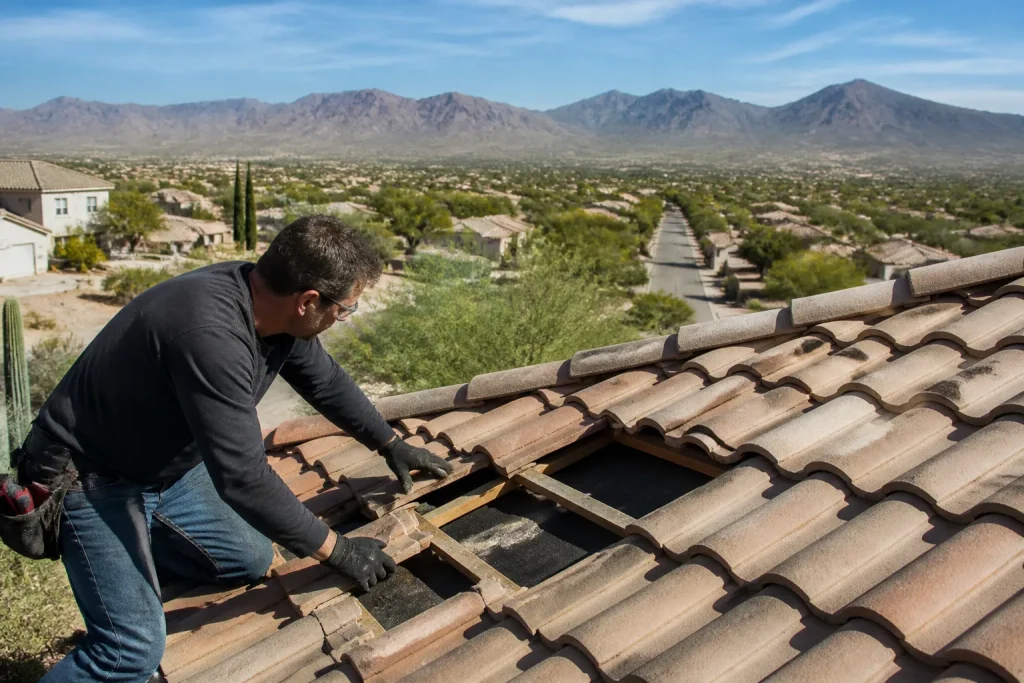
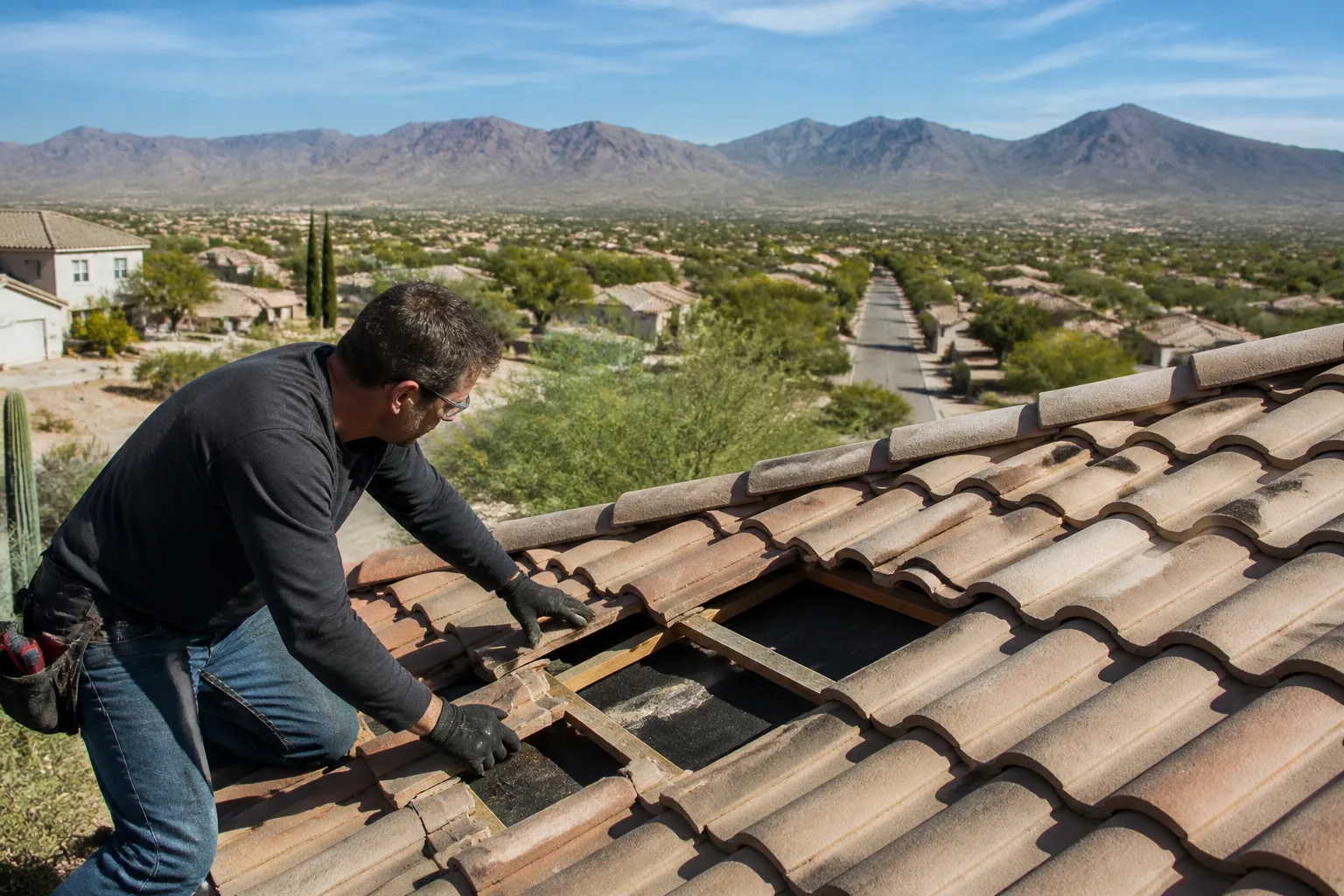
We pulled the ridge caps off a tile roof near the Whitney Ranch area last spring and the tiles were flawless. The felt underneath crumbled in our hands like old newspaper. The homeowner had no idea, because nothing had leaked into the house yet. It was just luck and a dry winter.
Here’s how to estimate your underlayment age without tearing anything up:
- Find the install year. Your county assessor’s records, a home inspection report, or the seller’s disclosure from when you bought the house will usually have it.
- Check for a permit sticker or paper in the garage or on the electrical panel. Older Whitney roofs often have one.
- Look for the first signs. Granules in the gutters, dark streaks on the tile, or a musty smell in the attic after rain all point to underlayment failure.
- Do the math. Install year plus 20 to 25. If you’re past that, the felt is living on borrowed time no matter how the tile looks.
That’s the number that should drive your decision. Not the color of the tile. Not a single cracked piece on the south slope. The underlayment age.
Cracked Tiles: Impact Damage vs. Deck Movement
Not every crack means the same thing. Where the break sits tells you what caused it, and that changes whether you repair or replace.
Impact damage is isolated. A limb falls, a hailstorm hits, a kid’s baseball finds the ridge. You’ll see one tile broken, maybe two or three near each other, with the rest of the field clean. That’s a repair. The tile comes off, the underlayment underneath gets checked, a matching tile goes back on. We do this kind of fix all over Whitney and it’s usually a straightforward job.
Deck movement is a pattern. If you see cracks running in a line, tiles lifting at the edges, or breaks concentrated along a ridge or valley, the deck under the roof is moving. That’s a structural symptom, not a tile problem. Replacing the broken tiles on a moving deck just means they’ll crack again next season. The roof needs to be looked at as a system, and often that points toward replacement.
Here’s the tell: get up on a ladder and look. One crack in one spot, with no relationship to anything else? Impact. Cracks in a row, or a sag you can see along the eave line? Call someone to look at the deck.
Mortar at the Ridges and Hips: When Re-Mortaring Is Worth It
Mortar fails in a sequence, and knowing the sequence helps you decide whether to fix it or step back.
- Hairline cracks appear along the mortar joint. Normal aging.
- Chunks start falling off onto the roof or the ground. You’re finding pieces in the yard.
- Tiles loosen at the ridge or hip and can lift in high wind.
- Water gets behind the mortar and the joint starts weeping.
If you’re at step one or two, re-mortaring the ridges and hips is a reasonable investment on a roof with plenty of underlayment life left. We use a flexible mortar mix that holds up to Whitney’s heat swings better than the old hard-set stuff, and it buys you real years.
If you’re at step three or four, or the mortar failure is happening across multiple ridges at once, that’s usually a sign the whole roof has shifted with the deck. Re-mortaring one ridge on a roof that’s already moved is throwing money at a symptom. On a 25-year-old tile roof with failing mortar on every hip, the honest answer is that the money is better spent on a new roof than on a mortar patch that will be back in three years.
Why Matching Tile on a Repair Is Harder Than It Sounds
Tile matching is where a lot of Whitney repair jobs go sideways, and nobody warns homeowners upfront.
UV fade. Tile that’s spent 15 years in the Nevada sun has faded. The same profile in the same color from the same manufacturer won’t match a roof that’s been baking since 2010. We can get close, but you’ll see the difference in the right light.
Discontinued profiles. Manufacturers retire tile profiles all the time. A profile that was common on Whitney homes built in the early 2000s may be gone today. We can sometimes source from a Boral or Atlas salvage lot, but the match is never guaranteed.
Resale. A visibly mismatched patch on the front slope of your home is one of the first things a buyer’s inspector flags. We’ve seen buyers knock thousands off an asking price over a patch job that was technically fine but looked like a scar. Sometimes the honest call is to replace the whole slope, or the whole roof, to keep it uniform.
If you’re planning to sell within a couple of years, factor that in before you approve a repair.
The 10-Year Math on Partial Repairs vs. a Full Tile Re-Roof
Here’s where it helps to think in decades, not months. Partial repairs on an aging tile roof tend to stack up fast. Underlayment patches, re-mortaring, a slope re-tile here and there. Done one at a time, none of them feel expensive. Added up over 10 years, they usually cost more than a single full re-roof that resets the clock.
A rough way to think about it:
- One repair, isolated damage, newer roof: definitely worth it.
- Two or three repairs a year on a roof past 20 years: you’re paying rent on a roof that needs replacing.
- Any repair on a roof past 25 years with failing underlayment: the repair buys you weeks, not years.
When a full re-roof is the right call, we install tile over modern synthetic underlayment rated for Whitney’s heat, and we’ll match the profile and color wherever possible. If you’re weighing tile against other materials, our Metal Roofing in Whitney page explains the tradeoffs.
When to Call a Pro
If you’re comfortable on a ladder and the damage is one isolated tile on a newer roof, a repair is something a careful homeowner can arrange. But tile roofs are heavy, slippery, and unforgiving of mistakes. Stepping on the wrong spot can crack a tile or, worse, send you through the roof.
Call us if any of these apply:
- Cracks in a pattern, or tiles lifting along a ridge or hip
- Water stains on the ceiling or a musty smell in the attic
- Mortar chunks falling onto the roof, walkway, or yard
- Your roof is 20 years old or older
- You’re not sure what caused the damage
We look at the deck, the flashing, and the underlayment before we quote any repair. If you’d like to see how we handle general fixes, our Roof Repair in Whitney page covers what we do. And if you already have a written estimate from someone else, our free second opinion is a standing offer. Call (844) 797-9455 and we’ll take a look.
The Bottom Line
In Whitney, the tile is almost never the problem. The underlayment, the mortar, and the flashing underneath are what fail, and that’s what should drive your decision.
- Repair if the damage is isolated, the underlayment is under 20 years old, and the rest of the roof is sound.
- Replace if the underlayment is past 20 to 25 years, the mortar failure is spreading, or you’re facing three repairs a year on a roof that keeps giving.
- Match the tile carefully if you’re patching, and think about resale before you approve a mismatched fix.
If you’re in Whitney and need help, Shepherd & Sons Roofing Whitney offers free estimates. Call (844) 797-9455 and we’ll come out, take a look, and show you the deck photos before we talk money.
Frequently Asked Questions
Most tile roof repairs in Whitney run between a few hundred and a couple thousand dollars, depending on how many tiles need replacing and whether mortar work is involved. A single isolated tile replacement is at the low end. Ridge and hip re-mortaring is in the middle. If the repair uncovers deck or underlayment damage, the number goes up. Call (844) 797-9455 for an exact quote, and we’ll give you a written line-item estimate. Estimates are free.
Check three things: the install year, the condition of the mortar at the ridges and hips, and whether you’re seeing leaks or attic moisture after rain. If the roof was installed before about 2005 and you’re seeing any of those, it’s time to have someone look. The tile may still be fine. The underlayment underneath is the question.
Technically yes, but it’s the worst of both worlds. The tiles have to come off to reach the underlayment, so the labor is most of a re-roof anyway. The old tiles go back on and have to be re-set, and some will break in the process. Most of the time you’re better off replacing tile and underlayment together, and getting a fresh roof out of the money.
It shouldn’t. Our pricing is written out before any work starts, and if we find something we didn’t see in the initial look, we stop and show you what we found before we do a single thing more. No surprises on the final invoice. Call (844) 797-9455 to set up a free estimate, and if you have a written bid from someone else, our second opinion is free too.
For the wider picture on roof systems and how we approach tile versus shingle versus metal, our Roof Replacement & Installation in Whitney page walks through it. And if you just want to know who’s answering the phone, that’s us at the Shepherd & Sons Roofing Whitney home page. A real person picks up, day or night.
Written by the team at Shepherd & Sons Roofing Whitney.
Need Roofing Help?
Call Shepherd & Sons Roofing Whitney - the local pro we connect you with is licensed and insured, here with fast after-hours help in Whitney.
(844) 797-9455