
GAF Roof Repair in Whitney: A Homeowner’s Guide
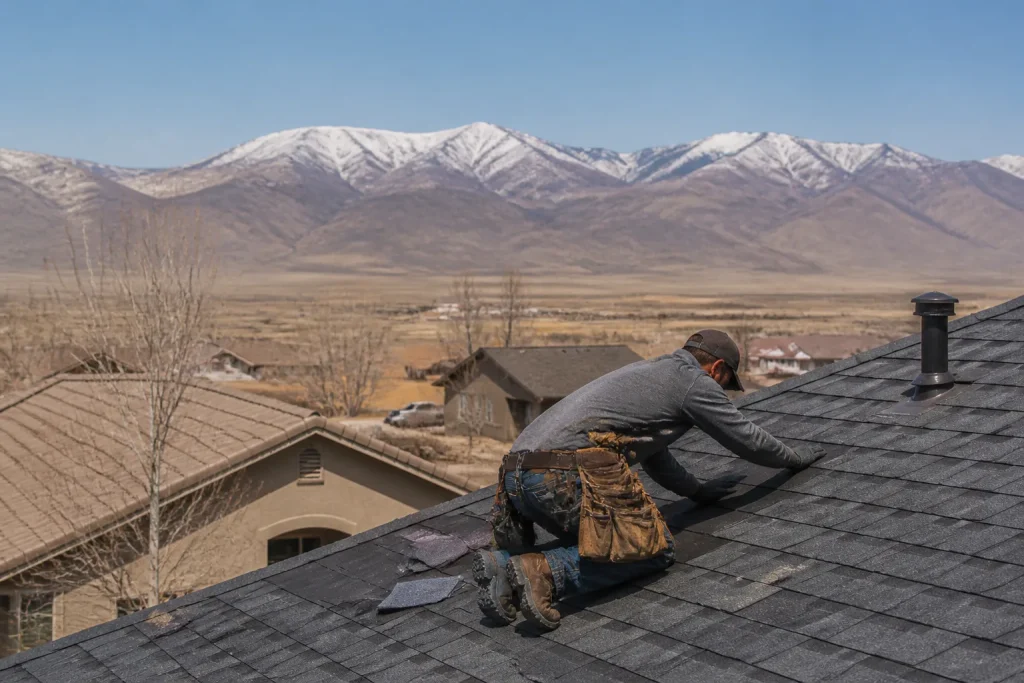
GAF makes over 300 shingle colorways. Most repair crews stock four. That math is why we can walk a Whitney neighborhood and spot a half-dozen mismatched repairs from the street without even getting out of the truck. A GAF repair that’s done right means the right product, the right flashing, and a paper trail that keeps the warranty alive. If you’d rather not gamble on that, call (844) 797-9455 and we’ll take a look.
Why GAF Is Everywhere in Whitney – and Why That Matters for Repairs
GAF is the most common shingle on Whitney roofs, and there’s a good reason: it’s a solid product with a real warranty behind it. The flip side is that when something goes wrong, the fastest fix is whatever the crew happens to have on the truck. Timberline HDZ in a color that’s “close enough” gets nailed down, the homeowner writes a check, and the roof looks fine from the curb for about three years.
Then the sun does its work. Whitney sits in a high-desert climate with brutal summer UV and wide temperature swings between day and night. Shingle granules wear differently depending on the batch and age. A patch installed two years after the original roof fades on a different curve. What looked like a close match at the start reads as a visible rectangle by the time you’re ready to sell.
We’ve pulled apart plenty of these. The homeowner almost never knows the repair was a mismatch until an inspector flags it or a buyer’s agent starts asking questions. Knowing what a proper GAF repair requires is the difference between a fix that disappears into the roof and one that announces itself every time somebody pulls into the driveway.
How Do You Find the Exact GAF Product on Your Roof?
The answer is almost always in your attic, not on the roof. GAF ships shingles with identification on the bundle wrapper, and most installers leave a wrapper or a product label stapled to a rafter or the underside of the roof deck near the attic access. Look for a printed label that names the product line (Timberline, Timberline HDZ, Timberline UHDZ, Marquis WeatherMax, and so on), the color name, and a lot or batch number.
If there’s no wrapper, here’s what to do next:
- Check the original paperwork. Your closing documents, contractor invoice, or the previous owner’s files often list the exact product and color. A Whitney house built or re-roofed in the last 15 years usually has this somewhere.
- Look at the shingle itself. Pull a loose tab or examine an edge. GAF shingles have a distinctive profile, and the color name is sometimes printed on the back of the tab.
- Count the exposure. Measure how much of each course is showing (the “exposure”). GAF products are designed around specific exposures, and a pro can often back into the product line from that measurement alone.
- Call a GAF-savvy roofer. Anyone who installs GAF regularly can usually identify the line and color from a photo or a quick look. That’s part of knowing the product, not a special favor.
Get the product name and color before you call anyone for a bid. It’s the single biggest thing you can do to prevent a mismatched patch, and it costs you fifteen minutes in the attic.
Why Shingle Matching Is a Performance Issue, Not Just a Looks Issue
Most homeowners assume a mismatched shingle is a cosmetic problem. It’s not. The way shingles shed water depends on how the tabs overlap, and GAF designs its products so the tab pattern and thickness work together as a system. Drop a different thickness or a slightly different tab geometry into the middle of a field of GAF shingles and you’ve introduced a seam where water can wick, ice can catch, and wind can lift.
In Whitney, that matters more than it does in a lot of places. Our wind events are real, and a shingle that doesn’t match the surrounding field by thickness or nailing zone is the first one to go. We’ve seen it after a spring blow: one shingle peeled back at the edge of a patch, water got under, and the “small repair” turned into a decking replacement.
Color matters at resale too. A home inspector in Whitney will note “evidence of prior repair, mismatched shingles” in a report, and that sentence costs homeowners leverage at the negotiating table. Matching the product line and color isn’t vanity. It’s the difference between a repair that holds and a repair that outs you.
What Does GAF’s Lifetime Warranty Actually Require?
GAF’s Lifetime Shingle warranty is generous, but it has strings, and repair work is where most homeowners accidentally cut them. The warranty is tied to the original installation, and most GAF lifetime systems require proper ventilation, a specific number of qualifying GAF accessories, and installation by a GAF-certified contractor to get the strongest coverage tier. A repair that breaks any of that can void the coverage on the affected area.
Here’s what actually matters when you have a GAF roof repaired in Whitney:
- Use matching GAF materials. A repair with a non-GAF shingle in a GAF field can void the warranty on that section. The whole point of matching the product line is keeping the original coverage intact.
- Don’t disturb the ventilation. GAF’s system warranties assume proper intake and exhaust. A repair that blocks a ridge vent, or that replaces a GAF accessory with an off-brand one, can invalidate the whole thing.
- Keep the paper. Save the repair invoice, the product label, and any photos. If you ever file a claim, GAF wants a timeline, and a written record is the difference between “we’ll review” and “denied.”
- Work with someone who knows the warranty. A roofer who installs GAF can tell you in five minutes which repair approach protects your coverage and which one doesn’t.
This is also why we recommend asking any Whitney repair crew whether they’re familiar with GAF’s warranty requirements. The ones who install GAF will answer without blinking.
The Flashing Standards GAF Publishes – and Most Crews Skip
GAF publishes detailed installation standards for its products, and the sections on flashing are the ones that get ignored most often. Flashing is the metal the water runs along: step flashing at sidewalls, counterflashing at chimneys, drip edge at the eaves and rakes, and valley flashing where roof planes meet. When a repair crew replaces shingles but leaves the old flashing in place, the repair looks finished and behaves like it isn’t.
In our experience, most GAF roof leaks we’re called to fix in Whitney trace back to a flashing detail, not the shingle itself. The standards GAF publishes specify the minimum overlap, the correct material, and how the flashing should lap behind the siding or against the chimney. Skipping those details is cheap and easy and invisible – until the next rain.
Three flashing details we check on every Whitney repair:
- Step flashing at sidewalls and dormers. Each course of shingles should cover one piece of step flashing. If the old step flashing is left in place and just re-covered, water will find the seam.
- Counterflashing at chimneys and masonry. This needs a proper reglet cut into the masonry, sealed, and lapped over the base flashing. Caulk alone is not counterflashing.
- Valley flashing. GAF publishes open and closed valley standards. A repair that changes the valley style without addressing the whole valley is asking for trouble.
This is a place where the cheapest bid usually loses. Flashing is most of the labor in a proper repair, and the crew that doesn’t replace it isn’t saving you money – they’re just moving the cost to the next rain.
How to Get a Repair That Holds Up at Resale
A Whitney home inspector looks for specific things on a GAF roof: shingle condition, visible patches, flashing at penetrations, and whether the repair matches the surrounding field. They don’t care that the repair was necessary. They care whether it was done to a standard a buyer can trust. Here’s how to make sure the answer is yes:
- Match the product line and color. Not just “close enough.” Get the product name off the attic label and use it.
- Replace the flashing, don’t re-cover it. Ask for photos of the flashing work before the shingles go back down. Legitimate crews take them.
- Keep a paper trail. The invoice should name the GAF product, the color, and any flashing that was replaced. That document travels with the house.
- Note the date and the weather. A repair made in a Whitney summer is different from one made in a winter wind event. A record of when and why helps the next owner and the next inspector.
- Get it inspected before you list. If you’re selling in the next year or two, a pre-sale roof inspection gives you the same view the buyer’s inspector will have – and time to fix anything that shows up.
Half the mismatched repairs we see in Whitney would never have happened if the homeowner had asked two questions before work started: “What GAF product is on my roof?” and “Are you replacing the flashing?” Neither question costs anything, and both prevent a problem that costs plenty.
When to Call a Pro
Roof repair involves heights, sharp materials, and the risk of a serious fall. If you’re not comfortable on a ladder, don’t get on one. The repair is not worth a trip to the emergency room. And even if you’re handy, the warranty and flashing questions above are the ones a pro answers with experience behind the answer. Our technicians have up to 30 years of experience, and the local pro we connect you with is licensed and insured as Nevada requires.
Related services in Whitney: For a closer look at what we do, see Roof Repair in Whitney and Roof Replacement & Installation in Whitney. If your GAF roof is past the point of patching, or you’re weighing a different material altogether, Metal Roofing in Whitney is a good place to start. And to see how we run every job, start at the Shepherd & Sons Roofing Whitney home page.
The Bottom Line
If you take one thing from this guide, take this: find the GAF product name and color on your roof before anyone bids on the repair. That single step prevents most mismatched patches, keeps the warranty intact, and saves you leverage at resale. The second thing: insist on new flashing, not re-covered flashing. The third: keep the paperwork.
Every job we connect you with is backed by a written 90-Day Done Right Promise, free estimates with line-item pricing so you know the number before anyone touches your roof, and no trip charge inside our own county. Estimates are free, and a live person answers the phone – call (844) 797-9455.
Frequently Asked Questions
Look for a product label or bundle wrapper stapled to a rafter or the underside of the roof deck in your attic – most installers leave one near the attic access. If there’s no label, check your closing documents or the original contractor invoice, or pull a loose tab and read the back. A roofer who installs GAF can usually identify the product line and color from a photo. Call (844) 797-9455 if you want a hand figuring it out – estimates are free.
It’s both. A mismatched tab can affect how water sheds and how wind lifts at the seam, and in Whitney’s wind events that matters. It also shows up in home inspection reports as “mismatched repair,” which costs you leverage at resale. Matching the GAF product line and color is the way to avoid both problems. Call (844) 797-9455 for an honest assessment of what’s on your roof now.
It can, if the repair uses non-GAF materials or disturbs the ventilation or accessories the original installation relied on. GAF lifetime system warranties have specific requirements, and a repair with the wrong product in a GAF field can affect coverage on that section. Keep the repair invoice and product labels, and work with someone who knows GAF’s requirements. Call (844) 797-9455 to talk through your warranty – estimates are free.
Most single-area GAF repairs in Whitney fall in the range of a few hundred to a couple thousand dollars, depending on the repair size, whether flashing is replaced, and how much decking is involved. Proper flash replacement adds labor, which is why bids vary so widely. We quote line-item pricing up front with no change orders – call (844) 797-9455 for a free, no-hassle estimate and we’ll show you what we found before we talk money.
Written by the team at Shepherd & Sons Roofing Whitney.
Need Roofing Help?
Call Shepherd & Sons Roofing Whitney - the local pro we connect you with is licensed and insured, here with fast after-hours help in Whitney.
(844) 797-9455