
Metal Roofing: Repair or Replace? How Whitney Homeowners Decide
A single loose screw on a metal roof isn’t a repair. It’s a symptom. If one fastener is backing out, the expansion cycle that worked it loose has been quietly stressing every other fastener on that roof for years. That’s why Whitney metal roofs decide repair or replace differently than asphalt does. Most repairs buy time. On a failing panel system, they just buy less of it.
Here’s the direct answer: if a Whitney metal roof has isolated damage and healthy fasteners, repair it. Once seams are pulling, gaskets are shot, and panels have been re-sealed more than once, replacement usually costs less over the next decade than chasing repairs. If you’d rather not climb up and guess, call (844) 797-9455 and we’ll take a look.
What are the warning signs on a Whitney metal roof?
Metal roofing fails in ways that look minor from the ground and read very differently up close. In Whitney, the high desert swing between hot afternoons and cold nights is what drives most of it. Panels expand and contract every single day, and that motion works on fasteners, seams, and sealant whether you notice or not. After 20 years, the system has been through tens of thousands of those cycles.
What we look for:
- Backed-out or missing fasteners. One is a symptom. A row of them is a pattern.
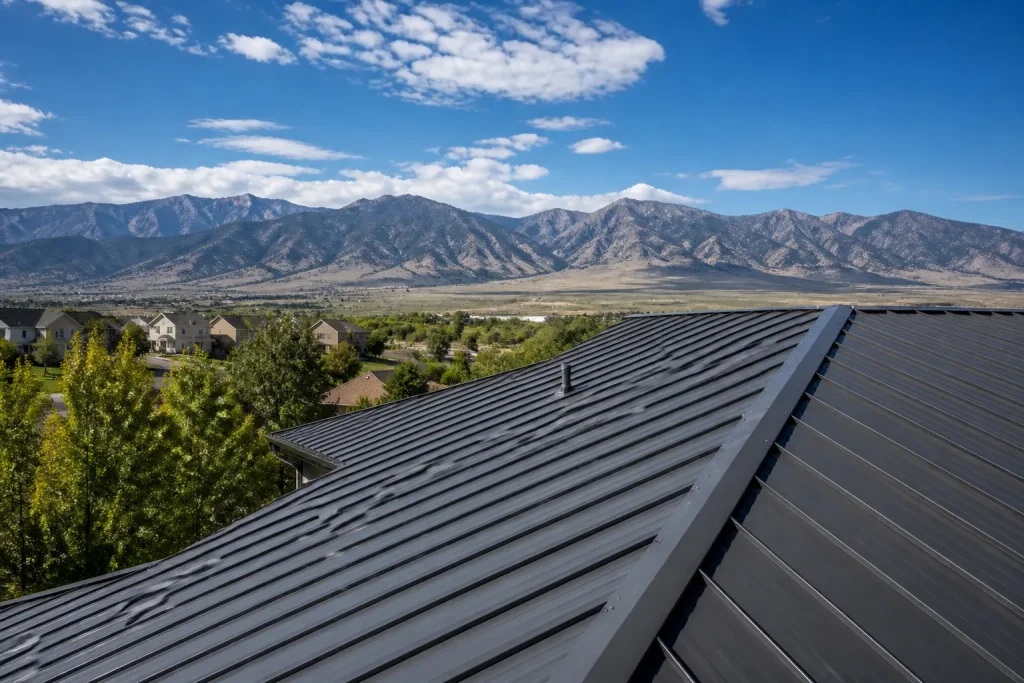
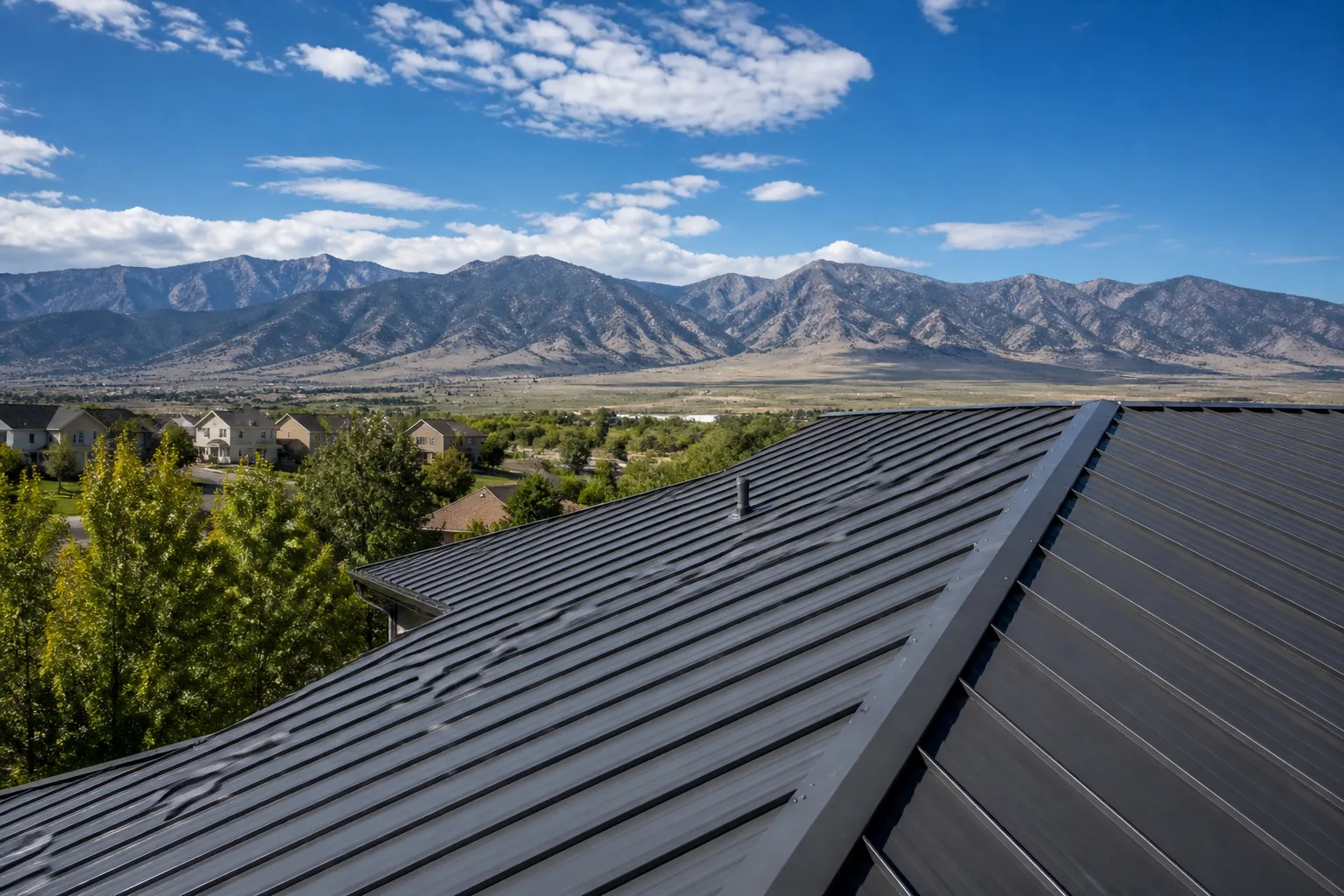
- Rippling or oil-canning on panels. Panels that flex more than they should usually means the attachment underneath has loosened.
- Seams that have opened. Look at the overlap lines, not the field of the panel.
- Dried, cracked, or missing gaskets. The little washers under each screw are the roof’s first line of defense.
- Rust at cut edges and penetrations. Surface rust on the field is cosmetic. Rust creeping from a cut edge or a screw hole is structural.
- Water stains on the deck or insulation below. The roof is telling you where the water is landing.
We walked a roof over near the Whitney Ranch area not long ago where the homeowner had three separate repair receipts from three different companies over six years. Every one of them was a legitimate repair. The problem was that nobody had stepped back and looked at the whole system. That’s what we do on our Roof Repair in Whitney visits: we check fasteners across the whole plane, not just at the leak.
Cosmetic repair or structural repair: why this changes the answer
This is the fork in the road. Whitney homeowners get talked into the wrong branch constantly because the two problems look similar from the ladder.
Cosmetic repairs are surface issues. A dent from a fallen branch, faded paint, light surface oxidation on the panel face. These don’t threaten the roof’s ability to shed water. They’re worth fixing for appearance and to keep small oxidation from growing, but they don’t force a replacement decision.
Structural repairs are about the attachment and the seams. Fastener pattern failure, opened seams, failed gaskets across a large area, panels lifting at the ridge. These are the repairs that get expensive, and they’re the ones where the underlying problem usually keeps spreading. A structural repair on a metal roof buys you time, but the clock never really stops.
The honest test we use: if the damage is confined to one area and the surrounding panel system is tight, repair it. If the failure shows up in three places across two planes of the roof, the problem is the system, not the spot.
How does Whitney’s climate wear out a metal roof?
Metal roofs in Whitney live a harder life than they would in a mild climate, and the realistic lifespan after 20 years reflects it. The panel itself is usually fine. What ages is everything holding the panel down.
The daily temperature swing is the driver. A painted metal panel can move a measurable amount through expansion and contraction between a July afternoon and a July night. Over 20 years, that motion:
- Works screws loose in their holes and opens the hole slightly wider over time
- Fatigues sealant at every overlap and penetration
- Cracks gaskets that have already hardened in the sun
Add the occasional wind event and the sand and grit that Whitney gets, and a 20-year-old exposed-fastener roof often needs real attention. A standing-seam roof with concealed fasteners holds up far better because there are no screw holes to widen. That’s part of why we install the concealed-fastener systems we do from Metal Roofing in Whitney. The brand on the panel matters less than the attachment, but we set panels from Tamko, Boral, and GAF regularly, and the design of the attachment is what earns the wind rating.
When is re-sealing worth it, and when do panels have to come off?
Re-sealing is worth it when the panels are tight and the only failure is gaskets and sealant. It’s not worth it when the panels themselves have lost their attachment.
Here’s the timeline we see on exposed-fastener roofs in Whitney:
- Years 1-10: Gaskets and sealant are doing their job. Routine inspection finds little.
- Years 10-18: Gaskets start to harden and crack. Re-sealing at penetrations and replacing under-cushion washers is a real, cost-effective move.
- Years 18-25: Sealant at seams and fasteners becomes the weak point. You can re-seal once, maybe twice. After that, the sealant is being applied over failing sealant and you’re chasing it.
- Beyond 25: If fasteners are backing out and seams are opening, re-sealing is throwing money at the symptom. The panels need to come off, or the roof needs to be replaced.
One re-seal on a roof that’s otherwise tight is a good investment. A second re-seal on the same roof is a warning sign. A third is money you’ll wish you’d put toward the roof.
Why mixing panel generations or gauges is a problem no one warns you about
Here’s the one that bites Whitney homeowners two or three years after a repair. A contractor replaces a section of panel with whatever’s on hand, or a thinner gauge than the original, or a different metal entirely. It looks fine. It’s not.
When two different metals touch, especially where water runs across them, you get galvanic corrosion. The less noble metal gives up electrons and corrodes faster than either would alone. If the original panels are steel and the repair is aluminum, or the gauges don’t match, the two panels behave differently under the same heat and movement. One expands more than the other, and the seam between them opens. Two or three years later, the homeowner has a leak that traces back to a repair nobody warned them about.
That’s why we try hard to match the panel gauge, metal, and finish on any repair we do, and why we’ll say so when a perfect match isn’t available. Sometimes the honest answer is that a small replacement of a whole plane beats a patch that creates a corrosion cell. When the full Roof Replacement & Installation in Whitney is the right call, we install a single system from one brand, and we tell you which one and why.
What we look at before we give you an answer
When we walk a Whitney metal roof, we’re not looking for the fastest repair to sell. We’re looking for the answer that holds up. Here’s the sequence:
- Fastener pull test. We check fasteners across multiple areas of the roof, not just where the leak showed up.
- Seam inspection. Every overlap and ridge is checked for opening.
- Gasket and sealant condition. We photograph the failed and the healthy ones so you can see the difference.
- Deck and underlayment. From the attic side where we can see it, and at penetrations.
- Galvanic check. Are there existing mismatched panels? Is the metal at cut edges already reacting?
We take photos of all of it before we talk money. If a repair will hold, we’ll tell you. If the system has failed, we’ll tell you that too, and show you why. Same address since 1996, name on the truck, name on the license. That’s how we’d want it done on our own roof.
Related services in Whitney: for a look at everything we do, visit our Shepherd & Sons Roofing Whitney home. Need the roof looked at this week? Call (844) 797-9455, a live person answers 24/7, and estimates are free. We also offer a free second opinion on any written estimate, a $40 discount on any repair over $200, and 10% off for seniors and veterans.
The Bottom Line
Here’s the short version for Whitney homeowners staring at a metal roof that’s starting to show its age:
- Isolated damage with tight fasteners and dry seams? Repair it.
- Surface rust or a dent that doesn’t leak? Cosmetic repair, and worth doing.
- Fasteners backing out in rows, seams opening, gaskets failing across the roof? That’s a system problem, and replacement usually wins on cost.
- One re-seal is smart. A third re-seal is money you’ll wish you’d moved.
- Mismatched panels from an old patch can cause corrosion you won’t see for years. Match the metal or replace the plane.
If you’re in Whitney and need help deciding, Shepherd & Sons Roofing Whitney offers free estimates and a free second opinion on any estimate you’ve already got. Call (844) 797-9455 and we’ll come look. Every roofing job we do carries our written 90-Day Done Right Promise. If it’s not done right, we make it right, and one call brings us back.
Frequently Asked Questions
If the damage is confined to one area and your fasteners and seams are healthy elsewhere, you need a repair. If fasteners are backing out across multiple planes, seams are opening, or the roof has been re-sealed more than twice, replacement is usually the better long-term math. The deciding factor is whether the failure is in one spot or in the whole system.
You can repair a single section, but only if the new panel matches the original in metal type, gauge, and finish. A mismatched patch creates a galvanic corrosion cell, and that shows up as a leak two or three years down the road. When a match isn’t available, replacing a whole plane is often the safer call than patching.
The panels often last 30 years or more, but the fasteners and sealant are what fail first here. On exposed-fastener roofs, we see gaskets and sealant start to need attention around year 10-18 and real system failure in the 20s. Concealed-fastener systems hold up longer because there are no screw holes to wear out. Call (844) 797-9455 for an honest read on where your roof is.
First re-seal on a tight roof, yes, it’s worth it. A second, borderline. By the third, you’re coating failing sealant and the money is better spent on replacement. Call (844) 797-9455 and we’ll tell you which side of that line you’re on. Estimates are free.
Written by the team at Shepherd & Sons Roofing Whitney.
Need Roofing Help?
Call Shepherd & Sons Roofing Whitney - the local pro we connect you with is licensed and insured, here with fast after-hours help in Whitney.
(844) 797-9455