
 Metal roofing
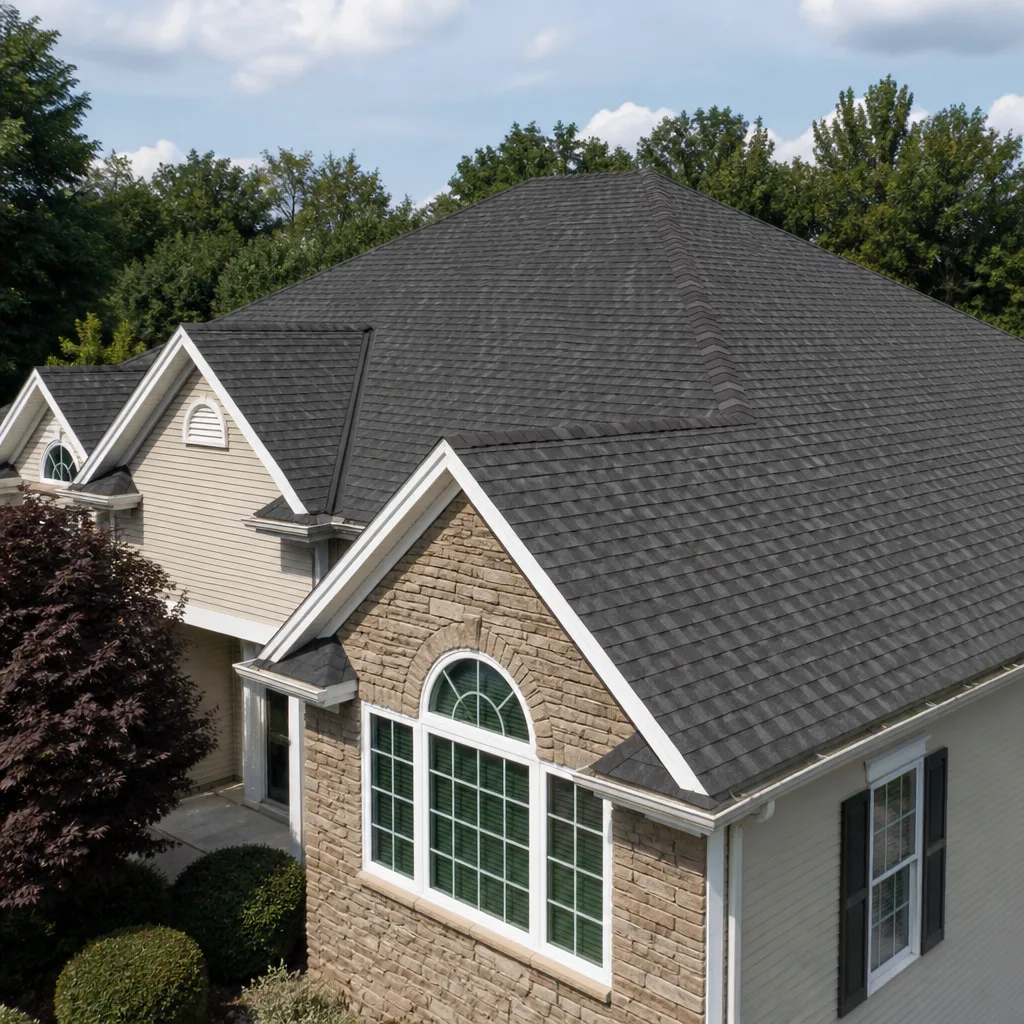
 Architectural shingles
 Tile roofing
 GAF
 Owens Corning
 Flat & low-slope
Free roof inspection with deck photos before we talk money - GAF and Owens Corning certified installation
Styles & brands we work with
- Architectural shingles
- Metal roofing
- Tile roofing
- GAF
- Owens Corning
- Flat & low-slope
See the difference
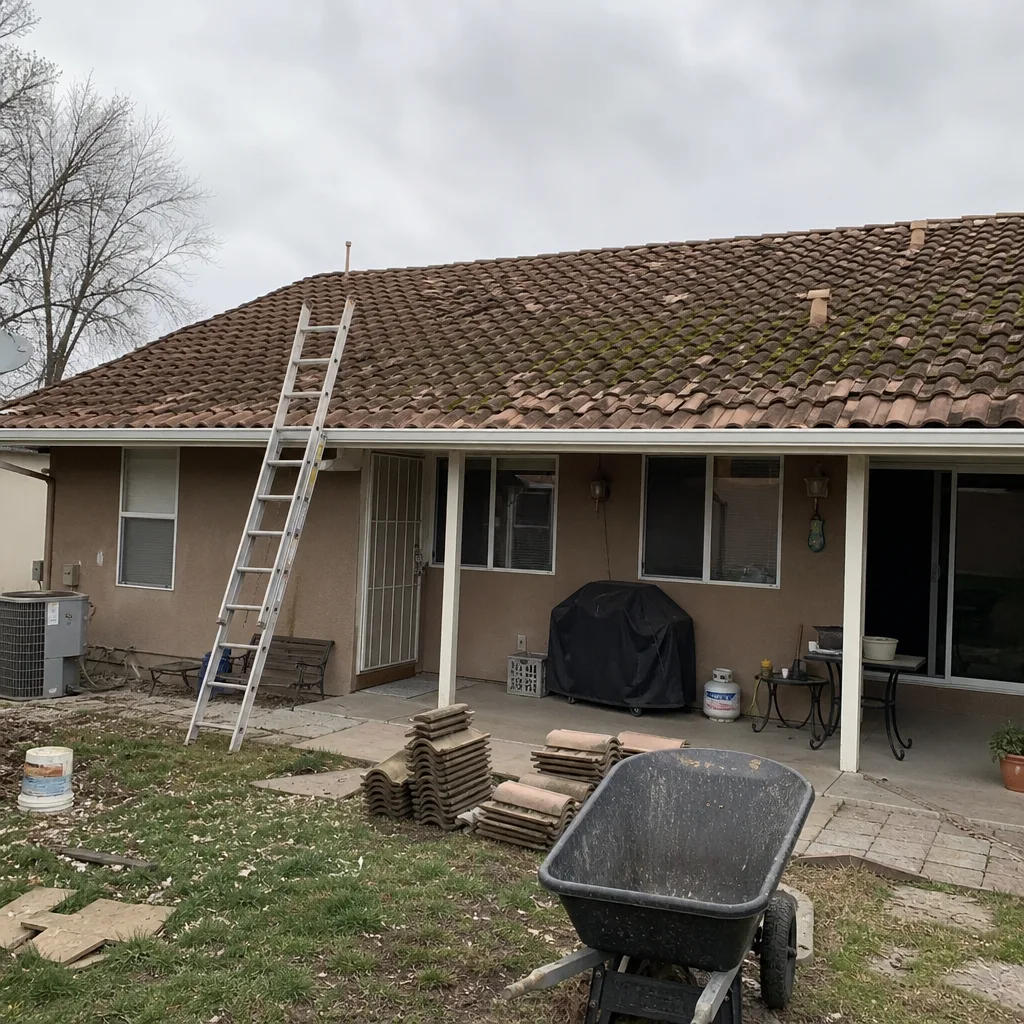 Before
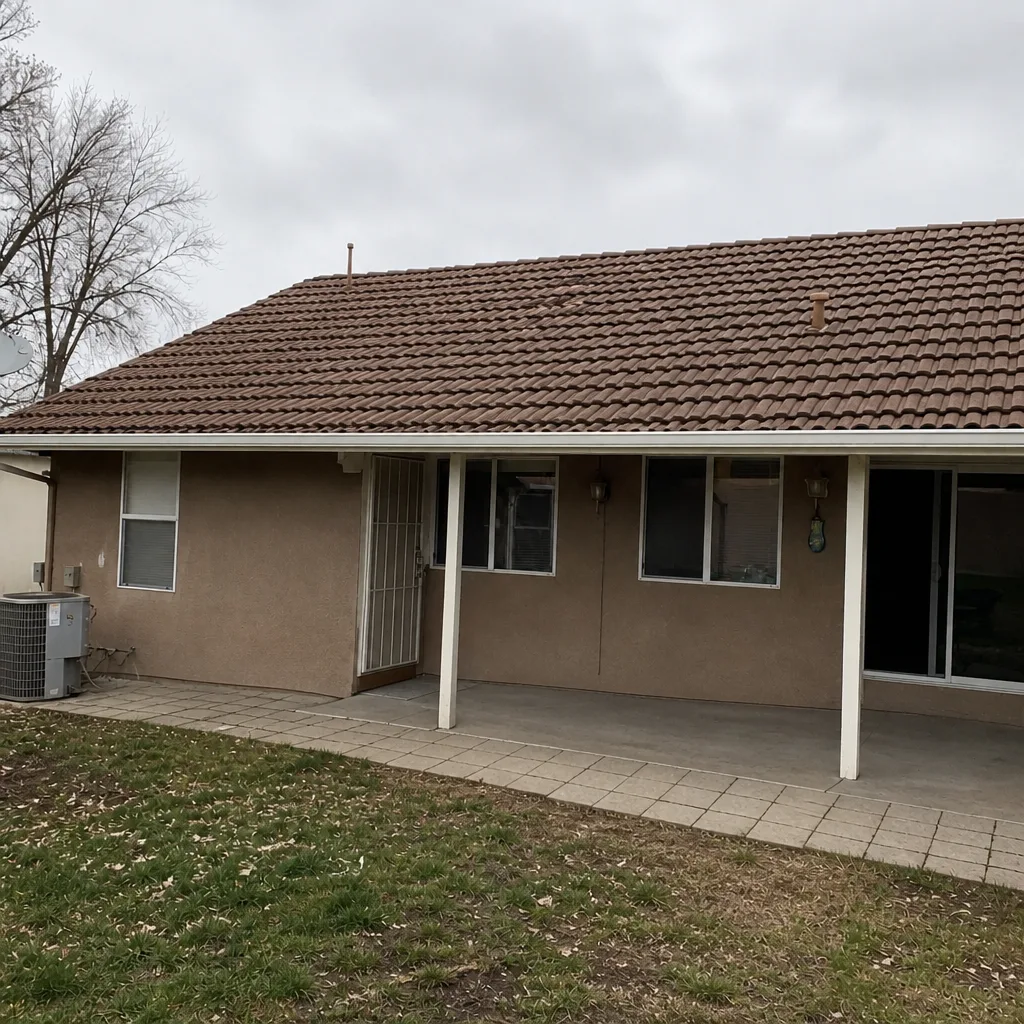 After
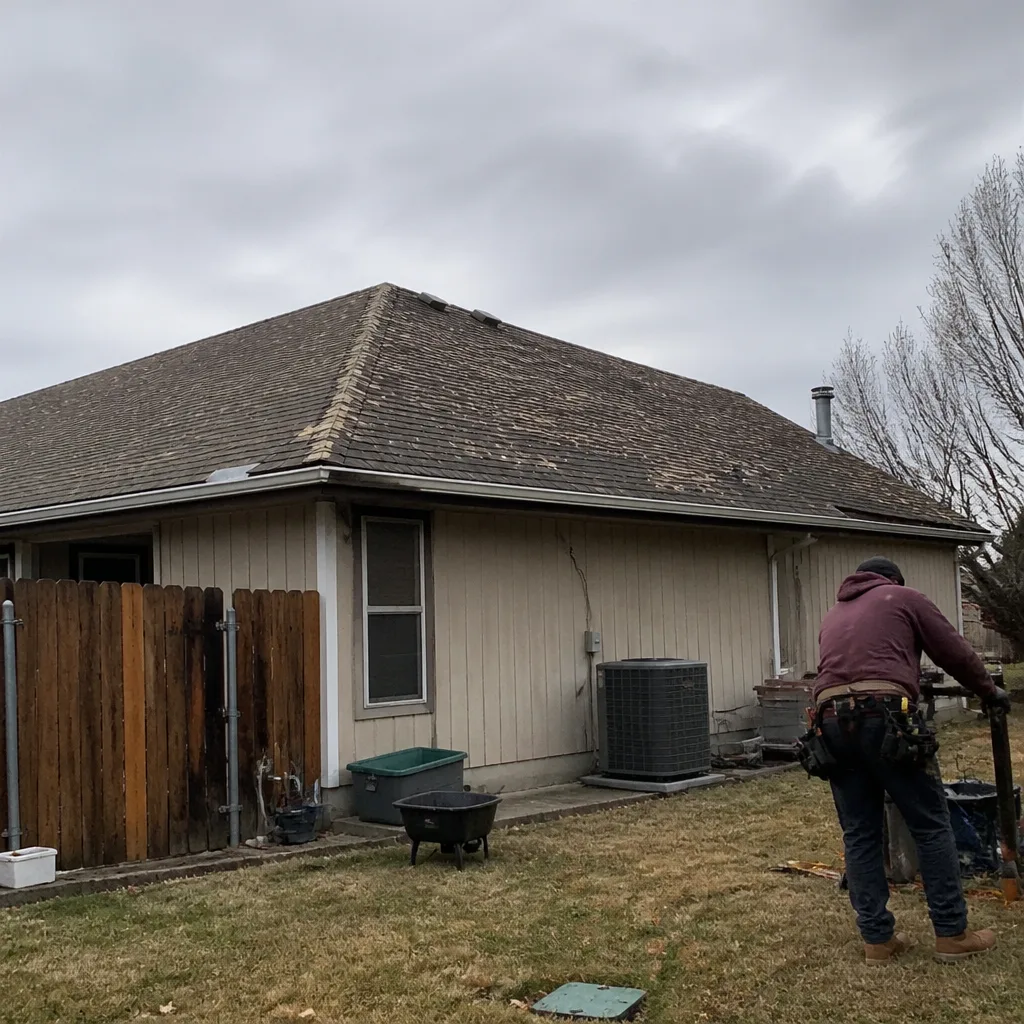 Before
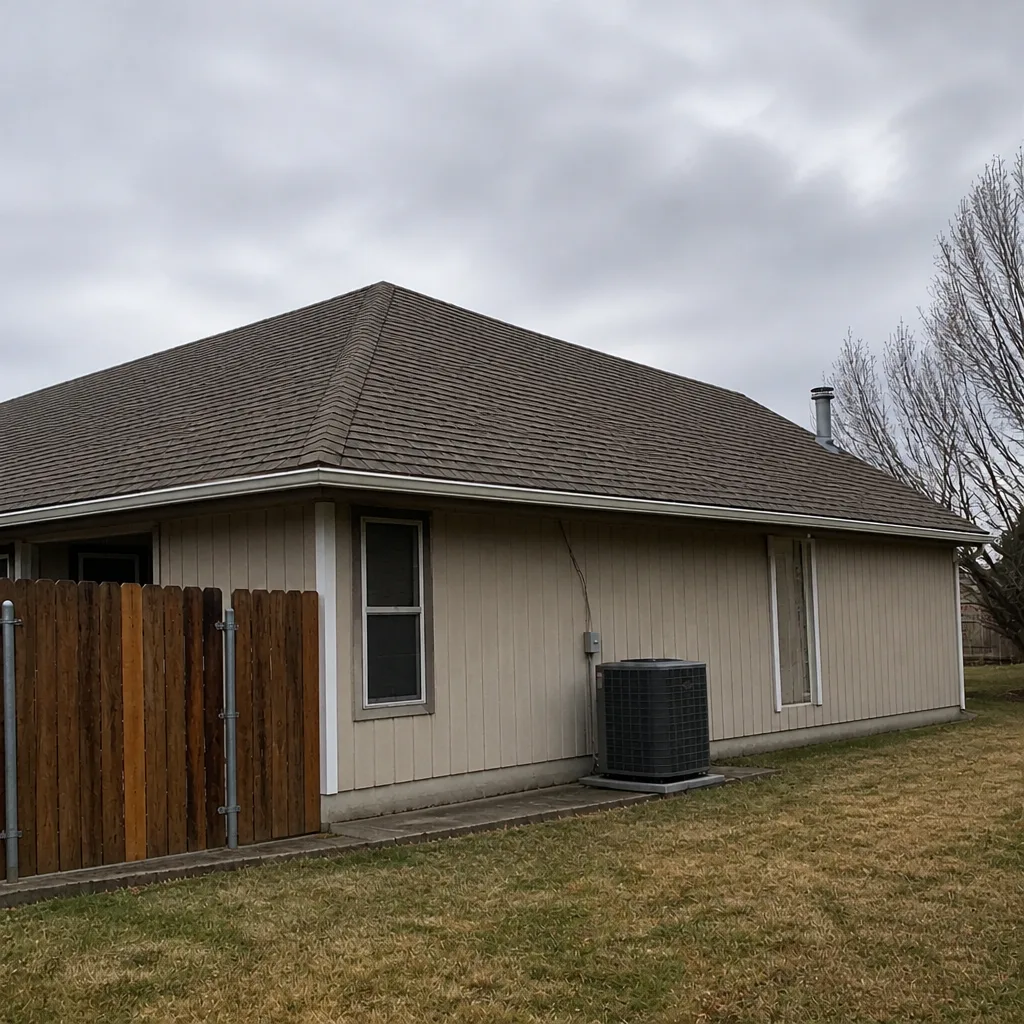 After
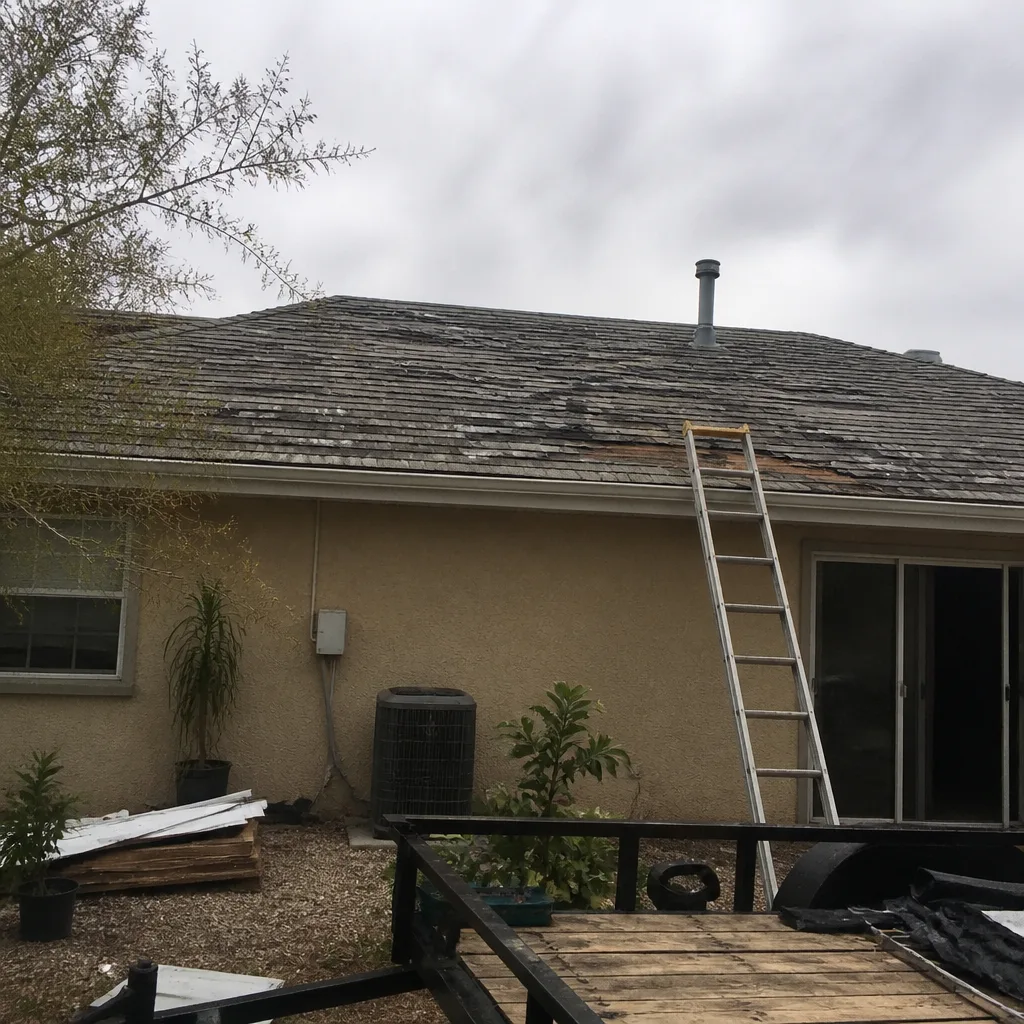 Before
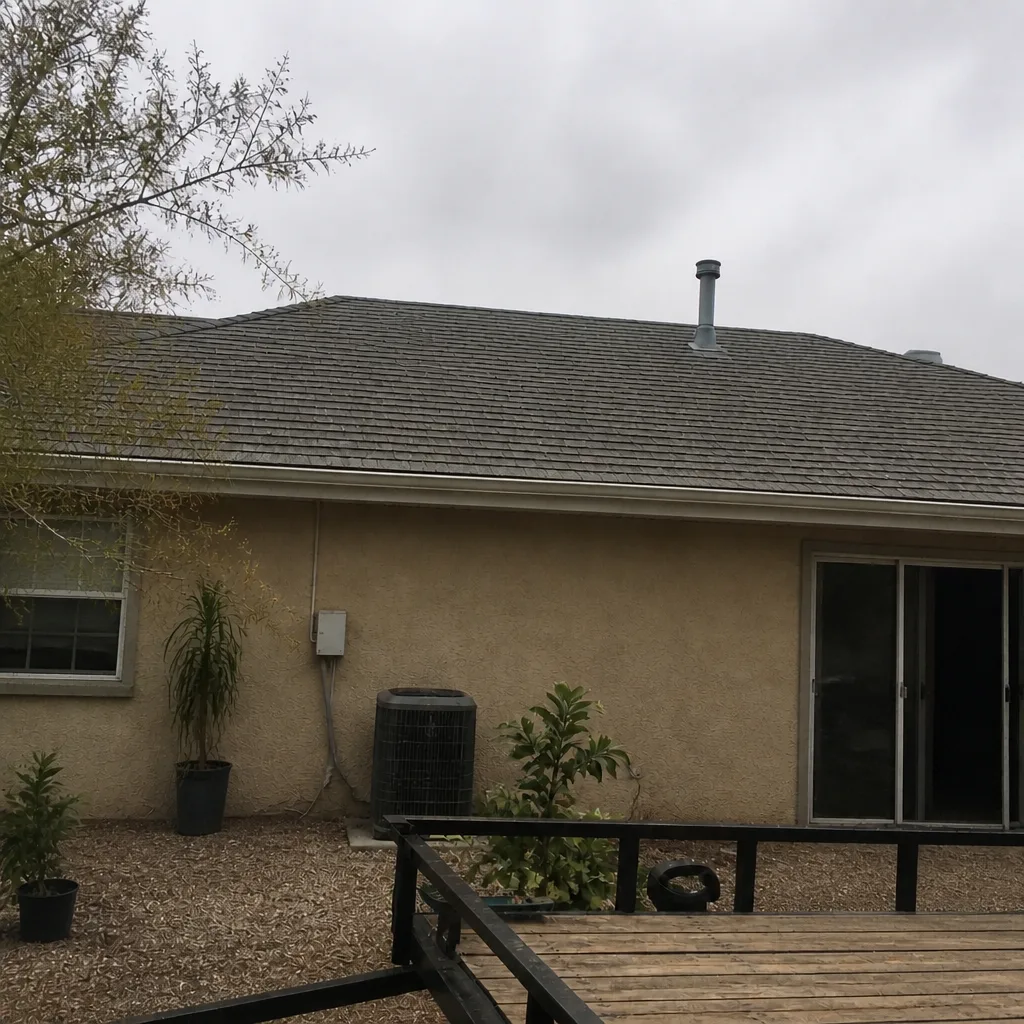 After
How to Find a Roof Leak in Whitney, NV (When the Stain Isn’t Where the Water Enters)
The short answer: on Whitney’s 1980s-2000s concrete-tile roofs, the ceiling stain almost never sits directly below the real entry point. Water gets in through a cracked tile, a failed pipe boot, or a corroded valley, hits the baked-brittle original felt underneath, and slides along the deck several feet before it drops through. So the leak you’re hunting usually starts 4-8 feet uphill and sideways from the wet drywall. If you’re running a garden hose over the square foot above the stain, you’re probably wetting the wrong spot. If the ceiling’s already wet and you can’t trace it, call (844) 797-9455 and a live person picks up, day or night.
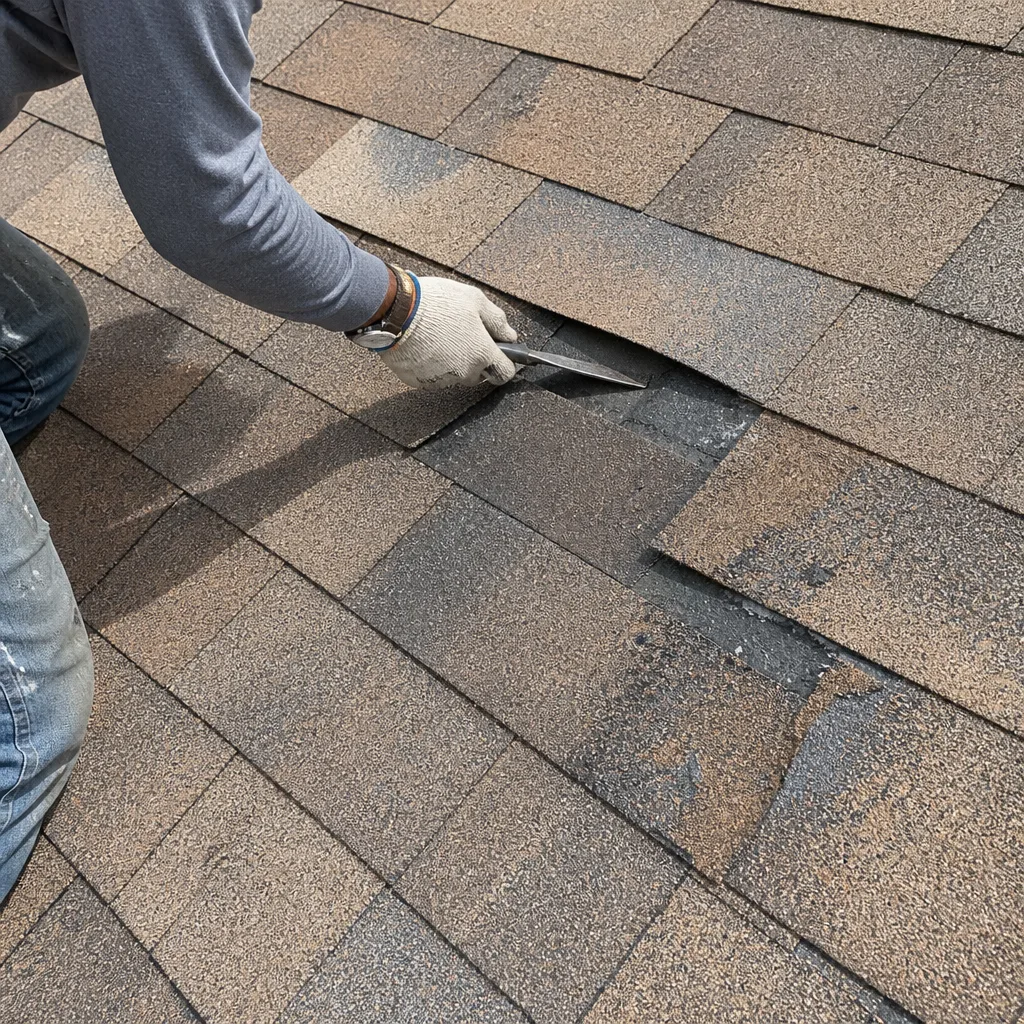
Why Whitney Leaks Hide: The Lateral Migration Problem
Most of Whitney was built in a single burst between 1980 and 2005 as Sun Belt tract housing, and that one fact changes how leaks behave here. Whole blocks went up at the same time with the same materials, so they’re failing on the same predictable 20-25-year clock. The concrete tile on top is still holding up fine. It’s the felt underlayment beneath it that’s the problem.
That original felt has spent three decades baking under desert UV and cycling through summers over 100°F and winter nights near freezing. It goes brittle and cracks in sheets, not in neat little holes. When a monsoon downpour finally finds a way past a cracked tile or a bad flashing joint, the water lands on that cracked felt and does exactly what water does on a sloped deck: it follows the low path. It runs horizontally under the tile, sometimes right past a dozen sound sections, until it finds a felt crack it can drop through into the attic and the ceiling below.
The chain of events is consistent:
- Entry – a cracked tile, a dried-out pipe boot, or failed valley metal lets water past the surface.
- Migration – water hits the brittle felt and travels 4-8 feet along the deck slope, staying under the tile the whole way.
- Drop – it finds a felt crack and falls through to the ceiling, which is why the stain and the source rarely line up.
That’s the mechanism that trips up a homeowner with a hose. You soak the spot above the stain, nothing happens, and you conclude the roof is fine. It isn’t. You just tested the wrong area.
The Right Way to Hose-Test a Whitney Tile Roof
Hose-testing still works on a Whitney roof, but only if you test it backwards from how most people do it. Work against the water’s travel direction, not around the stain.
- Start at the lowest possible entry point on the roof plane – well below the stain, near the eave. Not above the stain.
- Soak one section for a full 5 minutes. Short sprays miss slow migration. Give it time.
- Wait and watch. A second person stays inside at the ceiling with a flashlight. Water takes minutes to travel 4-8 feet under felt, so patience matters.
- Move up one section at a time and repeat the 5-minute soak. Keep climbing toward the ridge, one band at a time, until the ceiling shows moisture.
- Note the section that triggered it – that band and the one just above it are your suspects.
What you should never do is start at the stain location and work outward. That’s the instinct, and on an asphalt-shingle roof with intact felt it often works. On a Whitney tile roof with baked-out underlayment, it sends you chasing your own hose. The water’s coming from uphill. Test uphill. It’s also worth knowing this only works on a dry day with the attic reasonably clear to inspect – if the ceiling’s already soaked from last night’s monsoon, wait for a dry stretch before you test.
The Two Entry Points That Cause Most Whitney Tile Roof Leaks
When we’re tracing a leak on these roofs, the source lands in one of two places more often than anywhere else. Both are typical of a 15-to-25-year-old Whitney home.
1. Pipe boots (the rubber collar)
Every plumbing vent and HVAC penetration pokes through the roof inside a rubber boot, and in this heat that rubber is the first thing to go. It bakes, hardens, and cracks years before the tile shows any wear. On a 15-year-old roof, a split pipe boot is often the single first failure – and because the boot sits on a penetration, the water drops close to the plumbing chase and can surface on a ceiling far from the pipe itself. Check every boot on the roof, not just the one nearest the stain.
2. Valley transitions
Where two roof planes meet, water concentrates by design. A lot of Whitney’s 1980s-90s homes still have the original valley metal and flashing, and that metal corrodes and pulls away from the deck over time. A failed valley sends a wide sheet of water under the tile against the felt, which is the fastest route to real lateral migration. Valley leaks are hard to pinpoint from above because the entry is spread across the length of the joint, not a single crack.
Notice what’s not on that list: the tile itself, most of the time. A cracked tile is usually just the doorway. The felt underneath is what’s letting water travel. That’s why we rarely talk about a simple tile swap on these roofs – a proper Roof Repair has to address the underlayment the water is actually riding on. And if the felt is gone across a broad area, the honest fix is more than a patch, which is usually when we steer a homeowner toward a full Roof Repair in Whitney conversation instead of another band-aid.
When the Hose Test Finds Nothing and It Keeps Coming Back
Here’s the scenario that tells you it’s time to stop looking from above. You run the correct uphill hose test, you soak every section for 5 minutes, you watch the ceiling the whole time – and nothing. Then the next monsoon rolls through and the stain spreads anyway.
That result isn’t a dead end. It means the felt failure is too large and too diffuse to isolate by wetting the surface from above. When the underlayment has cracked across a broad area, water finds dozens of entry points and dozens of exit points, and no hose can map that. Patching one spot won’t hold because the next storm finds a different path through the same failing felt. This is the point where professional moisture mapping and an underlayment diagnosis make sense – someone needs to read the deck, not just the tile, and that means getting eyes on the felt in the affected zone or reading it from the attic side.
This is also where the whole-block timing of Whitney bites: if your neighbors’ roofs are the same age and failing the same way, your leak likely isn’t unusual. It’s the clock. Whole tracts here hit the underlayment end-of-life together, and that’s precisely when a full tear-off and re-felt beats chasing leaks one storm at a time.
How Shepherd & Sons Roofing Whitney Handles a Leak You Can’t Locate
If you’ve called with a leak you can’t trace, a live person answers the phone 24/7 – not a call center, not voicemail, a real human who takes the details. There’s no trip charge inside our own county, so having us look costs you nothing to start. Bill photographs the deck before quoting any repair; you see exactly what we see, then we talk money. Our technicians have up to 30 years of experience with tile, and we’ve set enough CertainTeed, Owens Corning, and IKO tile systems to know this housing stock cold. Every roofing job is backed by the written 90-Day Done Right Promise – if it’s not done right, one call brings us back. Shepherd & Sons Roofing Whitney has been locally owned and owner-operated since 1996, same address the whole time. That matters when the out-of-state storm chasers are gone by next season and you want someone whose name is still on the license.
FAQs
You find it by testing uphill from the stain, not above it. On Whitney’s tile roofs the water enters at a cracked tile, pipe boot, or valley, then travels 4-8 feet under brittle felt along the deck before dropping through – so the real source sits higher and to the side of the stain. Hose-test in 5-minute soaks starting at the lowest point on the plane and work upward one section at a time with a second person watching the ceiling. If that finds nothing and the leak returns after every monsoon, call (844) 797-9455 for a deck inspection – it’s free to look inside our county.
Most of the time it’s the felt under the tile, not the tile itself. The concrete tile on a 1980s-2000s Whitney home is usually still sound – it’s the original felt beneath it that’s baked brittle after decades of desert UV and 100°F-plus summers, and that’s what lets water migrate. That’s why a simple tile swap often fails to stop the leak. A trained roofer needs to read the underlayment, not just replace the visible tile. Call (844) 797-9455 and we’ll show you deck photos before quoting anything.
Monsoon leaks happen because a slow, small entry point only lets in enough water to show up when rainfall is heavy and concentrated. On a Whitney home, that’s typically a cracked pipe boot, corroded valley flashing, or cracked felt that a light rain never reaches in volume. A gentle sprinkle stays on the surface; a monsoon downpour pushes water past the failing point and under the tile. If you only see the stain grow after storms, that pattern itself points to a felt or flashing failure – call (844) 797-9455 for an assessment before the next storm cycle.
For a cracked pipe boot or a patched tile at grade, a careful homeowner can sometimes make a temporary repair – but tracing a migrating leak under brittle felt and restoring the underlayment is professional work. The deck is slippery, the felt is fragile, and a wrong diagnosis means the leak returns. On these roofs, the honest answer is that unless you know exactly where the water is entering, surface patching wastes money. Call (844) 797-9455 – a live person answers 24/7 and there’s no trip charge inside our county.
If you’d rather have it looked at, Shepherd & Sons Roofing Whitney offers a no-pressure assessment in Whitney – we’ll hose-test it the right way, photograph the deck, and give you a straight number. There’s no trip charge inside the county, and a free second opinion on any written estimate. Call (844) 797-9455.
Written by the team at Shepherd & Sons Roofing Whitney, serving Whitney, NV.