
Last updated November 18, 2026
 Architectural shingles
 Metal roofing
 Tile roofing
 GAF
 Owens Corning
 Flat & low-slope
Free roof inspection with deck photos before we talk money - GAF and Owens Corning certified installation
Roof Repair Maintenance Checklist for Whitney Homeowners
The number one repair call we get in Whitney every spring isn’t storm damage – it’s cracked pipe-boot flashing that dried out quietly over two summers while the homeowner had no idea. That little rubber collar around the plumbing vent splits, water sneaks under the shingles, and by the time a stain shows on the ceiling you’re looking at a repair that could have been a five-minute inspection. Most roof checklists floating around online were written for wet, rainy climates. This one is different. It’s built around what we actually find year after year on Whitney roofs, in this heat, on this high-desert sun. We’ll walk you through the inspection sequence that matters here, the twenty-minute gutter and soffit check, granule loss testing, seasonal timing, and what to photograph so you’re never arguing with an adjuster from memory.
Quick Answer
A proper roof maintenance checklist for a Whitney home starts with pipe boots and penetration flashings, not shingles, because desert UV destroys rubber and sealant faster than anything else on the roof. Walk the roof (or the perimeter) twice a year, with the most important check coming in fall after summer heat has done its damage. Photograph everything, keep a home file, and address small flashing and sealant failures before they turn into interior repairs.
Styles & brands we work with
- Architectural shingles
- Metal roofing
- Tile roofing
- GAF
- Owens Corning
- Flat & low-slope
Table of Contents
- The Whitney Inspection Sequence: Start With Penetrations
- Gutters vs. Soffit Ventilation: What Actually Matters Here
- The Scuff Test: Reading Granule Loss on Asphalt Shingles
- Why Fall Is the Right Season for a Whitney Walk-Around
- What to Photograph and Write Down for Your Home File
- Your Step-by-Step 20-Minute Walk-Around
- Common Mistakes to Avoid
The Whitney Inspection Sequence: Start With Penetrations
When we climb onto a roof in Whitney, we don’t start at the ridge and work down like the generic checklists tell you. We start at the penetrations: pipe boots, vent stacks, skylight curbs, and chimney flashing. Here’s why. Asphalt shingles in a hot, dry, high-UV place like Whitney age, but they age slowly compared to the rubber and sealant around penetrations. A standard neoprene pipe boot that would last fifteen years in a mild climate can dry-crack and split in nine or ten here. The sun beats on it all day, the temperature swings from a scorching afternoon down to a cold desert night, and that rubber flexes and hardens until it gives up.
So the sequence matters. Inspect in this order:
- Pipe boots and plumbing vent flashings. Look for cracked rubber, separated seams, or a collar that’s pulled loose from the pipe. These are the most common leak source we find in Whitney, full stop.
- Other penetration flashings. Vent stacks, exhaust caps, and any rooftop HVAC curbs.
- Chimney and skylight flashing. Check the sealant and the metal for lifting or rust.
- Valley and step flashing. Where roof planes meet, and where the roof meets a wall.
- Field shingles. Only now do you look at the broad field of shingles for damage, curl, or granule loss.
That order saves you from the trap of staring at perfectly good shingles while a cracked boot quietly leaks. If anything in this sequence looks wrong, it’s worth having it looked at properly. Our Roof Repair in Whitney page covers how we handle these fixes, and the stuff we find on penetrations is exactly the kind of small repair that’s cheaper to catch early.
Gutters vs. Soffit Ventilation: What Actually Matters Here
Homeowners moving to Whitney from wetter parts of the country assume gutters are the big deal. In most of the country, a clogged gutter is a real threat because it backs water up into the fascia and the roof edge. Here, gutters matter less than they do in a rainy climate, but they still matter, and the payoff is different. What matters more, and what almost nobody checks, is soffit and ridge ventilation. In a Whitney summer, an attic that can’t breathe gets brutally hot, and that heat cooks the underside of your roof deck and shortens the life of the shingles above it.
You can check both in about twenty minutes from the ground and a ladder:
- Gutters: Look for granules piled in the gutter (a sign of shingle wear up top), sagging sections, and downspouts that dump water right against the foundation. In Whitney, that water is precious to your plants but bad for your slab edge.
- Soffit vents: Make sure the vents under the eaves aren’t blocked by insulation, paint, or dirt. Hold your hand near one on a warm day; you should feel air moving.
- Ridge vent: Check that the ridge vent along the top of the roof is clear and not covered by debris or a heavy layer of granules.
- Attic check: On a hot day, step into the attic briefly. If it’s unbearable and there’s no airflow, your ventilation is failing the roof above it.
Good ventilation is one of those things you don’t think about until the shingles above it wear out early. If your attic runs hot and your shingles are aging fast, that’s worth a conversation. Whether you’re planning a repair or a full Roof Replacement & Installation in Whitney, the ventilation has to be right or the new roof inherits the same problem.
The Scuff Test: Reading Granule Loss on Asphalt Shingles
Here’s the question every homeowner eventually asks: how much life does this roof have left? You can get a rough answer yourself with what we call the scuff test. It won’t replace a professional inspection, but it tells you a lot. Asphalt shingles are coated in granules – the little mineral grit that protects the asphalt from UV. In Whitney, UV is relentless, and when those granules wear away, the asphalt underneath starts to bake and crack.
How to do the scuff test safely (from the ground or a stable ladder position, never leaning out over an edge):
- Find an accessible section of shingle, ideally on a south- or west-facing slope where the sun hits hardest.
- Lightly scuff your fingernail or a blunt object across the surface. You’re not trying to damage it, just disturb it.
- Look at what comes loose and what you see underneath. A few loose granules are normal. A bare, shiny, sandpapery patch is not.
- Repeat in a few spots and check your gutter for a heavy granule buildup, which confirms what your hand is telling you.
What the result means: shingles that still hold their grit and feel rough all over have life left. Shingles that shed granules readily and show bald dark patches are near the end of their useful life, and repairs on them tend to be short-lived because the shingle itself is failing. If your scuff test comes back bad across a large area of a Whitney roof, you’re likely looking at replacement rather than repair. Name the shingle – Tamko, GAF, CertainTeed, and the rest of the major brands – and there’s a good chance it’s one we can identify and match.
Why Fall Is the Right Season for a Whitney Walk-Around
The traditional advice is to inspect in spring. In Whitney, we’d flip that. The most valuable walk-around happens in the fall, after the summer heat has done its worst. All summer long, that UV and heat have been stressing every piece of rubber, sealant, and shingle on the roof. The damage happens in summer; you just discover it in fall. Checking in October or November catches the cracked pipe boot and the lifted flashing before the winter rains and the cool season’s moisture find their way in.
Your yearly rhythm should look like this:
- Spring: A quick look after any windy storms, plus a check that the previous season’s repairs held. Light touch.
- Late summer: The serious inspection. Heat damage is at its peak, boots are most likely to have dried and cracked, and sealant has been through months of expansion and contraction.
- Fall: The most important check of the year in Whitney. This is when you catch and fix the things summer broke, before moisture matters.
- After any hailstorm: A dedicated inspection, no matter the season. Hail is its own category.
If you’re only going to do one inspection a year on a Whitney roof, make it the late-summer or early-fall one. That’s the timing that pays off. Our Shepherd & Sons Roofing Whitney home page is the place to start if you’d rather have us do that check for you.
What to Photograph and Write Down for Your Home File
This is the part almost everyone skips, and it’s the part that saves you real money when a hailstorm rolls through Whitney. When you file an insurance claim, the adjuster asks questions. How old is the roof? What was its condition before the storm? If you’re answering from memory, you’re guessing, and a guess on a claim can cost you. If you have dated photos and notes in a home file, you’re answering from evidence.
Here’s what to capture and keep, every single inspection:
- Wide shots of each roof slope, so anyone can see the overall condition at a point in time.
- Close-ups of every penetration – pipe boots, vents, chimney, skylights. These are your most likely failure points.
- Gutter and downspout shots, plus the granule pile after you clean them.
- Any existing damage, even small – a lifted shingle, a rust spot, a slightly sagging gutter.
- A written note with the date, the weather, and what you found or fixed. One or two lines is enough.
Store it all in a folder, digital or paper, and add to it every time. When the next hailstorm hits Whitney and the adjuster asks about pre-existing conditions, that file is your best friend. For the full pre-storm picture on a metal roof, our Metal Roofing in Whitney page explains what’s worth documenting on those systems specifically.
Your Step-by-Step 20-Minute Walk-Around
If you want a repeatable routine you can do yourself from the ground and a ladder, here it is. This is a visual inspection, not a repair guide. Never walk a steep or wet roof, and never get up on the roof in wind or after dark.
- Start at the perimeter (5 min). Walk the whole house with binoculars if you have them. Look at the roof edge, the fascia, and the soffit. Note any sag, missing pieces, or wet spots.
- Check the penetrations with binoculars (5 min). From a safe ladder, look at every pipe boot, vent, and chimney flashing you can see. Cracked rubber or separated sealant is the red flag.
- Clean and check the gutters (5 min). Clear debris, look for granules and sagging, and confirm downspouts flow away from the foundation.
- Look at the shingle field (3 min). Check for curling edges, missing tabs, bald spots, and a scuff test on a south or west slope.
- Glance at the attic and ceilings inside (2 min). A quick look for stains, daylight, or dampness tells you what the roof is doing on the inside.
- Photograph and note (2 min). Update your home file with the date and anything you saw.
Twenty minutes, twice a year, plus after storms. That routine is the difference between a five-minute boot replacement and a ceiling repair.
Common Mistakes to Avoid
- Starting with the shingles. The prettiest field of shingles in Whitney can hide a cracked pipe boot leaking underneath. Always check penetrations first – that’s where the water actually gets in.
- Ignoring the attic. A stained ceiling or a damp smell in the attic is telling you something. Homeowners here often write off interior signs as humidity or a plumbing drip when the source is the roof above.
- Skipping the fall check. Copying the national “spring inspection” advice means you discover summer damage too late. In Whitney, the fall walk-around is the one that matters.
- Trusting a scuff test on a shaded slope. North-facing shingles age differently than south-facing ones under the same sun. Test the slopes that take the most heat, or you’ll get a rosy picture of a roof that’s failing elsewhere.
- Not keeping records. No photos, no notes, no file – then a hailstorm hits Whitney and you’re arguing with an adjuster from memory. Date everything.
- Touching the dangerous parts yourself. Pipe boots and flashings sit right near roof edges and need to be handled on a secure footing. A fall off a roof is a life-changing injury; that work belongs to someone trained and equipped for it.
- Hiring the first storm-chaser who knocks. After a hailstorm in Whitney, out-of-town crews appear with a clipboard and a lowball number. Ask for a local address and a license, or you may not find anyone to call back when it fails.
See the difference
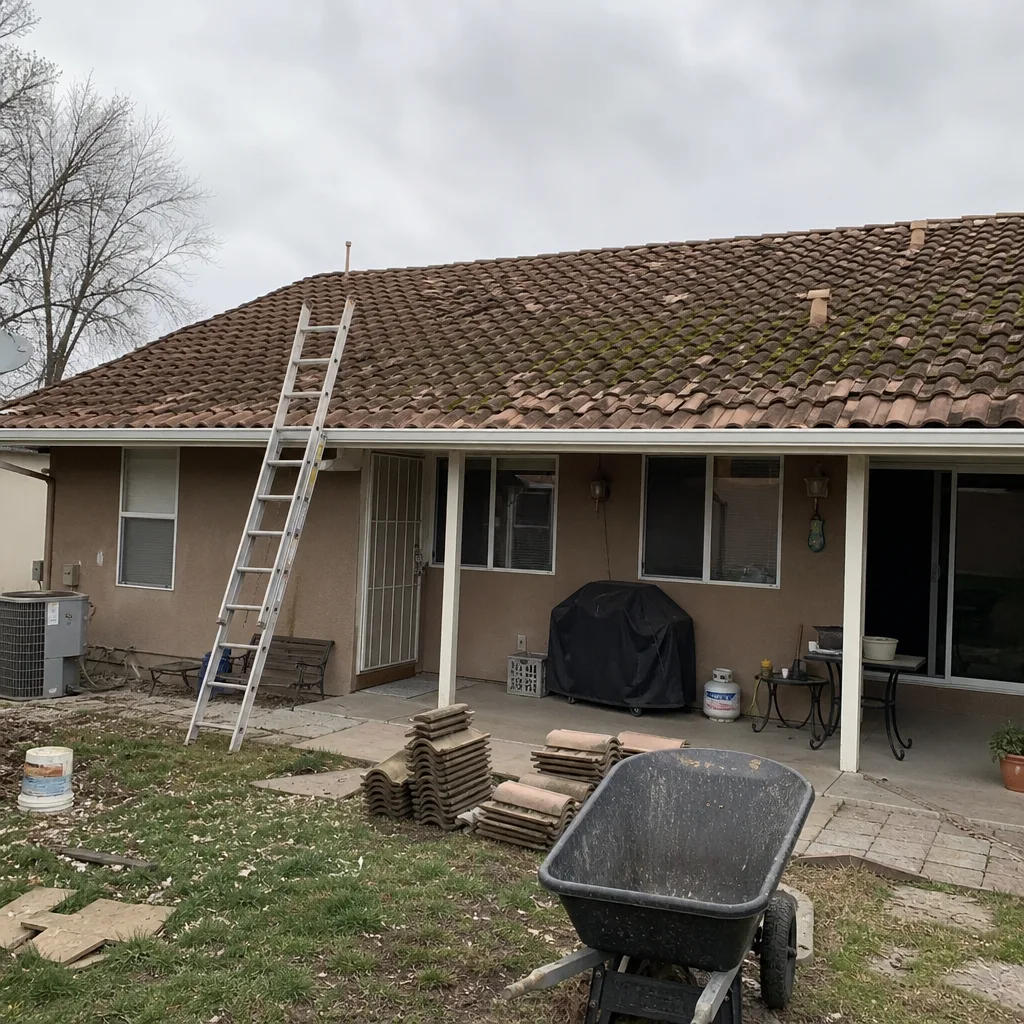 Before
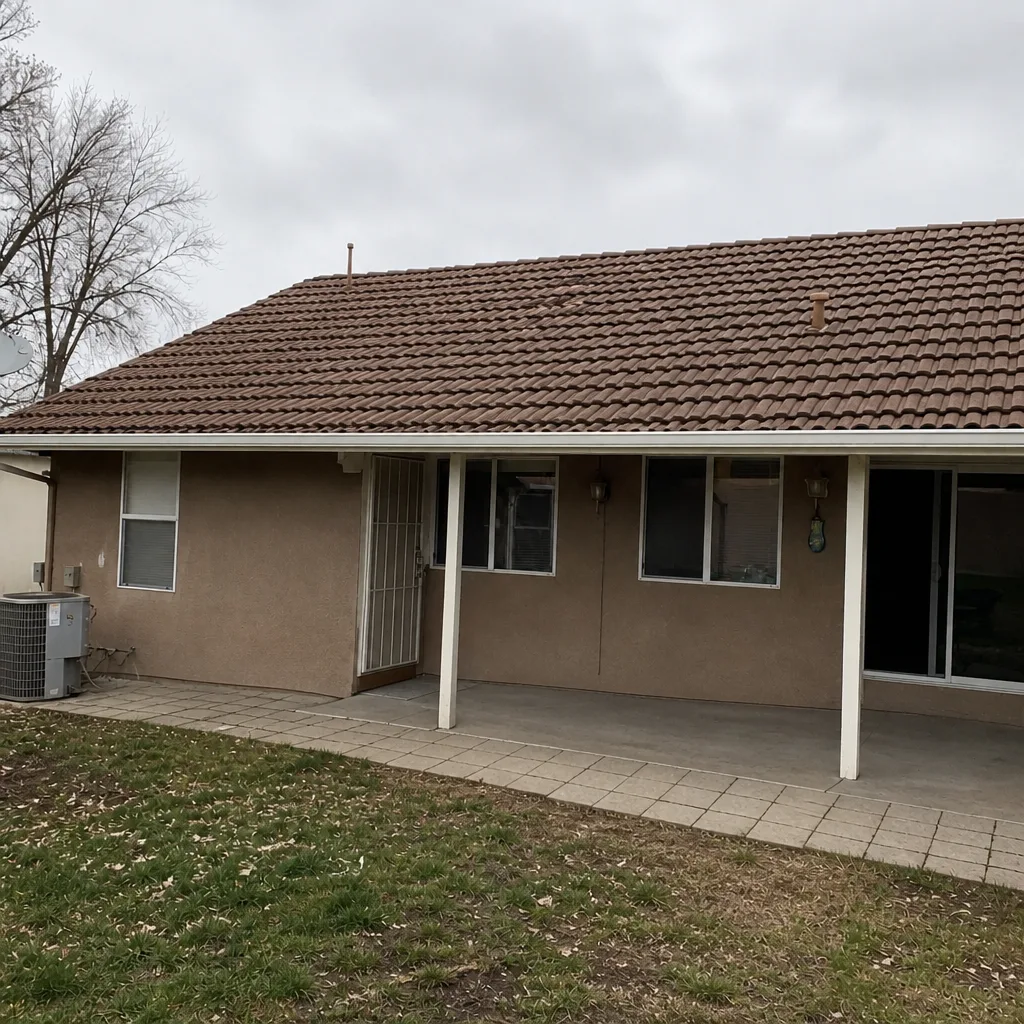 After
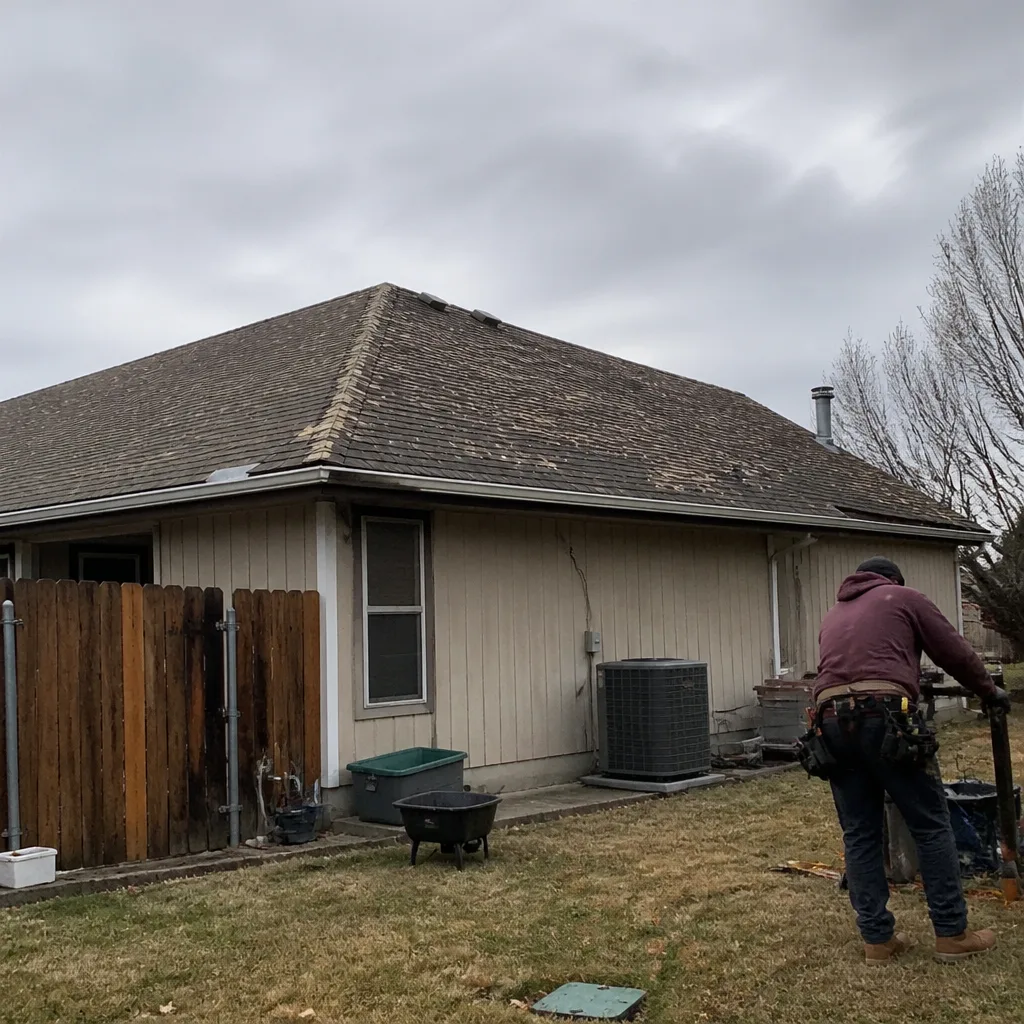 Before
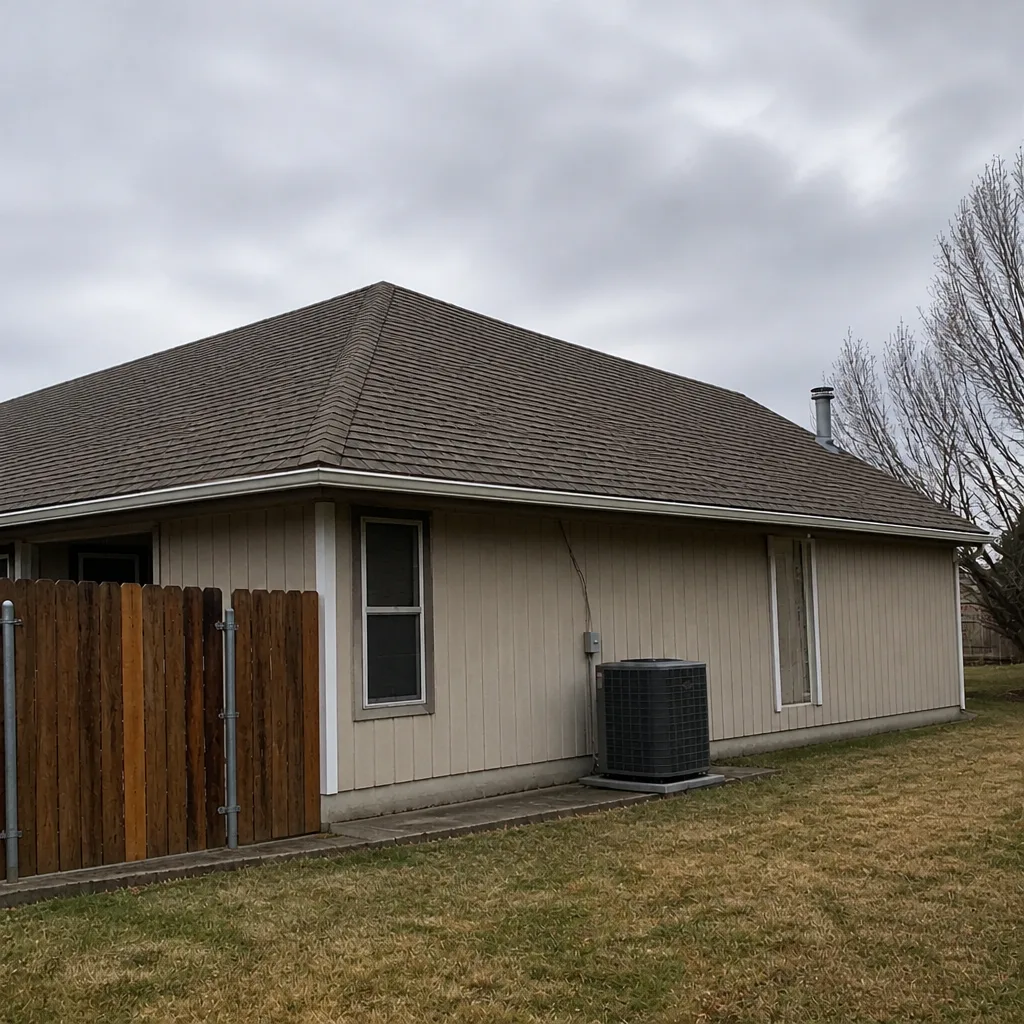 After
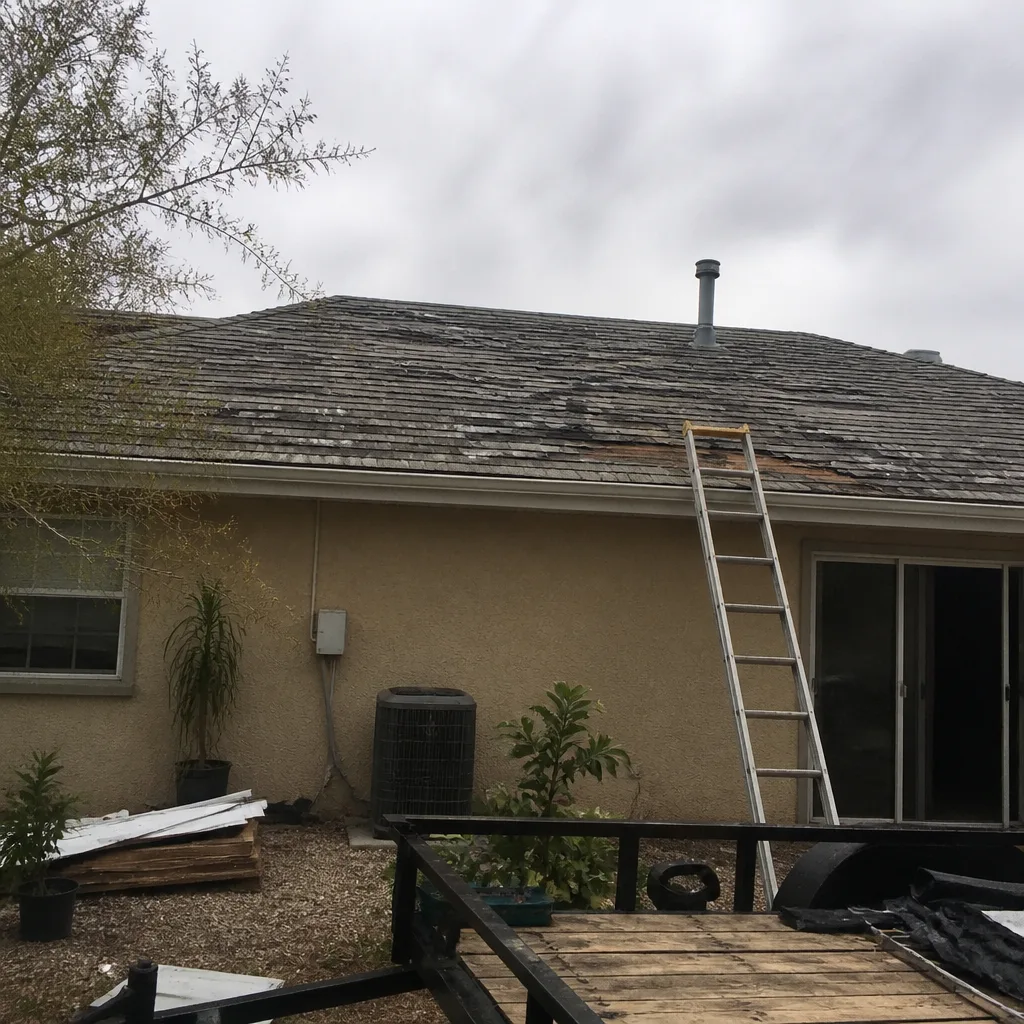 Before
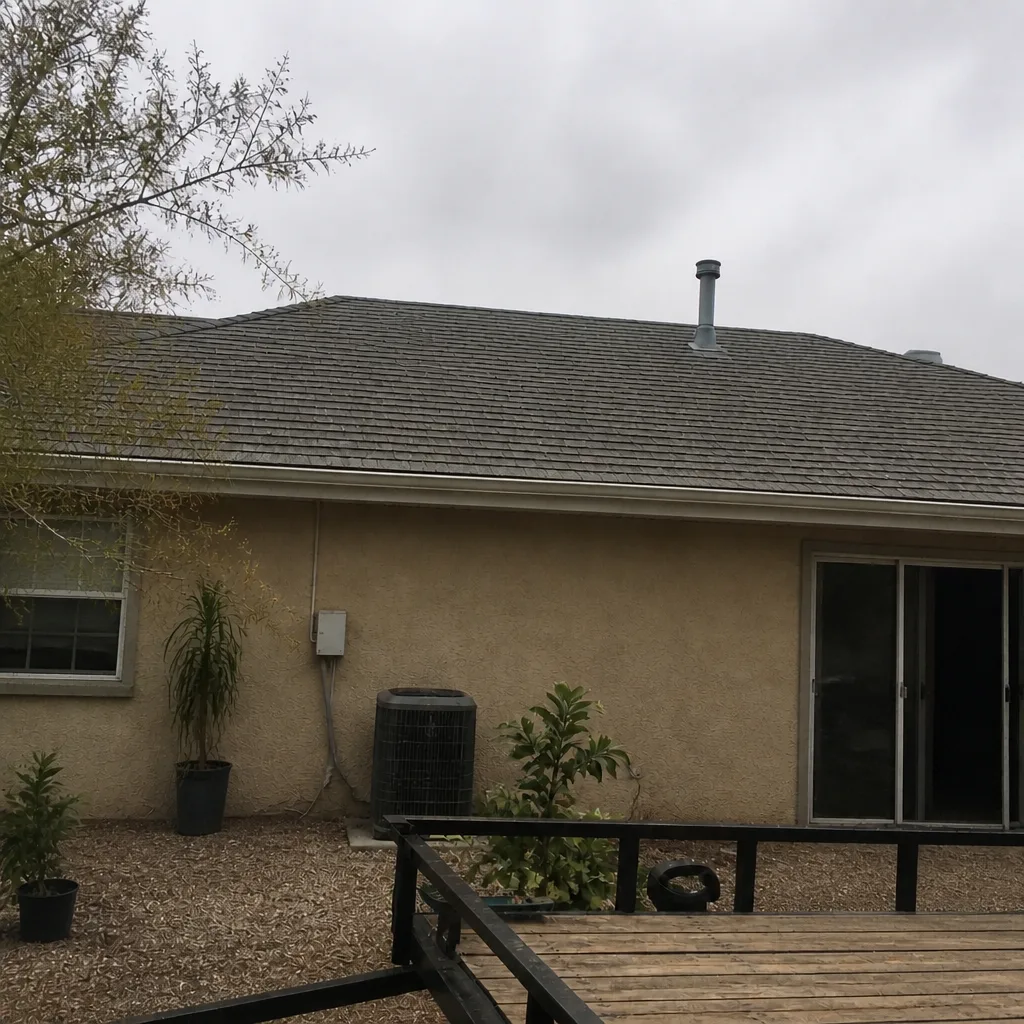 After
When to Call a Professional
Some of this checklist you can do safely yourself: the perimeter walk, the gutter cleaning, the photos, the interior look. But a few situations call for a trained roofer, no question. Any cracked or failed penetration flashing near a roof edge is a job for someone with the footing and the equipment to do it safely. Sagging, soft spots underfoot, or a large area of bald shingles mean it’s time to stop looking and start planning. And any interior stain, damp attic, or sign of a leak needs a professional eye before it spreads. Roof work near edges and heights is genuinely dangerous – the steep-slope and near-edge repairs in this checklist are exactly the kind that cause serious falls. Shepherd & Sons Roofing Whitney offers free estimates in Whitney – call (844) 797-9455. A live person answers the phone around the clock, and there’s no trip charge inside our own county.
Frequently Asked Questions
Twice a year, plus after any hailstorm. In Whitney, the most important check is the late-summer or fall walk-around, because the summer heat and UV are what damage the roof’s most vulnerable components. Call (844) 797-9455 for a professional inspection if you’d rather not climb a ladder.
Because the high-desert sun and heat break down the rubber and sealant around penetrations faster than in milder climates. The constant day-to-night temperature swings also flex the rubber until it cracks. It’s the number one repair source we find on Whitney roofs, and it’s why we check pipe boots first.
It tells you roughly how much life your asphalt shingles have left. Shingles that hold their grit have life remaining; shingles that shed granules easily and show bald patches are near the end. If the whole roof tests bad, you’re looking at replacement. Call (844) 797-9455 for an honest read before you decide.
Yes, if you want an easier time with insurance after a hailstorm. Dated photos of each slope and every penetration tell the adjuster exactly what condition the roof was in before the storm. Without them, you’re relying on memory. Call us for a professional inspection that documents your roof properly.
Yes, from the ground and a stable ladder, you can clear gutters and check that soffit vents are open. What you shouldn’t do is reach out over an edge or climb onto a slope to inspect it. That’s the part to hand to a trained roofer – call (844) 797-9455.
We’ll fix the single failed boot. Small penetrations are the kind of repair that’s much cheaper caught early, and a cracked boot is a repair, not a reason to replace a sound roof. Call (844) 797-9455 and we’ll take a look, show you what we find, and give you a straight number.
The Bottom Line
A good Whitney roof maintenance checklist isn’t the generic one. It starts with pipe boots and penetration flashings because that’s where the desert sun does its real damage. It treats soffit ventilation as seriously as gutters. It uses the scuff test to read remaining shingle life honestly. It leans on the fall walk-around, not the spring one, because summer is what breaks a Whitney roof. And it keeps dated photos and notes in a home file so a future hail claim isn’t a guessing game. Do the safe parts yourself, hand the dangerous parts to a pro, and catch the small failures before they spread. When you want eyes on it, call (844) 797-9455 for a free estimate.
Written by the team at Shepherd & Sons Roofing Whitney.