
Last updated November 18, 2026
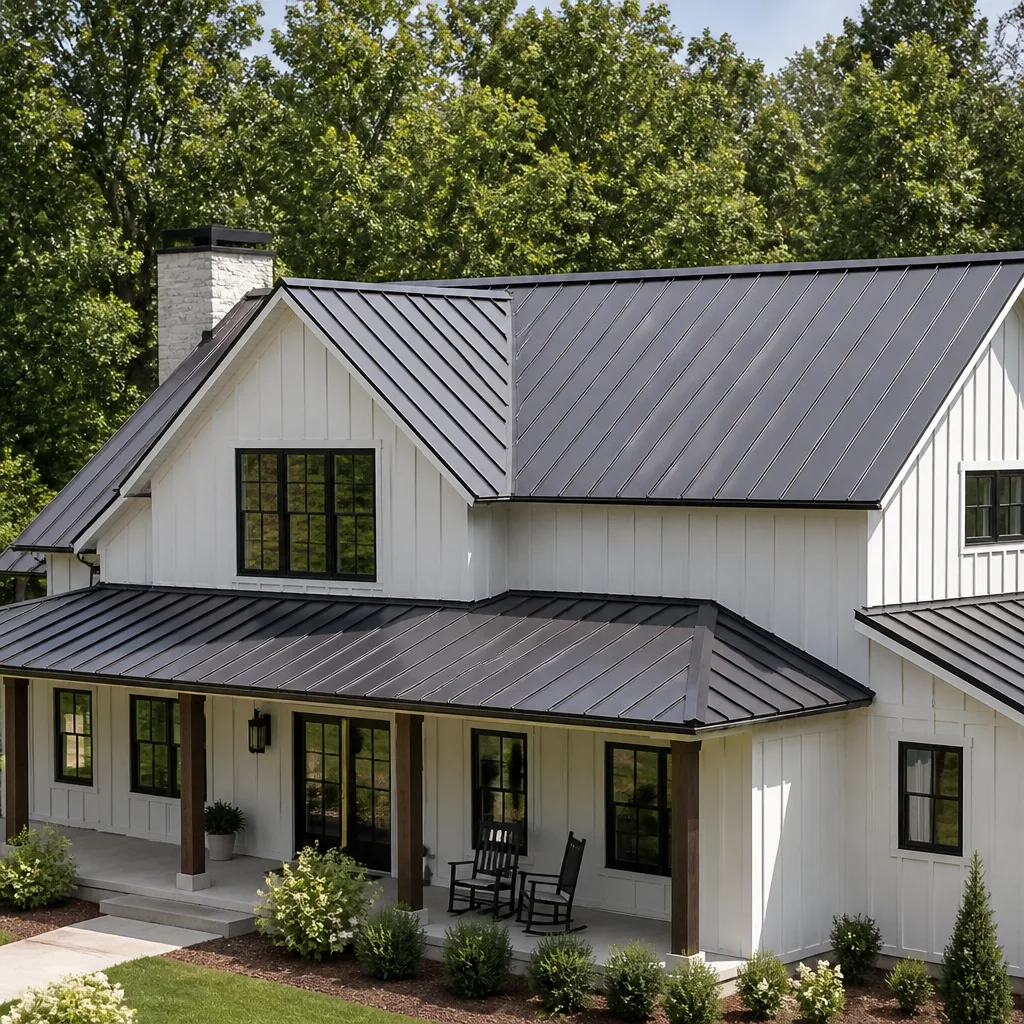 Metal roofing
 Architectural shingles
 Tile roofing
 GAF
 Owens Corning
 Flat & low-slope
Free roof inspection with deck photos before we talk money - GAF and Owens Corning certified installation
Metal Roofing Troubleshooting: Common Problems and How to Fix Them
If your metal roof is leaking, the leak is almost certainly not where the water shows up inside – and the homeowner who chases the stain instead of the source will pay twice. Water travels along the underside of a panel, down a purlin, and drips off the first thing that catches it, so the wet spot on your ceiling can sit ten feet from the actual hole. In our experience around Whitney, nine out of ten metal roof problems aren’t metal problems at all. They’re fastener, flashing, or underlayment failures that happen to be under metal. This guide teaches you how to trace a leak backward, read rust correctly, and tell the difference between a $40 tube of sealant and a replacement job.
Quick Answer
Most metal roof leaks trace back to a failed fastener, a dried-out pipe boot, or flashing that was never properly lapped – not the panels themselves. Start at the ceiling stain, go up into the attic, and work backward to the highest point water could enter. Rust streaks that wipe away are cosmetic; rust you can dig a fingernail into is structural. And oil-canning is usually just how the panel looks, not a sign your roof is failing. If you can’t find the entry point after tracing it, a free estimate from Shepherd & Sons Roofing Whitney will find it for you.
Styles & brands we work with
- Architectural shingles
- Metal roofing
- Tile roofing
- GAF
- Owens Corning
- Flat & low-slope
Table of Contents
- How to Trace a Leak Backward From the Ceiling Stain
- The Five Most Common Exposed-Fastener Failures
- Oil-Canning: Cosmetic or Structural?
- Rust Streaks vs. Rust Penetration: The Visual Test
- When Re-Sealing Is the Right Answer
- The Metal Roof Problems You Can Fix Yourself
- Common Mistakes to Avoid
- When to Call a Professional
How to Trace a Leak Backward From the Ceiling Stain
Every metal roof leak starts with a ceiling stain. The stain is not the problem; it’s the finish line. Your job is to find where the race started. Follow these steps, and if you’re not comfortable in the attic, wait for a dry day and start at the roof side instead.
- Photograph the stain from above and below. Measure from the nearest wall and note the distance. This gives you a rough line to search along the roof.
- Go into the attic on a dry day. With the light off, look for daylight coming through. A pinhole of light at a ridge, valley, or pipe is your leak, nine times out of ten.
- Examine the sheathing, not the metal. Water leaves a dark trail on wood and a white chalky ring on plywood. Follow the trail uphill.
- Check directly above where the trail starts. Flashing at the ridge cap, a plumbing vent, a chimney penetration, or a sidewall is the most common suspect. Sealant and boots fail long before the panels do.
- If the trail runs uphill and disappears, check the seam. Water can wick under an overlapping panel seam and travel against gravity for a couple of feet on a low-slope section.
In Whitney, we see this pattern most often after a wet winter or a wind event that tears a pipe boot loose. The stain lands in the same spot every time, which is why homeowners assume the ceiling is the problem. It isn’t. It’s the flashing nine feet uphill.
The Five Most Common Exposed-Fastener Failures
Exposed-fastener metal roofs are the workhorses of rural Nevada. They’re inexpensive, easy to install, and easy to repair – but the fasteners take all the wear. Here are the five failure modes we see, ranked by how often they show up on a callback in Whitney, and which are DIY-fixable.
- Backed-out fasteners. A screw that worked loose from wood movement or wind. If the hole is smaller than the screw, you can often seal and re-drive it. If the hole has widened past the neoprene washer, the panel needs a new fastener with a slightly larger diameter.
- Dried neoprene washers. The rubber gasket under the screw head turns brittle and cracks after a decade of sun. This is the single most common leak source on a 10-15 year old roof. You can replace individual washers on a dry day; a roofer can do a full panel sweep in an afternoon.
- Over-driven screws. A fastener sunk too deep dents the panel and splits the washer. This is a no-go for DIY because you’re working over a hole that’s already compromised – call us.
- Missed or skipped purlins. The screw caught air, not wood. That fastener does nothing. If you find a row of these, the original crew made a mistake; the fix is to drive a new fastener into a solid purlin, not to add sealant over the hole.
- Corroded fasteners on coastal-grade panels. Whitney isn’t coastal, but older panels sometimes used screws not rated for the desert UV and heat cycle. A screw with visible rust blooming at the washer should be replaced, not resealed.
Gutters and accessories often fail at the same time as the fasteners. If your metal roof has an attached gutter run, check it as part of the same inspection. See our Shepherd & Sons Roofing Whitney home for the full range of what we handle.
Oil-Canning: Cosmetic or Structural?
Oil-canning is the wavy, rippling appearance you sometimes see on flat or low-slope metal panels where the metal flexes in and out, often with a soft popping sound when it moves. It’s named for the way the side of a metal oil can buckles. Homeowners in Whitney often notice it on a summer afternoon when the sun heats the panel and the metal expands. Three tests separate cosmetic from structural:
- Press test. Press on the wavy area with a flat hand. If the panel flexes and returns without a sharp kink or crack, it’s cosmetic.
- Fastener test. Look at the nearest two screws. If they’re tight and the metal around them is smooth, the panel is sound. If the metal is torn or the screw is standing proud, the panel is at risk of pulling free in a wind event.
- Water test. If the canning is near a seam or valley and you see water pooling or dripping after rain, it’s a structural problem, not a cosmetic one.
Nine times out of ten, oil-canning on a residential roof is a cosmetic issue caused by the panel resting on a purlin that isn’t perfectly flat, or by thermal expansion in our 100+ degree desert summers. It’s not a leak, and it doesn’t require replacement. The exception is when the canning concentrates at a seam, at which point water can get under the panel. If you’re not sure which one you have, our Metal Roofing in Whitney page walks through what’s normal and what needs attention.
Rust Streaks vs. Rust Penetration: The Visual Test
Rust is the question every metal roof owner asks first. The good news is that the vast majority of rust on a residential metal roof is surface rust, and the fix is cosmetic. The bad news is that once rust penetrates the panel, no amount of paint will bring it back. Here’s the visual test we use on every inspection in Whitney:
- Wipe test. Rub a white cloth or paper towel across the rusty area. If orange-brown comes off in a smear and the metal underneath is smooth, it’s surface rust. Fixable with cleaning and a re-coat.
- Fingernail test. Dig a fingernail into the rust spot. If the nail catches or the rust flakes away in sheets, the metal is thinning. That’s a structural warning.
- Pinhole test. Hold a flashlight on the underside of the panel at night and look for light through the rust spot. Even a single pinhole means water is already getting through – the panel needs patching or replacement.
- Seam test. Check the rusted area next to a lap seam or a ridge cap. Rust that starts at a seam is far more serious than rust in the flat field, because it means water is already working under the panel edge.
Rust streaks at the cut edge of a panel are common and usually cosmetic – the exposed edge of the steel will flash-rust within a season of installation, and it stops there. Rust bubbling up in the middle of a flat field, away from any edge, is the one that warrants a roofer’s eye. When the panel rusts through, the fix is a cut-and-patch repair or a panel replacement, not a coat of paint.
When Re-Sealing Is the Right Answer
Re-sealing is the most overused and most abused fix in the metal roofing trade. Done right, it buys you three to five years of reliability on an older roof. Done wrong, it hides a failing fastener for eighteen months and then the leak comes back worse. Here’s how we draw the line in Whitney:
- Re-seal is right when the metal is sound and the only problem is the sealant. Dried caulk at a pipe boot, a loose panel edge, or a failing ridge-cap closure is a straightforward reseal. We use a urethane sealant, not a silicone or a hardware-store caulk, because only urethane survives our UV and heat cycle.
- Re-seal is wrong when the sealant is covering a rusted hole, a pulled fastener, or a torn panel. Caulk over a hole is a bandage, not a repair. It’s the roofing version of putting a bucket under the leak and calling it solved.
- Re-seal is wrong when the whole roof is at the end of its life. A 25-year-old metal roof with rust at multiple seams and a dozen failed boots isn’t a reseal candidate. That’s a replacement conversation, and we’ll tell you straight. The written estimate will say replacement, and you can get a free second opinion on it from us if you’d like a second set of eyes.
For the broader repair scope on a metal or shingle roof, see our Roof Repair in Whitney page. If the panel itself is failing, the decision may be full replacement – that’s the conversation our Roof Replacement & Installation in Whitney page covers.
The Metal Roof Problems You Can Fix Yourself
We’re a roofing company, so we have a bias. But we also know that some metal roof problems are genuinely a homeowner fix if you’re comfortable on a ladder. Here’s the short list, along with the ones we’d rather you not touch.
Homeowner-fixable (dry day, ladder secured, a helper spotter):
- Replacing a single dried pipe boot with a new boot of the same size.
- Cleaning out a clogged ridge vent or panel end.
- Tightening a visibly backed-out screw in a non-critical area.
- Re-caulking a dried seam at a sidewall or panel end with proper urethane sealant.
Not homeowner-fixable – these are the ones where we see the DIY damage on callbacks:
- Any fastener hole wider than the original screw.
- Any leak where you can’t find the entry point.
- Any rust you can dig a fingernail into.
- Any work at a ridge, valley, or chimney penetration – those are the failure points and getting them wrong costs more to fix than it would have cost to hire.
The rules on roof work have a real safety component. We won’t give step-by-step instructions for anything involving height work, roof access, or a compromised panel, because the fall risk is genuine. If a fix requires you to walk a metal panel field more than a couple of steps, call a trained professional.
Common Mistakes to Avoid
- Chasing the ceiling stain. Water runs. The stain is where it drips, not where it enters. Every hour spent slicing drywall in Whitney is an hour not spent finding the flashing failure nine feet uphill.
- Sealing over rust. Caulk over a rusted hole traps moisture and makes the rust spread. It looks fixed for one season, then you’re paying for a panel replacement.
- Using silicone or hardware-store caulk on a metal roof. It won’t survive two summers in Whitney’s heat. Silicone peels, and the leak comes back. Urethane, always.
- Walking the panels. Metal panels dent and the seams can pop. If you have to walk the roof, walk on the flat, not across the ribs, and only in soft-soled shoes. Better yet, don’t – call us.
- Assuming oil-canning means the roof is failing. Most oil-canning on a Whitney-area metal roof is cosmetic. Don’t replace a sound roof because the panel looks wavy.
- Ignoring the attic. A ten-minute attic look with a flashlight finds more leaks than an hour on the roof. We do the attic first on every inspection.
- Hiring a storm chaser after a hail event. Whitney sees plenty of out-of-state crews after a storm. Ask for the address and the license number. If they can’t produce both, send them down the road. We’ve had the same address in Whitney for over 29 years, and the license is on the truck.
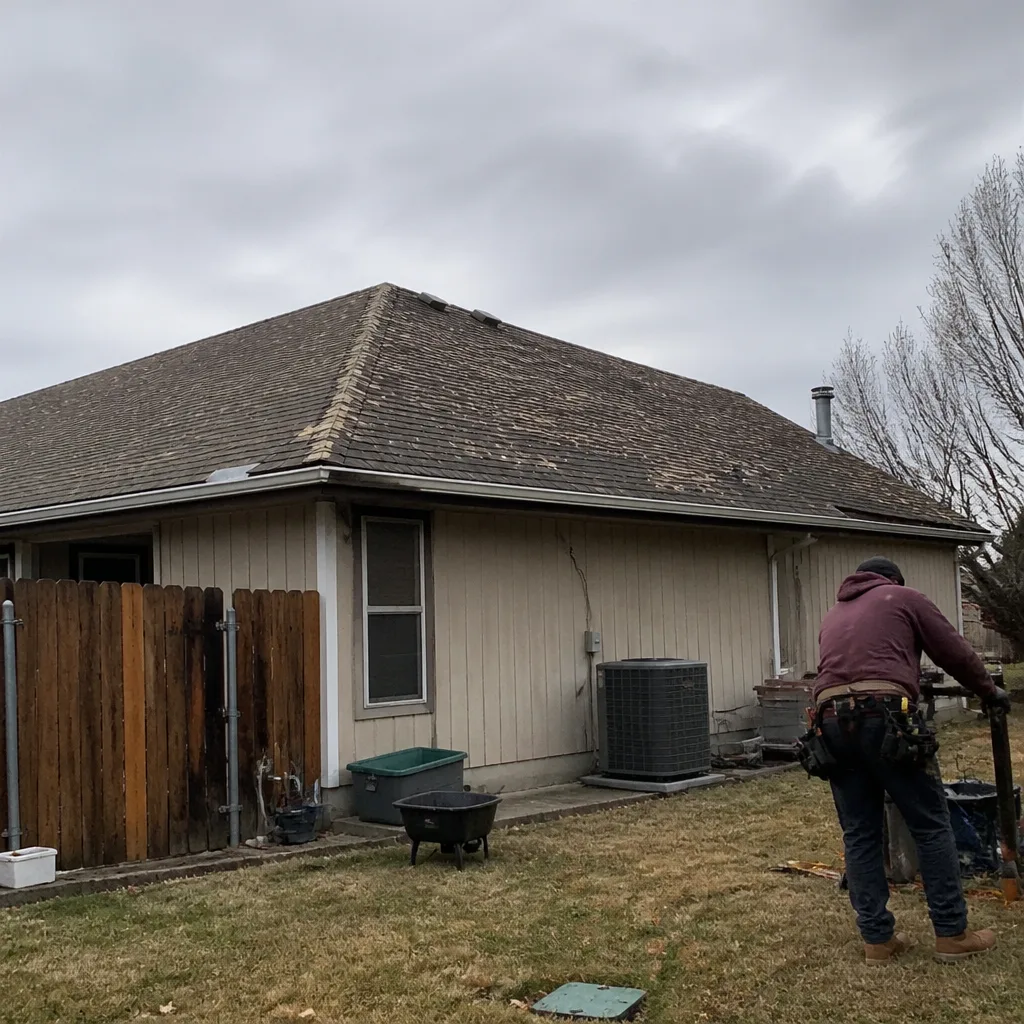
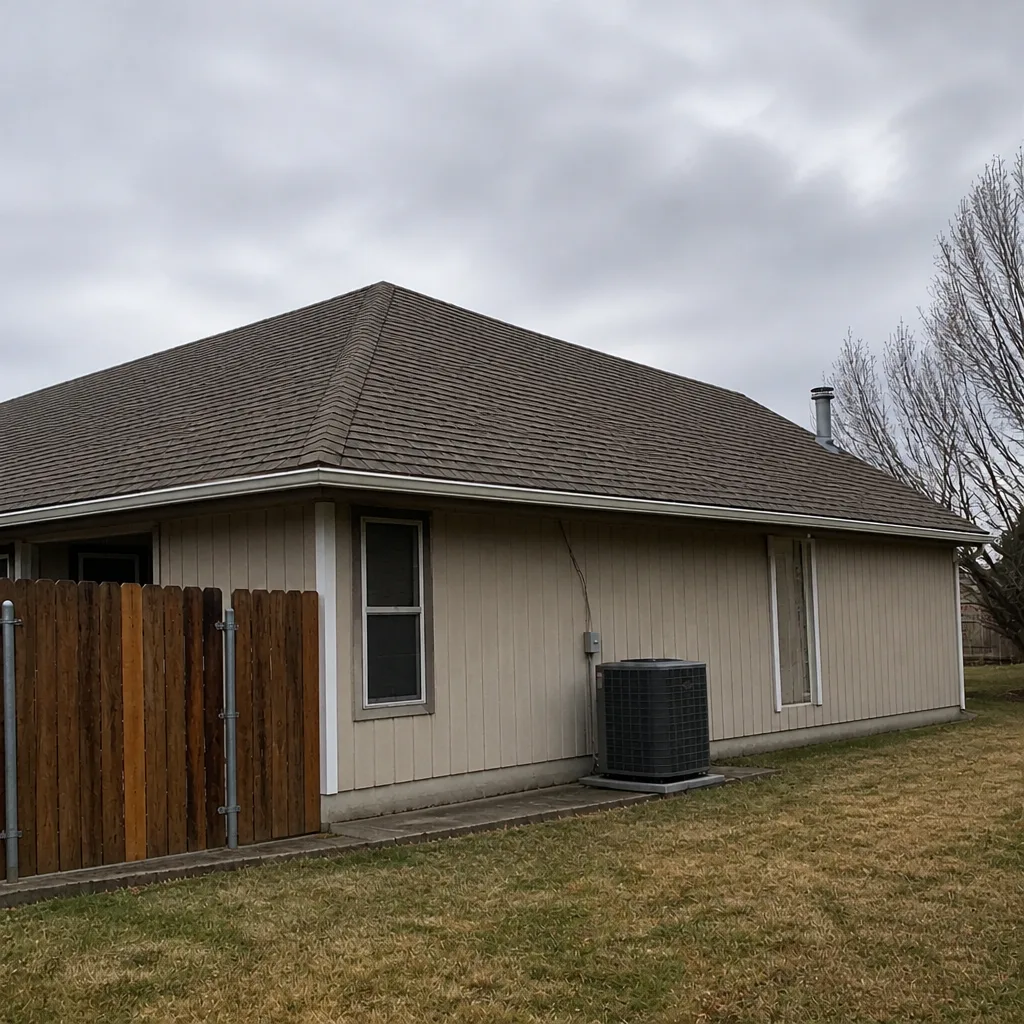
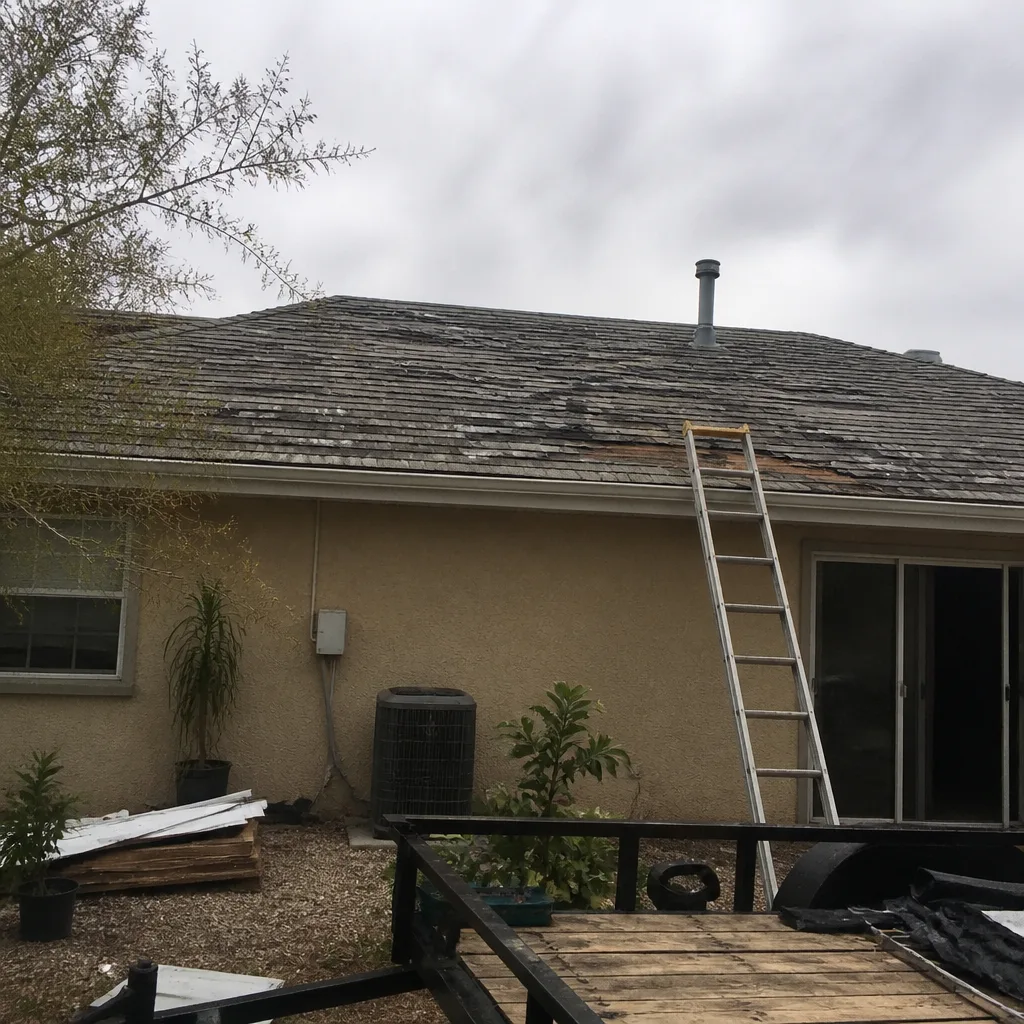
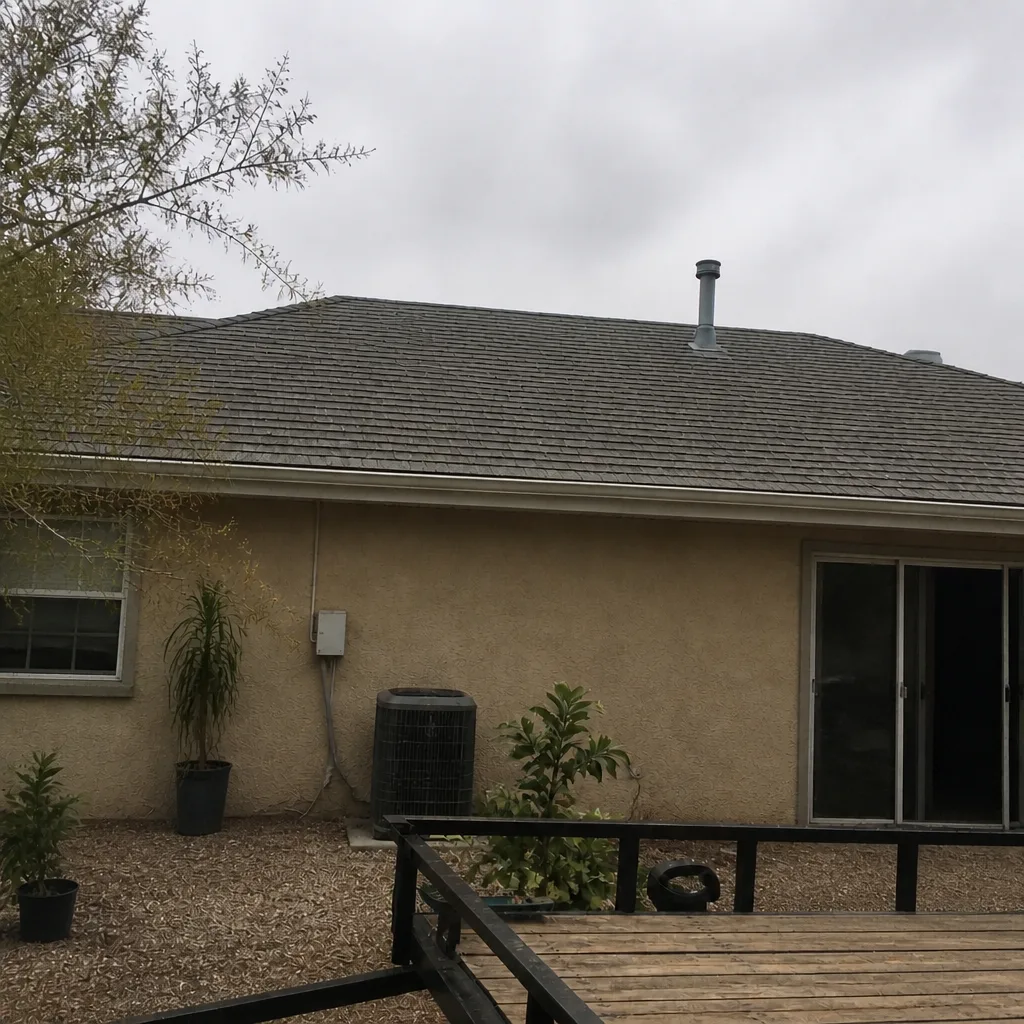
See the difference
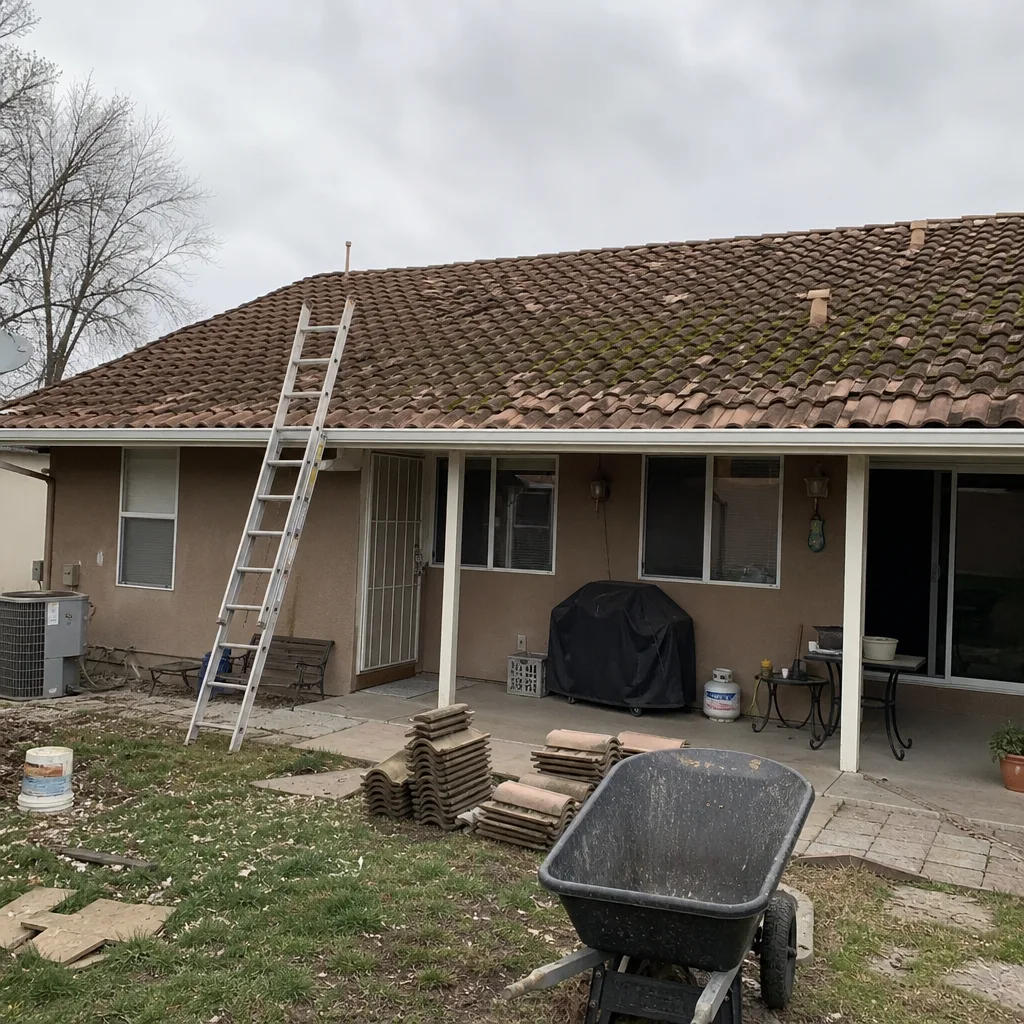 Before
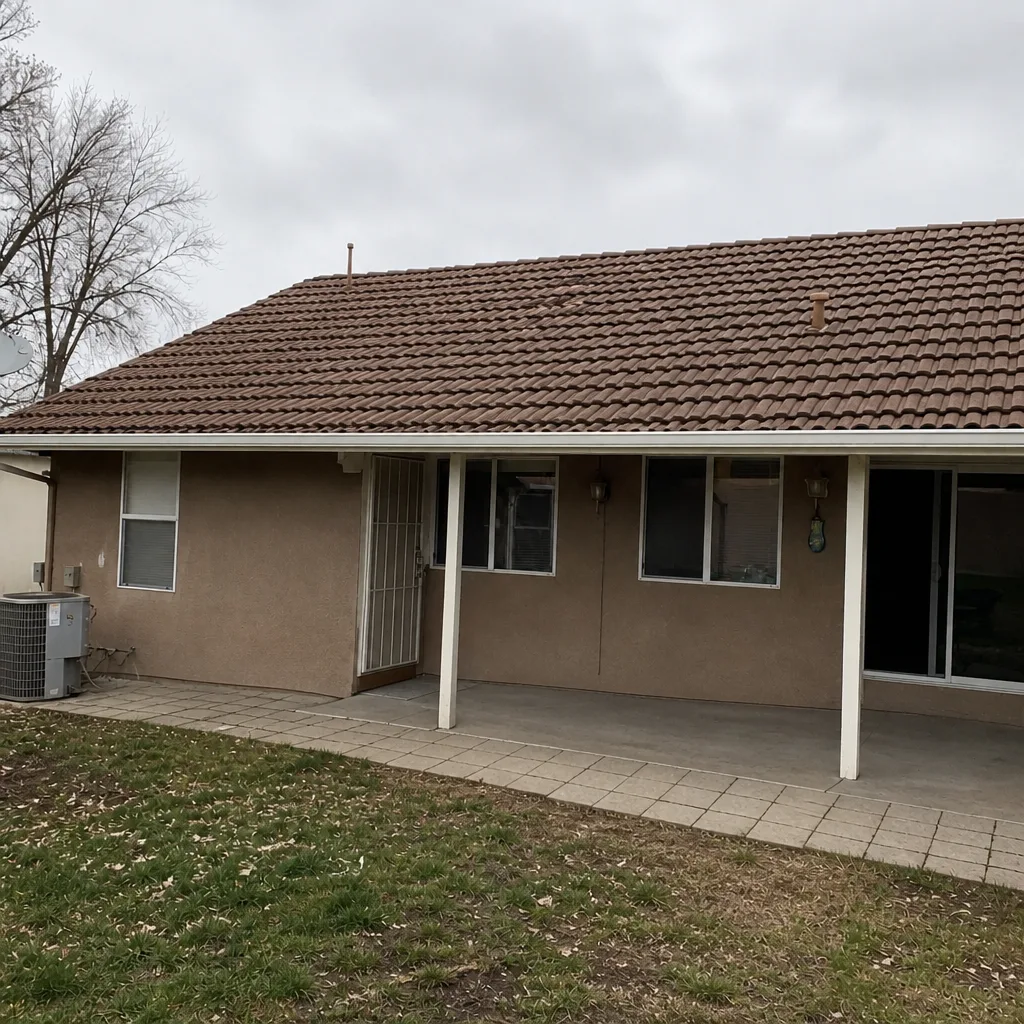 After
 Before
 After
 Before
 After
When to Call a Professional
Call a professional if you can’t trace the leak to a specific entry point in fifteen minutes, if any fastener hole is wider than the original screw, if you find rust that a fingernail can dig into, or if the leak is anywhere near a chimney, valley, ridge, or sidewall penetration. Those are the intersections where a wrong fix costs more than the original job. Also call us if you’re not comfortable on a ladder – a fall is a much worse problem than a leak. Shepherd & Sons Roofing Whitney offers free estimates in Whitney, a free second opinion on any written estimate you already have, and no trip charge inside our own county. Call (844) 797-9455 and a live person will pick up.
Frequently Asked Questions
A single-flashing repair typically runs a few hundred dollars; a full exposed-fastener panel reseal on an average-sized home runs more, depending on the number of panels and fasteners. In our experience, most Whitney homeowners are looking at the lower end of that range because the failure is one boot or one run of fasteners, not the whole roof. Call (844) 797-9455 for an exact quote – estimates are free, and we’ll show you the deck photos before we talk money.
No. We write the estimate line by line, we show you the photos, and the price on the paper is the price on the invoice. If we find something the estimate didn’t cover, we stop and call you – we don’t just do it and bill you for it. The 90-Day Done Right Promise backs every job in writing.
Yes. Local permitting for roof work in Whitney and the surrounding Nevada counties is part of the job, and we pull and close them. We don’t ask you to chase down a permit office; we handle the paperwork and the inspection. If a contractor tells you a permit isn’t needed for a panel replacement, get a second opinion.
A single fastener or flashing repair is usually done in an afternoon. A full exposed-fastener reseal on a typical home runs one to two days depending on square footage and how many fasteners are failing. Replacement is a longer conversation. We give you the timeline in writing with the estimate, and we stick to it.
You can paint over surface rust, and with the right prep and a metal-rated coating it will last. Painting over penetration rust is a waste of time and money. If a fingernail catches in the rust, or you can see light through it, no paint will fix it – you need a patch or a panel replacement. Our team can tell you which you have in about five minutes on the roof.
Not a leak problem, and not a sign the roof is failing. Noise in the rain is a function of the decking and insulation below the panels, not the metal itself. Most of the Whitney-area metal roofs we’ve inspected with a noise complaint have thin battens or missing underlayment, not a defective panel. If the noise is new and accompanied by a rattle or a screw-head showing, that’s worth a look. Call (844) 797-9455 and we’ll come out and check.
The Bottom Line
Most metal roof problems in Whitney aren’t metal failures at all. They’re fasteners, boots, flashing, and sealant that failed on top of or under the metal, and they’re often fixable for a fraction of what a replacement quote might suggest. Trace the leak backward from the ceiling to the source. Test rust with your fingernail, not your eyes. Treat oil-canning as cosmetic unless it concentrates at a seam. Reseal when the metal is sound and replace only when it’s penetrated. Get a written, line-item estimate before anyone touches the roof, and ask the contractor for the address and the license number before you sign. We install GAF, Owens Corning, Atlas, and other name-brand products, and we’ve been doing this from the same Whitney address since 1996. Call (844) 797-9455 for a free estimate – a live person answers, and the roofers we connect you with are licensed and insured as their state requires. Our technicians have up to 30 years of experience.
Written by the team at Shepherd & Sons Roofing Whitney.