
Last updated November 18, 2026
 Tile roofing
 Architectural shingles
 Metal roofing
 GAF
 Owens Corning
 Flat & low-slope
Free roof inspection with deck photos before we talk money - GAF and Owens Corning certified installation
Tile Roofing Maintenance Schedule: What to Do and When
Concrete and clay tile can last 50 years, but the felt underlayment beneath them typically gives out in 20 to 25. That means your “lifetime roof” has a ticking clock most homeowners never know about, and by the time the ceiling stains show up, the decking is often already soft. Here in Whitney, the calendar that matters isn’t the one a national roofing site publishes. It’s built around our freeze-thaw nights, our dust storms, and the summer sun that bakes mortar ridge caps until they crack. What follows is the schedule we actually use out here: what to check in spring, what to button down before winter, and which tasks you can safely do from the ground.
Quick Answer
A tile roof in Whitney needs two full professional inspections a year, one in spring after the last freeze and one in fall before winter rains, plus a quick ground-level look after every big dust or wind event. The tile itself rarely fails; the underlayment, flashing, and ridge-cap mortar are what fail, and catching those early is what turns a $600 repair into a roof that lasts another 20 years.
Styles & brands we work with
- Architectural shingles
- Metal roofing
- Tile roofing
- GAF
- Owens Corning
- Flat & low-slope
Table of Contents
- Why the Tile Outlasts the Roof Beneath It
- What Whitney’s Temperature Swings Do to a Tile Roof
- The Two Ground-Level Checks You Can Do Yourself
- How to Spot Underlayment Failure Before It Hits the Deck
- Debris, Dust, and Valleys: What Matters Here
- Spring Checklist: Post-Freeze Inspection
- Fall Checklist: Pre-Winter Button-Down
- When to Call a Professional
Why the Tile Outlasts the Roof Beneath It
The tile is the part everyone sees, and it’s the part that lasts. A good concrete tile in our climate can go 50 years. Clay goes even longer. But tile doesn’t shed water on its own. The tiles overlap and channel water downhill, and then the felt underlayment underneath does the real waterproofing. That felt is the weak link, and most homeowners don’t learn it exists until it’s already failed.
In our experience across Whitney, the underlayment is usually the first thing to go, and it fails on a schedule nobody prints on the sales sheet. Twenty to twenty-five years is typical for standard felt. Newer synthetic underlayments last longer, but plenty of the tile roofs in Whitney were set over the older stuff, and they’re coming due right now.
Here’s the part that catches people: when the felt gives out, the tile still looks fine from the street. No missing pieces. No obvious holes. The water just seeps through the tile channels, through the failed felt, and into the decking. That’s how a homeowner ends up replacing decking and structural sheathing on top of a roof replacement they didn’t see coming.
So the whole point of a maintenance schedule is to watch the underlayment and the flashing, not the tile. That flips the way most guides are written, and it’s the single most useful thing to understand about a tile roof.
What Whitney’s Temperature Swings Do to a Tile Roof
Rain is the enemy a lot of roofing guides focus on. In Whitney, the bigger stress is temperature. We get cold nights that drop toward freezing and then a brutal summer sun that pushes surface temps well past what the air temperature reads. Tile and the mortar holding the ridge caps expand and contract with that swing, day after day, season after season.
Mortar is rigid. It doesn’t stretch. So it cracks. The ridge caps along the peak of a Whitney roof are where we see the most mortar failure, and a cracked ridge cap is a direct path for water straight down the top of the roof. That’s why our spring inspection always starts at the ridge and works down.
Then there’s the freeze-thaw cycle. Water works into a hairline crack in the mortar or a tile edge, then the night drops below freezing, the water expands, and the crack opens a little wider. Spring shows the result. On top of that, our dust storms drive fine grit into every valley and behind every flashing edge, and that grit holds a little moisture against the material where you don’t want it.
- Mortar ridge caps: crack faster from thermal cycling than from rain.
- Flashing edges: collect dust, then hold moisture against the metal.
- Valleys: gather grit and debris that dam up water during winter storms.
- Freeze-thaw: widens every small crack once winter sets in.
None of this is dramatic on any single day. It’s the accumulation that kills a ceramic tile roof, and that’s why a schedule beats a one-time check.
The Two Ground-Level Checks You Can Do Yourself
You can catch a lot of problems without ever getting on the roof. We tell Whitney homeowners the same thing: put a decent pair of binoculars in your hand twice a year and walk the perimeter. It takes twenty minutes and it’s safe. Two checks matter more than the rest.
Check One: The Ridge and the Ridges
Start at the peak of the roof and work your eye down. Look for cracked or missing mortar along the ridge caps, and anything that looks like it’s lifted or slid out of line. A ridge cap that’s loose or a mortar joint that’s opened up is a water entry point, and it shows clearly through binoculars from the driveway. In Whitney, the ridge is almost always the first thing to show wear.
Check Two: Flashing and Valleys
Next, look at the flashing around every chimney, vent, and wall intersection. You’re watching for gaps, lifted metal, or dark staining where water runs and dries. Then check the visible valleys where two roof planes meet. Debris in a valley, or a valley that looks dark and stained, tells you water’s been sitting there. Our dust storms load those valleys up with grit, so this check matters more in Whitney than in wetter climates.
What you can’t judge from the ground is the underlayment and the decking. That takes boots on the roof, and that’s the line you don’t cross as a homeowner. Tile roofing is heavy, brittle, and easy to crack under a misplaced foot, and the heights and fall risk are real. The pros on our crew are trained for roof walking; the ground check is where your job ends.
How to Spot Underlayment Failure Before It Hits the Deck
Underlayment failure doesn’t announce itself. But there are early signs, and a trained eye catches them years before the decking gets soft. The first is staining on the underside of the tile when we lift a few pieces during inspection. Dark spotting or a rough, degraded texture where the felt used to be smooth is the tell.
From the ground, the clues are subtler. Look for dark streaks running down the roof face that don’t wash away, or tiles that look like they’ve shifted slightly out of their original line. Those can mean water is moving under the tile instead of over it. Inside the house, a faint water stain on a ceiling in the top room, especially after a storm, is the loudest signal. Catch it then and you’re looking at underlayment and maybe some localized repair. Ignore it a couple of seasons and the same problem becomes decking and sheathing.
A good inspection lifts a few tiles in a few spots to actually look at the felt. We do that on every tile inspection because a roof that reads fine from outside can still have failing underlayment underneath. If a Whitney roof is at that 20-year mark on the original felt, that look is the whole ballgame.
If the underlayment is already past saving, the fix is usually a full replacement rather than patching, and that falls under roof replacement and installation in Whitney. We’d rather find that out on a $99 second opinion than after a leak.
Debris, Dust, and Valleys: What Matters Here
National roofing guides spend a lot of ink on moss. In Whitney, moss is mostly a non-issue. We’re dry. The stuff that actually causes trouble here is dust and grit, and where it piles up.
Every dust storm lays another layer of fine sediment on the roof. Most of it blows off, but some settles in the valleys, behind the flashing, and along the lower edges where two planes meet. Over a season that becomes a small dam. When the winter rains finally come, that dam backs water up under the tiles instead of letting it run off. That’s the mechanism we see most, and it’s why valley clearing is on our fall checklist rather than a vague “clean your gutters” line.
We’ve also seen grit collect on ridge caps and behind chimney flashing, holding moisture against the mortar and the metal. It’s not dramatic, but it’s the kind of thing that shows up as a slow leak two winters later. Cleaning it off before winter is cheap. Finding the leak after is not.
Gutters are part of the picture too, especially where they back up against the roof edge and hold water. We cover gutters and accessories on their own, but the maintenance point is simple: if your gutters fill with grit, the water has nowhere good to go, and it works its way into the roof edge.
Spring Checklist: Post-Freeze Inspection
Spring is when you see what winter did. Run this list after the last hard freeze of the year, before the summer sun is in full force. This is the inspection that catches freeze-thaw damage while it’s still a small repair.
- Walk the ridge line. Look for cracked mortar and lifted or shifted ridge caps across the whole peak.
- Check every flashing point. Chimney, vents, and wall intersections get a close look for gaps and lifted metal.
- Look for winter stains. Faint water marks on ceilings and top-floor walls tell you to look harder outside.
- Scan the tiles. Missing, cracked, or slid-out tiles get flagged, especially after a rough winter.
- Check the valleys. Any grit or debris from spring winds gets cleared before it can trap water.
- Inspect the attic for daylight and moisture. A quick look for light in the decking or damp spots tells you what the roof isn’t showing.
If a tile roof in Whitney is around its 20-year mark on the original felt, we add a step and lift a few tiles to check the underlayment directly. That’s the spring look that saves people from the surprise.
For anything the spring walk turns up, roof repair in Whitney handles the fixes before they grow into replacements.
Fall Checklist: Pre-Winter Button-Down
The fall checklist is about being ready before the first storm. Everything here is about moving water off the roof and keeping grit away from the places it holds moisture. This is the inspection that prevents the winter leak.
- Clear the valleys. Remove grit, dust, and debris so water can run off instead of pooling and damming.
- Check the ridge again. Cold nights are coming; any mortar that’s cracked in fall gets caught now, not after the freeze.
- Look at flashing and seals. Confirm flashing is tight and any sealant around vents is still doing its job.
- Clear gutters and downspouts. Grit-filled gutters back water up into the roof edge; get them flowing before the rain.
- Inspect for gaps. Any opening around a chimney or wall gets sealed while the weather’s still dry.
- Do the ground-level binocular pass. Confirm the ridge and flashing you trusted in spring are still sound.
Two inspections a year, spring and fall, is the whole ticker. It’s a printed schedule tied to freeze cycles, not arbitrary monthly chores, and it’s what keeps a tile roof in this climate in one piece.
Common Mistakes to Avoid
- Watching the tile and ignoring the felt. The tile will outlast the underlayment by decades; if you only judge the roof by the tile, you’ll miss the failure that matters.
- Whoa-ing on the roof yourself. Tile cracks under a misplaced foot, and fall risk is real. The ground check is yours; the roof walk is a pro’s job.
- Assuming moss is the enemy. In Whitney’s dry climate, valley grit and flashing buildup cause more problems than moss ever will.
- Skipping the ridge. Our temperature swings crack ridge mortar faster than rain, and a cracked ridge cap is a direct leak path.
- Waiting for the ceiling stain. By the time water shows inside, the underlayment has usually been failing for a season or two, and decking is often next.
- Letting a storm chaser talk you into a full reroof. Half the tile roofs we look at don’t need replacing; they need a repair on the flashing or a fresh inspection. Get a second opinion before anyone sells you a new roof.
- Treating the schedule as a one-time thing. Tile roofs don’t fail on a single bad day; the damage builds. Two inspections a year catches it while it’s small.
See the difference
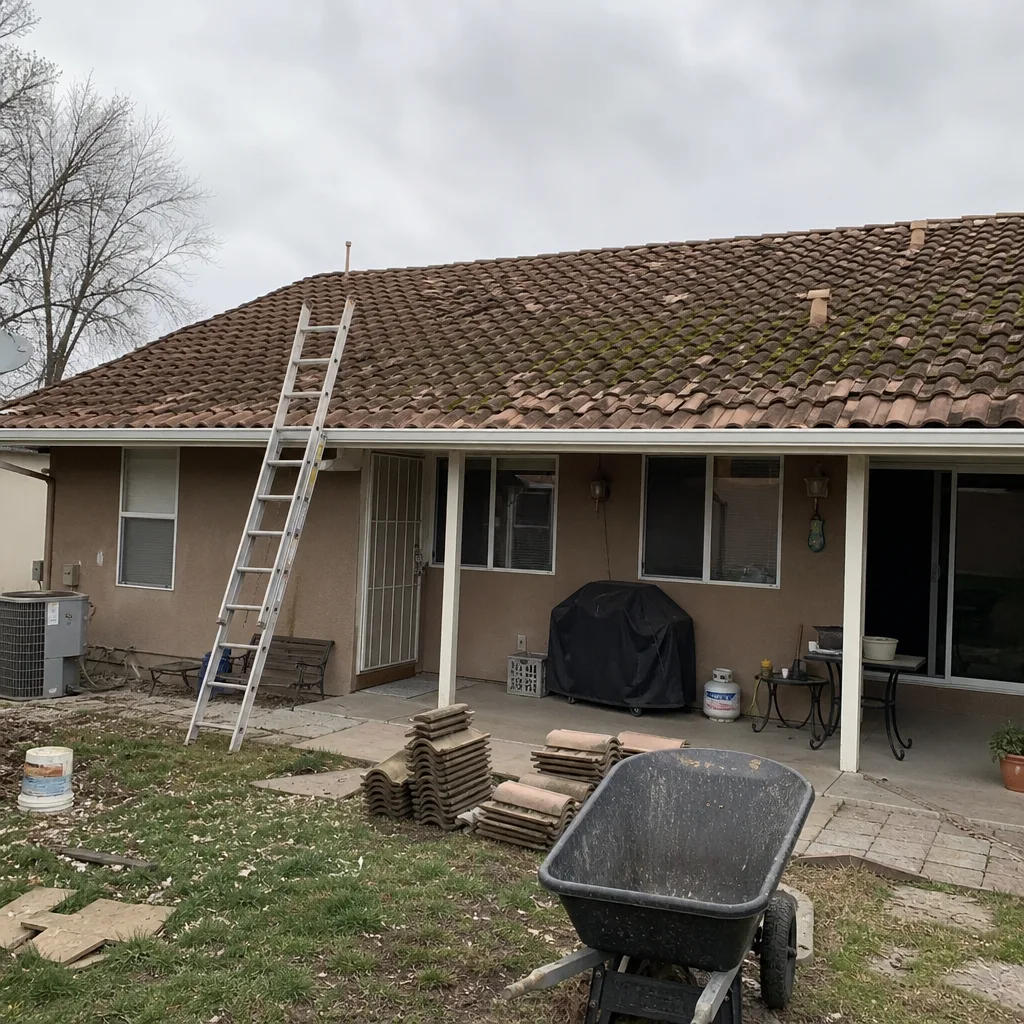 Before
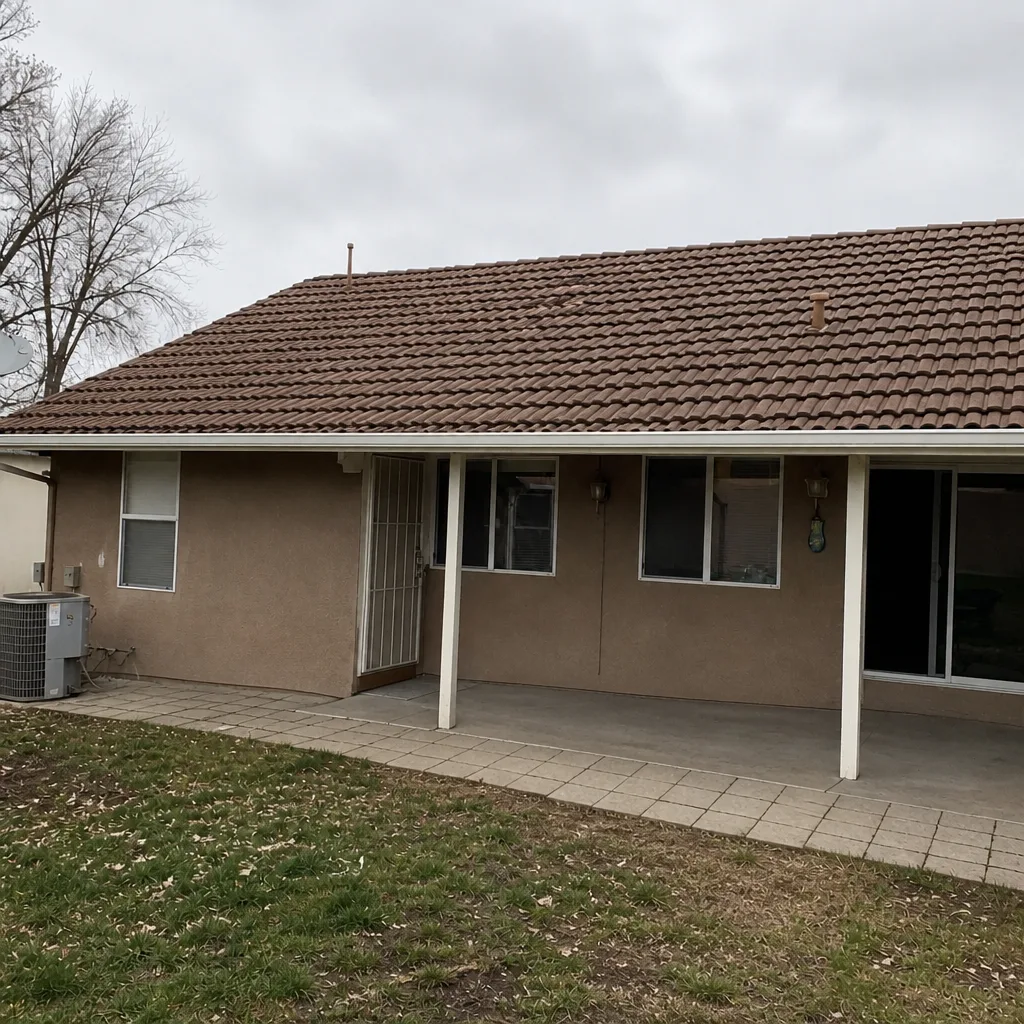 After
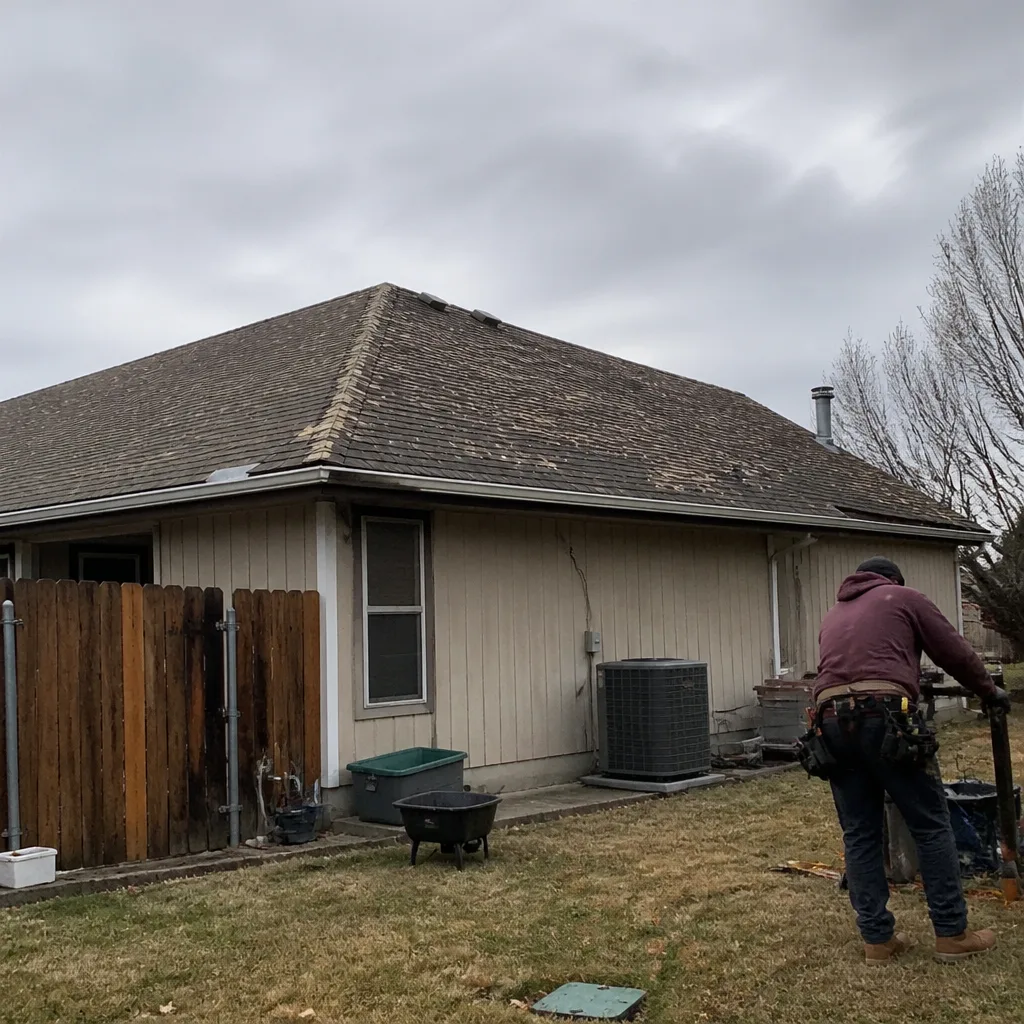 Before
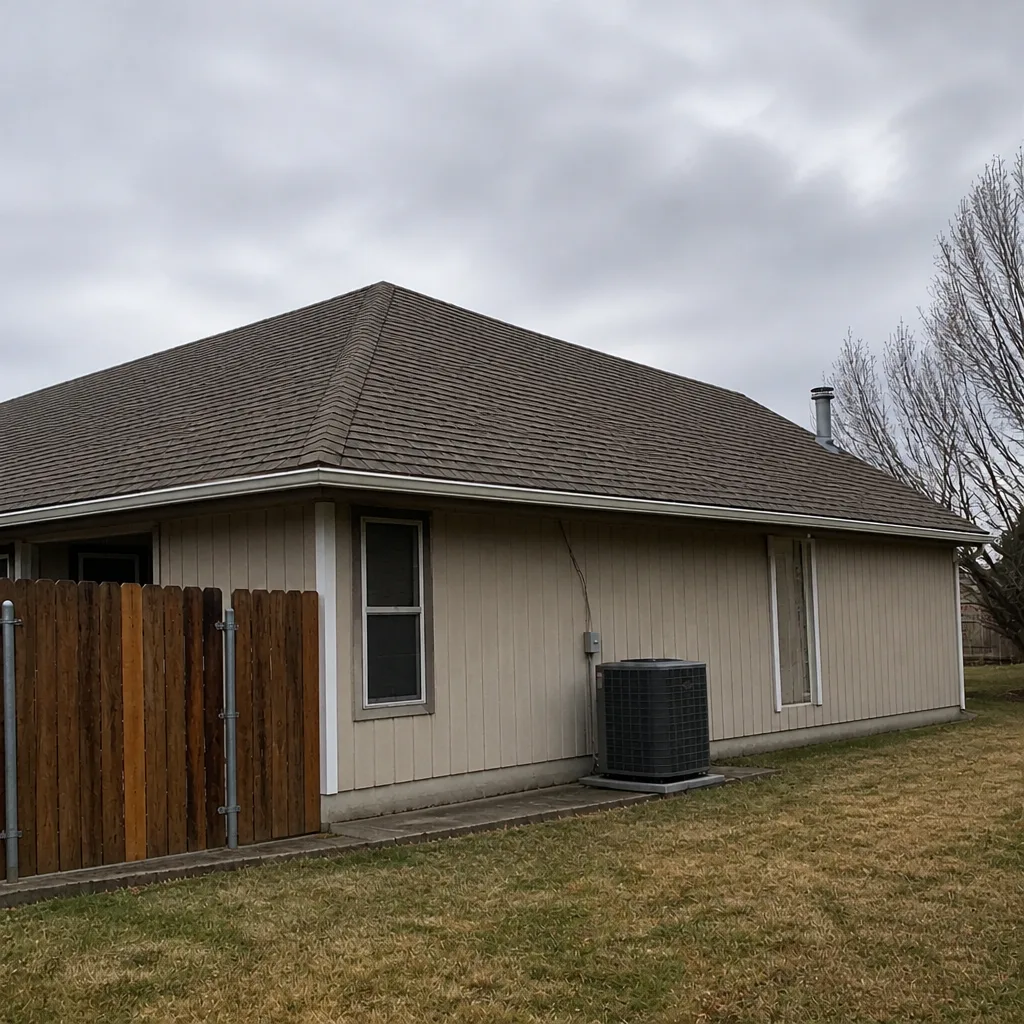 After
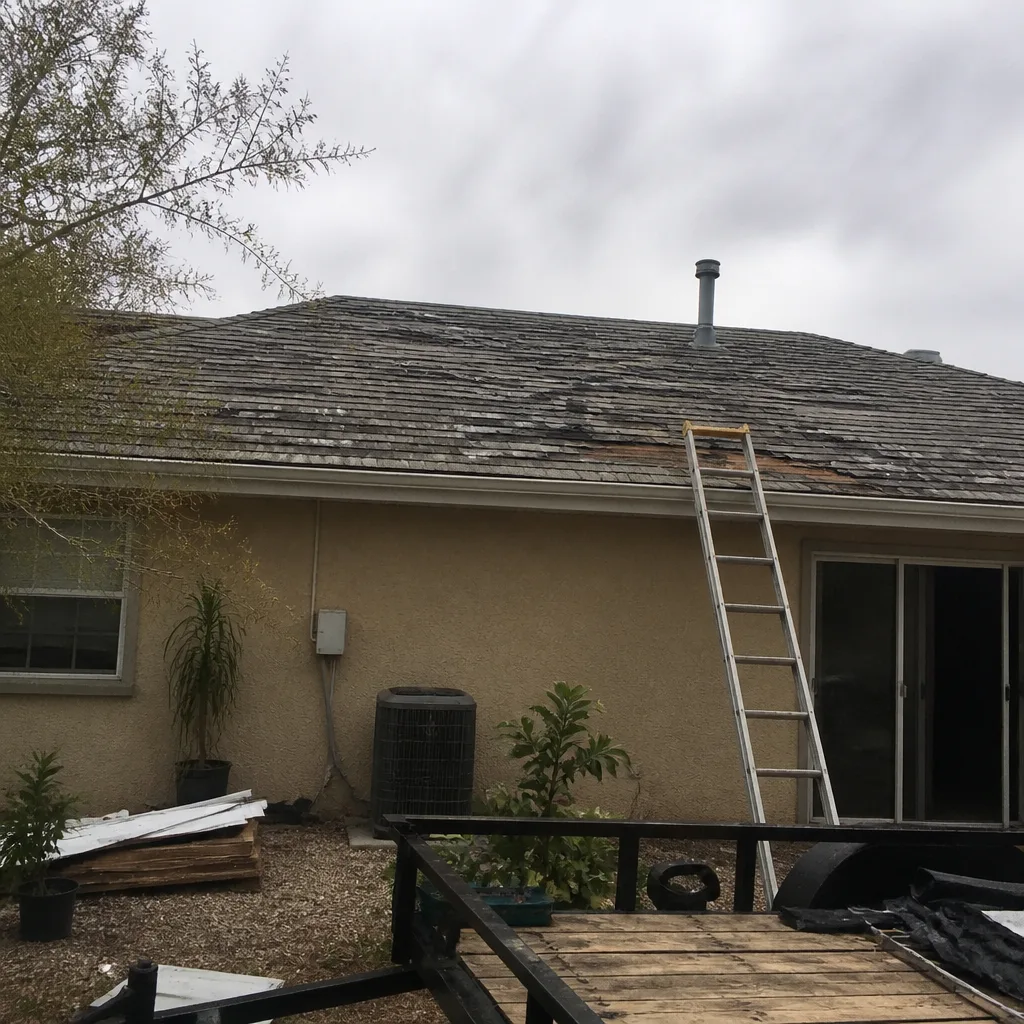 Before
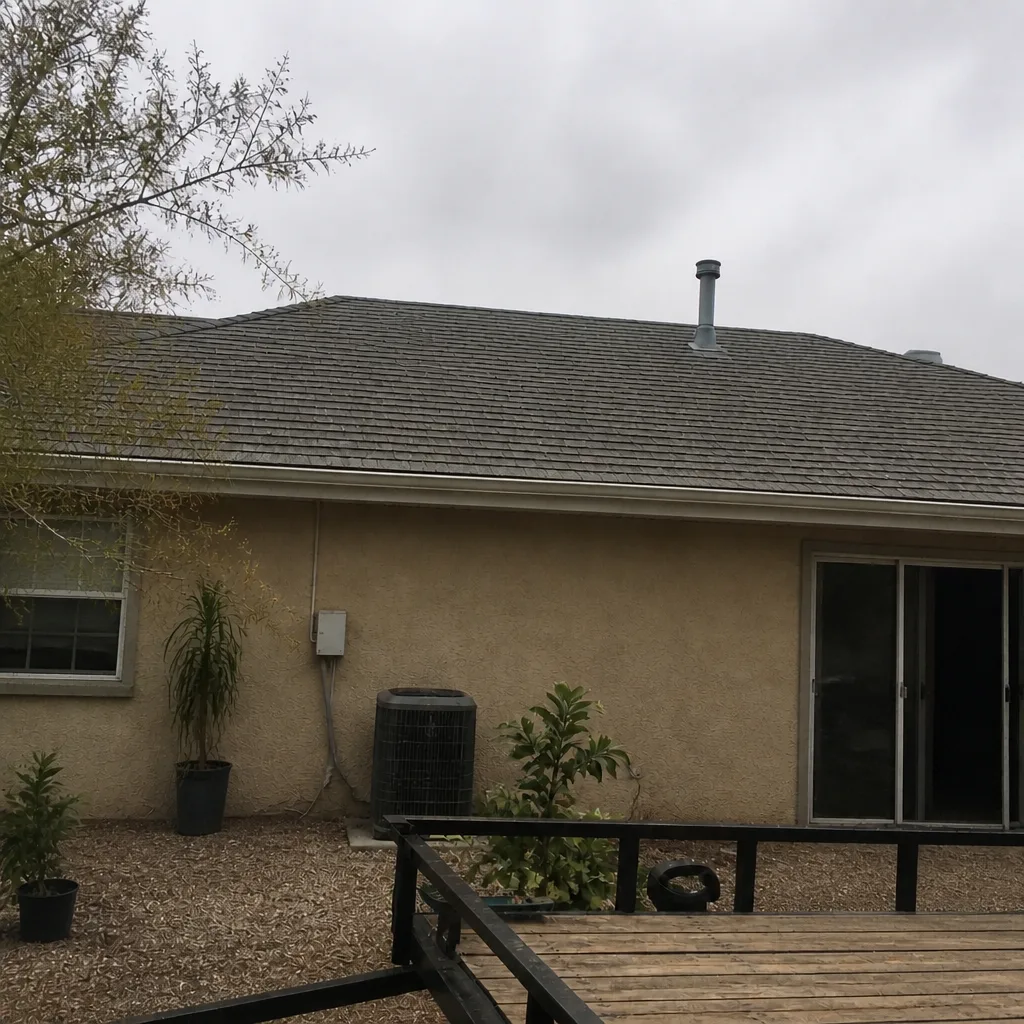 After
When to Call a Professional
Call us if you’ve seen a ceiling stain after a storm, cracked or missing ridge mortar, or dark streaking on the roof face that won’t wash off. Call if your tile roof is around 20 years old and you’ve never had the underlayment checked. Call after a big dust storm or wind event if the ground check shows anything out of line. And call if a storm chaser has quoted you a full reroof, before you sign anything. A tile roof with a real local shop behind it gets a second set of eyes. Shepherd & Sons Roofing Whitney offers free estimates in Whitney, and we’ll show you the deck photos before we talk money. Call (844) 797-9455 and a live person picks up, day or night.
Frequently Asked Questions
Twice a year, once in spring after the last freeze and once in fall before winter. Whitney’s freeze-thaw nights and summer heat crack mortar and stress flashing faster than steady rain would, so the spring and fall checks are what catch it early. Call (844) 797-9455 to get a free estimate on an inspection.
Not necessarily, but it requires different maintenance. The tile itself rarely needs work, while the underlayment and flashing underneath are what need watching. Once you build the schedule around those, a tile roof is among the lowest-maintenance roofs you can own.
Watch for dark streaking on the roof face, faint ceiling stains after storms, and tiles that look slightly shifted out of line. A professional inspection lifts a few tiles to look directly at the felt, which is the only sure way to know. If your roof is around 20 years old, call (844) 797-9455 for a free estimate on a proper check.
You shouldn’t. Tile is brittle and cracks under a misplaced foot, and the fall risk from roof height is real. Stick to the binocular pass from the ground and leave the roof walking to a trained crew. They’re the ones with the training and the equipment for it.
Because our weather swings the mortar hard. Cold nights and brutally hot days expand and contract the ridge caps day after day, and mortar is rigid so it cracks. Rain alone rarely does that kind of damage; the temperature cycle does. Call (844) 797-9455 for a free estimate on a ridge inspection.
A proper inspection is a modest, upfront number, and we quote it before anyone touches the roof, with no trip charge inside our own county. If something needs fixing, you get an upfront price with no change orders and a free second opinion on any written estimate. Call (844) 797-9455 for your exact number.
The Bottom Line
Your tile roof isn’t failing because of the tile. It’s failing, or will fail, because of the underlayment and the flashing underneath, and those give out on a 20 to 25 year clock most homeowners never see. In Whitney, the schedule that matters runs on our temperature swings: a spring inspection after the last freeze, a fall button-down before the storms, and a quick ground-level check after big wind and dust. Two visits a year, the ridge and valleys watched closely, and a professional who actually looks under the tile. That’s what turns a “lifetime roof” into one that really lasts. If you want eyes on yours, we’ve got a free estimate and a straight answer waiting.
If you’d like a closer look at how a full tile roof is built and installed, see Shepherd & Sons Roofing Whitney home and our metal roofing in Whitney page for the low-maintenance alternative some homeowners choose. We install tile set with products from Owens Corning, IKO, and Atlas, and stand behind every one with our written 90-Day Done Right Promise.
Have us take a look before the next season change. Call (844) 797-9455 for a free estimate in Whitney and a live person will pick up, day or night.
Written by the team at Shepherd & Sons Roofing Whitney.