
Last updated November 18, 2026
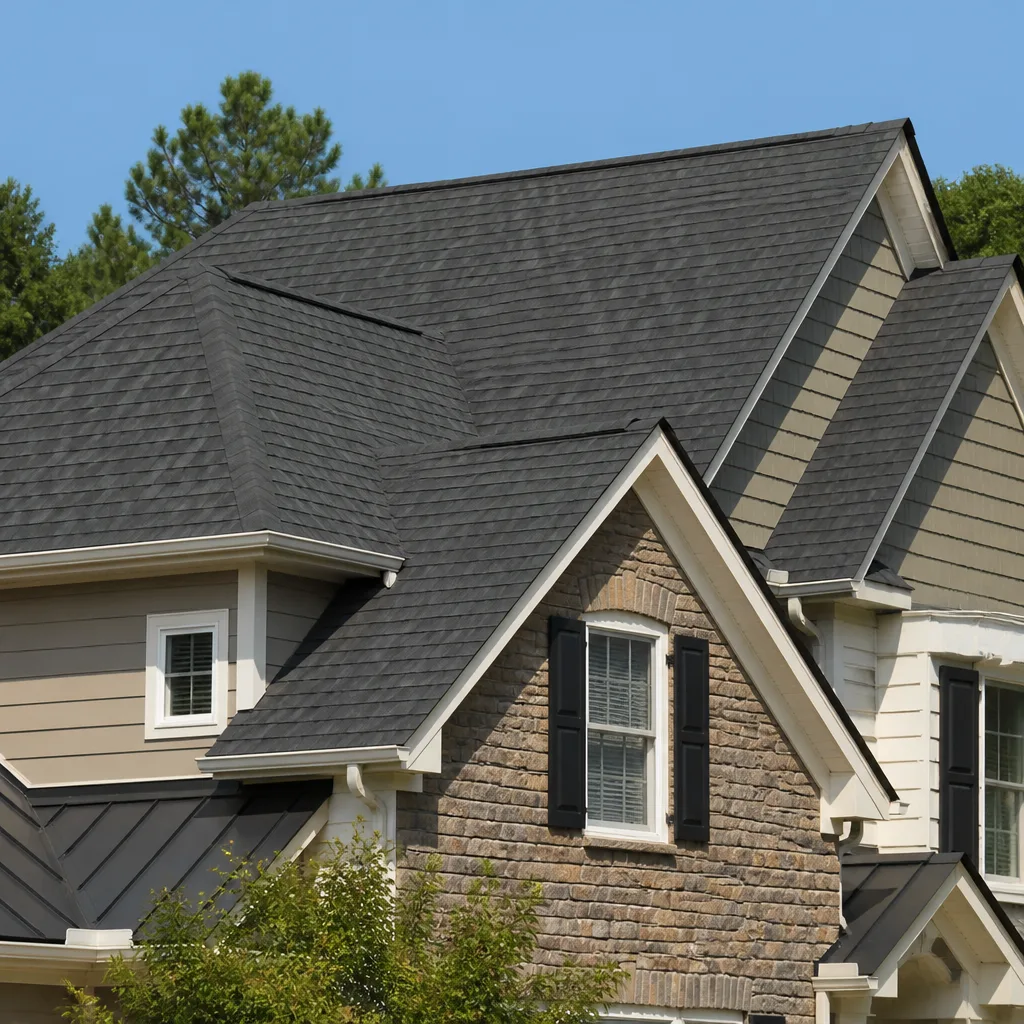 Architectural shingles
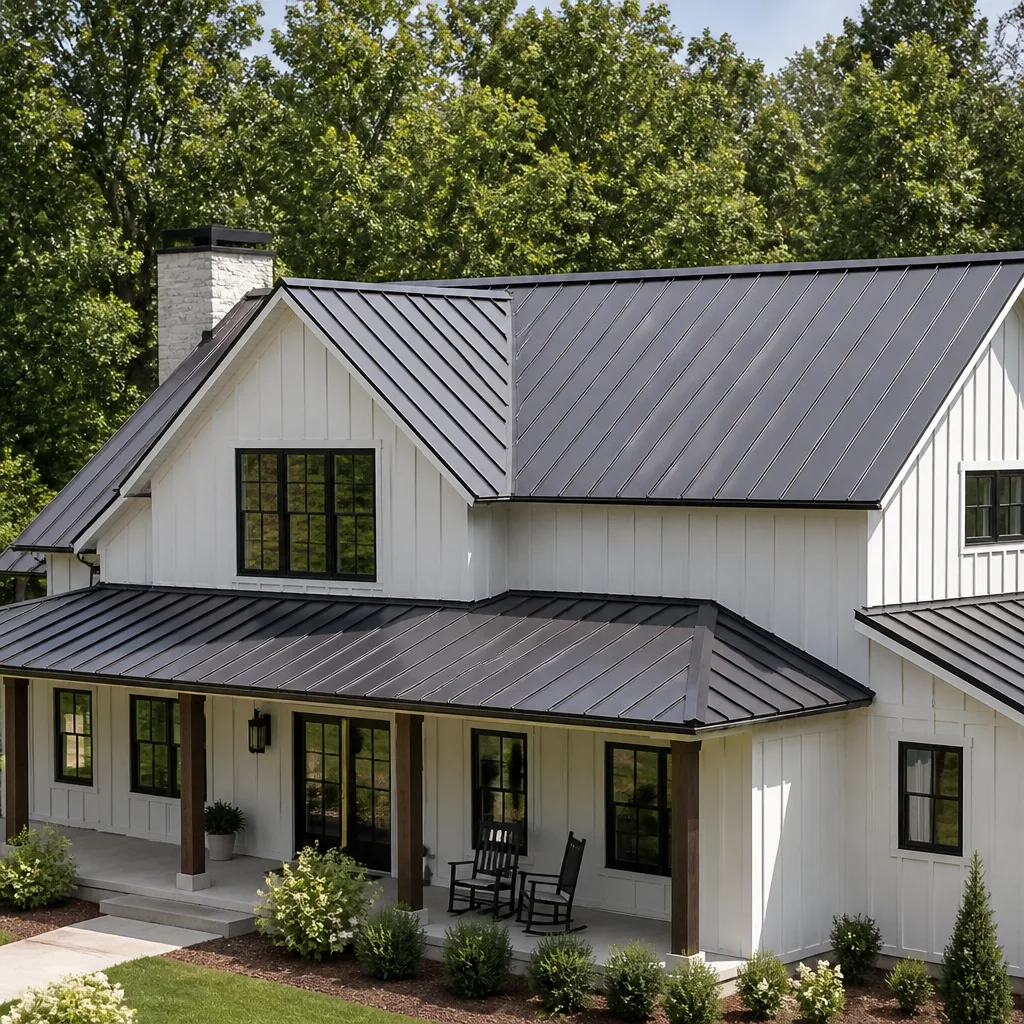 Metal roofing
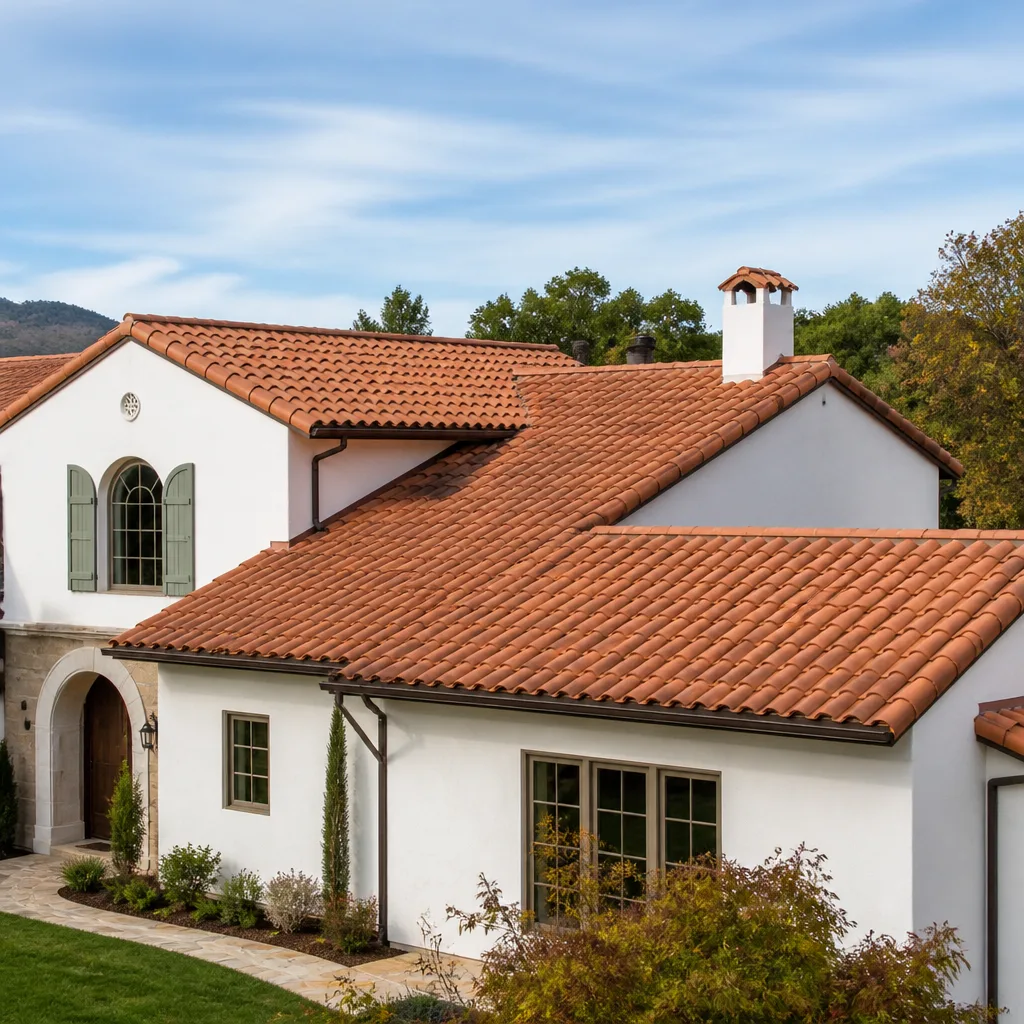 Tile roofing
 GAF
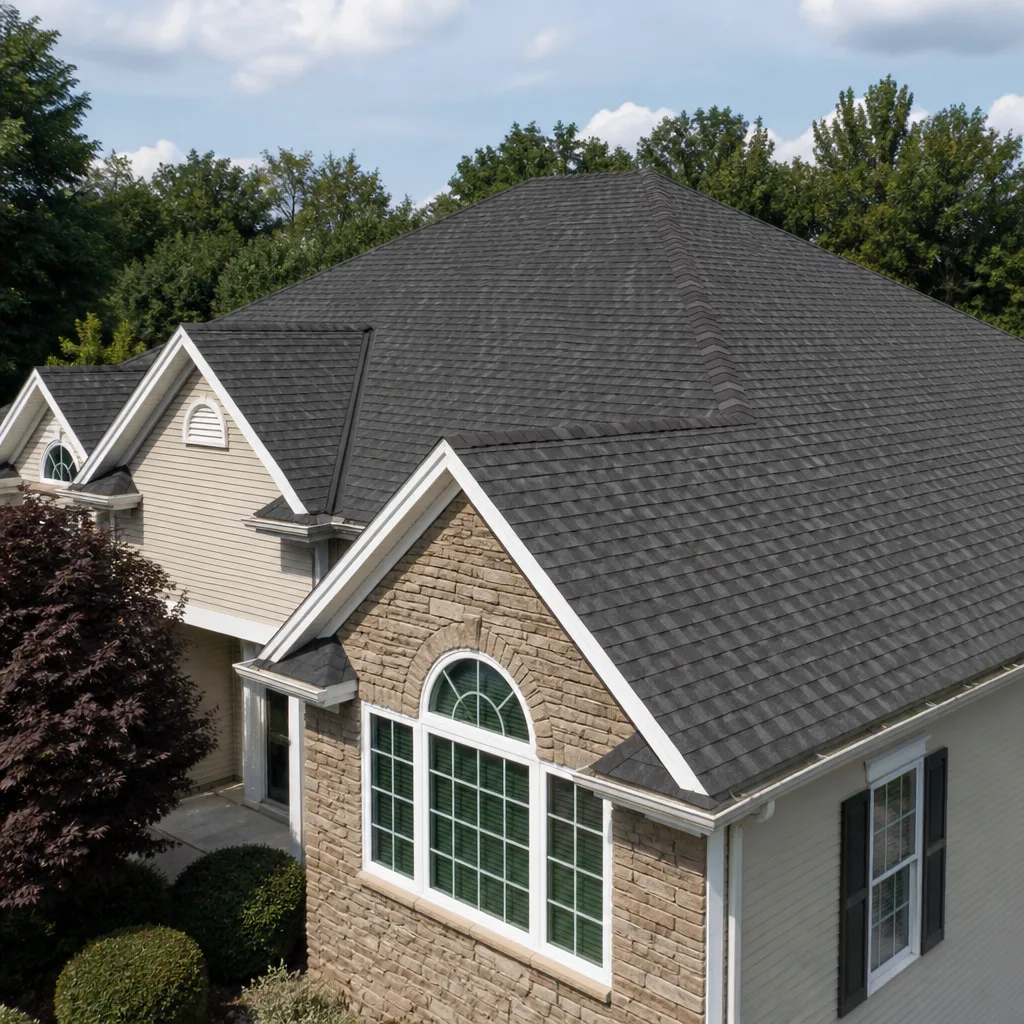 Owens Corning
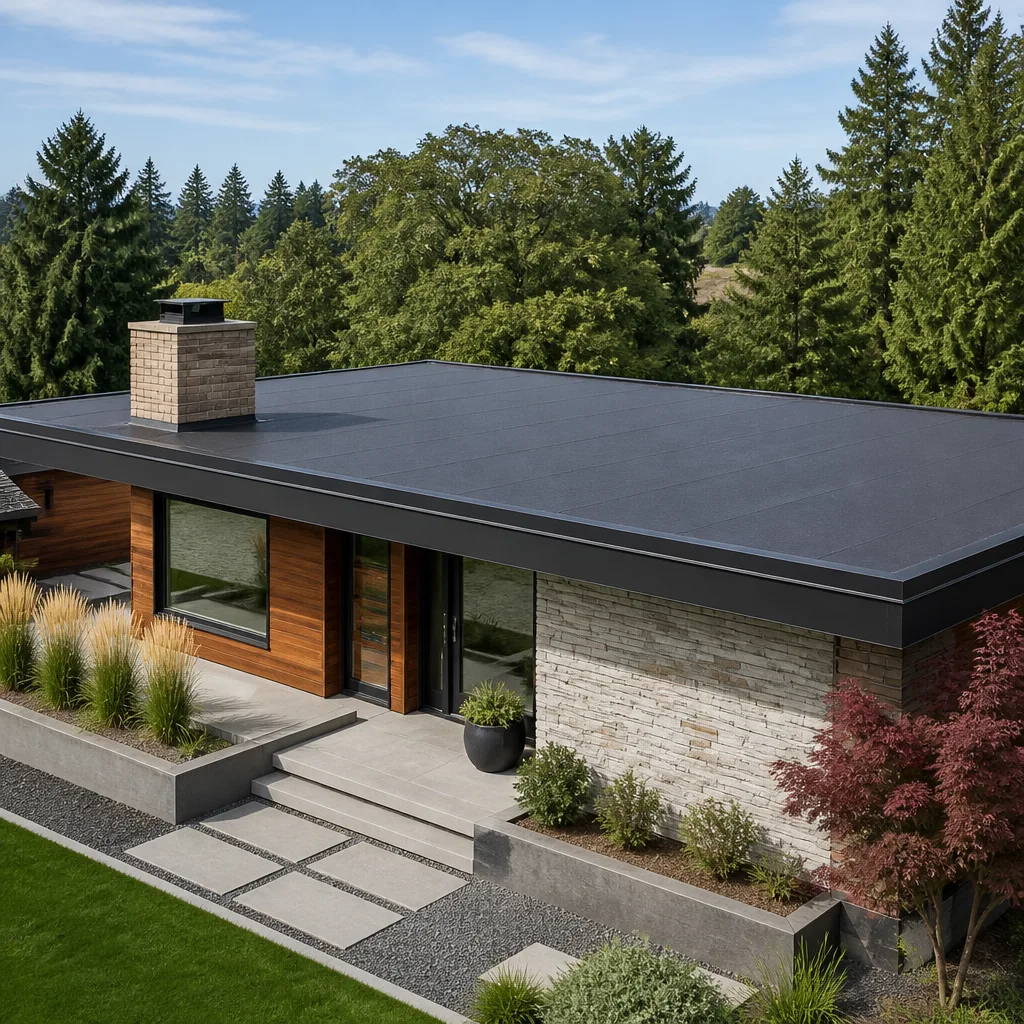 Flat & low-slope
Free roof inspection with deck photos before we talk money - GAF and Owens Corning certified installation
The Complete Roof Repair Guide for Whitney Homeowners
At 4,600 feet elevation, Whitney gets roughly 300 days of direct sun a year – that UV load breaks down asphalt shingles about 30% faster than the national average printed on most warranty cards. That single fact changes almost everything about how a roof fails here, and it’s why so much of the repair advice written for wet, coastal climates lands wrong in Whitney. Most of the calls we get here aren’t storm damage at all. They’re sun damage. In this guide you’ll learn how Whitney’s high desert swings crack flashing and dry out sealants, the exact spots on a Whitney home that fail first, how to read a repair quote and tell whether the contractor actually got on the roof, and honest cost ranges for the five most common repairs we see.
Quick Answer
Roof repair in Whitney typically runs $350 to $1,800 depending on what’s actually failing – sun-driven granule loss and blistering, cracked valley flashing, or dried-out sealant around HVAC penetrations are the most common culprits. The main repair question isn’t “can it be patched,” it’s whether the damage is surface-only or has reached the deck. A contractor who climbs up, checks the underside and shows you photos is guessing less than one who quotes from the driveway.
Styles & brands we work with
- Architectural shingles
- Metal roofing
- Tile roofing
- GAF
- Owens Corning
- Flat & low-slope
Table of Contents
- Why Whitney’s Climate Wears Roofs Differently
- The Repair Call We Get Most (and It Isn’t Storms)
- The Spots on a Whitney Home That Fail First
- How to Read a Roof Repair Quote
- What the Five Most Common Whitney Repairs Cost
- Repair or Replace? How to Decide
- Permits and Codes in Whitney
- When to Schedule Repair in Whitney
Why Whitney’s Climate Wears Roofs Differently
Whitney sits in high desert country, and that means cold nights and blazing days stacked on top of each other. A roof surface here can swing 40 to 50 degrees between a February morning and afternoon. That cycle is the real enemy. Roofing materials expand in the heat and contract in the cold, and after a few thousand cycles the places where two materials meet – flashing, seams, penetrations – start to pull apart.
Coastal guides worry about constant moisture and moss. Whitney has the opposite problem: relentless dry heat and intense UV. Sealants that would last a decade in a humid climate dry out and crumble here in a fraction of that time. Asphalt shingles lose their protective granules faster because there’s no cloud cover to blunt the sun. And when a rare freeze does hit, any water that’s worked into a hairline crack expands and pries the gap wider. It’s a one-two punch: UV dries and brittles the material, then freeze-thaw splits what the sun weakened.
What does this mean for you? It means the calendar of failure in Whitney runs on sun exposure, not on how many storms you’ve had. A roof that’s never seen a hailstorm can still be failing at year twelve if it faces the wrong direction. It also means the repair window matters – a dried-out sealant is a cheap fix today and a rotted deck board next spring.
The Repair Call We Get Most (and It Isn’t Storms)
Most homeowners assume roofers spend their days chasing storm damage. In Whitney, the most common repair call we get is blistering and granule loss from UV. Here’s what that actually looks like, and how you can spot it from the ground.
Granule loss is the slow one. Shingles are coated in mineral granules that shield the asphalt underneath from the sun. When those granules wear off – and in Whitney’s UV they wear off fast – the asphalt beneath starts to bake, and you’ll see bare, dark patches where the surface looks smooth and shiny instead of rough and sandy. Look at your downspouts and the drip line after a windy day. A little grit is normal. Cups of granule-colored sand pooling at the base of the downspouts means the shingles are shedding their armor.
Blistering is the more dramatic one. Tiny trapped moisture pockets under the shingle surface puff up and pop in the heat, leaving small circular craters that look almost like acne. Those craters are where the next crack starts.
- From the ground, look for: dark smooth patches with no visible texture, especially high on sun-facing slopes.
- Then look down: granule grit collected at downspout outlets and along the drip edge.
- Then look across: ripples, curling edges, or shingle tabs lifting up along the ridge.
- A sign you’d rather not find: small pinholes of daylight through the roof boards, visible from inside the attic.
None of these need a storm to happen. They’re what a decade or two of Whitney sun does to a shingle all on its own.
The Spots on a Whitney Home That Fail First
Not every part of a roof ages at the same rate. In Whitney, there’s a predictable order, and it starts with orientation.
- West and southwest-facing slopes. These take the peak afternoon sun, the hottest part of the day. They weather out first by a wide margin, which means if one slope is failing, its opposite is often still fine.
- Valley flashings, especially near HVAC penetrations. A valley is where two roof planes meet and channel water. It’s also where roofing material meets metal flashing, and where expansion and contraction do the most work. Add an HVAC unit sitting on the roof nearby, and you’ve got a penetration with a sealant collar that dries out, plus vibration from the equipment. This is repair-call territory we see repeatedly.
- Pipe boots and plumbing vents. The rubber collar around a vent pipe cracks in the UV and lets water sneak in. These are cheap to replace and expensive to ignore, because the leak shows up as a stain on a ceiling two rooms away from the actual vent.
- Chimney and sidewall flashing. Where the roof meets a vertical wall or a chimney, the counter-flashing and its sealant are the vulnerable joint. Dried sealant here is a classic Whitney failure.
- Ridge caps and the north-facing slope’s shaded edges. The ridge takes sun on all sides, and ridge caps crack and lift at the peak. Meanwhile the cool, shaded north slope stays wetter after a rare rain, so it can grow algae or hold moisture.
When you know this hierarchy, a repair budget makes sense. You’re not replacing a whole roof – you’re targeting the slopes and joints that actually take the beating.
How to Read a Roof Repair Quote
Here’s the tell that matters most: a contractor who’s actually been on your roof will talk about what they saw, not what they assume. A quote typed from the driveway can’t tell you whether the deck is soft or whether the flashing behind the chimney is rusted through.
So before you sign anything, run these checks:
- Photos. Ask to see pictures of the actual problem – the cracked boot, the bare shingle, the rusted flashing. A real inspection produces photos. “I’ll show you the deck photos before we talk money” is a standard we hold ourselves to, and you should expect it from anyone.
- Line items, not a lump sum. “Roof repair, $1,200” tells you nothing. You want labor and materials broken out – how many shingles, which flashing, how much sealant.
- Measured in squares. A roof is measured in squares (100 square feet each). Ask any bidder how many they counted. If they can’t answer, they didn’t measure.
- An “as-inspected” finding. A good quote says what was found, what’s recommended, and what’s optional. A bad one quotes one price on the phone and a different one at the door.
- What’s not included. Does the price cover tearing off the old shingles, replacing any rotted deck board, and hauling away debris? Those are the surprise add-ons to watch for.
- Who shows up and who’s accountable. Ask for the license number and the address. A local roofer’s name is on the truck and on the license, and you can look both up.
A free second opinion on any written estimate is a smart move here. It costs nothing to have a second set of eyes confirm the diagnosis, and it flushes out the quotes that were guessed rather than measured.
What the Five Most Common Whitney Repairs Cost
These are honest ranges, not come-ons. The low end is a small, accessible fix; the high end is a larger area, harder-to-reach slope, or a repair that turns up a soft deck board once the shingles come up. Prices in Whitney run a bit higher than the national average on some items because the UV damage here tends to be more extensive by the time it’s caught – the sun doesn’t do small patches.
- Pipe boot / vent collar replacement: $180 to $350. One of the cheapest fixes and one of the most common leak sources. If a ceiling stain traces back to a vent, this is usually why.
- Valley flashing repair: $400 to $900. Valley flashings near HVAC penetrations are a frequent offender. The labor is in getting to it and re-flashing cleanly.
- Chimney or sidewall flashing re-seal and re-flash: $350 to $800.
- Localized shingle replacement (blistering or granule failure on one slope): $500 to $1,800 depending on area and accessibility.
- Deck repair under a failed area: $300 to $1,200, and only determined once the shingles are off and the board underneath can be checked.
Two things to hold onto. First, drill into any roof and you may find more than the inspection showed – that’s not a contractor being slippery, that’s how a hidden problem reveals itself. Ask up front how they handle a surprise like a soft deck board. Second, keep the numbers in perspective: a $300 pipe boot today beats a rotted ceiling and an interior repair later. The cost of letting a small repair sit is always higher. If your situation looks bigger than a patch, our roof replacement & installation page for Whitney walks through what a full replacement involves and how to budget for it.
Repair or Replace? How to Decide
The honest answer comes down to age, extent, and whether the damage has reached the deck. You don’t rebuild the whole house because one window sticks, and you don’t replace a roof because one boot cracked. But you don’t keep patching a roof that’s failing across every slope, either.
- Repair is usually right when: the roof is under 15 years old, the problem is isolated to one area or one joint, the slope is intact, and the deck underneath is solid.
- Replacement usually makes more sense when: the sun damage is broad and even across multiple slopes, you’re seeing leaks in more than one room or area, granule loss is widespread rather than patchy, or a repair quote starts approaching a meaningful fraction of replacement cost.
- Watch the direction of travel. If you patched something two years ago and a different spot is leaking now, and another next year, you’re spending on a roof that’s already telling you it’s done. In our experience the replacement conversation is less about one failure and more about that pattern.
One caveat specific to Whitney: the west-facing slope can wear out a decade before the north slope. A full replacement based on one bad slope might be premature – which is exactly why a real inspection matters. If the rest of the roof is sound, a targeted repair, or a metal roofing upgrade on that slope when its time comes, can be the smarter money.
Permits and Codes in Whitney
For a straightforward repair like replacing a pipe boot or a section of shingles, a permit usually isn’t required. For a full replacement, or for anything that touches the structural deck or changes the roof covering significantly, permits are typically required – and the rules are set by the local building authority, not by the roofer’s convenience.
Here’s what to hold your contractor to:
- Ask who pulls the permit. A reputable local contractor pulls it and stands behind the inspection. If a bidder suggests skipping the permit to save money, that’s a red flag about how they handle the rest of the job.
- Expect an inspection on replacement. The work should pass inspection, not just look fine from the driveway. Those inspections are how the work gets checked by someone who doesn’t work for the roofer.
- Ask about the nailing pattern. The wind rating a roof earns comes from the nailing pattern – how many nails per shingle, where they’re placed – not from the shingle wrapper. A good contractor will tell you what they’ll do, and a good inspection confirms it.
- Match the covering to the exposure. In Whitney’s UV and temperature swings, material choice matters. We install and repair products from GAF, CertainTeed, Owens Corning and IKO, among others, and the right pick depends on the slope, the budget, and how long you plan to stay.
When a crew shows you the deck, pulls the permit, and passes the inspection, the accountability is on paper. That’s the standard to ask for.
When to Schedule Repair in Whitney
Here’s the thing about delaying a repair in Whitney: the damage doesn’t pause. A dried-out sealant that would be a small fix keeps getting worked by sun and temperature swings all summer. By the time you think about it in fall, the water has had a season of the rare rains to work its way in.
So the seasonal advice is simple – the best time to fix a weathering roof in Whitney is when you first notice it, whatever month that is.
- Catch it early. Watch the west slope and the valleys near any rooftop equipment. A granule trail at the downspout or a smooth dark patch is your cue to call.
- Get ahead of the rainy stretch. If you know you’ve got a tired joint or a cracking boot, handle it before the wet weather arrives rather than after the first ceiling stain.
- Don’t wait for a storm to book a repair. Storm season sends everyone at once, and the honest local shops fill up. The small stuff is best scheduled on a calm week.
- Get the second opinion anyway. Any quote you’re unsure about is worth a free second look, especially when the diagnosis hinges on what was – or wasn’t – found on the roof.
We schedule routine repairs through the week, and we answer the phone when a real leak shows up too. Getting on the calendar is a phone call, not a form.
Common Mistakes to Avoid
- Getting a quote from the driveway. A contractor who never climbs up is guessing. Tarps and ladders stay on the truck until someone has actually seen the shingles and the deck. Insist on photos of what they found.
- Hiring the stranger with the brand-new truck and out-of-state plates. After every storm, crews roll into town, quote a low number on the phone, and raise it at the door. Ask where their address is, then drive past it. A roofer with a real local address and a license you can look up is the one you’ll see at the hardware store on a Saturday.
- Ignoring the granule trail. The grit at your downspout means the shingles are shedding their protective layer. It’s the earliest, cheapest warning you get. Treat it as a call to action, not a nuisance.
- Letting a roof get patched forever. One patch on a healthy roof is fine. Three patches on three different slopes is a roof telling you it’s finished. Tally up the repair receipts – they add up to a replacement.
- Skipping the permit on a replacement. Saving a few dollars now can cost you at resale or when the inspector finds it. The permit and the inspection are there to protect you, not the contractor.
- Assuming a warranty covers UV. Manufacturer warranties are written to the national average, and Whitney’s sun is harder than that average. The paperwork won’t save a roof that’s baked, so don’t count on it to.
- Trusting a phone number with no name behind it. If a roofer won’t tell you whose name is on the license and whose shop is at that address, keep calling around. Accountability isn’t a slogan, it’s a name and an address you can verify.
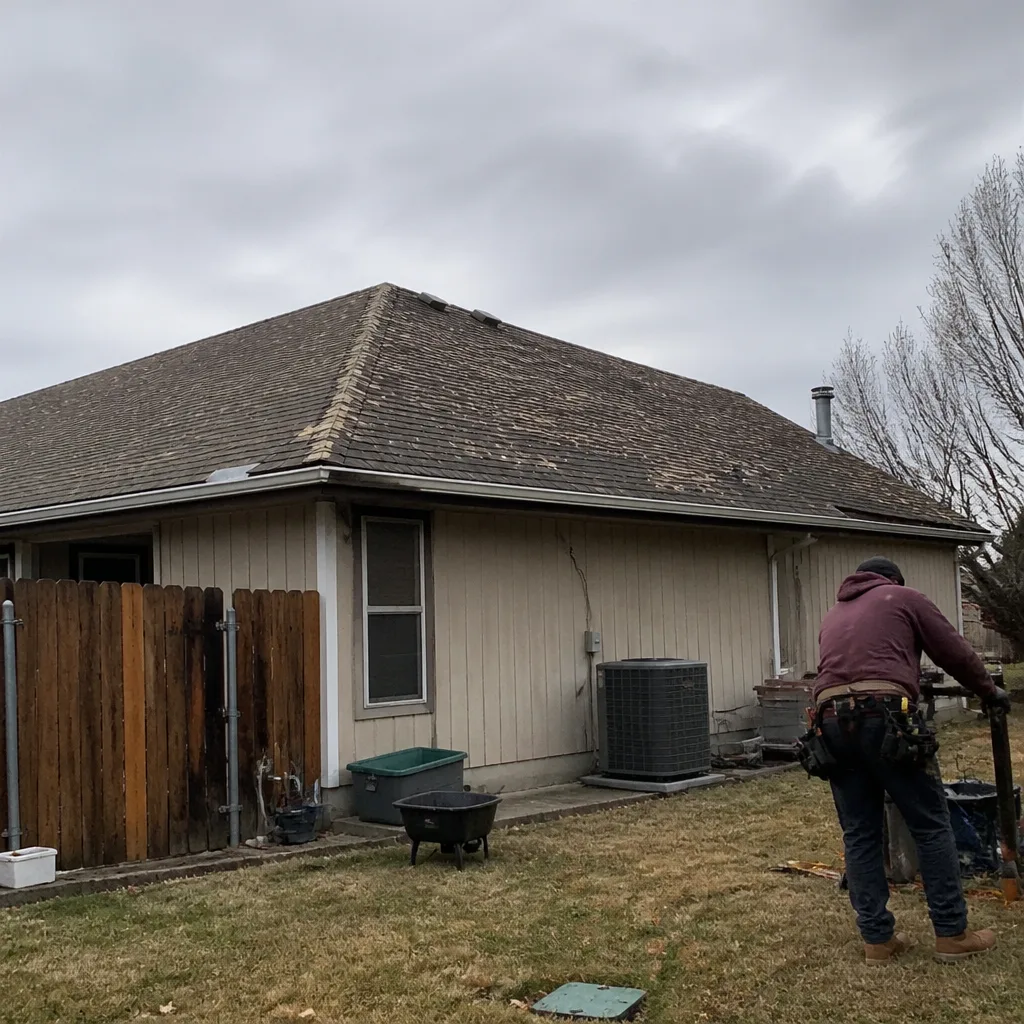
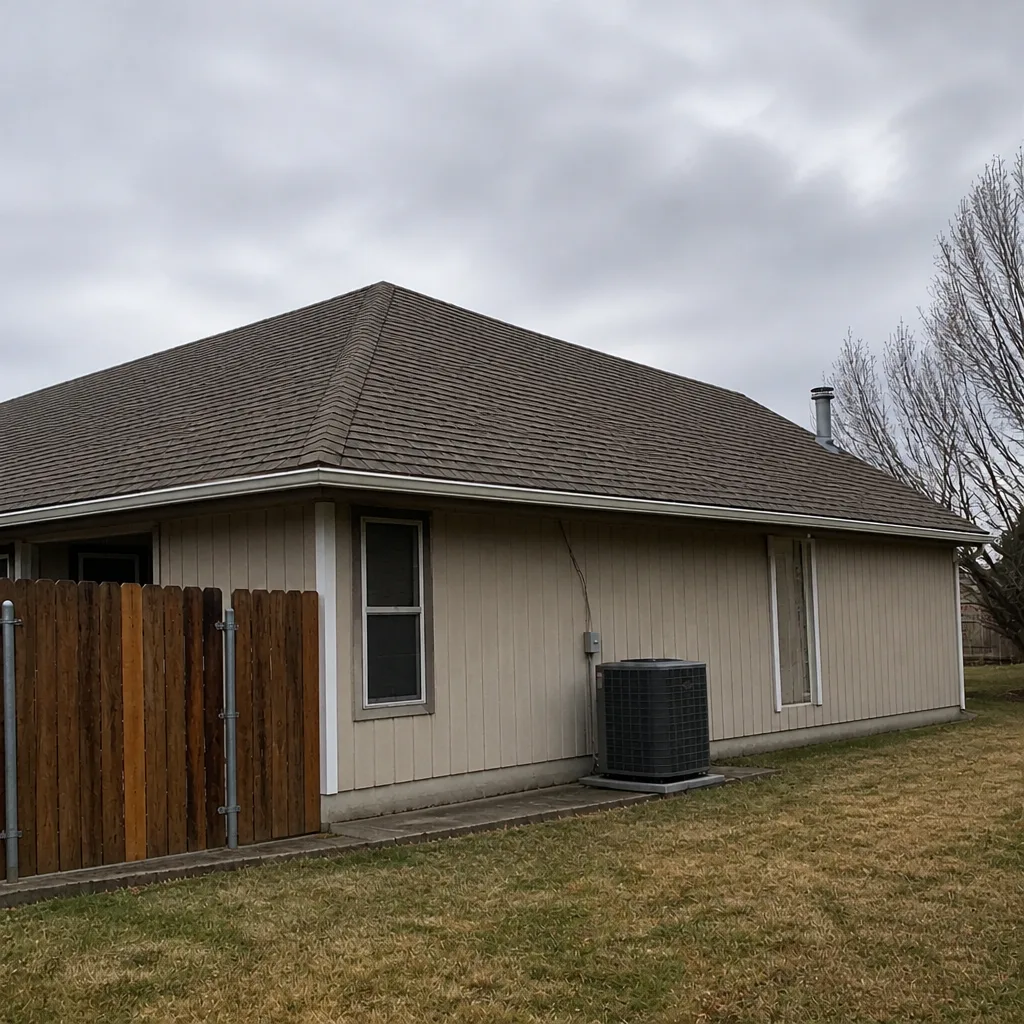
See the difference
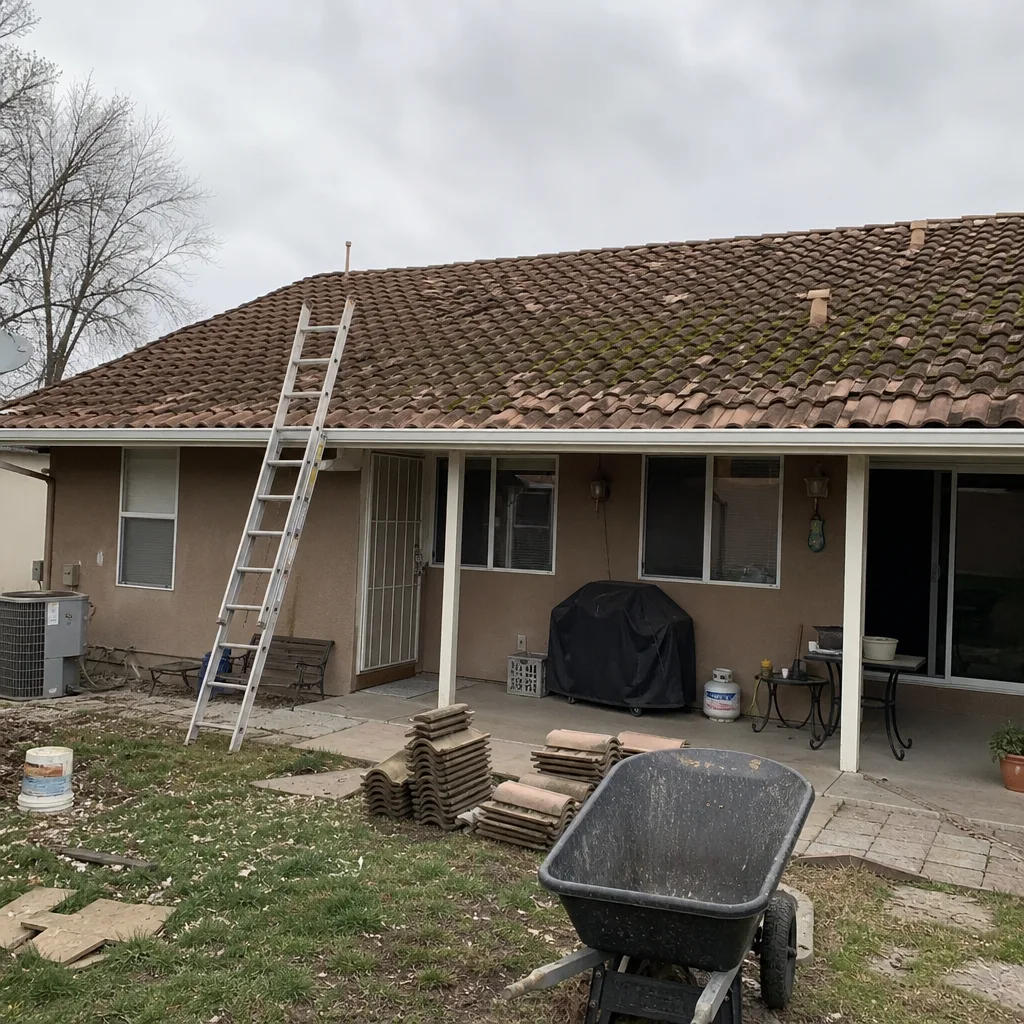 Before
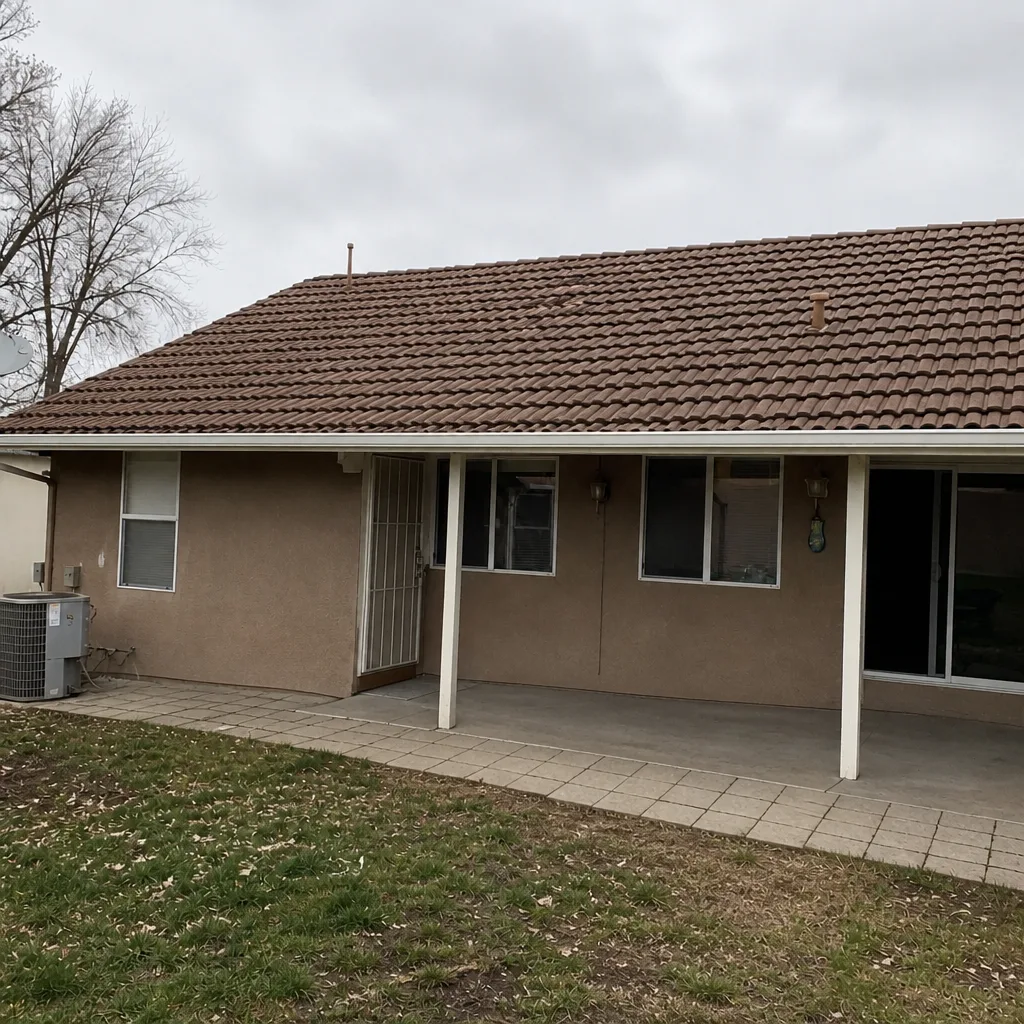 After
 Before
 After
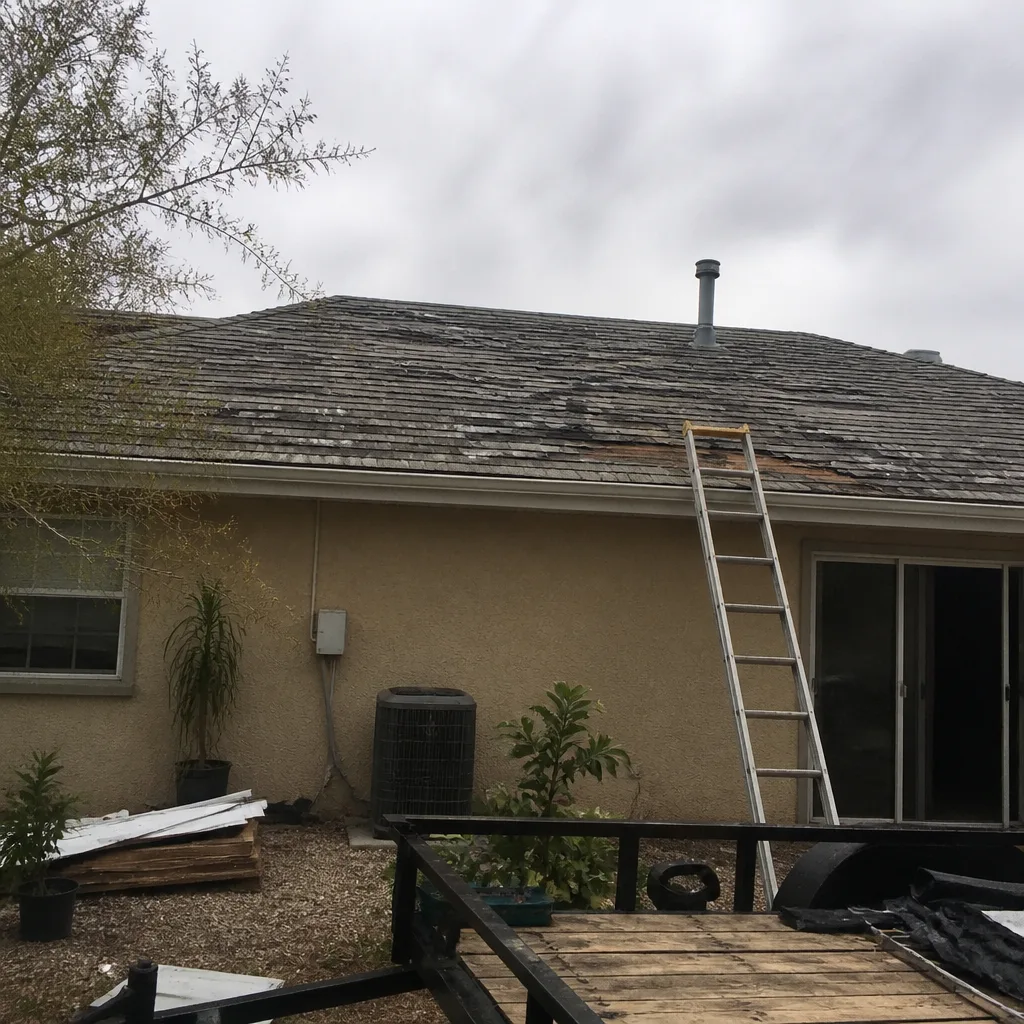 Before
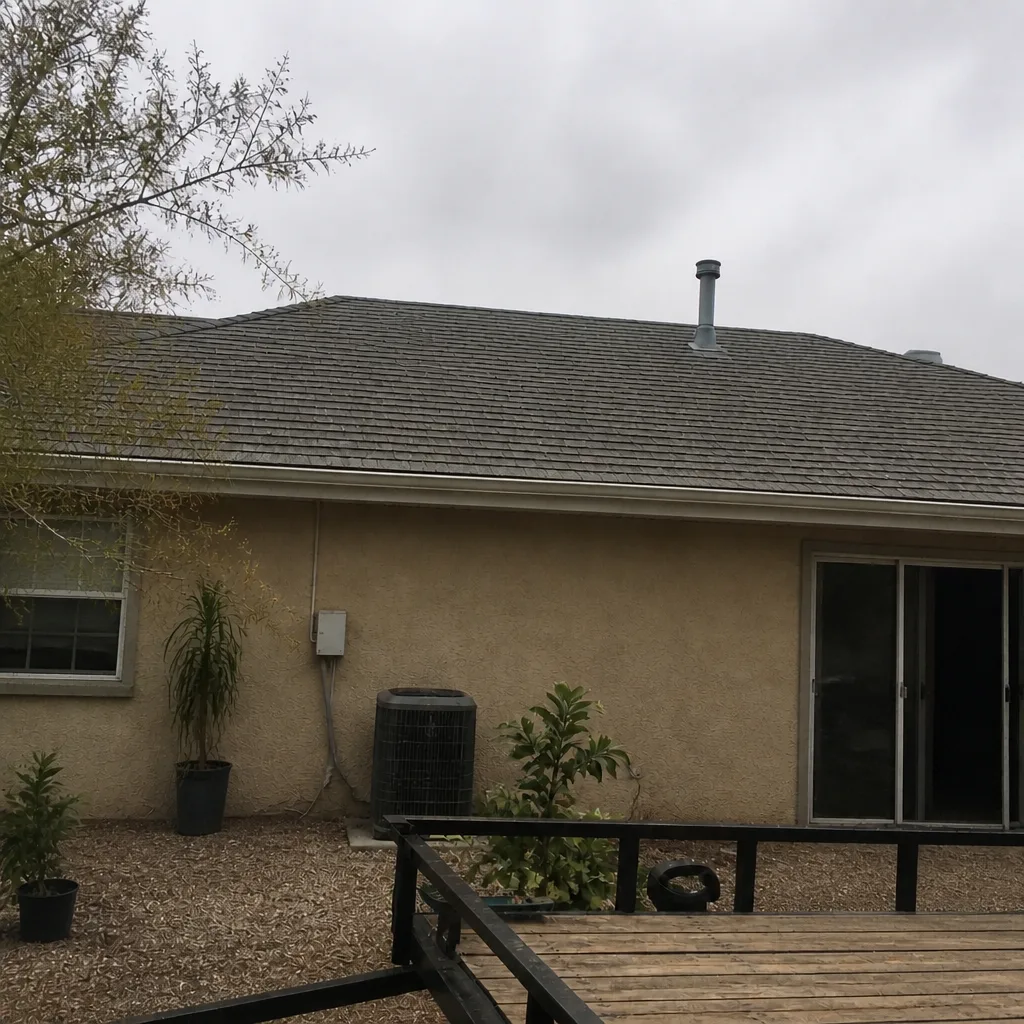 After
When to Call a Professional
The line between “I can check this myself” and “call someone” is mostly about safety and about seeing the whole picture. Walking a roof, especially a steep pitch, is dangerous and unnecessary for a homeowner – and a leak that shows up in one room often originates several feet away on the slope above. Call us when you see granule trails at the downspouts, a stain spreading on a ceiling, cracked or lifted shingles on the west slope, rusted or dried-out flashing, or a quote you’re not sure about. A free estimate, a free second opinion on any written estimate, and a no-trip-charge visit inside our own county mean you can get a real answer without a gamble. Shepherd & Sons Roofing Whitney offers free estimates in Whitney – call (844) 797-9455, and a live person picks up.
Frequently Asked Questions
Most Whitney roof repairs run between $350 and $1,800. A pipe boot replacement is around $180 to $350, valley flashing $400 to $900, and localized shingle replacement $500 to $1,800 depending on area and access. Call (844) 797-9455 for an exact quote – estimates are free.
Most small repairs – a boot, a flashing joint, a patch – are done in a single visit, usually a few hours. Larger shingle repairs on an inaccessible slope can take a bit longer. The crew should tell you the expected window before they start, not after.
It shouldn’t, and that’s why the inspection photos and line items matter. The one legitimate reason a number moves is if a hidden problem – like a soft deck board – turns up once the shingles come off. Ask up front how any surprise gets handled so there’s no change-order shock.
For a full replacement or anything touching the structure, yes – the permit is pulled and the work is inspected. For small repairs like a pipe boot, a permit usually isn’t required. Ask any contractor who pulls the permit before they start.
Because the sun here is harder than the national average. At roughly 4,600 feet and around 300 sunny days a year, UV degrades asphalt shingles about 30% faster than the manufacturer’s printed estimate. Warranties are written for an average climate, and Whitney isn’t one.
Sometimes, but it depends on the cause. Sudden damage like a storm event is more often covered; slow damage from worn-out sealant or sun-baked shingles usually isn’t, since it’s considered maintenance. Call your insurer to ask, then get an inspection so you know what’s actually failing before you file.
The Bottom Line
Whitney’s roofs fail on a different schedule than the generic guides describe. The sun is the main event – it dries out sealants, bakes shingles until they blister, and strips granules faster than the warranty card expects. The west slope and the valley flashings near rooftop equipment go first. The way to protect your home is to catch the small stuff early, insist that anyone who quotes your repair has actually been on the roof and has the photos to prove it, and hire a local name with an address and a license you can check. Fix the boot before it becomes a deck board. That’s the whole game in Whitney.
Same address, same name on the license. If you want a straight answer and a real number, call Shepherd & Sons Roofing Whitney at (844) 797-9455 for a free estimate – a live person picks up, and we’ll show you what we find before we talk money. Start at our Shepherd & Sons Roofing Whitney home to see what we do.
Written by the team at Shepherd & Sons Roofing Whitney.