
Last updated November 18, 2026
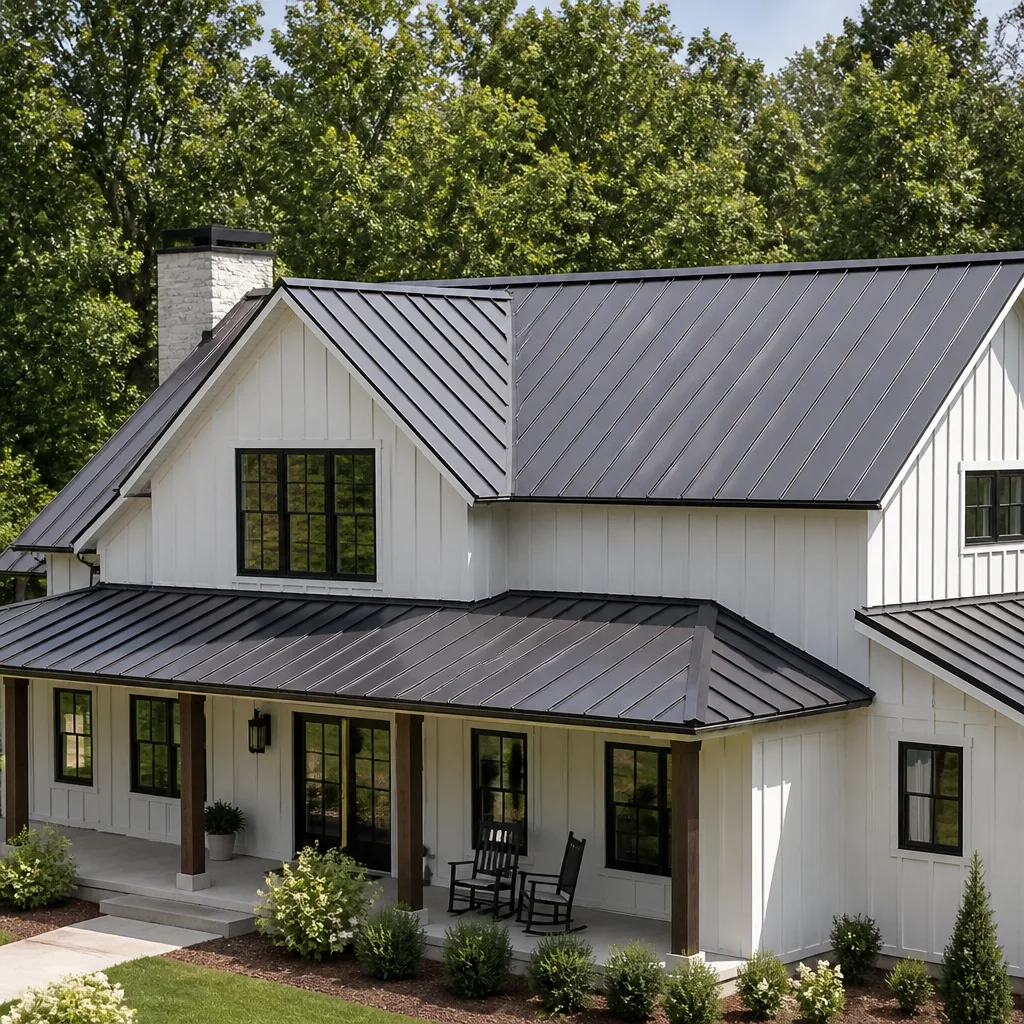 Metal roofing
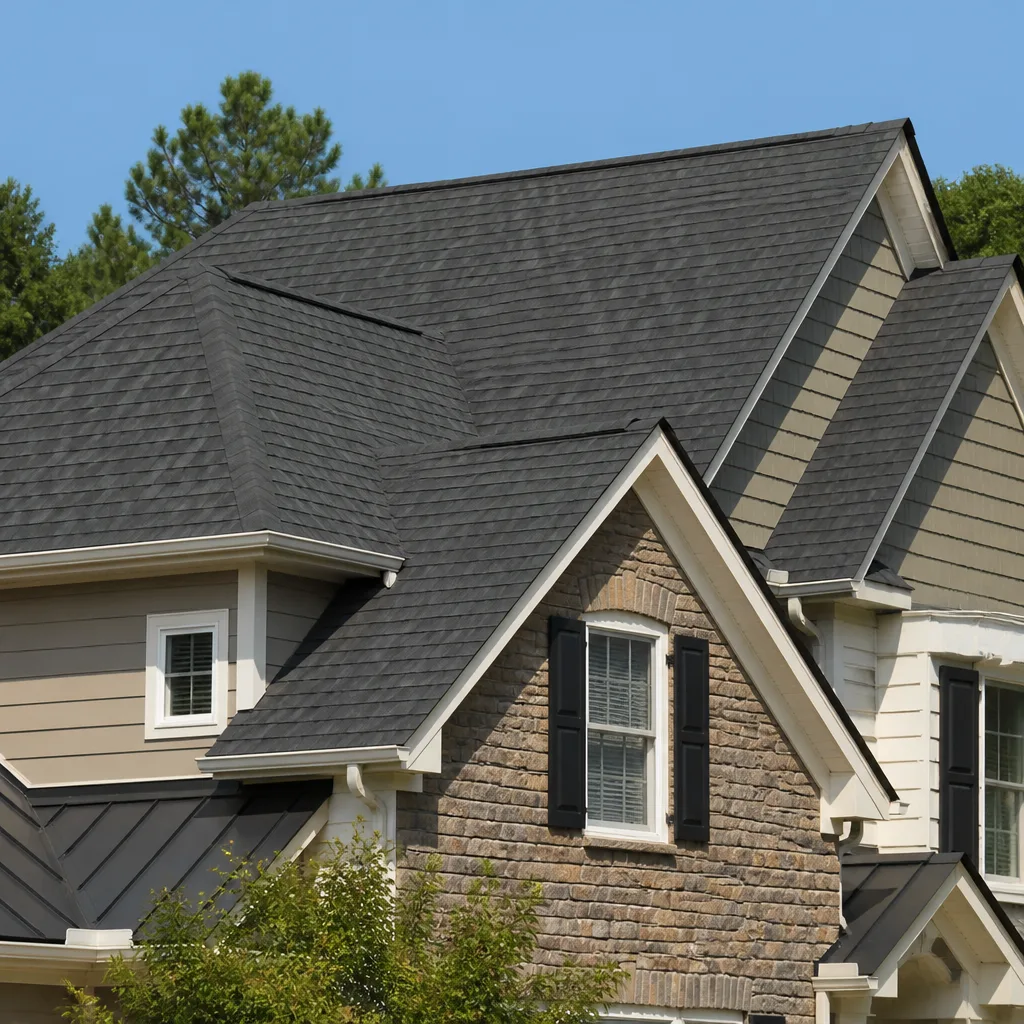 Architectural shingles
 Tile roofing
 GAF
 Owens Corning
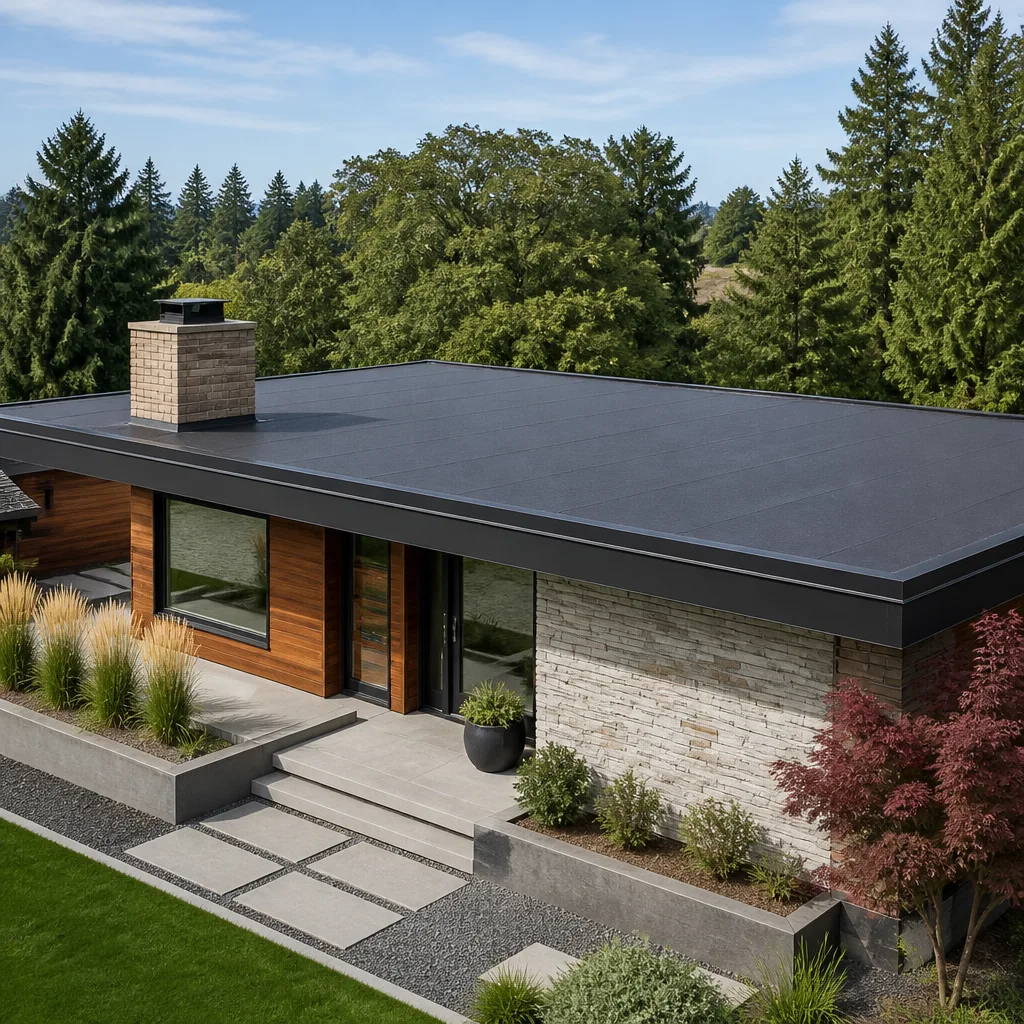 Flat & low-slope
Free roof inspection with deck photos before we talk money - GAF and Owens Corning certified installation
Roofing Emergency Preparedness Guide for Whitney Homes
When a Clark County hailstorm drops golf-ball ice on your neighborhood at 4 PM on a Tuesday, your roof is the last thing you’re thinking about – and that 48-hour window before you document the damage is the most expensive mistake you’ll make. Most Whitney homeowners assume their real roofing threat is a hurricane off the coast. It isn’t. It’s a monsoon microburst that dumps a month of rain in forty minutes, or a hailstorm that rolls off the Spring Mountains and stones a subdivision in ten minutes flat. This guide walks you through what to do in the first 48 hours, how to tell hail damage from old sun wear, why the friendly contractor knocking on your door the next morning is usually the wrong one, and what to have ready before the sky turns. Bookmark it. Whitney weather doesn’t send a calendar invite.
Quick Answer
After a Whitney hailstorm or microburst, your job in the first 48 hours is to photograph everything – the roof, the gutters, the downed limbs, the dings on your AC unit and fence – before a single contractor or insurance adjuster walks onto your property. Then tarp any active leak yourself or with a pro, and only then call your insurer. The photos you take before anyone touches the roof are the evidence your claim depends on, and no contractor can recreate them after the fact.
Styles & brands we work with
- Architectural shingles
- Metal roofing
- Tile roofing
- GAF
- Owens Corning
- Flat & low-slope
Table of Contents
- The First 48 Hours After a Whitney Hailstorm or Microburst
- Emergency Tarping: When You Need It and How to Do It Right
- How to Tell Hail Damage From Pre-Existing UV Wear
- The Storm-Chaser Warning Every Whitney Homeowner Needs
- What to Have Ready Before an Emergency Happens
- Actual Cash Value vs. Replacement Cost: What Your Policy Actually Pays
- Whitney Neighborhoods and the Roofs That Live There
- How a Local Roofer Fits Into Your Emergency Plan
The First 48 Hours After a Whitney Hailstorm or Microburst
What you do in the two days after the storm decides how much of your repair the insurance company pays for. Do it in this order.
- Make it safe before you photograph anything. Look for downed power lines, sagging roof sections, or water pouring through a ceiling. If any of that is present, get everyone out and call for help before you go near the roof.
- Photograph the ground evidence first. Hail dents on your AC condenser fins, shreds of shingle in the yard, leaf and debris lines on the north side of the house. These are the cheapest, safest photos you’ll take.
- Shoot the roof from the ground with a zoom lens. Missing tabs, curling edges, granules washing down the downspouts, and fresh bruises on the shingle face all show up in a decent phone zoom. Do not climb a wet Whitney roof to get a better angle. More homeowners hurt themselves doing that than get hit by hail.
- Photograph the interior water damage. Ceiling stains, sagging drywall, wet insulation in the attic if you can reach it safely. Timestamp everything; your phone does this automatically.
- Write down the date, time, and storm characteristics. “Golf-ball hail, ~4:15 PM, ~15 minutes, wind from the southwest” is the kind of note an adjuster respects.
- Call your insurer to open a claim. You don’t need a contractor’s estimate first. Opening the claim starts the clock and protects you from policy deadlines you probably don’t know exist.
If you can’t safely photograph the roof, that’s fine. Call a local roofer to do the inspection, but understand the difference: the roofer’s job is to document the damage for you, and your insurer’s adjuster makes the final call. Keep both sets of eyes on the roof. In our experience in Whitney, the homeowners who come out best after a storm are the ones who documented before anyone got on the roof.
Emergency Tarping: When You Need It and How to Do It Right
Tarping is not a roof repair. It’s a temporary shield that buys you days or weeks until permanent work can be scheduled. Knowing when to tarp and when to leave the roof alone is the whole skill.
When you need a tarp
- Water is actively coming through the ceiling or down an interior wall.
- A section of shingle is missing and exposed decking is soaking up rain.
- A limb has punctured the roof or torn off fascia and opened a gap.
- More rain is in the forecast and you won’t have permanent repairs for a week or more.
When you should not tarp it yourself
Most of the time, honestly. A wet Whitney roof, a two-story pitch, and a homeowner on a stepladder is a bad combination. Asphalt shingles and tile are slick when wet, and the wind that comes with a monsoon cell doesn’t help. This is one of the few “call someone” moments in homeownership where the call is genuinely the right answer.
What correct tarping looks like
- Use a proper tarp, not a taped-together blue plastic sheet. A 10-mil or heavier woven tarp resists wind and UV.
- Overlap the damage generously. The tarp should run well past the damaged area and up over the ridge line, so water can’t get underneath.
- Fasten through the tarp edges into the roof deck, not through the shingle faces. Nails or cap nails through the shingle field cause more damage and confuse your adjuster.
- Leave the edges free to shed water. Don’t seal the bottom edge; let it drain over the gutter line.
- Photograph the tarp after installation. Your claim needs a record that emergency mitigation was done correctly.
Here’s the part competitors skip: homeowner’s policies generally cover emergency mitigation costs when the work is done to prevent further damage. That includes professional tarping in many cases, provided you keep the invoice. Save the receipt. Mention it to your adjuster. If a neighbor’s tree put a hole in a Whitney roof and rain is entering the attic, tarping is the correct response and usually a covered one.
If your roof is seriously compromised and needs more than a tarp, our Roof Repair in Whitney service is the closest thing to a permanent fix on short notice.
How to Tell Hail Damage From Pre-Existing UV Wear
This is where claims get made and broken. On the phone with your insurance company, you need to describe what you see accurately, because the difference between hail damage and ordinary sun wear is the difference between a covered repair and a denial.
Hail damage looks like this
- Random, scattered bruises. Hail hits in a pattern that looks like freckles: irregular spots across many shingles, not a uniform line.
- Soft spots on the shingle face. Hail leaves a bruise where the mat is broken under the granules. The shingle surface feels soft to a careful fingertip.
- Freshly exposed asphalt where granules have been knocked away – dark, shiny, like a fresh crack in a chocolate bar.
- Dings on metal components. Your AC condenser fins, the metal flashings around vents, the gutters, and the downspouts all show dents in the same event. That’s a smoking gun.
- Concentrated on the southwest and west-facing slopes if that’s the direction the storm came from. Hail is directional.
Ordinary UV wear looks like this
- Granules sliding off in an even pattern on the sunny slopes, year after year.
- Curling or cracking shingles without the “ding” pattern hail leaves.
- Chalky shingles with no fresh asphalt showing.
- Wear concentrated on the south and east sides where the sun beats hardest – not scattered randomly across the whole roof.
In our experience in Whitney, homes on the older east side have roofs that are 15-plus years into their service life; they show plenty of UV wear even before a hailstorm rolls through. The adjuster knows this. That’s exactly why getting a fair assessment matters. If you’re not sure what you’re looking at, don’t guess. The free second opinion below exists for exactly this moment.
Read more about how we assess roof condition and whether repair or replacement is the right call in our Roof Replacement & Installation in Whitney guide.
The Storm-Chaser Warning Every Whitney Homeowner Needs
Here’s the hard truth about roofing: within 24 to 48 hours of any noteworthy storm in Clark County, out-of-state contractors will be knocking on doors in Whitney neighborhoods, offering quick estimates and faster repairs. A handful are legitimate. Most aren’t.
How do you tell? A few simple questions.
Ask these questions before anyone touches your roof
- What’s your business address? A real local outfit has a physical address you can drive to. If the answer is a PO box in another state, or “we’re staying in a hotel,” that’s your answer.
- Are you licensed in Nevada, and can I have the license number to look up? Nevada contractors are required to be licensed by the state. If they can’t hand you a number you can verify, walk away.
- Are you going to be here in 90 days when something goes wrong? Storm chasers are gone in weeks. A roofer with a real local address will still answer the phone long after the weather clears.
- Will you write me a scope of work that names the shingle system and the underlayment? If they won’t put the products and process in writing, they’re not describing a real repair.
- Will you give me a written workmanship promise? Our 90-Day Done Right Promise is in writing on every job: if it isn’t done right, we make it right. We don’t know a single storm chaser who offers that.
The reputation math in a small town is unforgiving. A storm chaser has no reputation in Whitney to protect. A locally owned roofer with the same address for decades does. When the next hailstorm comes through, the storm-chaser outfit has already left town, but the local roofer you used is still around for round two.
Here’s the deeper point: in Whitney, we see far more microburst, wind uplift, and hail damage than hurricane damage. A guide written for the Gulf Coast doesn’t fit. A microburst drops in from the Spring Mountains, tears shingles off a whole cul-de-sac, and dumps an inch of rain in fifteen minutes. Matching the response to the storm is the whole game.
If you want to know what a name-the-brand, clearly-scoped installation looks like, our main page on Shepherd & Sons Roofing Whitney explains our approach.
What to Have Ready Before an Emergency Happens
The homeowners who handle storms best aren’t lucky. They’re prepared. Maintain a simple paper-and-phone kit today so you’re not scrambling Tuesday afternoon.
Contractor’s number
Keep the number of a local roofing company at the top of your home-office file: saved to your phone, written on the folder with your insurance policy, and taped to the inside of a kitchen cabinet. In our shop, a live person answers the phone all the time, including nights and weekends after a storm, and you don’t get routed to a call center or a voicemail. Ask any local roofer you’re considering about that before you need it.
Policy number and insurer contact
Your policy number, your insurer’s claim line, the declarations page, and any riders. Have this in a drawer and in your phone. If your policy has special provisions for wind and hail, know them before you call.
A pre-storm photo record
Every six months, walk your lot and photograph the roof from the ground, the gutters, the flashings, the attic interior corner, and your AC unit. Store the photos in a cloud folder with the date in the folder name. This pre-storm photo record is what lets you tell the adjuster the difference between damage the storm caused and wear that was already there. It’s the single most useful thing you can do this weekend.
Neighborhood contractors worth knowing
Note two or three local roofers whose trucks you see on your street. The carpenter’s rule holds: ask a neighbor you like whose roof looks good who did the work. That list is worth more than any directory.
Actual Cash Value vs. Replacement Cost: What Your Policy Actually Pays
Two terms decide how much of your roof replacement the insurance company actually writes a check for. Get them straight now.
Actual Cash Value (ACV)
ACV pays the current value of your roof, not the cost of a new one. If your 12-year-old shingles were halfway through a 20-year life, the insurer pays roughly half. Example: replacement cost $18,000, roof is halfway through its life, ACV payout may be around $9,000 (minus your deductible). ACV policies are cheaper on premium and more painful at claim time. Older Whitney homes with aging roofs usually carry them.
Replacement Cost Value (RCV)
RCV pays to replace the roof with similar materials regardless of age. Your payout is much closer to the true replacement cost. Many policies pay an initial amount equal to ACV and then release the balance (“recoverable depreciation”) once the work is complete and invoiced. That’s a crucial detail: on an RCV policy, you have to actually do the work and submit the invoice to get the second check.
The practical difference for a Whitney homeowner
- Know your policy type before you file. Look for “replacement cost” language on the declarations page.
- ACV policy? Your out-of-pocket will be higher, and it pays to have two or three local estimates to know your true number.
- RCV policy? Don’t finalize the job with the initial check only. Make sure the contractor’s invoice triggers your recoverable depreciation.
- Deductible note: Nevada hail and wind deductibles are sometimes a separate percentage of dwelling coverage, not a flat dollar amount. Read the storm-damage section of your policy.
Our job at Shepherd & Sons Roofing isn’t to advise on your claim; that’s your insurer’s territory. It’s to give you an accurate written scope so you can compare it against the adjuster’s and know where they differ. That’s where a free second opinion comes in.
Whitney Neighborhoods and the Roofs That Live There
Whitney is a tight community of roughly 40,000 people tucked into the southeast Las Vegas Valley, right up against Henderson and a short drive from Boulder Highway and Lake Mead. The weather that threatens a roof here is specific: blistering summer UV, monsoon bursts from the mountains to the west and northwest, dust storms that strip granules, and the occasional rare hailstorm that catches everyone off guard. The roofs here face a stress combination you won’t see in most of the country: maximum sun, minimal moisture, sudden violence.
The roofs follow the neighborhoods. Whitney Ranch homes, most built in the 1990s, favor asphalt shingles and tile; the shingle roofs are hitting or passing their service-life window, so age plus storm damage can overlap in ways an adjuster will scrutinize. The newer builds closer to the eastern edge often carry concrete tile and metal systems. And out toward the county line, larger lots with pitched roofs and exposed sides catch more wind uplift on a microburst than a dense subdivision does.
If your home has a metal roof, especially the standing-seam or exposed-fastener styles popular on rural and semi-rural Whitney lots, our Metal Roofing in Whitney page covers how metal handles hail far better than shingles and what to inspect after a storm. If your home is tile, inspect for cracked field tiles and displaced underlayment, which is where the leaks actually start.
How a Local Roofer Fits Into Your Emergency Plan
We’re Shepherd & Sons Roofing. We’ve run from the same Whitney address since 1996, and our crew installs products from GAF, CertainTeed, Owens Corning, Tamko, and Boral. When a storm rolls through Whitney, a live person answers our phone, night or weekend, and it’s a person who can actually help – not a form, not a call center, not a voicemail prompt.
What we offer that matters after a storm:
- Free second opinion on any written estimate. If your adjuster’s scope looks light, or a storm-chaser’s bid looks strange, we’ll look at both and tell you what we see.
- Line-item written scope naming the shingle or system, the underlayment, the flashing work, and the square count. We show you deck photos before we talk money.
- 90-Day Done Right Promise in writing on every roofing job. If something isn’t right, one call brings us back.
- No trip charge inside our own county for a look at the roof.
- $40 off any repair over $200 and a 10% senior and veteran discount, available on request.
One note on safety that’s worth saying plainly. If your roof took a hit, don’t climb up there yourself after a storm. Wet shingles, a steep pitch, and a ladder in the wind is a genuine and serious danger. That’s what we’re here for. Our crew climbs. You photograph from the ground.
Common Mistakes to Avoid
- Signing anything on the spot. A contractor who needs a signature the same afternoon is selling, not roofing. Sleep on every bid for at least one night.
- Waiting to document until a contractor shows up. Once a roofer or adjuster is on the roof, the storm’s fresh evidence is being walked on. Photograph before anyone gets up there.
- Calling a 1-800 number from a door hanger. Whitney storm chasers use door hangers for a reason. Check the Nevada license number before you call back.
- Assuming hail damage is covered by your standard deductible. Nevada wind and hail sometimes carry a separate percentage deductible. Read your policy, or ask the insurer directly, before you budget.
- Tarping the roof yourself. We mentioned it once and we’ll mention it again. Climb down and call a pro. The ER bill dwarfs the tarping cost.
- Skipping the pre-storm photos. A six-month photo record of your roof is the single cheapest insurance you can buy against a disputed claim.
- Accepting the first settlement without a second scope. Adjusters are honest and busy people, but they’re also working from a photo set they took quickly. A local roofer’s second look often surfaces line items the adjuster missed.
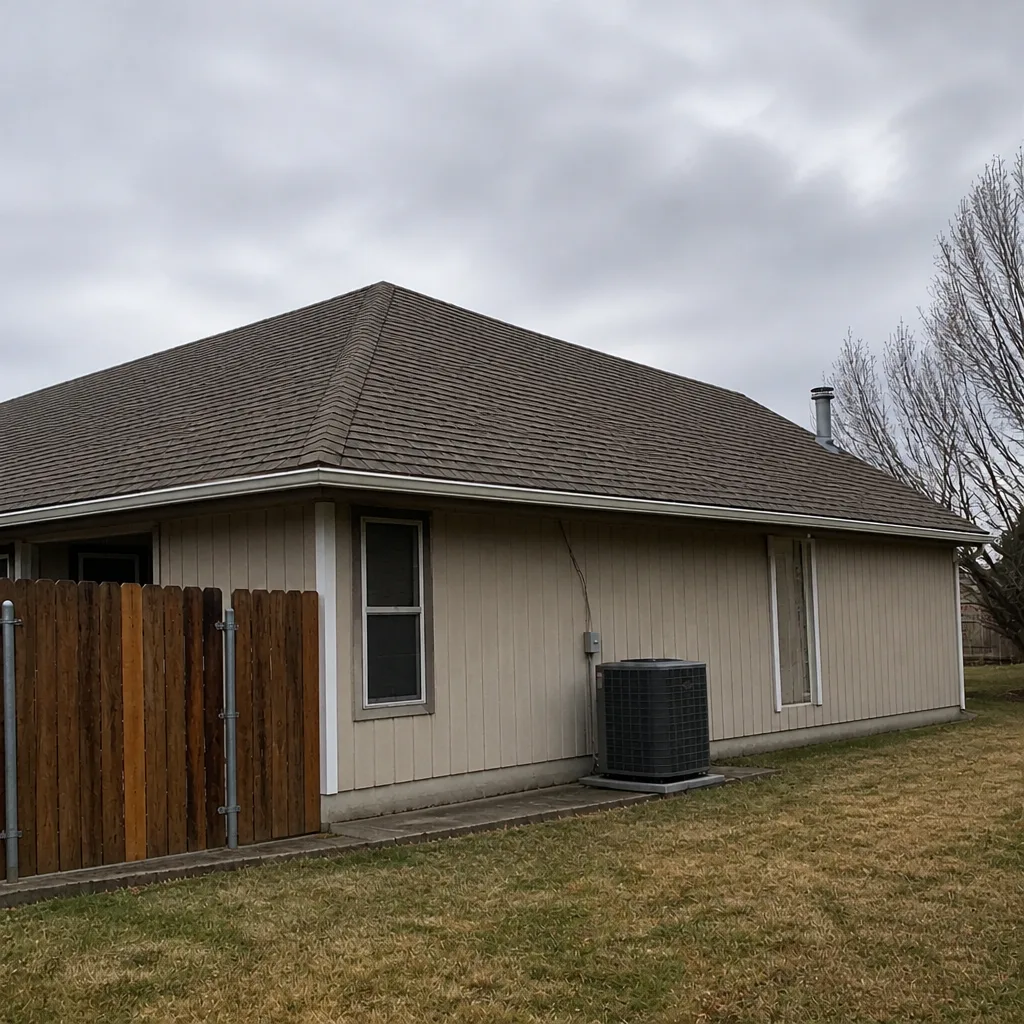
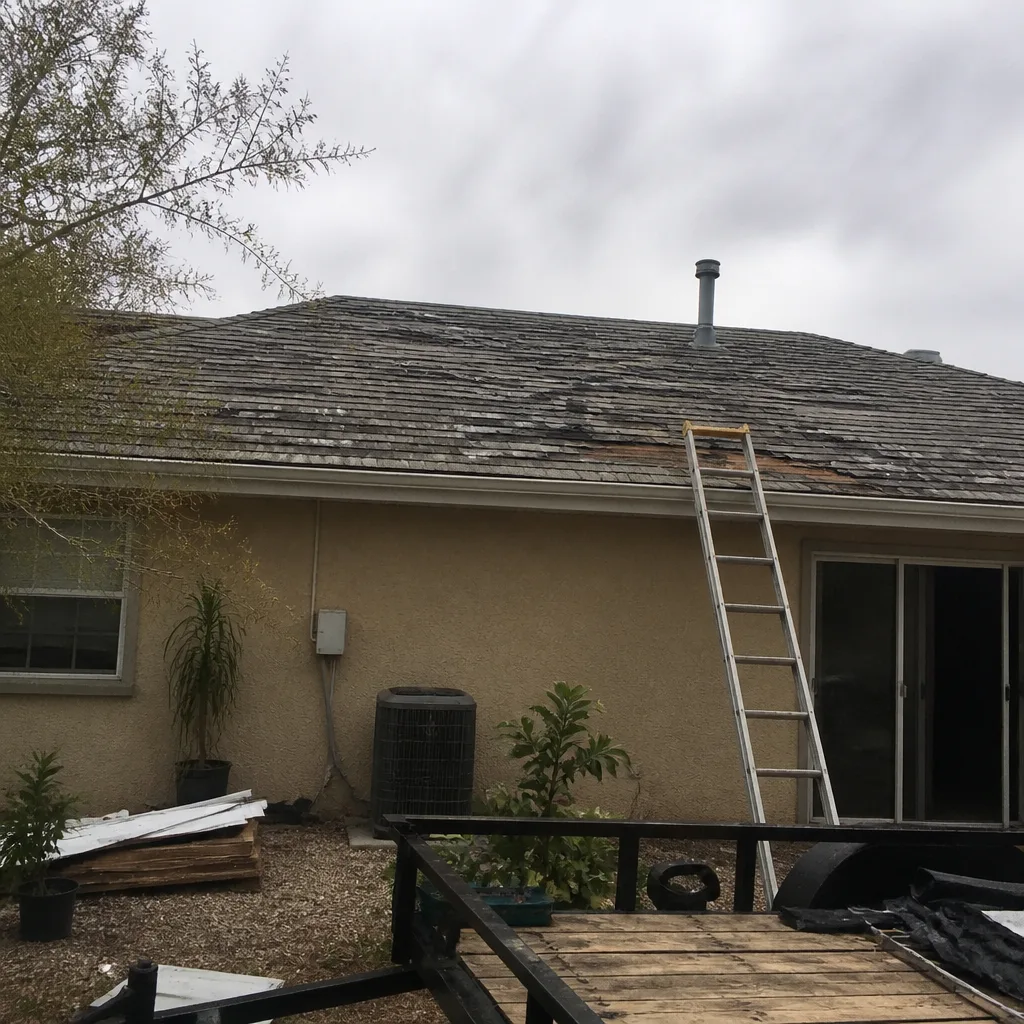
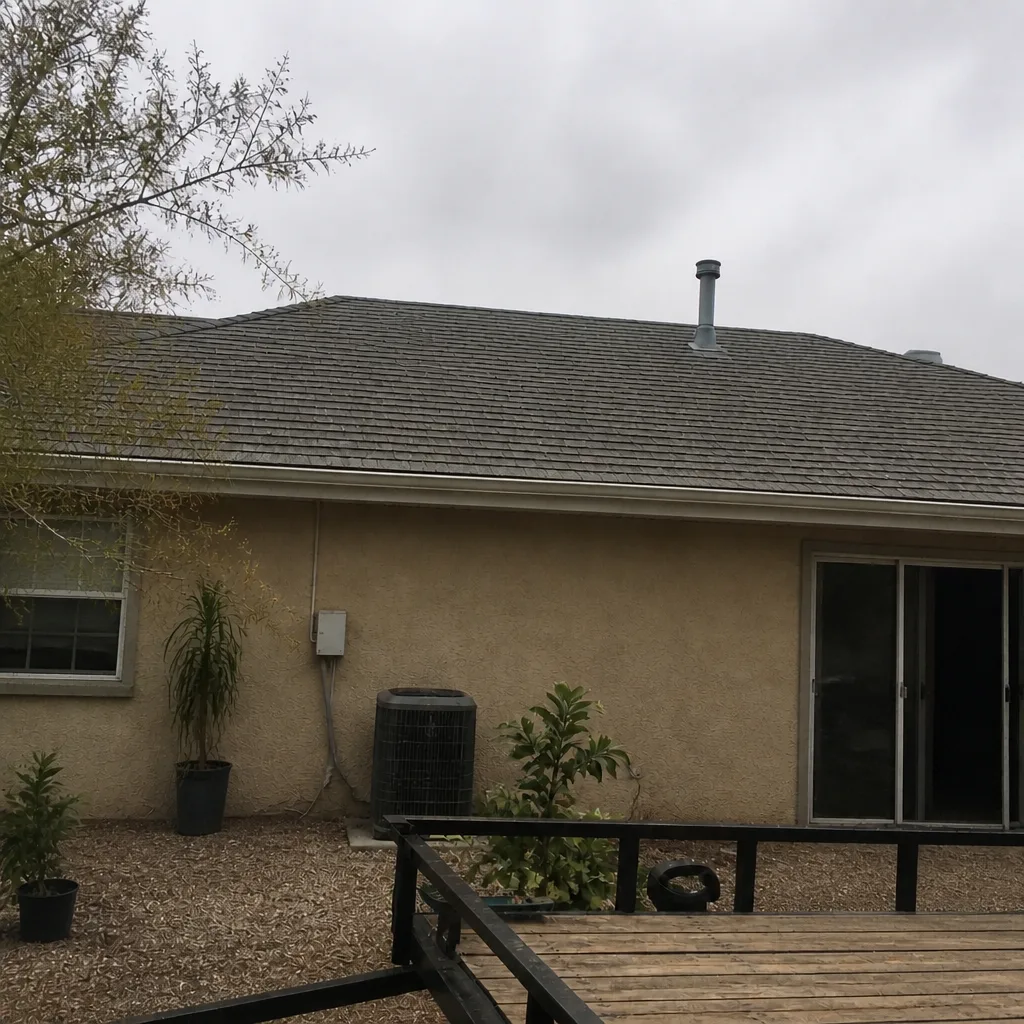
See the difference
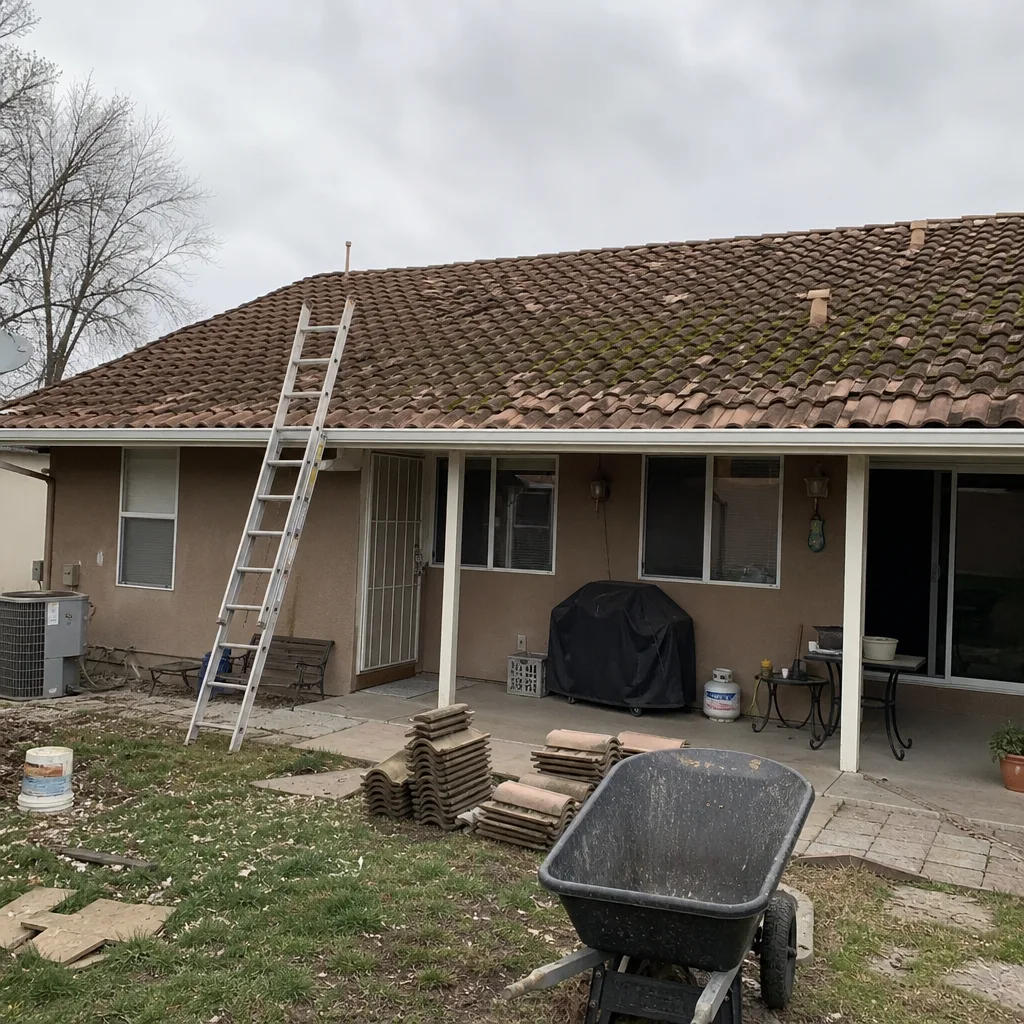 Before
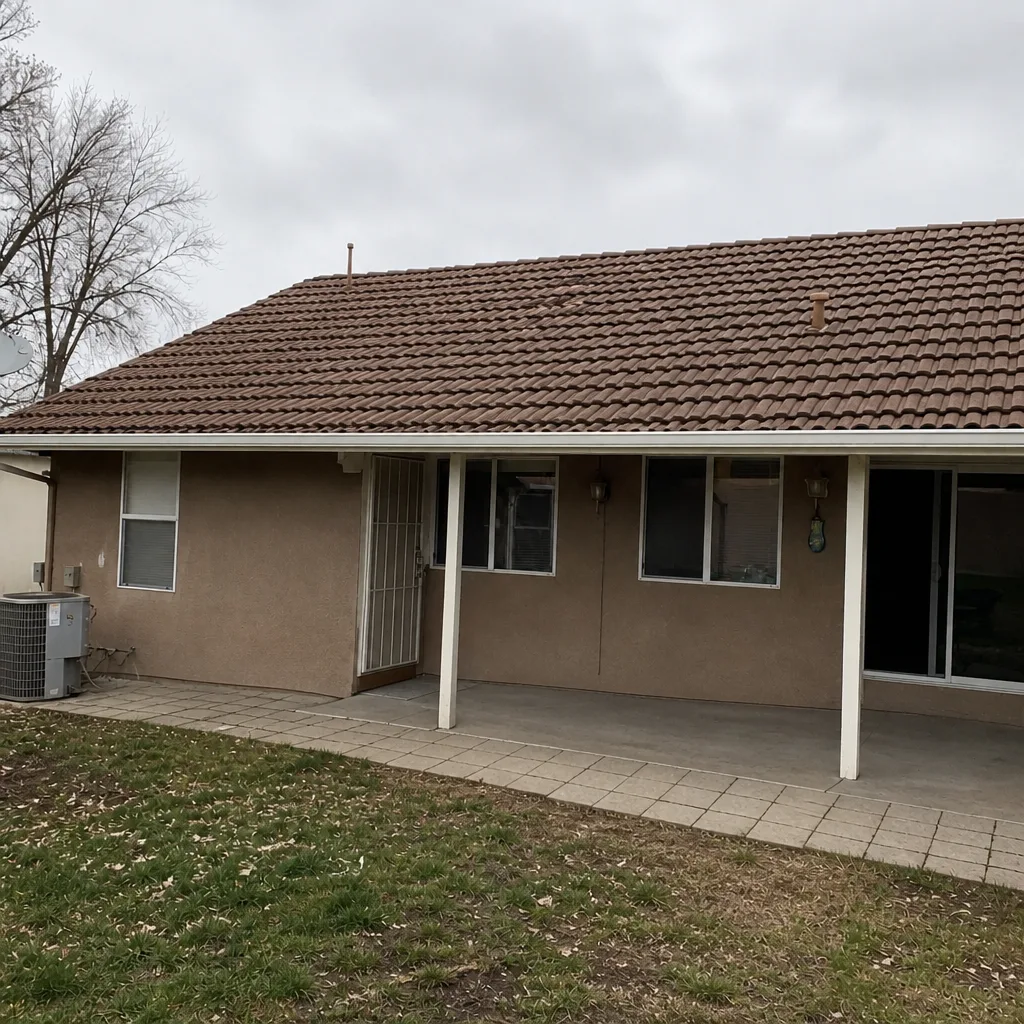 After
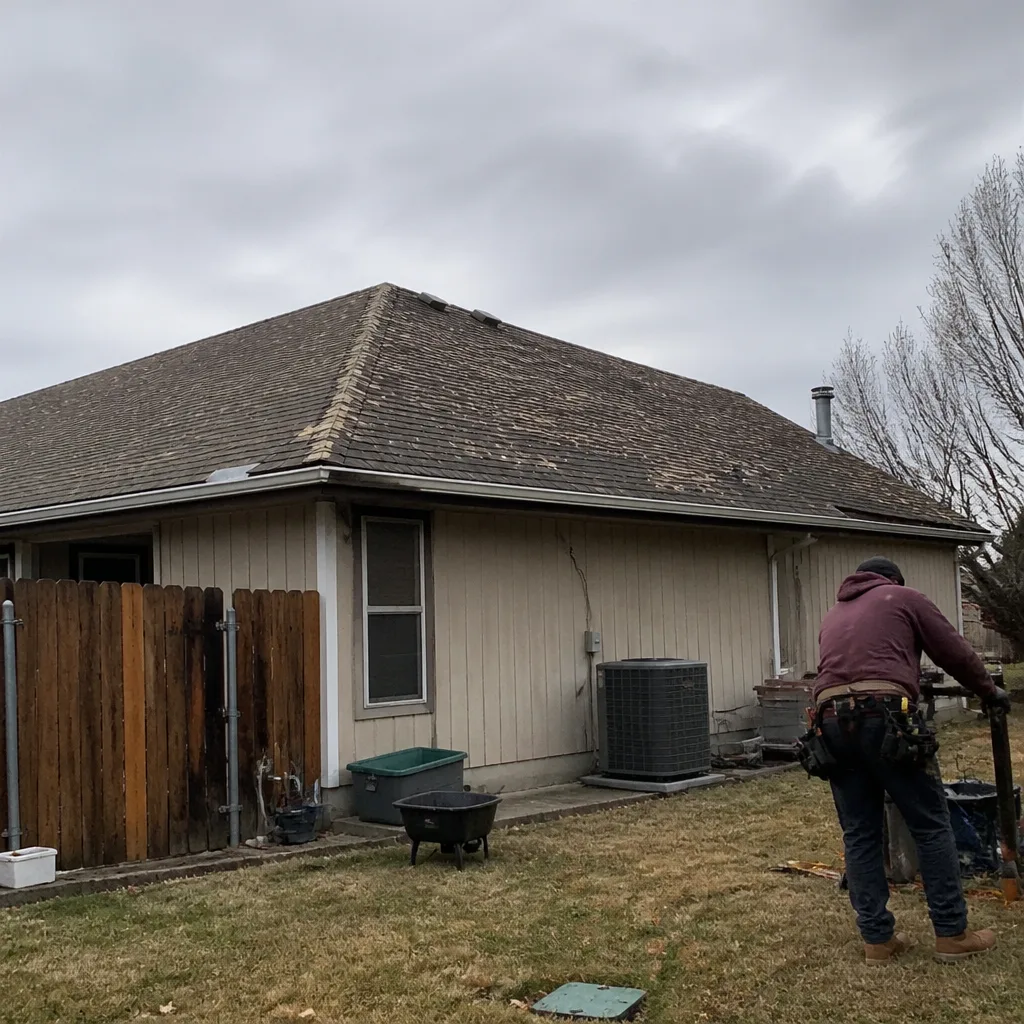 Before
 After
 Before
 After
When to Call a Professional
Call a roofer when water is coming through, when shingles are missing, when a limb has punctured the roof, or when you genuinely can’t tell from the ground whether the roof is sound. Call us when you want a written second opinion on any estimate you’ve already received, or when a storm-chaser knocked on your door and you’re not sure what to make of the offer. If your AC condenser, gutters, or skylight flashing shows fresh impact dents, that’s a strong signal it’s worth having the roof inspected too. Shepherd & Sons Roofing Whitney offers free estimates in Whitney. Live person answers the phone – call (844) 797-9455.
Frequently Asked Questions
Most storm repairs in Whitney run from a few hundred dollars for flashing, a few shingles, or a downspout up to several thousand dollars for large sections of decking or a full roof section. A local written scope with line items is what tells you your real number. Call (844) 797-9455 for a free estimate – the second opinion on any written bid is free.
Many homeowner policies cover emergency mitigation, including professional tarping, when it’s done to prevent further damage. Keep the invoice; your adjuster will need it. Call (844) 797-9455 and we’ll tarp what can be tarped and photograph everything for your claim.
Hail damage looks like random freckle-like bruises across multiple shingles, with soft spots and freshly exposed dark asphalt. Ordinary UV wear shows up as even granule loss on sunny slopes and shingles that curl without impact dings. Fresh dents on metal components (AC, gutters, flashings) are the tell that a storm hit. If you’re not sure, call (844) 797-9455 for a free inspection.
Almost always, yes. Typical storm repairs and most reroofs happen on the exterior, and you can stay put with some noise and trailer activity around the yard. If your interior is damaged or there’s a safety concern, we’ll tell you up front so you can plan around it. Call (844) 797-9455 to talk through timing.
We can’t promise a specific hour; a big Whitney storm puts every roofer in the valley on the road at once. What we can promise is that a live person answers the phone, so you’re not stuck in a voicemail queue. After that, we’ll give you an honest window when we call back.
Repairs generally require a permit when they involve replacing decking, changing the roof covering on a significant portion of the roof, or structural work. A licensed Nevada contractor pulls the permit and passes the inspection. Shepherd & Sons Roofing is a state-licensed contractor, and we pull permits and pass inspections on the work we do. Call (844) 797-9455 to walk through your specific job.
The Bottom Line
The roofing emergencies that hit Whitney homes are monsoon microbursts and rare-but-real hailstorms, not hurricanes, and the playbook that saves a Whitney roof is its own thing. Photograph everything in the first 48 hours, before a contractor or adjuster is on the roof. Tarp what leaks, call a pro to climb, and know your ACV from your RCV before you file. Keep a local roofer’s number and a six-month photo record of your roof in your file drawer. And when a storm chaser knocks, check the license number and the business address, and ask whether they’ll still be here in 90 days. The local roofer with a published address and a name on the truck will be.
If you want a free look at your roof or a free second opinion on an estimate, call our Whitney team at (844) 797-9455. A live person answers, day or night.
Written by the team at Shepherd & Sons Roofing Whitney.