
Last updated November 18, 2026
 Architectural shingles
 Metal roofing
 Tile roofing
 GAF
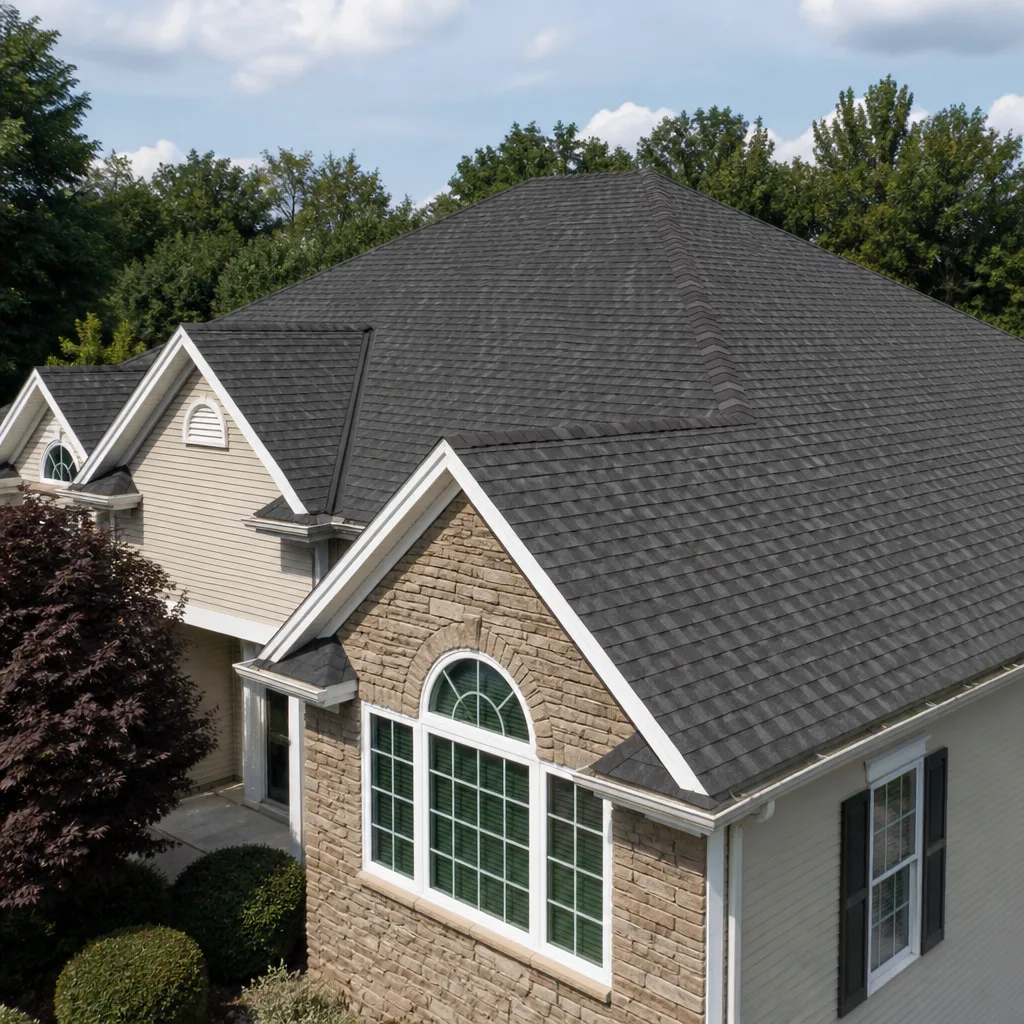 Owens Corning
 Flat & low-slope
Free roof inspection with deck photos before we talk money - GAF and Owens Corning certified installation
Roof Repair Warning Signs Every Homeowner Should Know
Homeowners in humid states call a roofer when they see moss creeping up the north slope. In Whitney, the warning sign almost nobody acts on in time is quieter than that: a chalky, faded patch on the shingle face that most people assume is just sun bleaching. It isn’t. That pale patch is where the granule layer has worn through and left bare asphalt underneath, and once the granules are gone the shingle is a sponge. In a high-desert climate that dropped those granules with years of UV and hard afternoon sun, that faded square is the first sentence of a much more expensive story. Here’s what we’ve learned to look for, and which signs mean call someone this week versus plan a repair before next winter.
Quick Answer
The most important roof repair warning signs are failing granules (chalky or faded shingle faces, grit in the gutters), lifted or curled flashing, granule piles at the downspouts, and a hot-attic smell that turns into a wet-wood smell after rain. In Whitney, UV degradation and hard afternoon sun do more damage than rain ever does, so shingles age from the top down in ways that look normal at a glance. Most serious repairs we see would have been a few hundred dollars earlier and become a deck replacement later.
Styles & brands we work with
- Architectural shingles
- Metal roofing
- Tile roofing
- GAF
- Owens Corning
- Flat & low-slope
Table of Contents
- The Color Change That Isn’t Sun Bleaching
- Texture: What Your Hand Tells You That Your Eyes Miss
- Interior Signs: Hot Attic Smell vs. Wet Wood Smell
- Lifted Flashing: Why the Ground View Fools You
- The Gutter Audit: Read Your Downspouts
- Bill’s Honest Triage: This Week vs. Before Winter
- Common Mistakes to Avoid
- When to Call a Professional
The Color Change That Isn’t Sun Bleaching
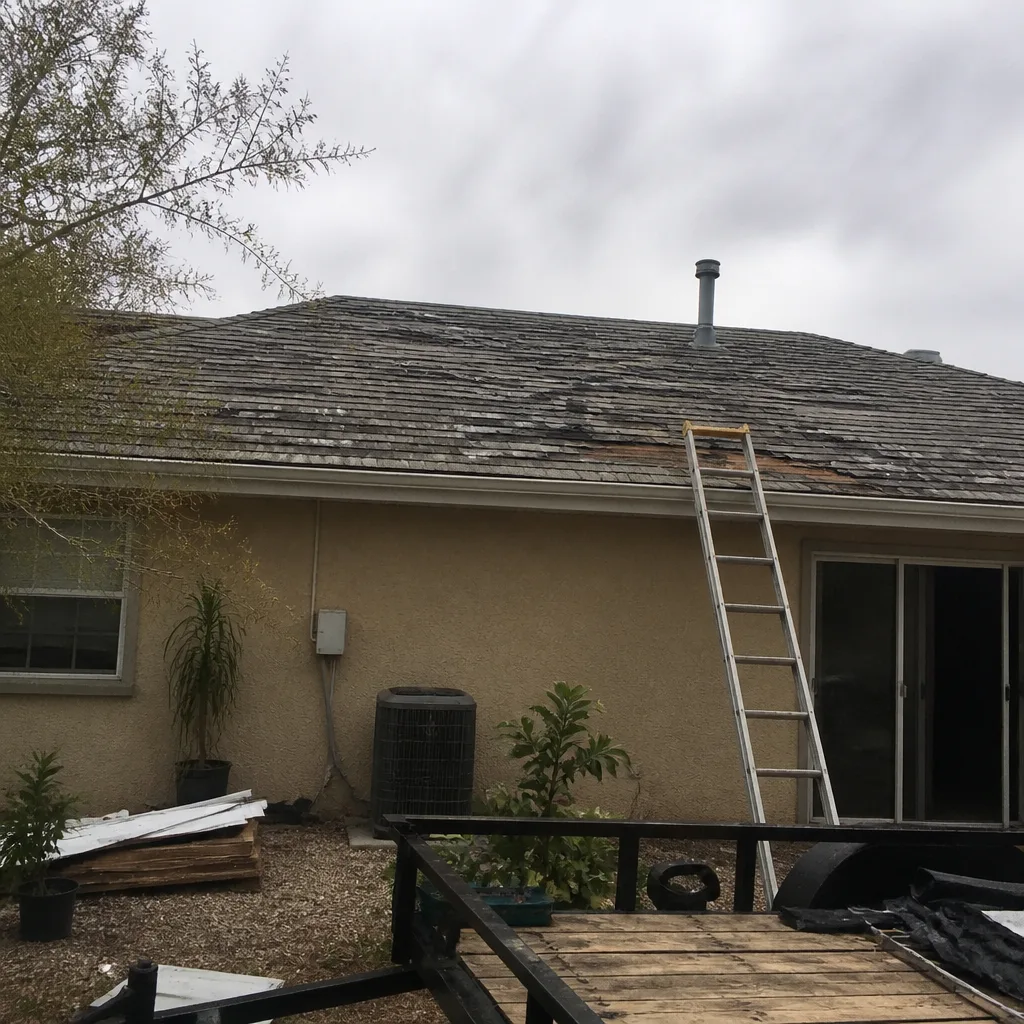
Every shingle made by Tamko, GAF, CertainTeed, or anyone else is built to shed its granules slowly over decades. That’s normal. What isn’t normal is a patch that goes pale faster than the shingles around it. When you stand in your yard and look up at the roof face, you should see a fairly even tone across the whole slope. If one section has gone from a deep charcoal to a washed-out chalky gray, and the section next to it hasn’t, that’s not bleaching. That’s the mineral granule layer wearing through and leaving raw asphalt exposed to the same UV that took the granules in the first place.
We see this a lot on south- and west-facing slopes in Whitney, because those are the faces that take the worst of the afternoon sun. Shade from a nearby tree or a taller house can slow it on one side and make the other side look worse by comparison. The key from the ground is contrast: pick a slope that gets full sun and a slope that gets shade, and compare. If the sunny slope is noticeably lighter, look closer. A shingle face that’s still healthy should feel gritty when you can safely touch it; a surface that looks smooth and chalky has likely lost its armor.
What most people don’t realize is that this failure is predictable and slow. It doesn’t usually cause a leak the same week. But it does mean the shingle can’t shed water the way it was made to, and every rainstorm after that starts working on the layer underneath. Catch it early and it’s often a repair. Miss it for two or three summers and you’re pricing a full slope. If you’re trying to decide whether what you’re seeing qualifies, our Roof Repair in Whitney page walks through how we assess a worn slope versus one that still has life in it.
Texture: What Your Hand Tells You That Your Eyes Miss
The other half of the granule failure is texture, and it’s hard to judge from twenty feet away. Up close, a healthy architectural shingle has a coarse, sandpaper feel, with visible granules you can see from a foot away. A failing one feels smoother than it should, almost like a worn-out piece of emery cloth. If you can safely reach a low roof edge (and only if you can do it from a ladder flat on the ground, not by climbing up), this is the fastest test.
We always look at the shingle face for the two texture patterns that tell us the most:
- Bare patches in the valleys and near the ridge. The valley is where water moves fastest, and the ridge is where heat concentrates. If granules are missing in those two spots, the shingle is working as hard as it can and losing.
- Visible fiberglass matting. On a badly worn shingle, the woven mat underneath starts to show through. If you can see a crosshatch pattern where the shingle used to be solid, that’s not a shingle anymore.
Texture also tells you what brand you’re dealing with, which matters for a repair. If your shingles are Boral and the adjacent slope is GAF, matching a repair gets harder and more expensive, so identifying the product early saves money. We keep notes on what was common in local neighborhoods. When you’re ready to look at the bigger picture for a worn roof, Roof Replacement & Installation in Whitney lays out how we approach a replacement versus a targeted repair.
Interior Signs: Hot Attic Smell vs. Wet Wood Smell
This is where older Nevada homes give misleading signals. In an attic that sits over a house in Whitney, the air on a July afternoon can be 140 degrees or more, and that hot attic smell is normal: dry, dusty, a little like an old shed. It’s the smell of wood and insulation baking. The smell you should worry about is different. Wet wood has a sour, musty, almost mushroomy note that lingers after the sun is down. Hot attic air dissipates; wet wood keeps talking.
Here’s how to tell them apart:
- Check the time of day. A hot attic smells worst in mid-afternoon and fades after sunset. Wet wood smells worst right after rain and lingers into the evening.
- Follow your nose to a corner. If the smell is stronger near a wall, a chimney, or a bathroom vent, you’re smelling a leak path, not the whole attic.
- Look for stains, not for water. In a dry climate, water evaporates fast, so you may never see a drip. You’ll see a brown tide mark on a rafter or deck board instead. That ring is the evaporating water leaving minerals behind.
One caveat about the musty smell: in a desert home it can also come from a damp crawlspace or a slow plumbing leak. Don’t let a roofer talk you into a roof replacement for a smell that starts at the water heater. Our Shepherd & Sons Roofing Whitney home page describes how we start with the attic inspection before we start pricing anything.
Lifted Flashing: Why the Ground View Fools You
Flashing is the metal that seals the joints where a roof meets a wall, chimney, skylight, or vent. When it’s done right, it’s invisible from the ground. When it’s lifting, it’s invisible from the ground too, which is exactly why people miss it. A lifted piece of flashing that runs along a chimney will look, from your driveway, like a normal shadow line. From a second-floor window, it becomes obvious: you’ll see a gap, a curl, or metal that’s pulled away from the wall with a dark sliver of exposed underlayment behind it.
This is the sign we most often catch from a ladder and most often miss from the ground. Two things we look for specifically:
- Step flashing that has lost its seal. On a roof that meets a sidewall, the metal should sit tight against the siding. If you see daylight behind it, or if the caulk joint has cracked and pulled away, water is getting in.
- Flashing that’s been re-done badly. A previous repair that was caulked over instead of re-sealed with new metal is a repair that’s already failing. We see a lot of these in Whitney, especially on homes that were repaired after an older storm.
The reason this matters more than people think: flashing leaks don’t always show up as stains on the ceiling directly below. The water can travel along a rafter for ten feet before it finds a spot to come through. If you’re on a metal roof, the flashing details are even more critical, and Metal Roofing in Whitney covers what a proper metal roof’s flashing should look like.
The Gutter Audit: Read Your Downspouts
Your gutter is a collection point for everything the roof has been shedding, so it’s a diagnostic tool if you know how to read it. Granule volume and color in the gutter tell you which section of roof is closest to failure. Here’s the audit:
- Run your hand along the inside of the gutter. A little grit is normal. A pile of granules an inch deep, concentrated near one downspout, tells you that the slope feeding that downspout is the weakest one.
- Look at the color of the grit. Granules should match the shingle color, roughly. Dark gray or black grit on a light gray shingle means you’re losing the granular layer fast.
- Check the downspout strainer. If it’s clogged with granules every month, the shingle above it is in active decline.
The gutter audit also catches a separate problem: shingle debris that clogs the gutter and pushes water back up under the first course of shingles. We see this on Whitney homes with older gutters that haven’t been cleaned in ten or fifteen years. The roof isn’t failing; the drainage is. That distinction can be the difference between a repair and a replacement. Before you let anyone price a new roof, walk the gutters and look at what’s in them.
Bill’s Honest Triage: This Week vs. Before Winter
Not every warning sign means the same thing, and we won’t pretend otherwise. Here’s how we’d sort them if it were our own house:
Call someone this week:
- Active drip or water stain that appeared after the last rain. It got worse once; it will get worse again.
- Lifted flashing at a chimney or sidewall with visible daylight behind it.
- A soft spot on the roof deck that flexes under a boot.
- Any ceiling stain in a room that also has a bathroom below it (water could be coming from the plumbing, but the roof is the first thing to rule out).
Plan a repair before next winter:
- Faded, chalky granules on one slope but no interior staining yet. This is a fading shingle face that’s starting to lose protection. Early repair is cheap.
- A modest granule pile in one gutter section, with no leaks indoors.
- Shingles that are curling a little at the edges but haven’t lifted.
- Any roof that has hit the end of its rated life and is showing wear. You don’t need an emergency install, but you do want to start pricing while you have time to compare bids.
That triage changes with the season. In Whitney, the dry months are the time to do repair work, because a roofing crew can get on a dry roof and stay dry. If you wait until the first fall rain, you’re on the same schedule as everyone else who noticed the leak at the same time. Same address since 1996 means we’ve seen this cycle play out on the same houses year after year.
Common Mistakes to Avoid
- Deciding from the ground. Half the warning signs on this page – lifted flashing, granule loss near the ridge, a soft deck spot – are invisible from your driveway. Get a second opinion from someone who climbs the roof, not someone who writes an estimate from the sidewalk.
- Treating a chalky shingle as sun bleaching. The single most expensive mistake in a desert climate. A faded face with no granules is a shingle that’s used up its protection, even if the color looks even.
- Patching the leak instead of finding it. A tube of roof sealant and a prayer can hide a leak for one storm and make it worse the next. The water is coming from somewhere ten or fifteen feet from the ceiling stain more often than not.
- Hiring a storm chaser. After a hailstorm, out-of-state crews show up in unmarked trucks with a price that’s too good. Ask for a local address and a license number, and hold them to it. A roofer you can look up is a roofer you can hold accountable.
- Waiting until the fall. Repairs in Whitney are cheaper and faster in the dry months. The first week of rain is the busiest week for every roofer in the county, including us.
- Not asking how many squares were counted. A roof is measured in squares, one hundred square feet each. If two bids differ by thousands of dollars, the first question is how many squares each one counted.
- Ignoring the gutter. A roof can fail because the gutters did. A hundred-dollar cleaning can prevent a two-thousand-dollar repair.
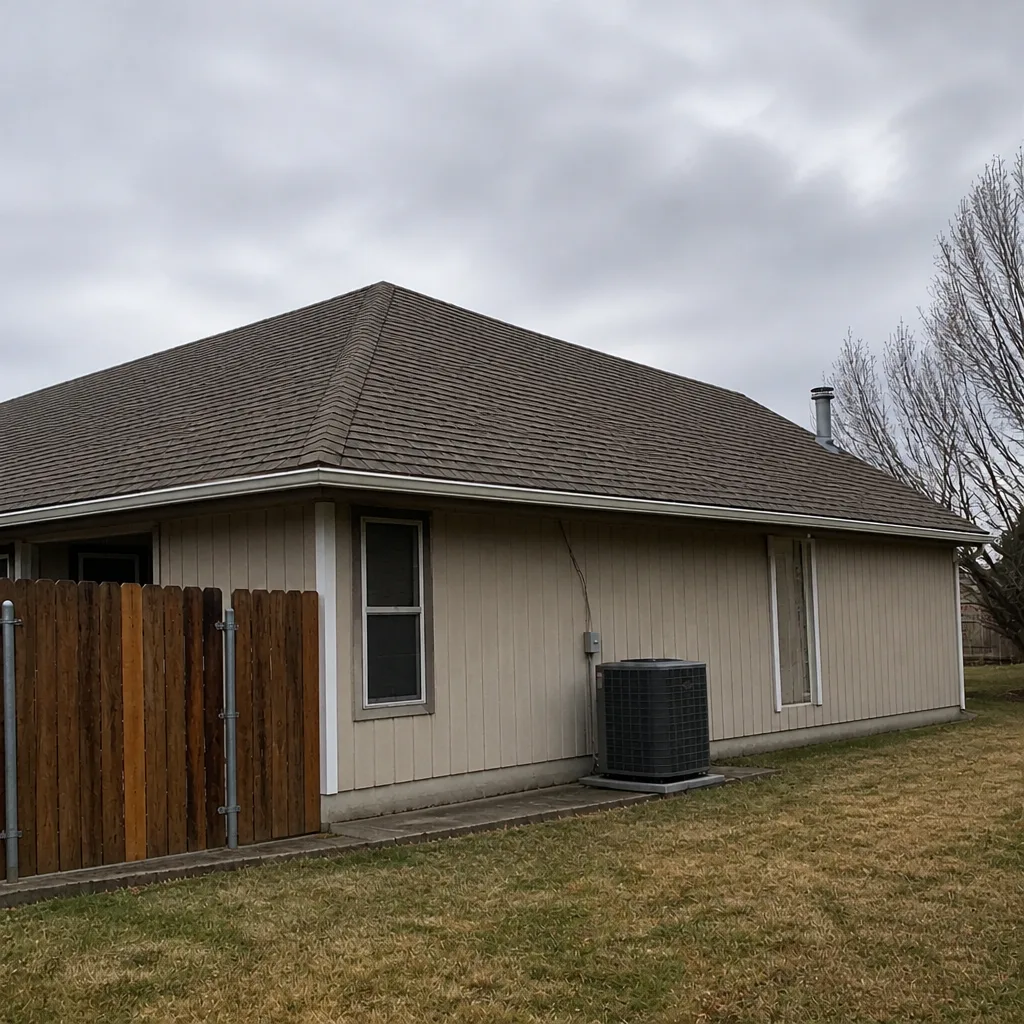
See the difference
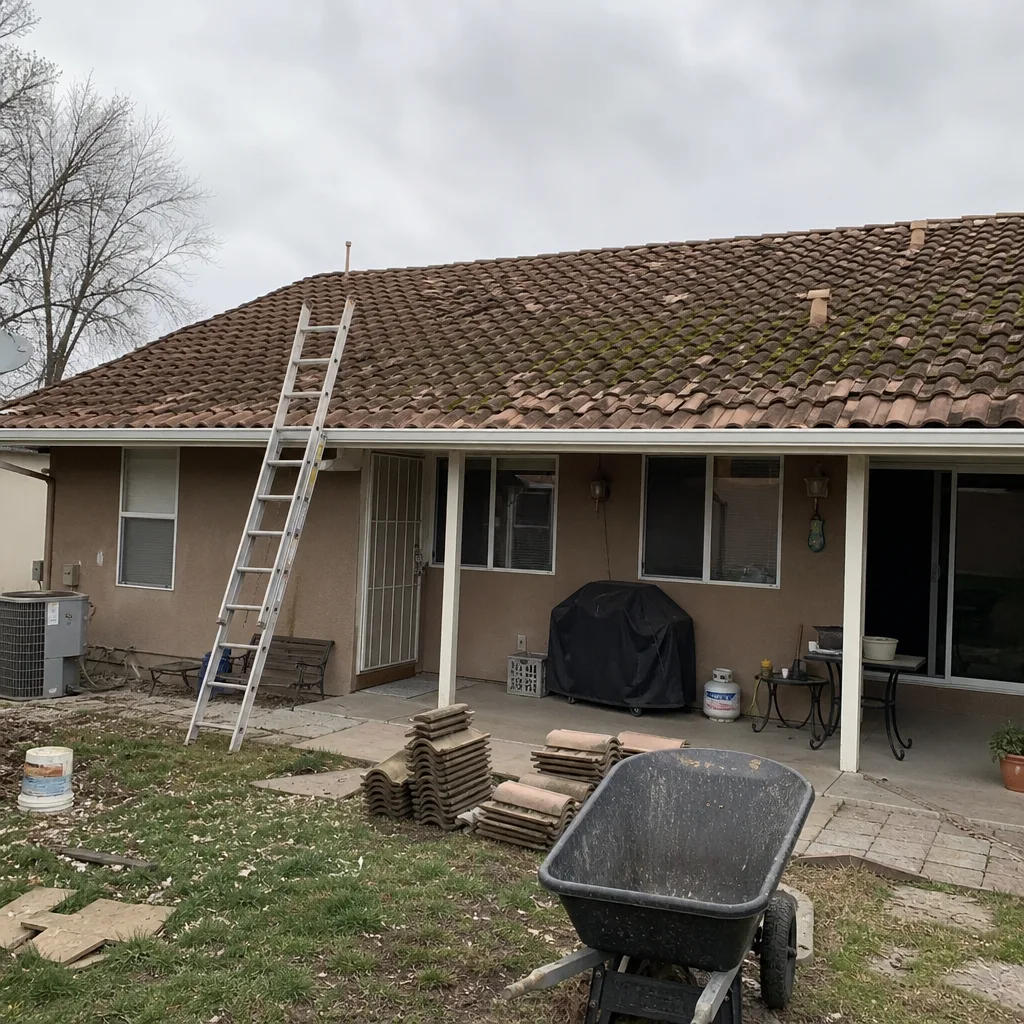 Before
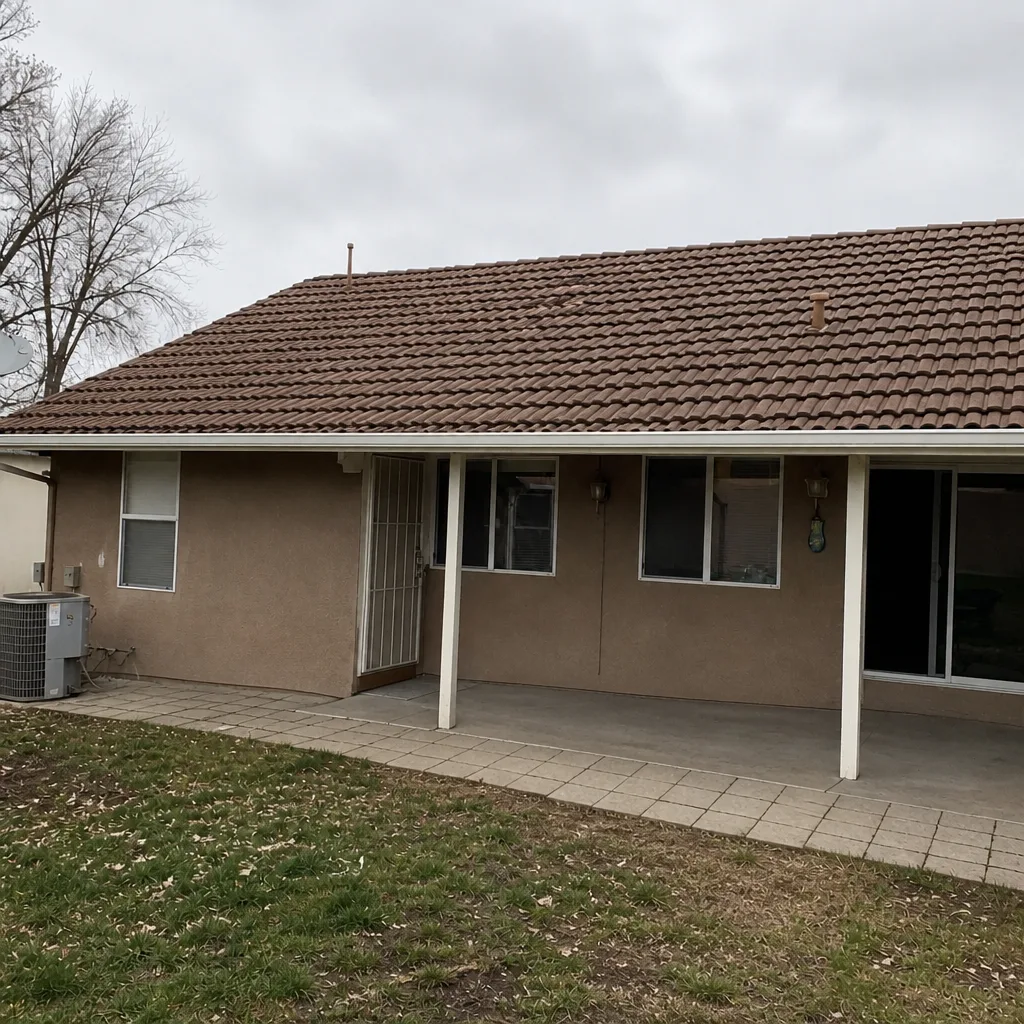 After
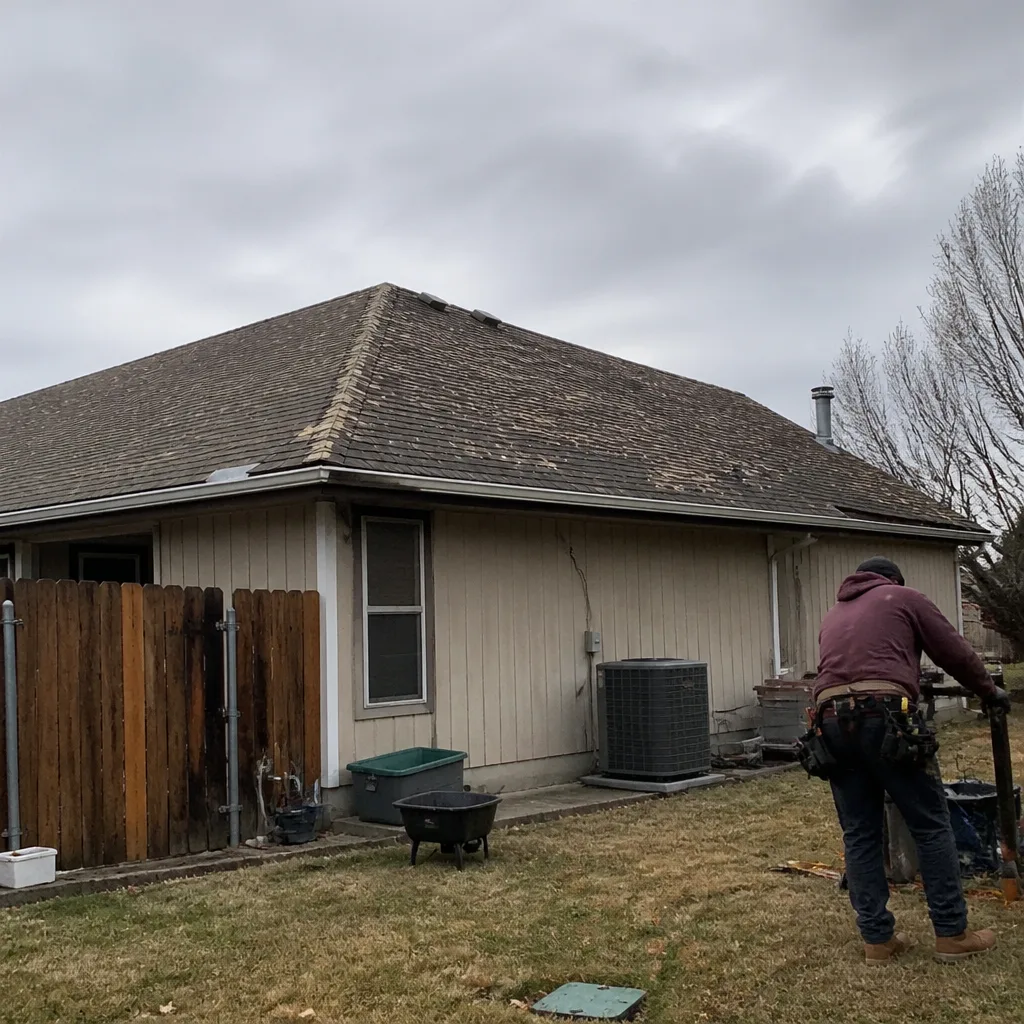 Before
 After
 Before
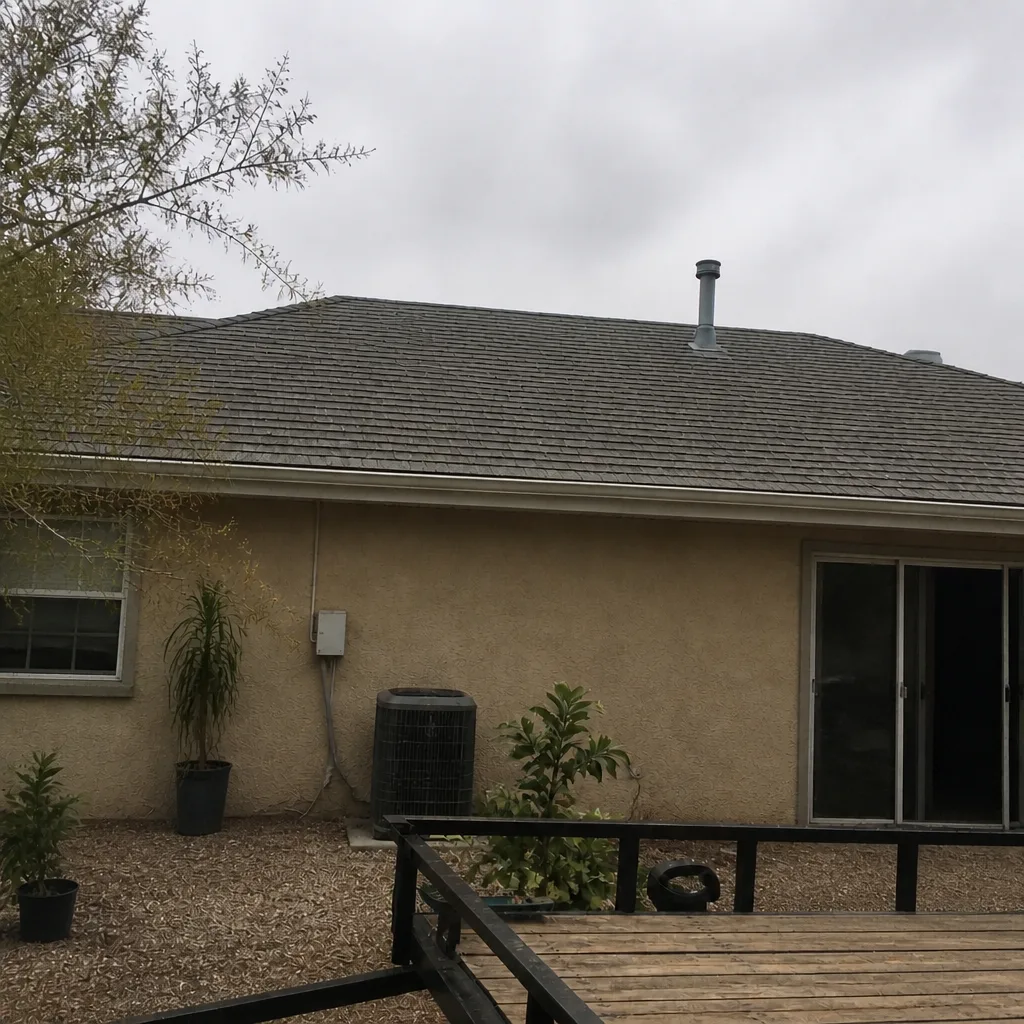 After
When to Call a Professional
If you’re seeing granule loss across a quarter of a slope, if there’s any interior staining after rain, if flashing is lifted at a chimney, or if a soft spot has shown up on the deck, those are all reasons to get a professional on the roof this week. A trained eye can tell a fading shingle face from a failing one in a way that a photo can’t, and a real inspection will save you from pricing a replacement you don’t need. When the roof has multiple failing signs at once, the math usually points toward replacement, and a pro will show you the deck photos before talking money. Shepherd & Sons Roofing Whitney offers free estimates in Whitney. Call (844) 797-9455 and we’ll be out to take a look.
Frequently Asked Questions
It needs repair if the damage is localized – a single lifted flashing, one slope with granule loss, a small soft spot – and the rest of the roof is healthy. It needs replacement if the failure is across multiple slopes, the shingles are at the end of their rated life, or the deck has soft spots in more than one area. The honest answer usually comes from a roof inspection, not a website. Call (844) 797-9455 for a free estimate and a straight read.
It looks like a chalky, faded patch on the shingle face that doesn’t match the slope next to it, with grit collecting in the gutters below. In Whitney, the south- and west-facing slopes usually show it first because they take the full afternoon sun. Bare patches in the valleys and near the ridge are the worst sign, because that’s where the shingle is already working hardest.
Not always. Shingles fade slowly with age, and an evenly faded roof is usually just an old roof. The sign to worry about is a fading patch that stands out against healthy shingles next to it, or a surface that looks smooth and chalky instead of gritty. That means the granule layer is wearing through, not just coloring.
A hot, dusty attic smell is normal in a Whitney summer and usually means nothing more than a hot attic. A wet-wood smell – sour, musty, mushroomy – that lingers after rain is a different animal and usually points to a leak path. If you smell it, look for a brown tide mark on a rafter or deck board before you call.
You usually can’t. From the ground, lifted flashing at a chimney or sidewall looks like a normal shadow line, which is why it gets missed. Look from a second-floor window if you have one. If you see daylight behind the metal, or a caulk joint that’s cracked and pulled away, that’s lifted flashing and it needs a look.
It depends on the repair: a small flashing fix or a few replacement shingles often runs a few hundred dollars, while a section of deck repair runs more. The only honest way to price it is to get on the roof and see it. Call (844) 797-9455 for a free estimate – estimates are free and we don’t charge a trip charge inside our own county.
The Bottom Line
The warning signs worth acting on in Whitney are not the ones you’d see on a roofing website written for Florida. They look like sun bleaching but are failing granules. They smell like a hot attic but turn into wet wood after rain. They hide at the flashing, where the ground view can’t see them. Read your gutters, look at your shingle faces, and check the flashing from a second floor. If you’re seeing any of these signs, the cheapest path is to call (844) 797-9455 for a free estimate, let a professional put eyes on the roof, and get a real answer while it’s still a repair.
Written by the team at Shepherd & Sons Roofing Whitney.