
Last updated November 18, 2026
 Architectural shingles
 Metal roofing
 Tile roofing
 GAF
 Owens Corning
 Flat & low-slope
Free roof inspection with deck photos before we talk money - GAF and Owens Corning certified installation
Roof Replacement & Installation Maintenance Schedule: What to Do and When
Manufacturers write their warranties assuming you’ll inspect your roof once a year. Fewer than 15% of homeowners actually do. That gap matters, because the fine print on nearly every shingle warranty includes a “reasonable maintenance” clause – and that clause is exactly what a manufacturer points to when you file a claim on a leak that started small four years ago and nobody looked at. A new roof doesn’t need much in year one, but it needs a real inspection at month twelve. In this guide we’ll lay out a year-by-year maintenance schedule, what to check at each stage, and the specific tasks that actually protect your warranty here in Whitney, where summer heat and monsoon wind do more damage than most people realize.
Quick Answer
Your new roof should get its first real inspection at the 12-month mark, then once a year after that (spring is ideal in Whitney), with a quick visual check after any major monsoon or wind event. The monthly-12 visit matters most because that first full summer-winter cycle is when fastener pop, sealant shrinkage, and ridge cap settling reveal themselves – and catching those inside a workmanship warranty costs you nothing. To keep your manufacturer warranty valid, you also need to keep dated records of every inspection, repair, and photo of the roof, because “reasonable maintenance” is a documented obligation, not a suggestion.
Styles & brands we work with
- Architectural shingles
- Metal roofing
- Tile roofing
- GAF
- Owens Corning
- Flat & low-slope
Table of Contents
- The 12-Month Post-Installation Checklist
- How to Keep Your Manufacturer Warranty Valid in Nevada
- What a Pro Checks That You Can’t
- Which Maintenance Tasks Actually Extend a 30-Year Shingle
- Building a Photo-Documented Maintenance File
- A Whitney Seasonal Maintenance Calendar
- Your Year-by-Year Schedule at a Glance
The 12-Month Post-Installation Checklist
The first inspection after a replacement is the most important one you’ll ever do, because that’s when the installation itself is being tested by a full weather cycle. Three things in particular are worth looking for.
Fastener pop. Nails and screws that weren’t driven flush (or were driven too deep) will start to back out after the first big temperature swing. On a Whitney roof, where the deck can go from 40 degrees to 140 degrees between winter and a July afternoon, that expansion and contraction works on every fastener. Look for popped nails along ridge lines and near the eaves, and check the attic side for nail shanks poking through the deck.
Sealant shrinkage around penetrations. Every pipe boot, vent stack, and skylight is sealed with a rubber or polyurethane sealant. That sealant shrinks. A year in, you’re looking for cracking or gaps around the flange, not just a visible leak.
Ridge cap settling. Ridge caps are the shingles folded over the peak. On a properly installed roof they settle in within the first year but should still be flat and sealed. If a cap has lifted or its sealant strip has failed, wind will get under it here in Whitney.
The Roof Replacement & Installation in Whitney page covers what good installation looks like from the start; this checklist is about verifying that work held up.
What the 12-month inspection should cover
- Walk the roof perimeter and inspect the deck side of every penetration from the attic.
- Check ridge cap sealant strips by hand for lift or cracking.
- Look for popped fasteners along ridge lines, hips, and eaves.
- Photograph every penetration and every suspect area with a date stamp.
- Check drip edge fit against the fascia (more on that below).
- Note any granule loss in gutters – some is normal, heavy loss is not.
- File the inspection report with your warranty paperwork.
How to Keep Your Manufacturer Warranty Valid in Nevada
Shingle manufacturers – GAF, CertainTeed, Owens Corning, IKO, Atlas, Tamko – have warranty language that sounds generous until you read the maintenance clause. Nearly all of them require “reasonable maintenance” and “proof of proper installation” to honor a material claim. In Nevada that means two things most homeowners never think about.
First, keep the installation invoice and the manufacturer’s product receipt. When you file a claim, the manufacturer wants to see which product line went on the roof and when. If you replaced the roof eight years ago and can’t find the paperwork, the claim gets harder.
Second, document that you maintained the roof. This is where most claims die. A manufacturer’s claims adjuster looking at a failure that started as a cracked pipe boot in year three and went unrepaired until year six will deny the claim on the basis that the damage was “preventable through maintenance.” A dated photo of that pipe boot at year one, followed by a repair invoice at year three, changes the whole conversation.
A word on registration: many manufacturers require you to register the warranty within a certain window after installation. If your contractor didn’t hand you a registration confirmation, ask. Often the difference between a 25-year and a 30-year warranty is whether someone filled out the paperwork. (Some brands, like IKO and Atlas, are more forgiving on this than others – but “more forgiving” isn’t a strategy.)
The 90-Day Done Right Promise we back every job with is separate from your manufacturer warranty – it covers our workmanship for 90 days, in writing. It’s not a substitute for the long-term warranty, and it’s not meant to be. It’s the short window in which any installation mistake will surface.
What a Pro Checks That You Can’t
A homeowner can walk their own roof and catch obvious problems. There are three things that a trained eye catches that a homeowner inspection misses – because they require access to the attic, knowledge of what “normal” looks like, or a ladder and a close-up look at flashing.
The attic side of every penetration. This is the one most homeowners never see. A pipe boot can look perfect from above and be stained brown underneath. We check the underside of every deck penetration for water staining, daylight, or rusted nail shanks – the three signs that a leak has started but not yet come through the ceiling. Catching it here is a $180 repair instead of a $2,400 drywall job.
Drip edge condition at the fascia. The drip edge is the metal strip that runs along the eaves. It’s what keeps water from wicking back under the shingles onto the fascia board. When it’s bent, separated, or pulling away – common after a Whitney windstorm – water gets behind it and the fascia begins to rot. You won’t see that rot from the ground until it’s substantial.
Valley flashing movement. The metal valley flashing between roof planes has to be seated firm against the shingles. Over the first two years, expansion and contraction can cause it to lift slightly. Under a monsoon downpour, that slight lift is where water gets in. It’s not visible from the ground or from a casual roof walk – it requires the kind of close inspection that Roof Repair in Whitney covers.
Which Maintenance Tasks Actually Extend a 30-Year Shingle
Roofing has its share of upsells. Some maintenance genuinely extends the life of a 30-year architectural shingle; some is decorative spending dressed up as necessity. Here’s how we separate them.
Worth the money:
- Annual inspection and pipe boot resealing every 3-5 years. Pipe boots are the number-one penetration failure on any roof. Twenty dollars of material and an hour of labor saves you the ceiling.
- Gutter cleaning, especially here in Whitney. Clogged gutters back water up under the drip edge and onto the fascia. Water under the roof system is what kills shingles from underneath.
- Tree branch trimming. Branches rubbing the roof through a monsoon load will wear through the shingle surface – and once the granular layer is gone, so is the shingle’s UV protection.
- Attic ventilation check. Every five years or so confirm your ridge and soffit vents are clear. Poor ventilation bakes the underside of the deck, and shingles fail faster from heat than from weather.
Mostly upsell:
- Yearly “rejuvenation coatings” or spray-on treatments. The shingle warranty doesn’t require it and there’s no meaningful case that it extends shingle life.
- Routine full-roof pressure washing. It can strip granules and force water under sealed edges.
- Replacing shingles that show normal granule loss. Granule loss on a new roof is expected for the first year; it’s only a problem after that.
If a roofer is selling you something on this second list, get the second opinion. We offer a free second opinion on any written estimate – that’s the whole point.
Building a Photo-Documented Maintenance File
We photograph every job before and after – under the deck, around every penetration, at the drip edge, in the valleys. That record matters twice. Once for the homeowner to see what they paid for, and again two or eight or twelve years later when someone needs to file an insurance claim or sell the house.
You can maintain the same record yourself, and it takes about twenty minutes a year.
- Create a folder on your phone or computer. Every photo from now on goes in it.
- Take dated photos of every penetration, every valley, every drip edge. Most phone cameras stamp photos automatically; if yours doesn’t, name the files with the date.
- Photograph every inspection report and every repair invoice. If a plumber reseals a pipe boot, take a photo of the invoice.
- Photograph the gutters before and after cleaning. This is your proof of gutter maintenance if a fascia claim ever comes up.
- Note the manufacturer product line. If it’s an IKO shingle or an Atlas or Tamko line, write that on a sheet of paper and put it in the folder. Product ID matters on a warranty claim.
When it comes time to sell the home, that folder is a real asset. A buyer sees documented maintenance and stops worrying; an insurance adjuster sees a dated record and stops asking hard questions. On the resale side, it’s worth more than a fresh coat of paint. For more on how a Whitney homeowner should think about a roof replacement (versus repair), the Shepherd & Sons Roofing Whitney home page is the place to start.
A Whitney Seasonal Maintenance Calendar
Whitney’s weather makes certain maintenance tasks seasonal. Here’s the calendar we’d give any homeowner in Whitney.
- March-April (spring). Annual inspection. Best weather, before summer heat. Check for winter damage, clear gutters, trim back any branch that’s grown toward the roof over the winter.
- May-June (pre-monsoon). Check sealant around penetrations and ridge caps. Ensure drip edge is snug. Monsoon season typically starts late June.
- July-September (monsoon). After every major storm event (roughly an inch of rain or more), do a five-minute look at the attic for new staining. Don’t walk the roof in monsoon conditions.
- October-November (fall). Post-monsoon inspection. This is when any storm damage will show. Repair now, before the winter wind season.
- December-February (winter). Check for wind damage after any high-wind event. Confirm attic ventilation is clear. If you’re going on a long trip, have a neighbor check the interior ceilings for new staining.
A metal roof installed by a qualified contractor from a brand like Boral or from Metal Roofing in Whitney has a different maintenance schedule – mainly fastener tightness checks and sealant refresh every 5-7 years, with less seasonal concern.
Your Year-by-Year Schedule at a Glance
Here’s the full schedule tightened up. If you keep this on the fridge, you’re ahead of 85% of homeowners.
- Months 1-11: One visual check from the ground after any big storm. Catch the obvious.
- Month 12: First professional inspection. Fastener pop, sealant shrinkage, ridge cap settling, drip edge and valley flashing.
- Year 2: Ground-level visual check; reseal one or two pipe boots if the first inspection flagged them.
- Year 3: Reseal pipe boots. Second professional inspection if the year-1 report recommended it.
- Years 4-5: Pro inspection (fascia, valleys, attic side). Gutter cleaning as needed, usually twice per year in Whitney.
- Years 5-10: Annual pro inspection. Sealant refresh around all penetrations every 3-5 years.
- Years 10+: Annual pro inspection with attic-side check. Consider whether the roof is approaching the end of its rated life (30-year shingles often last 20-25 in a hot climate).
Common Mistakes to Avoid
- Skipping the 12-month inspection. This is the single biggest mistake. Fastener pop and sealant shrinkage caught at the 12-month mark cost nothing to fix inside the workmanship window; caught at year three they cost hundreds, and the manufacturer may call them user error.
- Not documenting maintenance. A warranty claim denied for “lack of reasonable maintenance” is a denial you can’t appeal without records. Keep photos and invoices. Every time.
- Pressure washing the roof. It strips granules. Those granules are the shingle’s UV shield, and once they’re gone they don’t come back.
- Walking the roof on a hot Whitney afternoon. Shingles soften in summer heat. Foot traffic on a 140-degree roof is the fastest way to crack an otherwise good shingle. Wait for early morning.
- Using caulk on a pipe boot that needs replacement. Caulk is a temporary patch. A pipe boot that’s failed through is a $20 part, and caulk won’t last a monsoon season. Reseal properly or have it replaced.
- Hiring a storm chaser for a “post-storm inspection.” Every hailstorm brings a fresh crop of out-of-state inspectors with out-of-state plates and out-of-state paperwork. Ask where their shop is. Ask for a license number. Then call the guy with the address on the truck.
- Ignoring fascia and drip edge because “the shingles look fine.” Water damage works under the shingles, not on them. By the time a shingle shows failure, the fascia behind it can already have rot.
- Not registering the warranty. Manufacturer warranties require registration within a window after installation. If you don’t have a registration confirmation, find out.
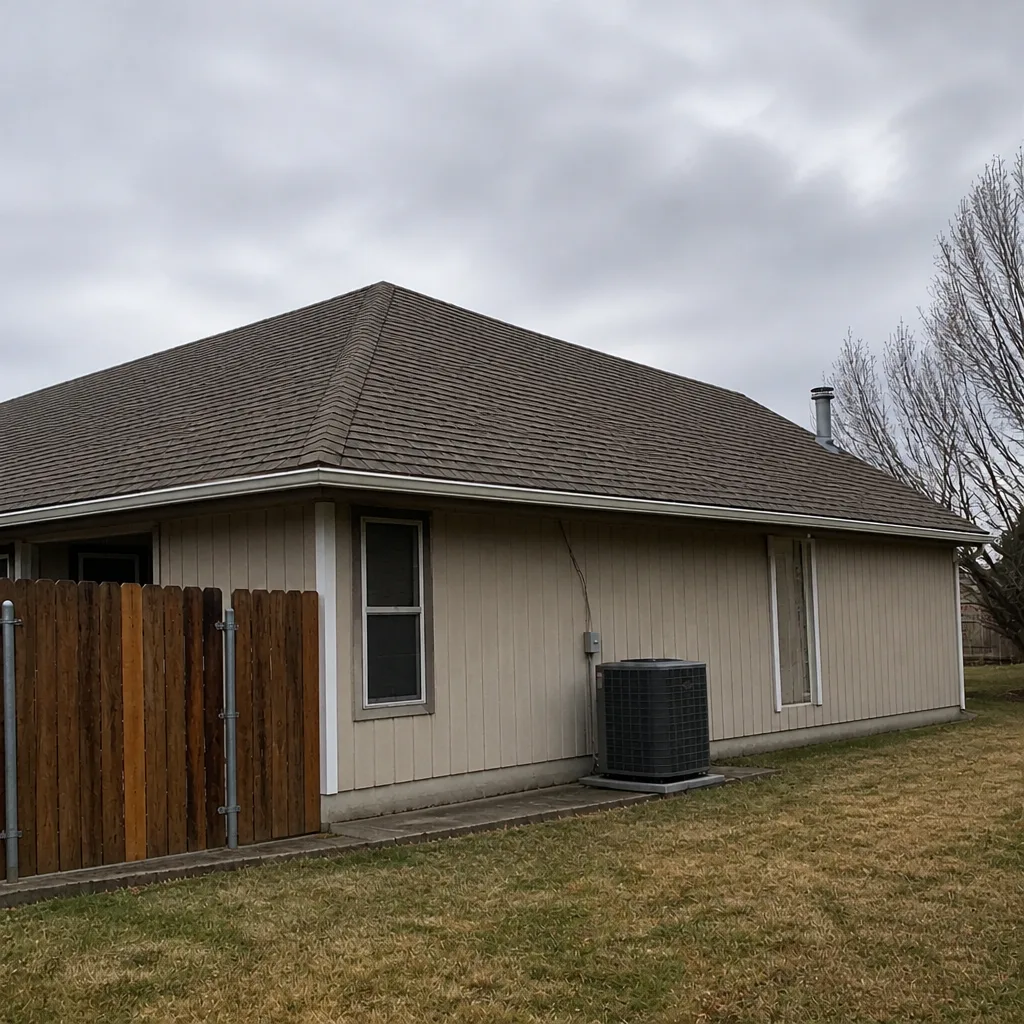
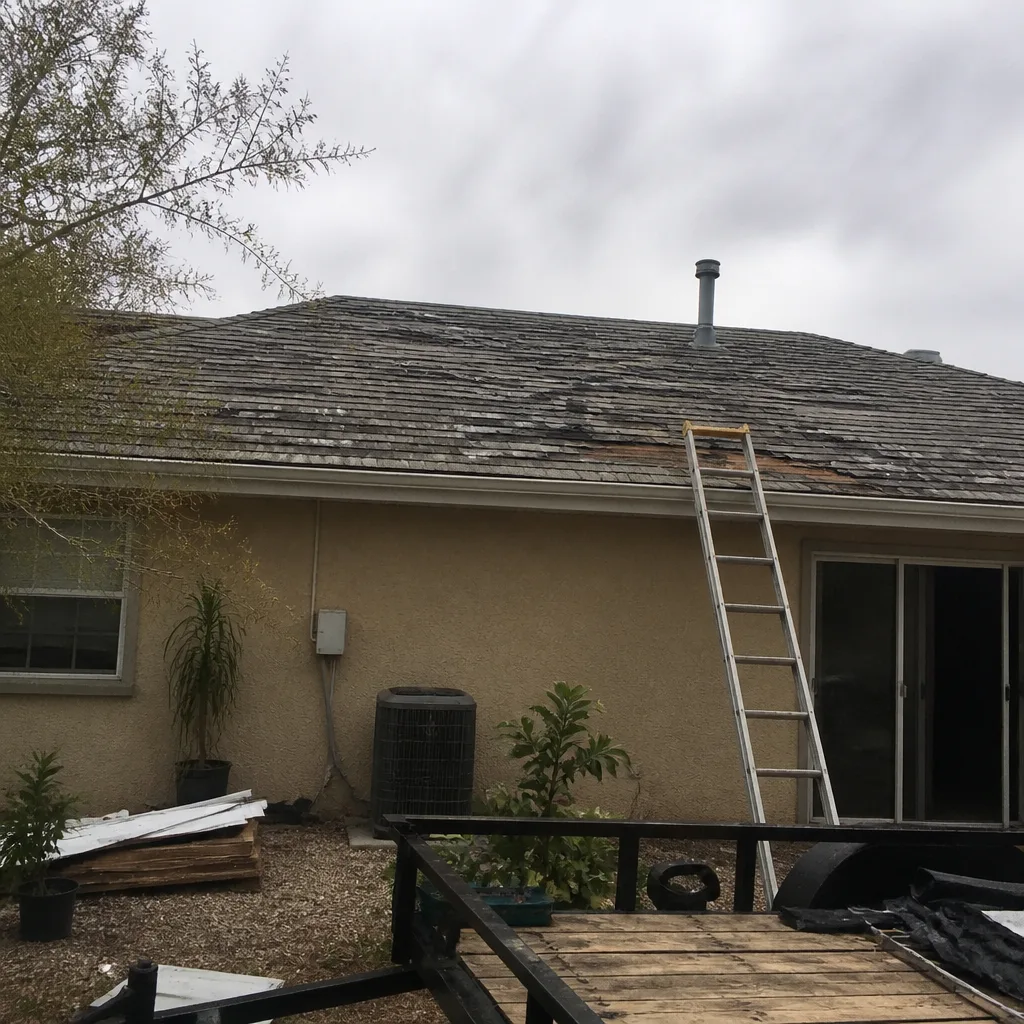
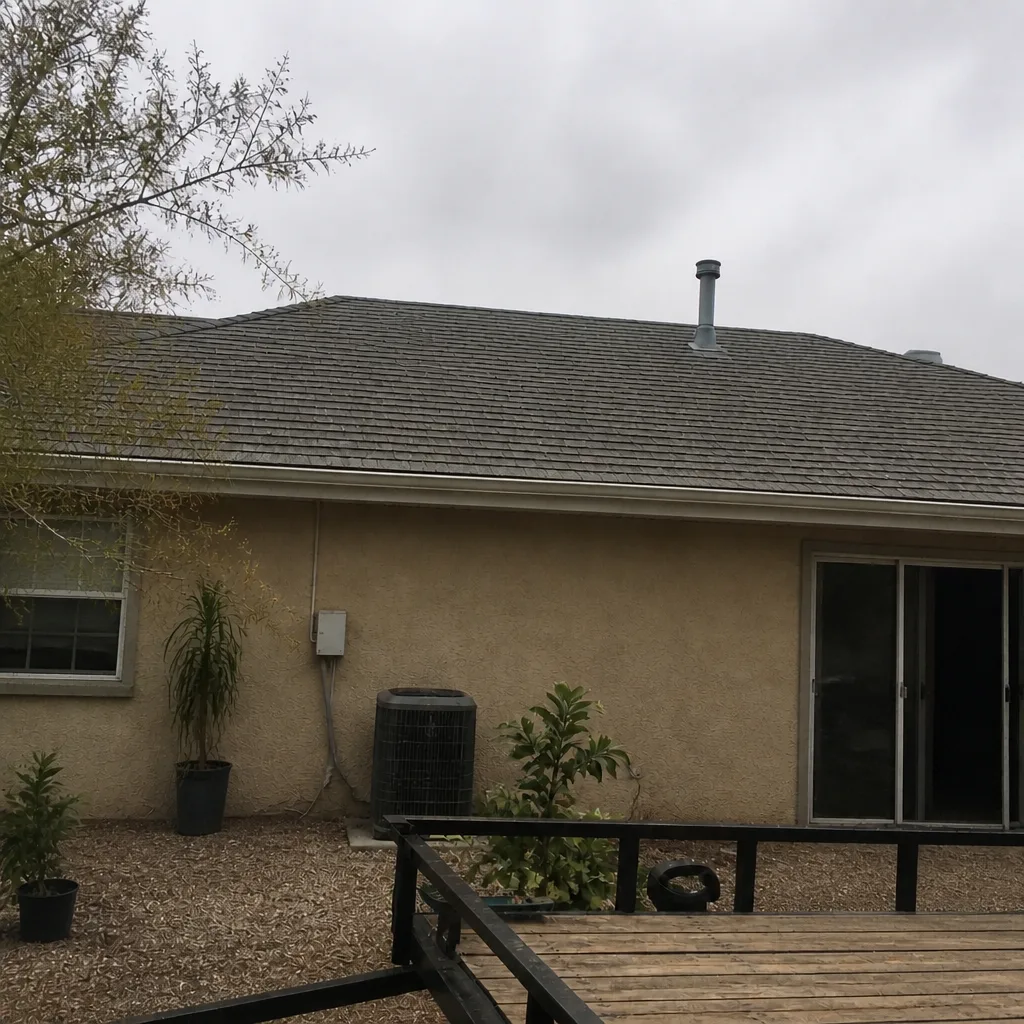
See the difference
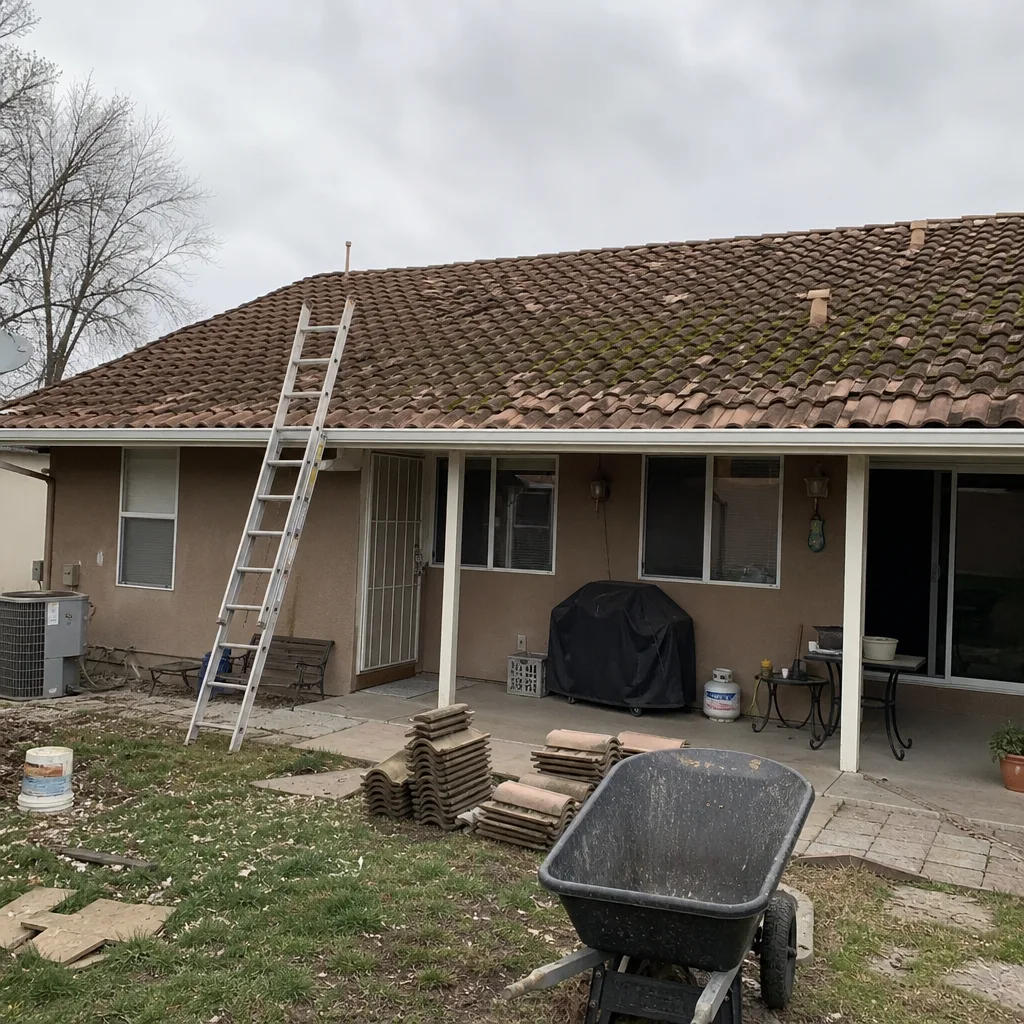 Before
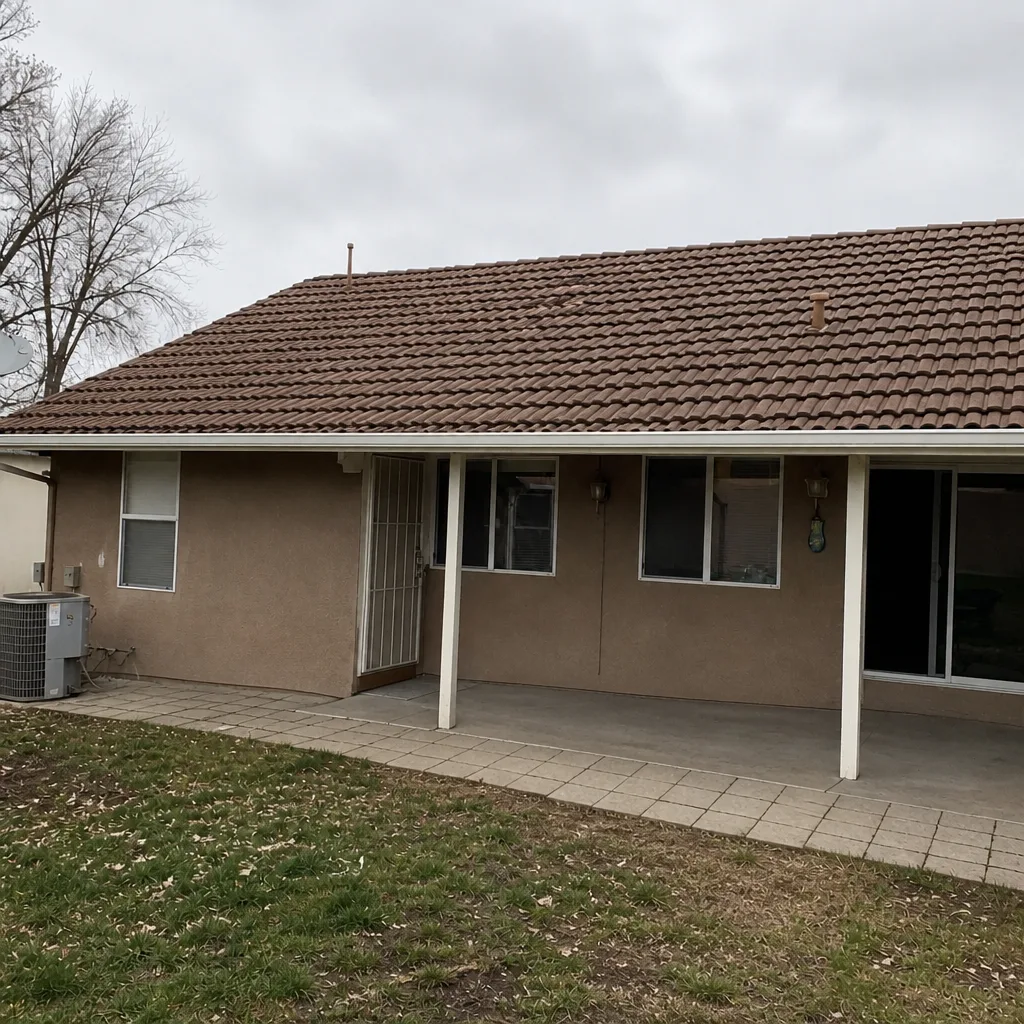 After
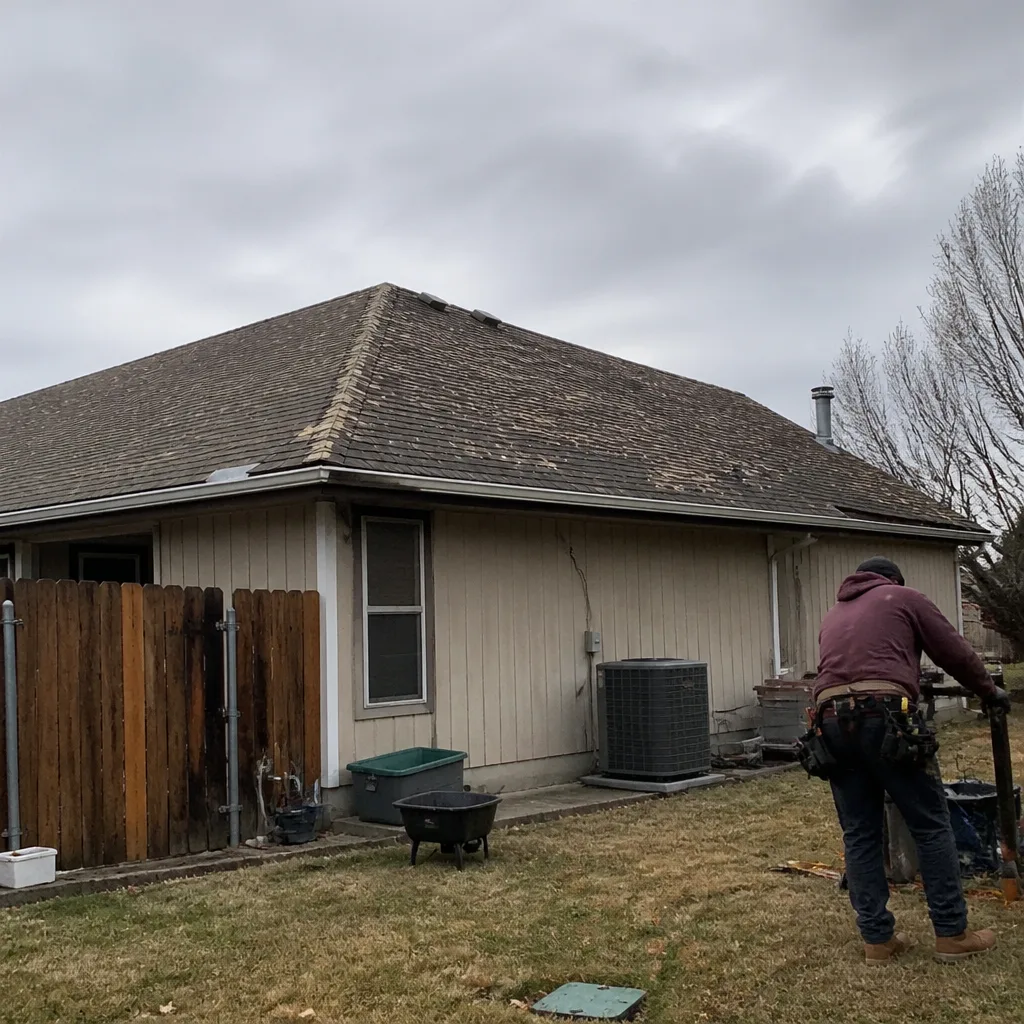 Before
 After
 Before
 After
When to Call a Professional
Not every roof question needs a pro on the ladder. Some do. Call us when:
- You’ve got a stain on the ceiling – any stain, any size. It’s not a DIY fix.
- Any visible damage after a storm (missing shingles, dented ridge caps, bent flashing, loose gutters).
- Your 12-month anniversary is coming and you haven’t had a first inspection.
- You’ve received a written estimate from another roofer and want a second opinion before signing.
- You can’t tell whether something is normal granule loss or shingle failure.
Shepherd & Sons Roofing Whitney offers free estimates in Whitney – and a free second opinion on any written estimate – so we’ll come out and tell you straight what we see. Call (844) 797-9455.
Frequently Asked Questions
Twelve months. That’s the first point at which installation defects and material settling reveal themselves, and it’s inside the workmanship warranty window – which is where small fixes stay free. Call (844) 797-9455 to schedule; inspections in Whitney are free.
Yes, in most cases. Every major manufacturer – GAF, CertainTeed, Owens Corning, IKO, Atlas, Tamko – has “reasonable maintenance” language in their warranty. A claim denied on that basis almost always traces back to no maintenance records. Keep dated photos and receipts for anything you have done.
Most Whitney inspections run $150-$300, depending on roof size and pitch. We do them free as part of an estimate or second opinion. Call (844) 797-9455 to schedule yours – no trip charge inside our own county.
You can do a ground-level visual check safely, and you should after every storm. The three things a pro catches – attic-side penetration damage, drip edge separation at the fascia, and valley flashing movement – aren’t visible from the ground and shouldn’t be checked on a ladder by a homeowner. Roof falls are genuinely dangerous. Use a pro.
One: five-minute look at the attic ceiling for new staining. Two: ground-level walk around the perimeter for missing or lifted shingles. Three: if you see either, call (844) 797-9455 and we’ll come out – a live person answers the phone any hour, including after a storm.
No. Our Free Second Opinion offer applies to any written estimate, any time – we’ll look at the numbers, the scope, and the products, and tell you whether it’s fair. Call (844) 797-9455.
Usually yes, and usually within a set window after installation. A contractor should hand you the registration confirmation. If you don’t have one, ask. The difference between a 25-year and 30-year warranty is often just whether someone filed the paperwork.
The Bottom Line
A new roof doesn’t need much care – but it does need the 12-month inspection, and it needs a maintenance paper trail. The three highest-value tasks on a Whitney roof are: schedule the first inspection at month 12, reseal pipe boots every 3-5 years, and keep dated photos and invoices for every inspection and repair. Those three things cost a few hundred dollars over the roof’s life and they protect a warranty that could be worth thousands. Skip the “rejuvenation coatings” and the pressure washing. Do the simple stuff, and if anything on the roof ever surprises you, remember that the name on the truck is the name you can look up – and the phone number is (844) 797-9455. Same address since 1996.
Written by the team at Shepherd & Sons Roofing Whitney.