
Last updated November 18, 2026
 Architectural shingles
 Metal roofing
 Tile roofing
 GAF
 Owens Corning
 Flat & low-slope
Free roof inspection with deck photos before we talk money - GAF and Owens Corning certified installation
How Long Does Roof Replacement & Installation Take? Timelines and What to Expect
A crew that quotes you “one day” on a 2,000 sq ft Whitney home and then disappears for three days because they ordered the wrong drip edge is not a rare story. It’s a Tuesday. Most homeowners ask the wrong question, though. You ask “how long will it take?” when the better question is “what stops it from finishing on time?” In Whitney, the answers are specific: high-desert heat that bakes shingles before they seal, three supply choke points that stall jobs across the valley, and a crew-start schedule that shifts with the summer sun. We’ve spent 29 years watching jobs finish on schedule and watching jobs stall. This guide walks you through the real timeline day by day, from a typical Whitney ranch home to a complex-pitch roof, so you can spot the difference before you sign anything.
Quick Answer
Most residential roof replacements take one to three days of on-roof work, with two to four weeks of total elapsed time from signed contract to final cleanup. A standard Whitney ranch home with a single gable and straightforward access is usually a one-day tear-off and install; a larger home, a steep or complex pitch, or one waiting on specialty flashing runs two to three days. Weather, permit timing, and material delivery are the three variables that add days, not the shingle itself.
Styles & brands we work with
- Architectural shingles
- Metal roofing
- Tile roofing
- GAF
- Owens Corning
- Flat & low-slope
Table of Contents
- What “One Day” Actually Means: When It’s Realistic and When It’s a Sales Pitch
- Day-by-Day Breakdown: A Typical Whitney Ranch Home
- Larger Homes and Complex Pitches: Where the Money and the Days Go
- How Nevada’s High-Desert Heat Changes the Schedule
- The Three Supply Choke Points That Delay Local Jobs
- What You Need to Do Before the Crew Arrives
- Permits, Inspections, and the Paperwork Clock
- How to Build a Realistic Timeline Before You Sign
What “One Day” Actually Means: When It’s Realistic and When It’s a Sales Pitch
“One day” is a real number in this trade, but only under specific conditions. When a bidder says one day, ask three follow-up questions: how many squares, how many guys on the roof, and what time do they start? A 22-square ranch home with one layer of shingles to tear off, clean deck, and drive-up access is a legitimate one-day job for a full crew that shows up at first light. A 40-square home with a steep 8/12 pitch, three dormers, and a second-story chimney is not. It doesn’t matter how fast the salesman talks.
The math is simple. An experienced crew tears off and replaces roughly 20 to 30 squares in a long day, depending on pitch, access, and how much deck repair they hit. A square is 100 sq ft of roof surface. So a 25-square roof is a comfortable one-day job. A 45-square roof is not. When a bidder promises one day on a 45-square home, they’re either planning to leave the tear-off for the next morning (which empties your roof overnight in the desert wind) or they plan to rush the shingle nailing pattern, which is what actually earns a wind rating, not the label on the wrapper.
A few things “one day” also has to include to be honest: tear-off, deck inspection, underlayment, drip edge, valley flashing, shingle or tile install, ridge cap, and site cleanup with magnet sweep. If a bidder’s one-day promise leaves out the cleanup, that’s not a full job.
Day-by-Day Breakdown: A Typical Whitney Ranch Home
Here’s what a two-day job on a standard Whitney ranch home actually looks like, hour by hour. This is the schedule we run for homes in the 1,800 to 2,400 sq ft range with a single gable and clear driveway access. We’ve laid it out so you know what to expect on your own driveway at 6 a.m. versus 4 p.m.
- Day 1, 6:00 to 7:30 a.m.: Crew arrives, sets tarps, drops the dumpster in the driveway, and does a pre-job walkaround with you. If you have a vehicle you can’t move, this is when it needs to move.
- Day 1, 7:30 a.m. to 12:00 p.m.: Tear-off. Two to four guys strip the old shingles to the deck. Deck is inspected for rot, soft spots, and popped nails. Anything that needs replacing gets photographed and texted to you with a fixed add-on price before it’s installed.
- Day 1, noon to 4:00 p.m.: Underlayment, ice-and-water where it’s needed, drip edge, and valley flashing. On a Whitney home with a fireplace chimney, the chimney flashing gets its own careful hour.
- Day 2, 7:00 a.m. to 2:00 p.m.: Shingle install. First field shingles, then hip and ridge. Nailing pattern to spec is a full-hour line item on its own.
- Day 2, 2:00 to 4:00 p.m.: Ridge cap, vent boots, final inspection with you on the driveway, magnet sweep, and cleanup.
That’s the honest schedule. Anything that promises you a 40-square roof in a single day is either doubling the crew or trimming the steps. Ask which. For a deeper look at what a full replacement includes from measurement to final walkthrough, see our Roof Replacement & Installation in Whitney page.
Larger Homes and Complex Pitches: Where the Money and the Days Go
Once you step above 30 squares or the pitch gets steep, the timeline stretches. Not because crews slow down but because every step takes longer on a complex roof. A steep 9/12 pitch is slower to walk, slower to tear, and slower to nail. Dormers, skylights, multiple valleys, and second-story work all stretch the same job. A 3,500 sq ft home with a steep hip-and-gable layout is a three-day job, sometimes four if we hit deck repairs mid-stream.
Here’s how the day count typically shifts by complexity:
- Simple ranch, under 25 squares, single gable, 4/12 pitch: 1 day.
- Mid-size home, 25 to 35 squares, moderate pitch, one valley: 2 days.
- Larger home, 35 to 45 squares, hip and gable, dormers: 2 to 3 days.
- Complex home, 45+ squares, steep pitch, multiple valleys, skylights, second-story chimney: 3 to 4 days.
- Tile or specialty roofing: Add one to two days regardless of size. Tile is slower to set, and underlayment gets more attention.
Metal roofing runs on its own schedule. Standing seam is often faster than shingle on flat planes, slower on cut-up roofs. We install metal from Metal Roofing in Whitney, and we’ll tell you straight if the panel approach on your particular roof is a two-day job or a four-day one.
How Nevada’s High-Desert Heat Changes the Schedule
This is where Whitney jobs are different from a job in a mild climate. Shingle adhesive relies on heat to seal the shingle tabs down to the course below. That sealing happens fast in the desert, usually within a few hours of installation on a 95°F afternoon. Which sounds good, until you realize the same heat can make the shingles soft and hard to walk without scuffing. The best crews work shingles early in the morning and finish the upper sections before 2 p.m. That’s not laziness. Heat above roughly 90°F makes shingle walking and cutting harder to do cleanly.
In practice, that means a Whitney summer job on a large roof often splits the shingle-laying over two mornings. Crew starts at first light, works fast until noon, and shifts to detail work (flashing, boots, cleanup) through the hot hours. The total calendar days it takes to finish doesn’t change much, but the working rhythm does. If your roofer promises a 7 a.m. to 6 p.m. run in July on a 40-square roof, ask how they plan to keep the shingle course clean through the afternoon. In our experience they don’t have a good answer.
High-desert wind is the second variable. Spring and early summer bring gusts that make tear-off dangerous on second-story roofs and unfold tarps without warning. A windy week can legitimately add a day to a Whitney job because crews can’t safely open large sections of deck at once. That’s the right call every time.
The Three Supply Choke Points That Delay Local Jobs
Most of the “why did my job take longer” stories trace back to three parts, not the shingle. Here’s what we’ve seen stall jobs across the valley:
- Decking. When tear-off reveals rot, crews need OSB or plywood sheets fast. Local supply is usually fine on standard 7/16″ OSB and 15/32″ plywood, but odd sizes and thicker sheathings can be a next-day delivery. Losing four hours on a decking delivery is how a one-day job becomes a two-day job.
- Flashing. Custom chimney flashing, kick-out flashing, and valley metal are fabricated per-job. If the bidder measured wrong, the wrong piece shows up on day one, and the crew is stuck till it’s cut again. This is the single most common cause of stall we see.
- Ridge cap. Hip and ridge cap is often stocked separately from field shingles. On jobs with a lot of ridge, the crew burns through ridge cap faster than the supply truck predicted. A missing bundle of ridge cap is a one-day gap while a supply house in Las Vegas pulls and delivers it to Whitney.
Brand availability matters too. We stock and install field shingles from IKO, Atlas, Tamko, and Boral, and we’ve seen supply windows shift by brand through the season. The honest play is to pick the shingle based on what’s genuinely in stock for your install date, not the color on the sample board. If a bidder quotes you IKO Dynasty on Tuesday and delivers Atlas on Thursday, that’s a supply problem, not a color choice.
What You Need to Do Before the Crew Arrives
Half a day of “roof job delay” is usually the homeowner’s half-day. Not because the homeowner is at fault, but because of stuff nobody told them. Here’s the pre-job prep list that keeps a job on schedule:
- Move vehicles out of the driveway by 6 a.m. The dumpster goes down first, and there’s no room for your car next to it.
- Clear the attic access. Crews inspect the underside of deck from the attic on most jobs. If your access hatch is behind a stack of stored holiday boxes, that’s a half-day delay.
- Take down anything fragile on the walls inside. Tear-off vibrates through the house. Picture frames stacked on shelves should come down before the crew shows up.
- Move patio furniture, potted plants, and grills away from the house perimeter. The tarp drop zone needs room. Anything within 10 feet of the walls is fair game.
- Point out the sprinkler heads and light fixtures on the day before the job. A broken sprinkler head where the dumpster lands is a $30 fix, but it delays the drop.
- Plan for dog and kid logistics. Nails end up in the yard despite every magnet sweep. Keep pets and small kids off the driveway and lawn for the full job, plus a day after.
If you do those six things before the crew arrives, your job starts on time. If you don’t, we’ll still get it done, but we’ll start an hour or two behind and the crew’s rhythm is off for the whole day.
Permits, Inspections, and the Paperwork Clock
The on-roof work is one to four days. The paperwork clock is the part nobody explains well. In Whitney, roof replacements require a permit through the local building department, and the permit itself can take anywhere from a few days to a couple of weeks depending on the season and current application volume. That permit clock runs before the crew shows up, not during.
Inspections usually happen in two phases on a full replacement: an underlayment or dry-in inspection after tear-off and deck prep, and a final inspection after the roof is complete. The dry-in inspection is a same-day stop for the inspector in most cases, but if the inspector’s schedule is full, that can push you half a day. It’s one of the reasons we don’t promise a single-day finish on jobs that require the dry-in inspection to be signed off before shingles go on. It’s just the honest schedule.
Permits pulled in the right name and inspections that pass are part of the job, not an upcharge. Ask any bidder who pulls the permit and who signs the inspection card. If the answer is fuzzy, that’s the storm-chaser tell. We see it every spring in Whitney, and honestly, it’s been the same pattern for 29 years. If you want a second set of eyes on an estimate you already have, our Free Second Opinion walkthrough will take a look at the scope line by line.
How to Build a Realistic Timeline Before You Sign
You can predict a realistic timeline yourself with four questions. Ask each bidder the same four, and the answer that comes back consistent is the one you can trust.
- “How many squares did you count?” If the bidder can’t answer, they haven’t measured. A roof is measured in squares, ask any bidder how many they counted.
- “How many guys and how many days on the roof?” A realistic crew size for a Whitney job is three to five. A crew of two means the job takes twice as long, no matter what the calendar says.
- “Where’s the flashing coming from?” Stocked locally is best. Custom-fabricated is fine but adds lead time. No answer is a red flag.
- “Who pulls the permit and who signs the inspection card?” The answer should be the same company name on the truck and the license.
Get straight answers on those four, and you’ll have a realistic start date, finish date, and material delivery plan. Everything else is execution. And that’s where a real local address matters. The name on the truck is the name on the license, and if something goes wrong, one call brings Bill back. Every roofing job we do is backed by the written 90-Day Done Right Promise, so a shingle that lifts or a flashing leak that shows up after the crew leaves gets handled without a debate.
Common Mistakes to Avoid
- Signing for a one-day promise on a 40-square roof without asking how. It’s mathematically possible only with an oversized crew and rushing, and rushing is what costs you the wind rating. Ask which you’re getting.
- Letting the bidder measure from a satellite image. Satellite roof estimates miss dormers, chimney flashing scope, and second-layer shingles every time. A real bidder walks the roof or has someone walk it for them.
- Picking shingle color before checking what’s actually in stock. Whitney supply swings by brand. Choosing a specific color that isn’t in stock can add a week to the schedule. Pick color from what’s on the shelf for your install window.
- Scheduling a summer install without an early crew start. High-desert heat past 2 p.m. makes shingle work harder and sloppier. If the crew isn’t on the roof by 7 a.m. in July, your job is already behind.
- Leaving the permit to the homeowner. Whitney roof replacement permits have specifics. A crew that leaves the permit to you is also leaving inspection callbacks to you. Ask up front who pulls the paper.
- Not asking the crew to photograph the deck repair before installing over it. If the bidder didn’t offer deck photos, ask for them. Any add-on for deck repair should come with a photo and a price before the shingles go down.
- Assuming the work ends when the shingles do. Magnet sweep, gutter clearing, and driveway cleanup are part of the job. A roof that isn’t swept for nails is a roof job that isn’t finished.
See the difference
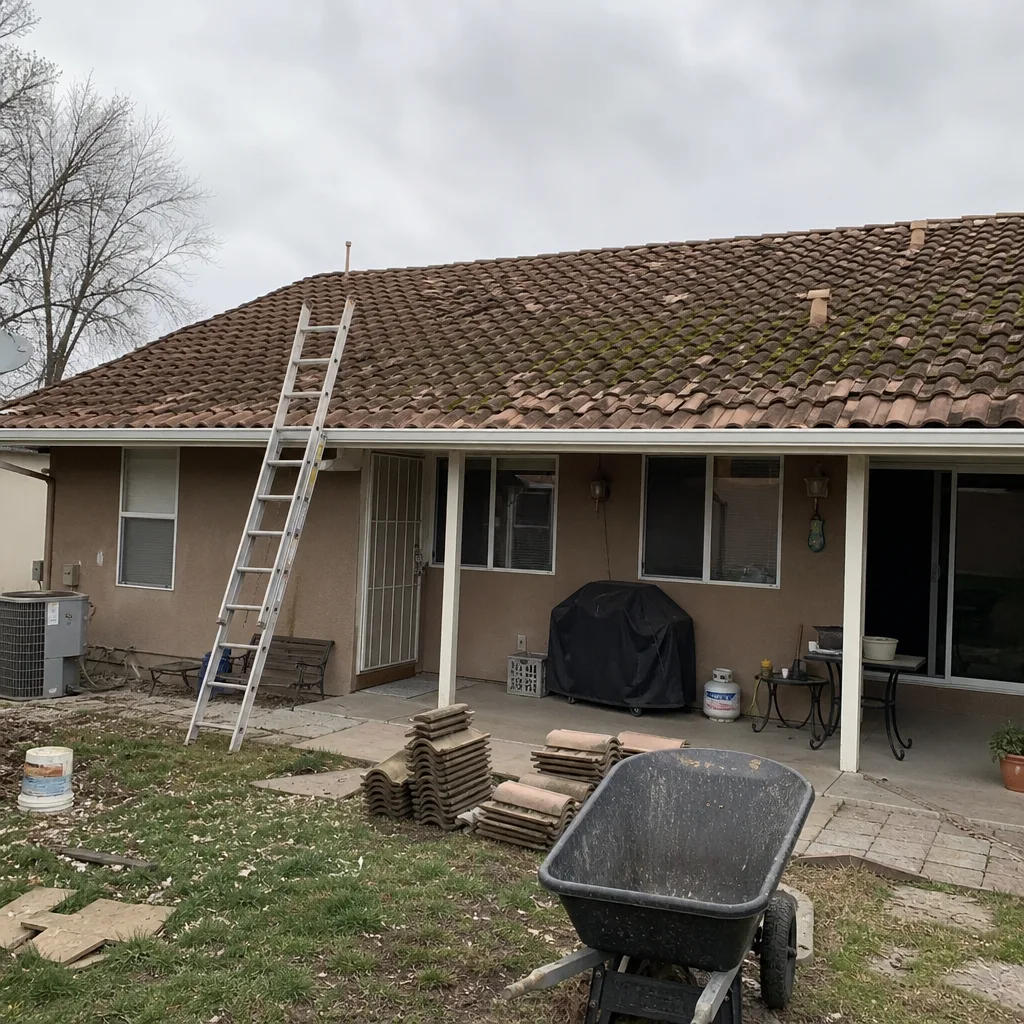 Before
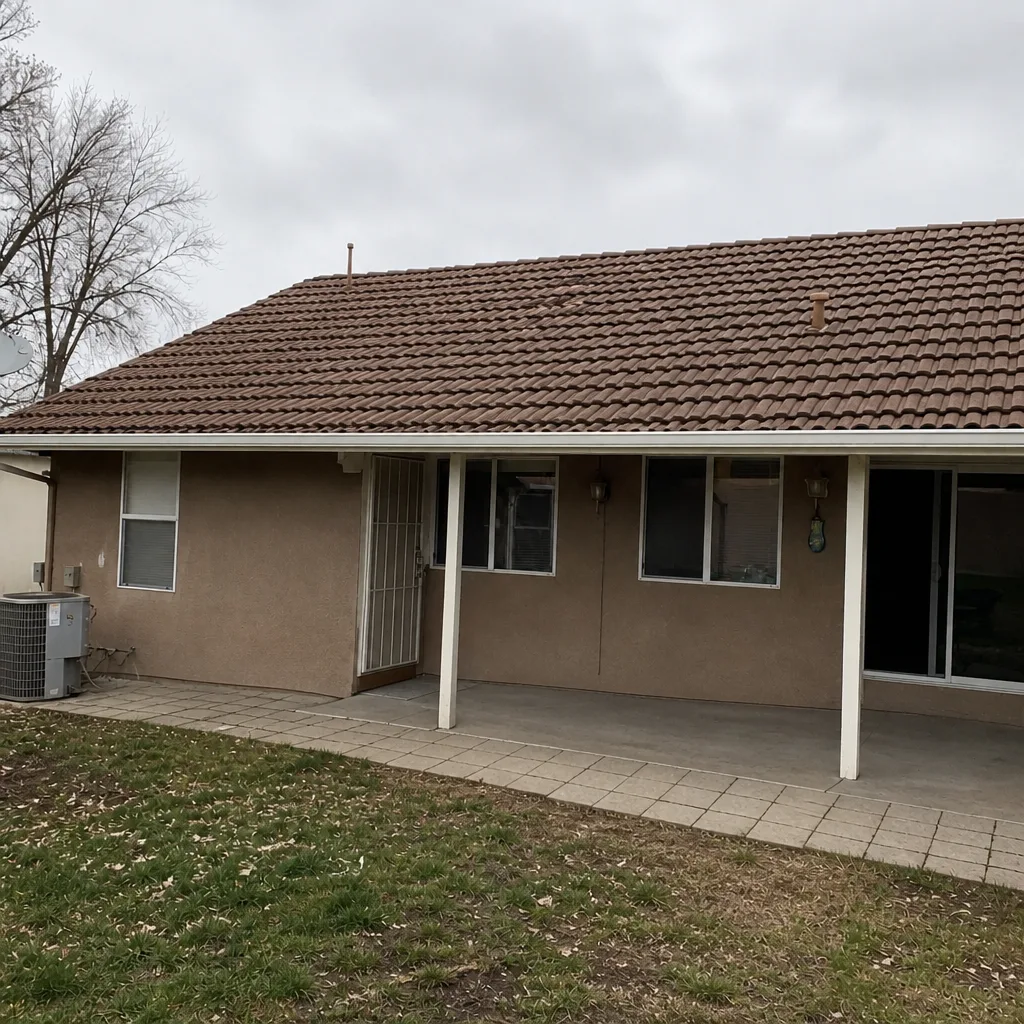 After
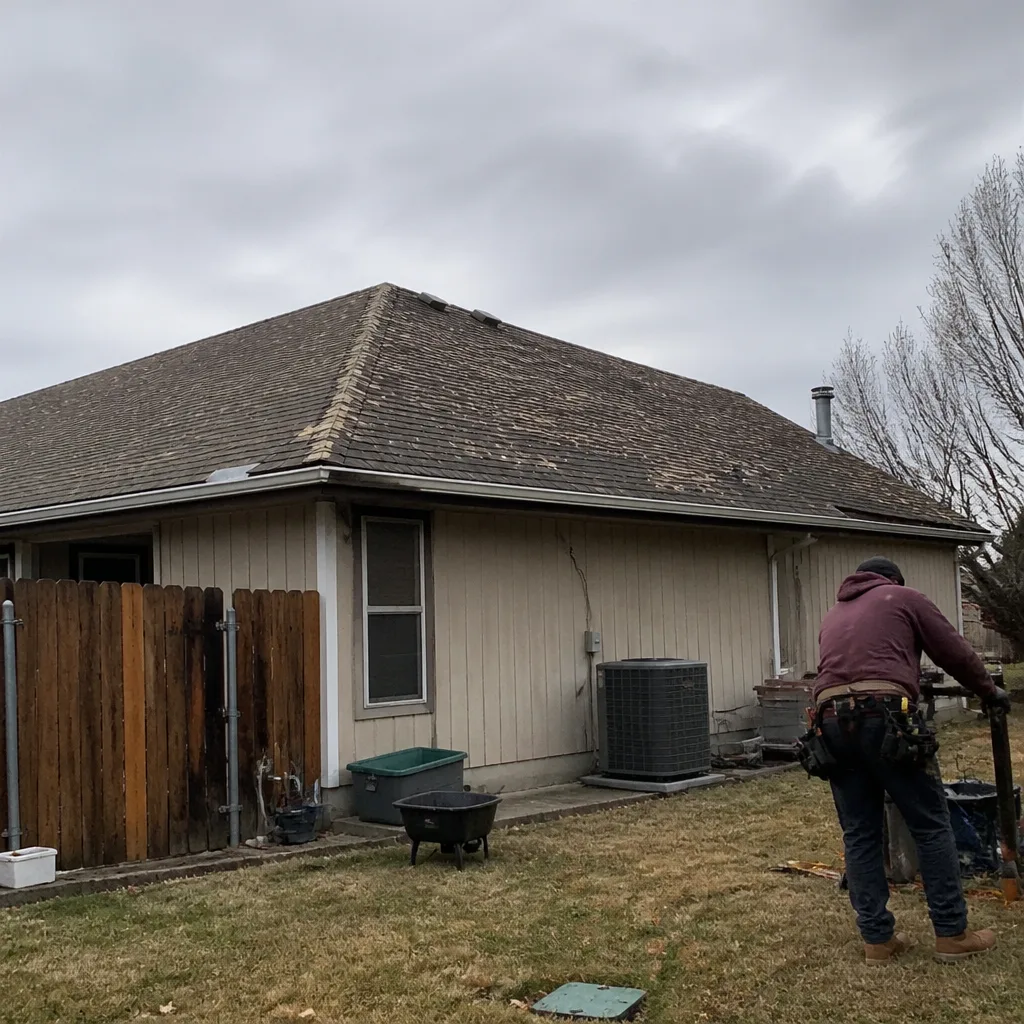 Before
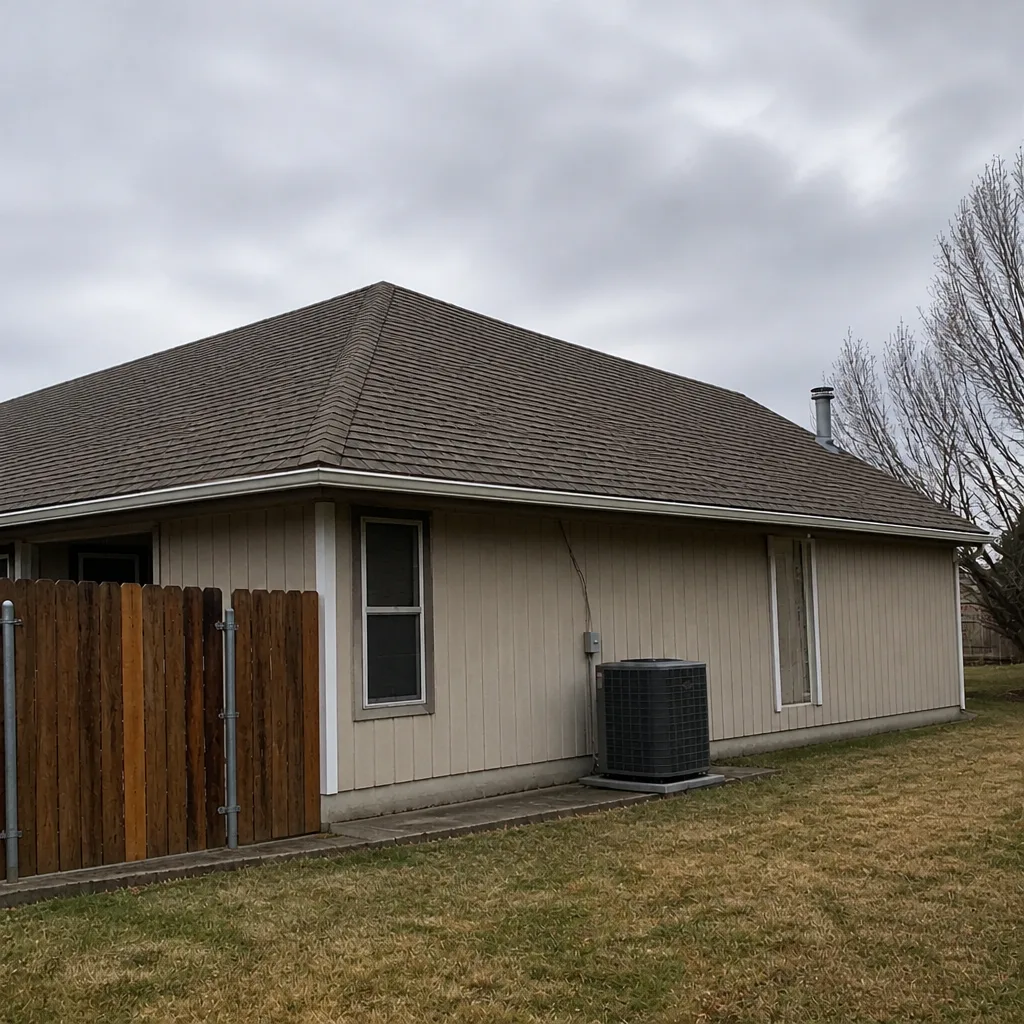 After
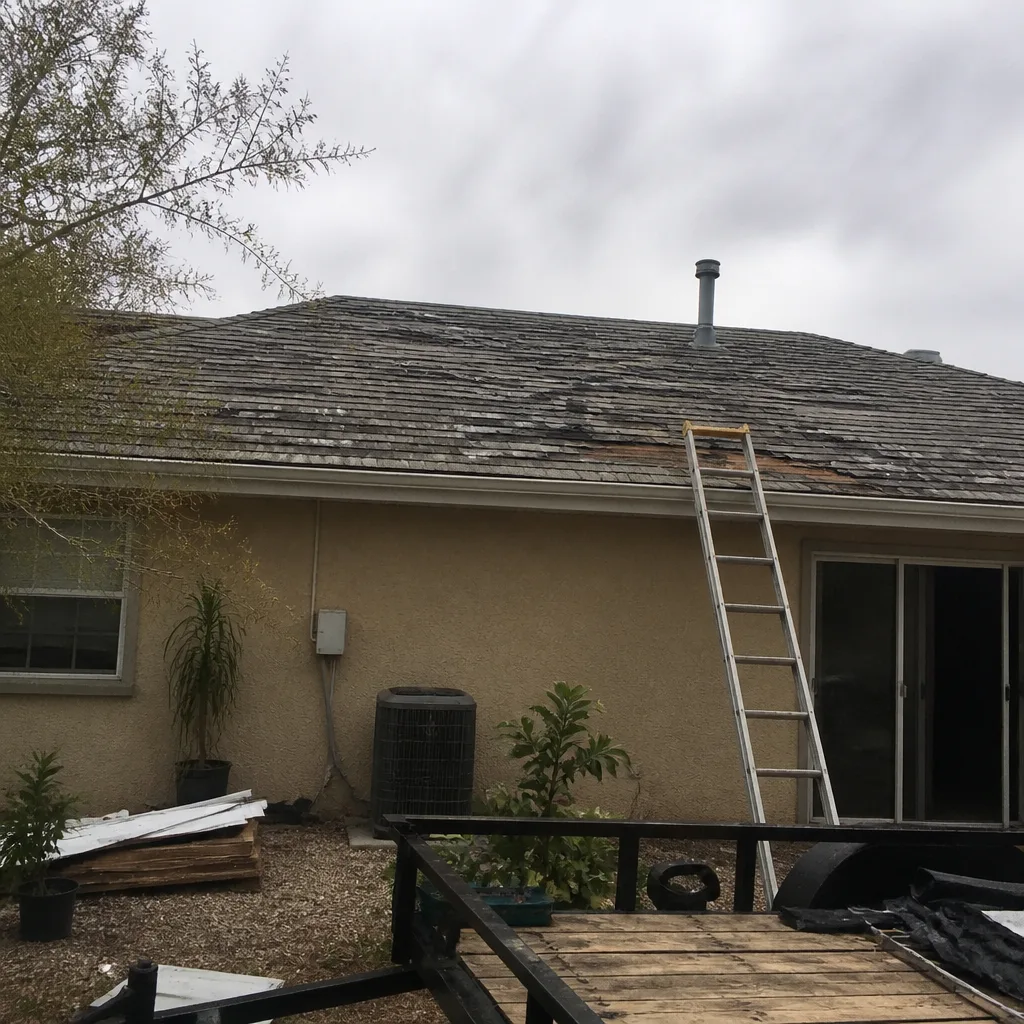 Before
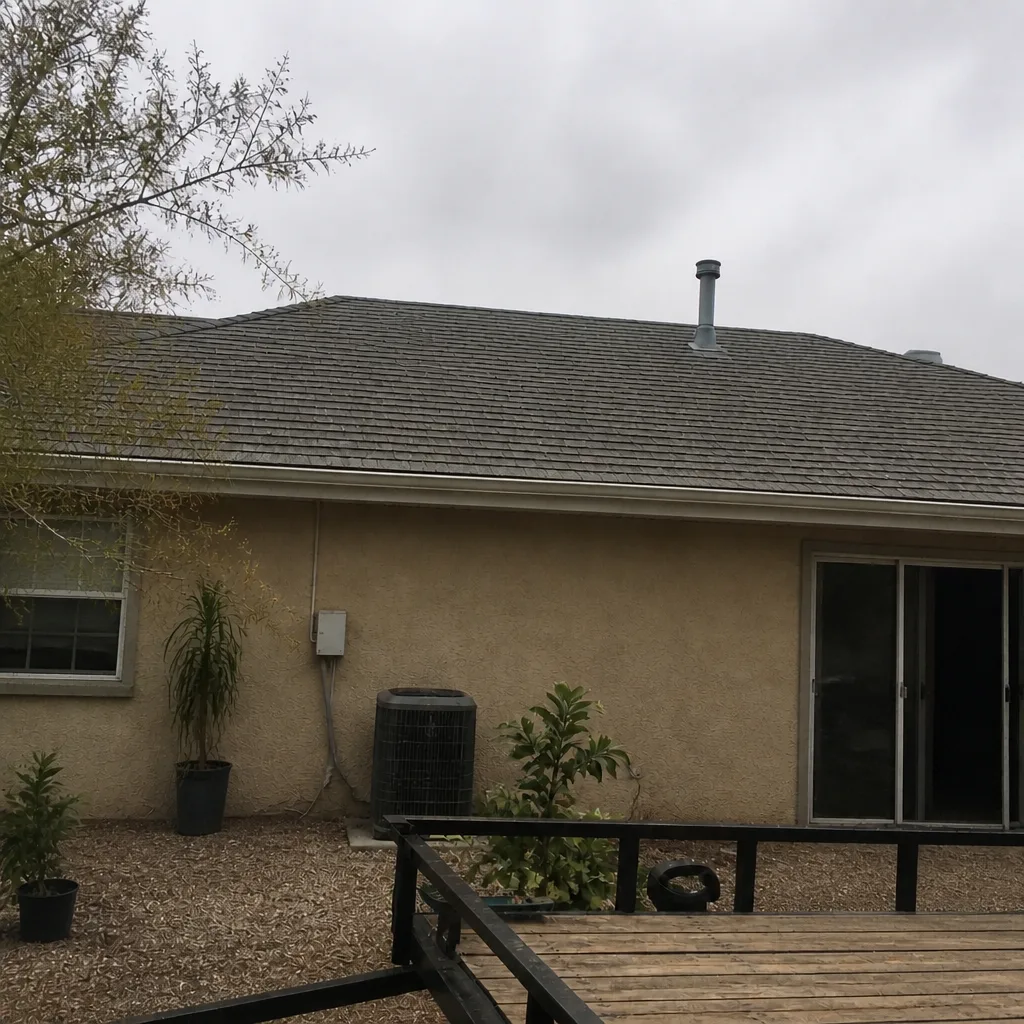 After
When to Call a Professional
Some roof work belongs in your hands: clearing a gutter, replacing a vent boot, sealing a nail pop. Some doesn’t. If you’re seeing missing shingles after a Whitney wind event, granule loss in gutters, or a leak stain on the ceiling after a monsoon downpour, the damage is more than skin deep. Same story if your roof is 20+ years old and you’re weighing replacement against a patch, or if a storm chaser has left a bid on the door you don’t trust. We offer a Free Second Opinion on any written estimate, no-hassle upfront pricing, and no trip charge inside our own county. If you’re ready to know the number before anyone touches the roof, Shepherd & Sons Roofing Whitney offers free estimates in Whitney. Call (844) 797-9455. A real person picks up, day or night, including after a storm.
Frequently Asked Questions
One to three days of on-roof work for most Whitney homes, with two to four weeks total from signed contract to final cleanup. A single-story ranch around 2,000 sq ft is usually one day of tear-off and install, plus the day before for delivery and the day after for cleanup. A larger home, a steep pitch, or a complex layout with dormers and multiple valleys stretches to three days. Call (844) 797-9455 for a free estimate on your specific roofline.
Yes, on roofs under about 25 squares with a standard pitch and clear access. Above that, or on a steep or complex roof, a one-day promise is a sales pitch, not a schedule. The honest markers are how many squares, how many crew on the roof, and what time they start. Ask all three before you sign, and call (844) 797-9455 for a straight answer on your own roof.
Heat above 90°F, wind, and material delivery are the three variables in Nevada. Shingle adhesive cures best when the crew lays shingles early, so a good crew works from first light and finishes the upper sections before the midday heat. Windy weeks can legitimately add a day because crews can’t safely open large deck sections. Materials, specifically decking, custom flashing, and ridge cap, are the third variable. Call for an exact quote on your roof, estimates are free.
No, but you do need to be reachable. The crew lead will text deck-repair photos and fixed pricing to you before installing anything extra. The one time we ask you to be on-site is the pre-job walkaround at 6 a.m. on day one and the final inspection on the last afternoon. Those two walks take 15 minutes each and prevent 90% of miscommunication. To schedule your free estimate, call (844) 797-9455.
Pricing depends on square footage, pitch, number of layers to tear off, and whether any deck repair is needed. We don’t quote over the phone because the number that matters is the number after the roof is measured. What doesn’t change is the pricing structure: written line-item estimate before any work starts, no change orders without your written approval, and the Free Second Opinion if you want to compare a bid you already have. Call (844) 797-9455 for an exact quote. Estimates are free.
We stop, secure the deck with underlayment, and pick up when it’s safe. A Whitney monsoon in July or August can shut the job down for a few hours, sometimes a full day. Safe crews don’t lay shingles in a driving rain or open deck in 40 mph gusts. If we lose time to weather, we tell you the new finish date the same afternoon. Call (844) 797-9455 if your current install has stalled and you want a second opinion.
The Bottom Line
A roof replacement in Whitney is one to three days of on-roof work, and two to four weeks from contract to final cleanup. The variable isn’t the shingle, it’s the setup: permit timing, material delivery, deck condition, weather, and crew size. Ask your bidder four questions (squares counted, crew count, flashing source, permit holder) and you’ll know within five minutes whether the timeline is real. Get those four right, and the work itself is the easy part. Get them wrong, and “one day” becomes next Tuesday’s story. For a straight answer on your own roof, call (844) 797-9455 for a free estimate. If you’re looking for a roofer who’s had the same address since 1996, you found us. Start at the Shepherd & Sons Roofing Whitney home, or read more on Roof Repair in Whitney if you’re still deciding between repair and replacement.
Written by the team at Shepherd & Sons Roofing Whitney.