
Last updated November 18, 2026
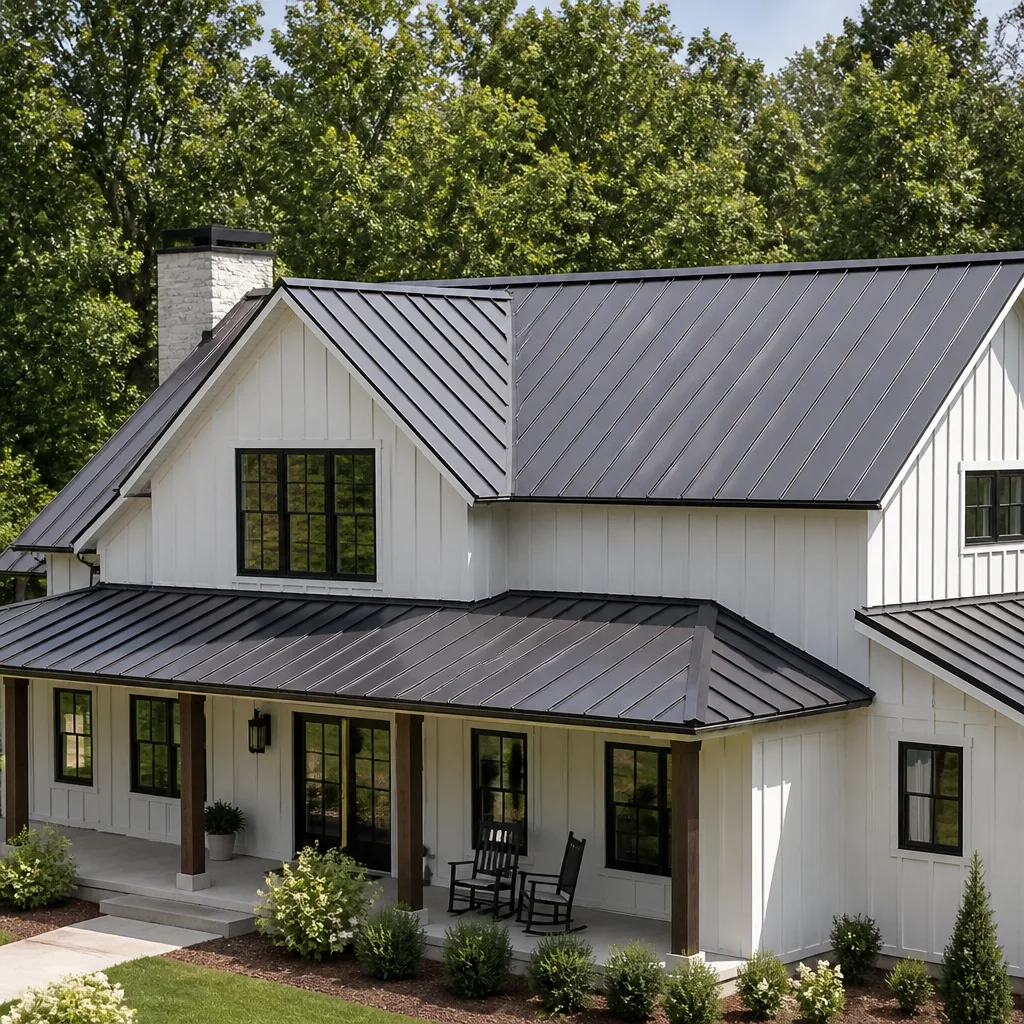 Metal roofing
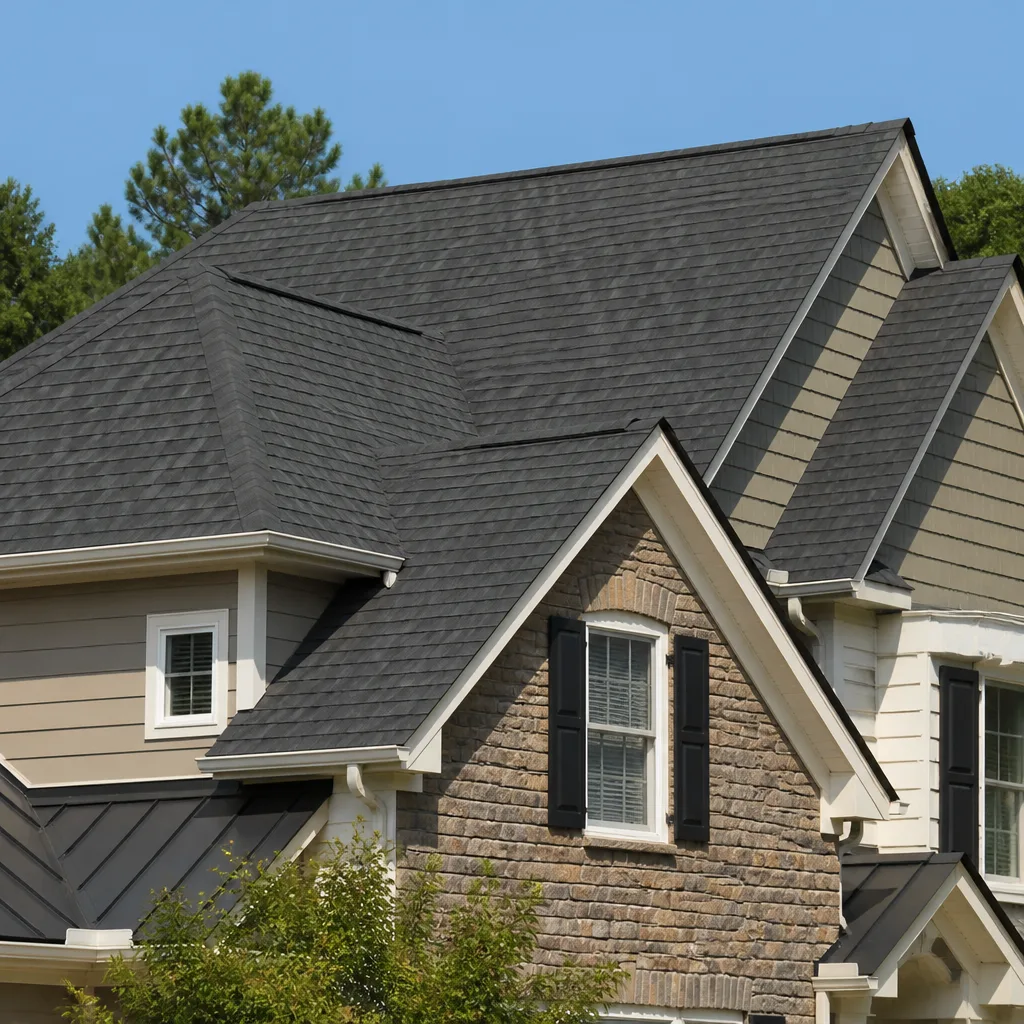 Architectural shingles
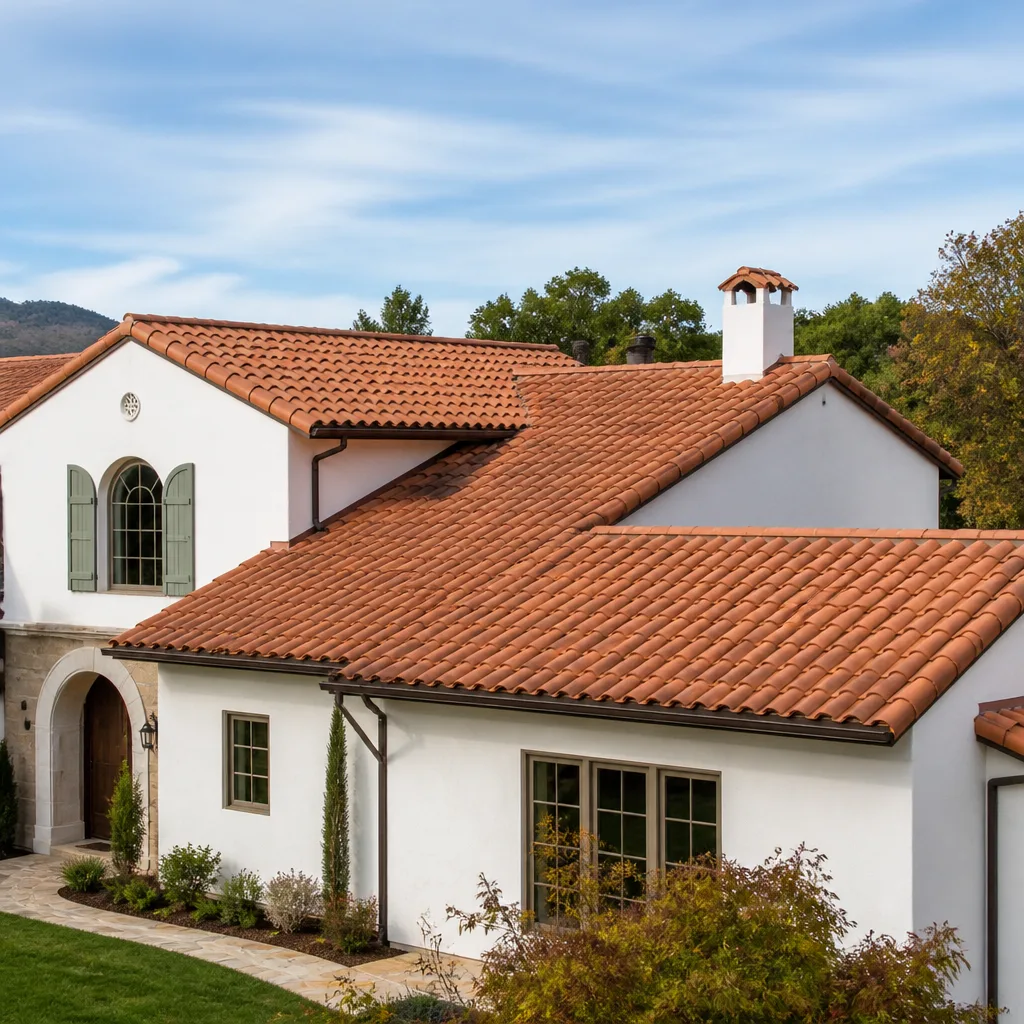 Tile roofing
 GAF
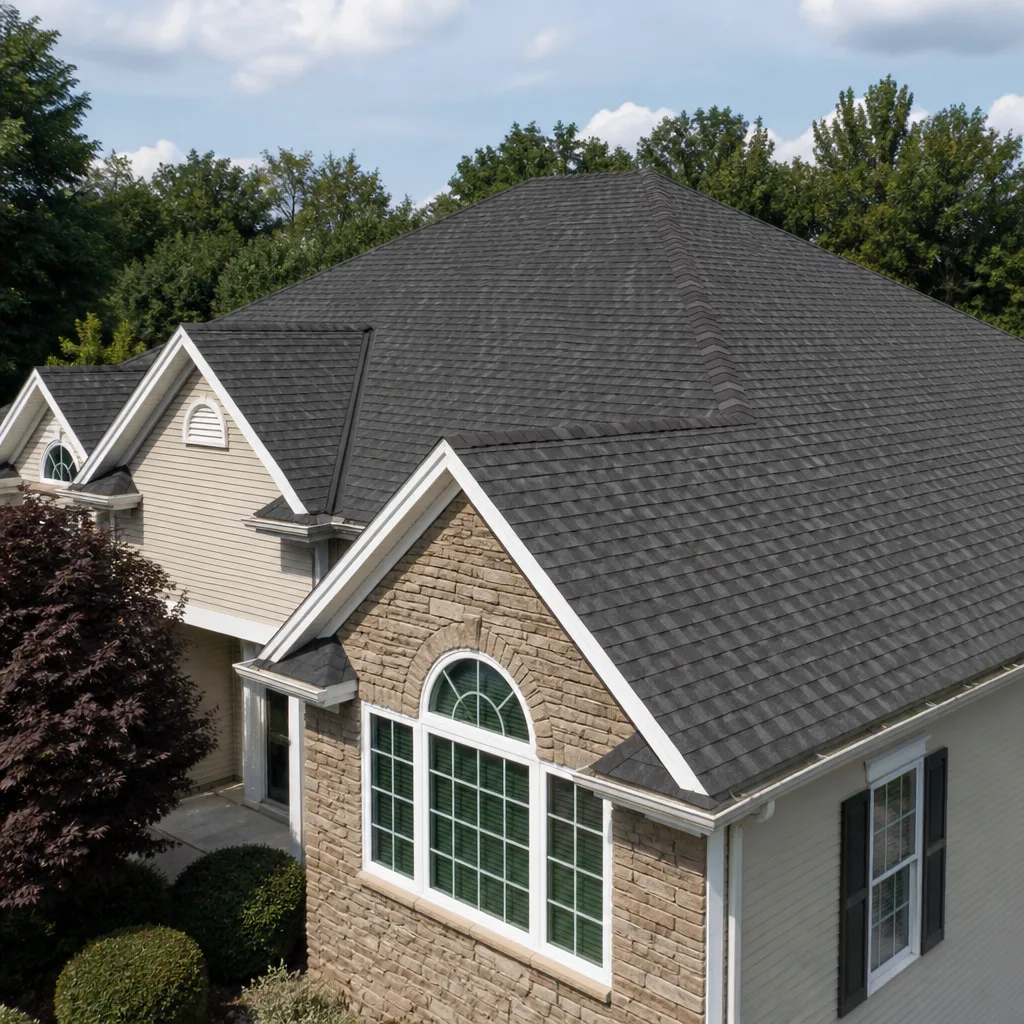 Owens Corning
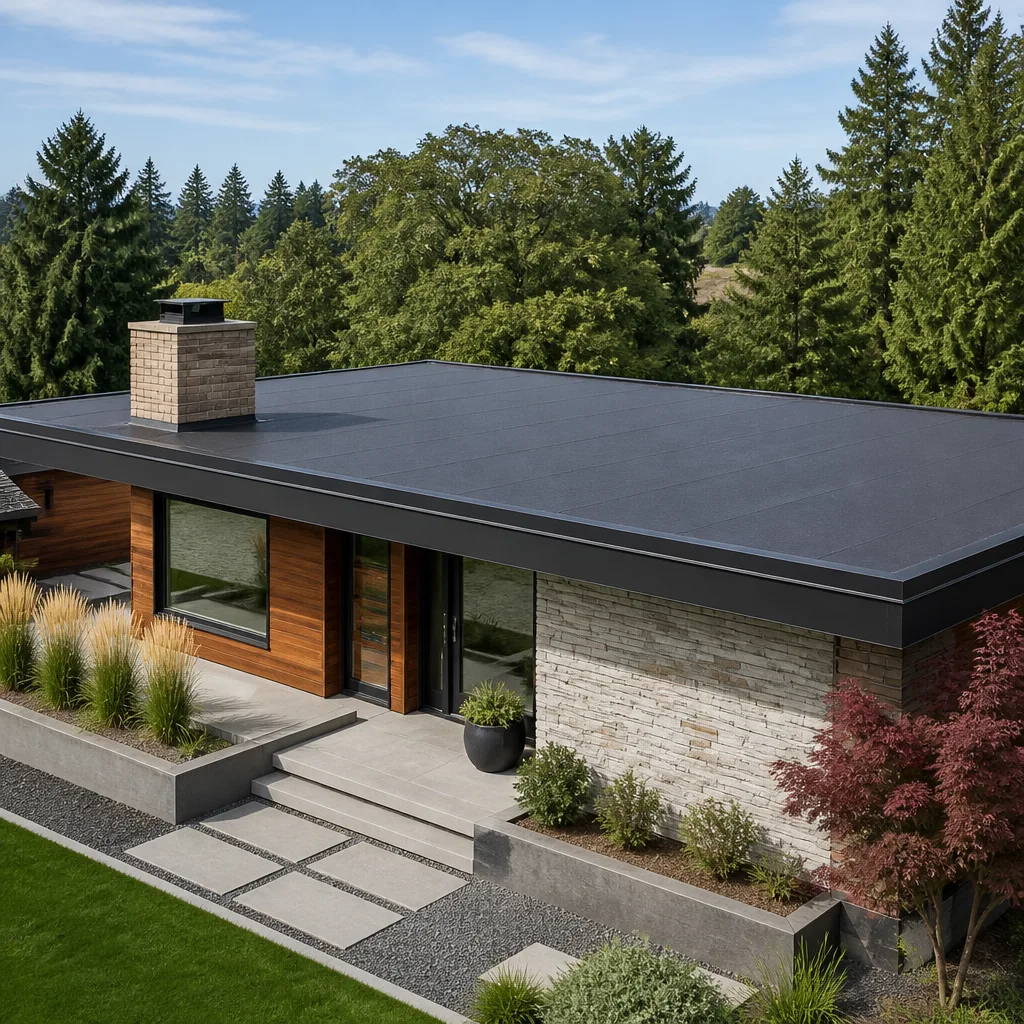 Flat & low-slope
Free roof inspection with deck photos before we talk money - GAF and Owens Corning certified installation
The Complete Guide to Roofing in Whitney
Whitney sits at roughly 2,000 feet with about 294 sunny days a year. That UV load degrades asphalt shingles measurably faster than the manufacturer’s 30-year warranty assumes, and almost no homeowner knows it. The warranty was written for an average American roof, not for a high-desert roof on the eastern edge of Clark County. This guide builds the Whitney-specific rulebook from the ground up: how elevation and sun change shingle life, why a hailstorm here hits harder than the same storm in central Las Vegas, what tract homes and older ranch houses each get wrong, and what “done right” actually looks like from drip edge to ridge cap.
Quick Answer
Roofing in Whitney has to account for high-desert elevation, intense UV exposure, and periodic hail, which together wear shingles faster than the manufacturer’s rating suggests and put a premium on UV-rated materials, correct attic ventilation, and wind-rated nailing. Most Whitney roof failures we see trace back to one of three things: granule loss from sun, heat baked into a poorly vented attic, or wind and hail damage that a cheap install could not handle. A roof built for this micro-climate, with the decking and details done right, is the difference between a 15-year roof and a 25-year one.
Styles & brands we work with
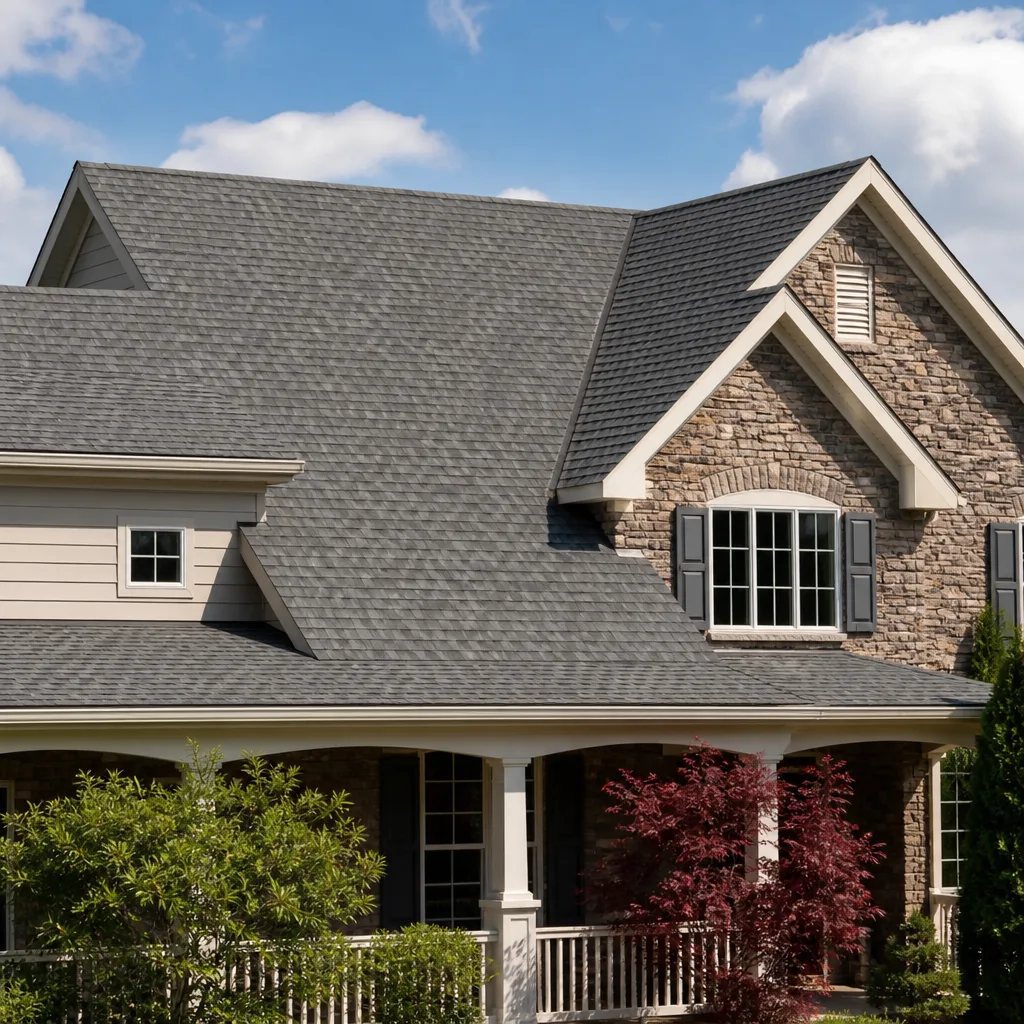
- Architectural shingles
- Metal roofing
- Tile roofing
- GAF
- Owens Corning
- Flat & low-slope
Table of Contents
- Why Whitney’s Elevation and Sun Wear Shingles Faster
- Why a Clark County Hailstorm Hits Whitney Harder
- What a National Chain Installs vs. What Holds Up Here
- Tract Homes vs. Older Ranch Houses: Two Different Problems
- What “Done Right the First Time” Looks Like in Whitney
- Repair or Replace? How to Decide
- Choosing Roofing Materials for the Whitney Climate
- How to Vet a Roofer in Whitney
Why Whitney’s Elevation and Sun Wear Shingles Faster
An asphalt shingle is a fiberglass mat coated in asphalt and topped with mineral granules. Those granules are the armor. They block UV rays from reaching the asphalt underneath. When the granules wear away, the sun starts cooking the asphalt directly, it dries out, cracks, and the shingle fails. In a place with 294 sunny days and thin, dry air at elevation, that granule loss runs ahead of schedule. High elevation means less atmosphere filtering the sun, so the UV that reaches your roof is more intense than the same sun at sea level.
What that means in practice:
- Warranty math is off. A “30-year” shingle is rated on an average sun load. In Whitney, expect the real service life to come in shorter unless the product is rated for high UV and installed with ventilation that keeps the deck cooler.
- South and west slopes go first. The afternoon sun on a west-facing plane does the most damage. We routinely see one slope of a Whitney roof age years ahead of the others.
- Color matters more than people think. Lighter shingles and reflective or cool-rated products run cooler and slow the wear. It’s a small upgrade with a real payoff under this sun.
- Attic heat multiplies the damage. A hot, poorly vented attic bakes the shingles from below while the sun cooks them from above. Ventilation is half the roof’s lifespan.
None of this is a reason to panic. It’s a reason to choose the product and the ventilation on purpose instead of taking whatever a bidder defaults to. When we look at a Whitney roof, the sun damage tells a story, and it usually points to a ventilation problem as much as an aging shingle.
Why a Clark County Hailstorm Hits Whitney Harder
Hail in the Las Vegas valley is not an every-year certainty, but it does come, and when it does, the storms tend to be short and violent. Here’s the part that surprises homeowners: the same hailstorm that dings a few shingles in a dense, tree-lined Las Vegas neighborhood can do more visible damage out in Whitney. Fewer mature trees means fewer things breaking the fall of the ice before it reaches the roof. More open exposure, more direct hits.
After a hail event, the damage isn’t always obvious from the ground. What to check, safely, from the ground with binoculars:
- Look for dark spots, bruises, or areas where granules have been knocked loose on the slopes facing the storm.
- Check gutters and downspouts for a sudden accumulation of granules, which signals shingle damage above.
- Inspect metal vents, valley flashings, and the ridge for dents, which are a tell that hail was large enough to matter.
- Look at the softer metals: gutter aprons, downspout elbows, and any exposed aluminum, which dent more easily than shingles and confirm the hail size.
If you see any of that, get a professional eye on it before you file anything or sign anything. Hail damage that goes unrepaired invites water in at the fasteners and seams. And be careful who you let up there: after a storm is exactly when out-of-town crews roll through town. Get a free second opinion on any written estimate and compare it against someone with a real local address.
What a National Chain Installs vs. What Holds Up Here
Most roofing problems we’re called out to fix in Whitney weren’t caused by bad luck. They were caused by a roof that was fine on paper and wrong for this climate. A national outfit working from a standard playbook tends to install one default product line the same way it would in Ohio or Florida, without adjusting for elevation, UV, and dry heat. The shingle may carry a recognizable name and a long warranty, but the install underneath it is what determines whether the roof survives.
What actually holds up in Whitney comes down to a few choices made on purpose:
- A UV-rated shingle from a manufacturer like GAF, CertainTeed, or Owens Corning, chosen for sun and heat, not just for the price per square.
- Proper attic ventilation that keeps the deck temperature down. Intake at the eaves, exhaust at the ridge, balanced and sized to the attic.
- The right nailing pattern. The wind rating is earned by the nailing, not the shingle wrapper. Nails in the wrong spot or driven too deep fail the wind rating no matter what the box says.
- Real underlayment and ice-and-water at the valleys and eaves, not the thinnest felt the bidder can buy.
The difference between a national default and a Whitney-correct install isn’t exotic. It’s knowing which details matter here and not cutting them. A roof measured in squares only tells you the size. Ask any bidder how many squares they counted, then ask what shingle and what ventilation they’re putting on it and why it fits this climate.
Tract Homes vs. Older Ranch Houses: Two Different Problems
Whitney has a split personality when it comes to housing stock, and the two halves fail in different ways. Knowing which one you’re in tells you what to watch for.
Tract Homes
Newer tract construction in Whitney tends to be tight, with engineered trusses, a single ridge vent, and sometimes ventilation that was sized to the minimum. These homes often age well structurally but bake their shingles because the attic airflow is marginal. The failure mode is often a hot deck and early granule loss on the sun-facing slopes, plus fasteners working loose at the panel edges as the deck cycles hot and cold. An upgrade to balanced ventilation and a UV-rated shingle does more for these roofs than anything else.
Older Ranch-Style Houses
Older ranch homes in Whitney bring the decking conversation. Many have board sheathing or thinner original roof deck that sags, delaminates, or can’t hold a nail after decades of heat cycles. When we replace a roof on one of these, the deck gets checked first. Soft spots, popped nails, and gaps between boards all get addressed before a single shingle goes down, because a new roof over a failing deck is money thrown away. Older homes also tend to have undersized vents and obsolete flashing details, which is where leaks start.
Both types share one truth: the roof is a system, and the deck, underlayment, ventilation, and flashing have to work together. If a bidder quotes you a price without ever looking in the attic or walking the deck, the quote is a guess.
What “Done Right the First Time” Looks Like in Whitney
“Done right” isn’t a slogan. On a Whitney roof it’s a sequence of steps, and you can check whether a crew follows them. Here’s what a proper replacement looks like from the deck up:
- Tear-off and deck inspection. Old shingles come off, the deck gets walked and checked for soft spots, popped nails, and rot. Bad decking gets replaced before anything else happens.
- Deck protection and underlayment. A proper underlayment goes down, with ice-and-water membrane in the valleys and along the eaves where water backs up.
- Drip edge and flashing. Drip edge at the eaves and rakes, new flashing at walls, chimneys, and penetrations. This is where most leaks are born, so it gets done right, not reused.
- Starter course and shingles. A starter strip along the eaves, then shingles laid to the manufacturer’s spec, with the nailing pattern that earns the wind rating.
- Ventilation. Ridge vent and intake set up to breathe, checked for balance, so the attic stays cooler under the Whitney sun.
- Ridge cap and cleanup. Ridge cap set, then a full magnet sweep for nails and a walkthrough with you before the crew leaves.
We photograph the deck before we cover it and show you the pictures before we talk money. That’s not marketing. It’s the only way you can see that the part you’ll never look at again was done right. Every job we back with our written 90-Day Done Right Promise, and one call brings us back if something isn’t right.
Repair or Replace? How to Decide
Not every Whitney roof needs to come off. The decision usually comes down to age, damage spread, and whether the deck is sound. A few guidelines we use:
- Repair when the damage is isolated, the roof is under roughly 15 years old, and the surrounding shingles are still flexible with granules intact.
- Repair when a single flashing detail, a vent boot, or a localized leak is the problem and the rest of the roof is holding.
- Replace when granule loss is widespread, shingles are curling or cracking across multiple slopes, or the roof is at or past its realistic service life in this climate.
- Replace when the deck is failing or when repairs would stack up to more than a fraction of the cost of a new roof.
For a closer look at what each path involves, see our Roof Repair in Whitney and Roof Replacement & Installation in Whitney pages. The honest answer is sometimes “you don’t need a new roof yet,” and we’ll tell you that. A repair over $200 comes with $40 off, and a free second opinion on any written estimate costs you nothing but a phone call.
Choosing Roofing Materials for the Whitney Climate
Material choice under the high-desert sun matters more than it does in milder climates. Here’s how the main options shake out for a Whitney roof:
- Asphalt shingles. The default and the best value, but pick a UV-rated line from GAF, CertainTeed, Owens Corning, or IKO. A quality architectural shingle paired with good ventilation handles this climate well.
- Metal roofing. Reflective metal runs cooler, sheds hail better than asphalt in many cases, and lasts a long time. For a sun-baked Whitney roof, it’s worth pricing. See Metal Roofing in Whitney.
- Tile. Heavy and requires a deck built for the weight, but excellent at handling heat and sun. Not every Whitney home’s framing is set up for it, so the structure gets checked first.
Whatever the material, the install details carry the performance. A premium shingle nailed wrong underperforms a mid-grade shingle nailed right. Start with our Shepherd & Sons Roofing Whitney home page for the full picture of what we install and how.
How to Vet a Roofer in Whitney
The single best protection against a bad roof is a roofer who will show you who they are and where they work. Here’s a short checklist when you’re comparing bids in Whitney:
- Ask for a published address and license number. A real local roofer will hand them over without a pause. Look them up.
- Ask how many squares they counted. If the bidder can’t tell you, the bid is a guess.
- Insist on a written, line-item estimate. The number on the phone and the number at the door should be the same number.
- Ask what gets pulled and inspected. Permits protect you. A crew that skips them is skipping you.
- Get a second opinion on any estimate, free. Compare two written bids side by side before you sign.
Storm chasers come and go after every hail event. Locals stay. Ask anyone on your street; the name on the truck should match the name on the license. Our technicians have up to 30 years of experience, and the crew on your roof is ours, not a subcontractor we’ll never see again.
Common Mistakes to Avoid
- Taking the lowest bid without reading it. The cheapest number often leaves out deck inspection, proper ventilation, or flashing replacement. Read what’s included, not just the total.
- Skipping the attic and deck walkthrough. A bidder who never looks under the shingles or inside the attic is guessing. In Whitney’s heat, the deck and ventilation are where the real problems hide.
- Letting a storm chaser talk you into a full replacement. After a Clark County hailstorm, out-of-town crews swarm in. Get a free second opinion before you sign anything.
- Ignoring one bad slope. Whitney’s west and south slopes take the worst of the sun. A single aging slope is a warning, not something to ignore.
- Reusing old flashing. Flashing is where leaks start. A proper job replaces it at walls, chimneys, and penetrations.
- Choosing a shingle on price alone. The default product a national chain installs may not be UV-rated for this climate. Ask what shingle and why.
See the difference
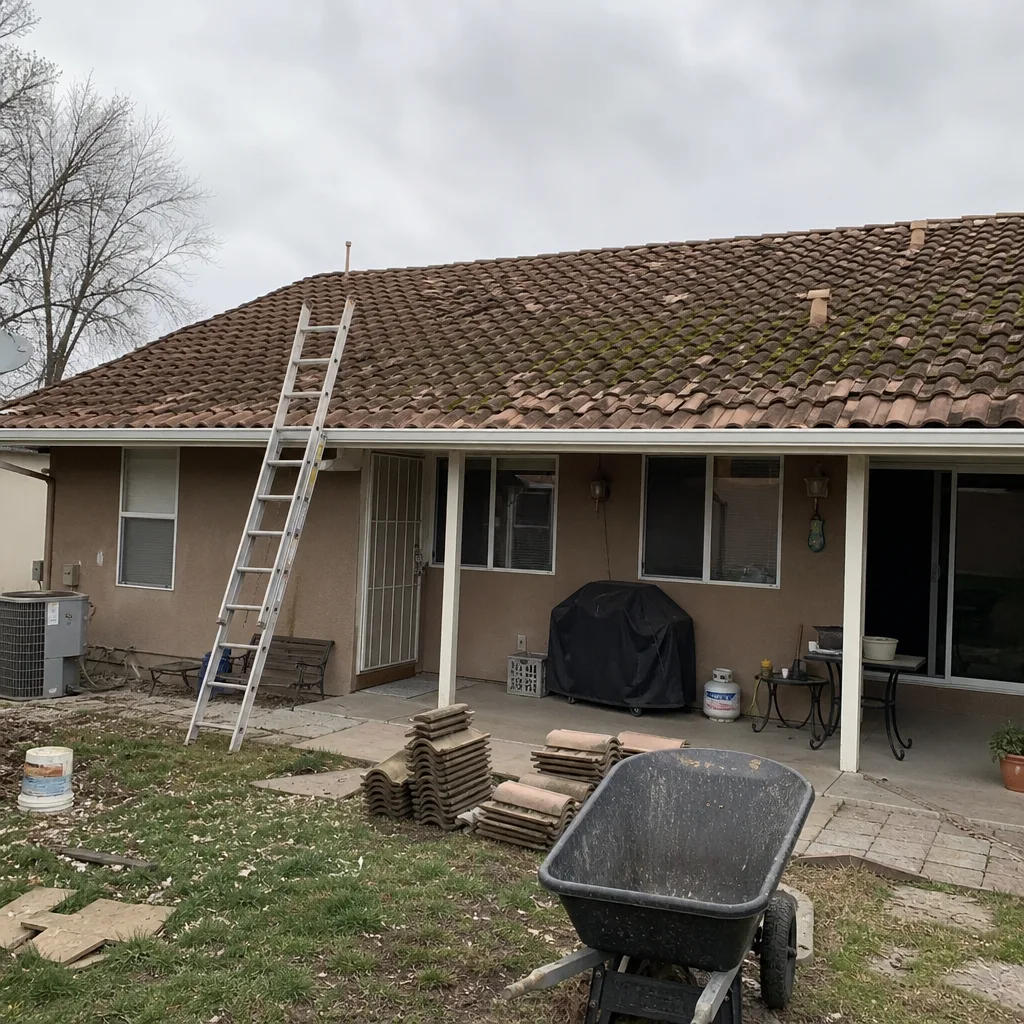 Before
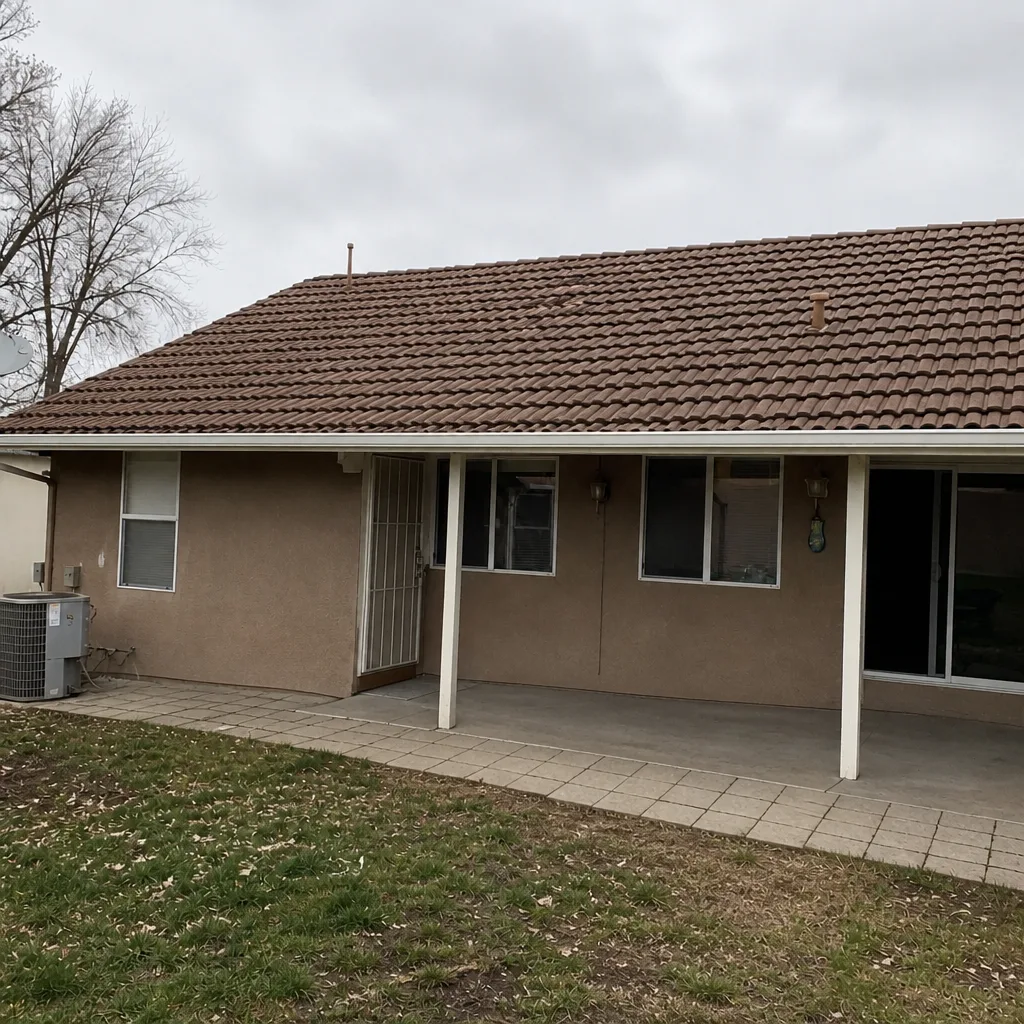 After
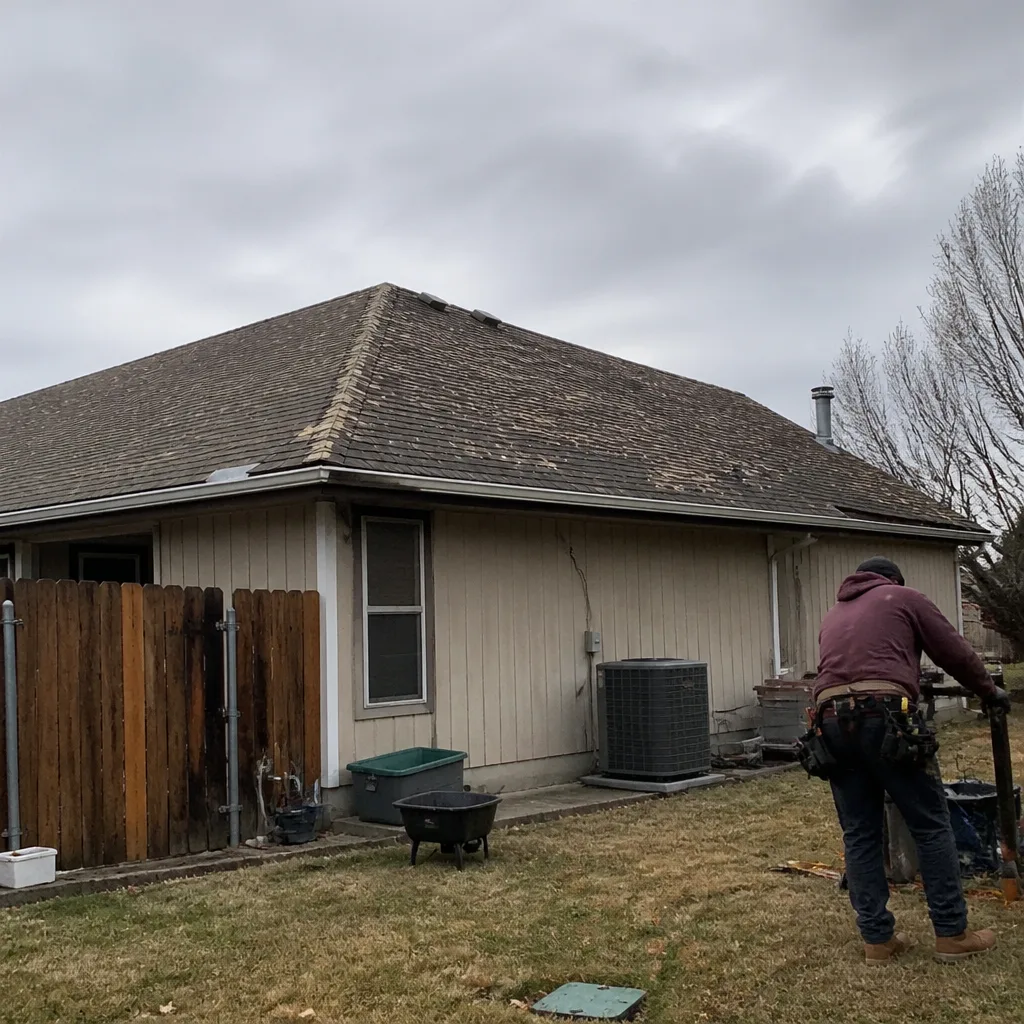 Before
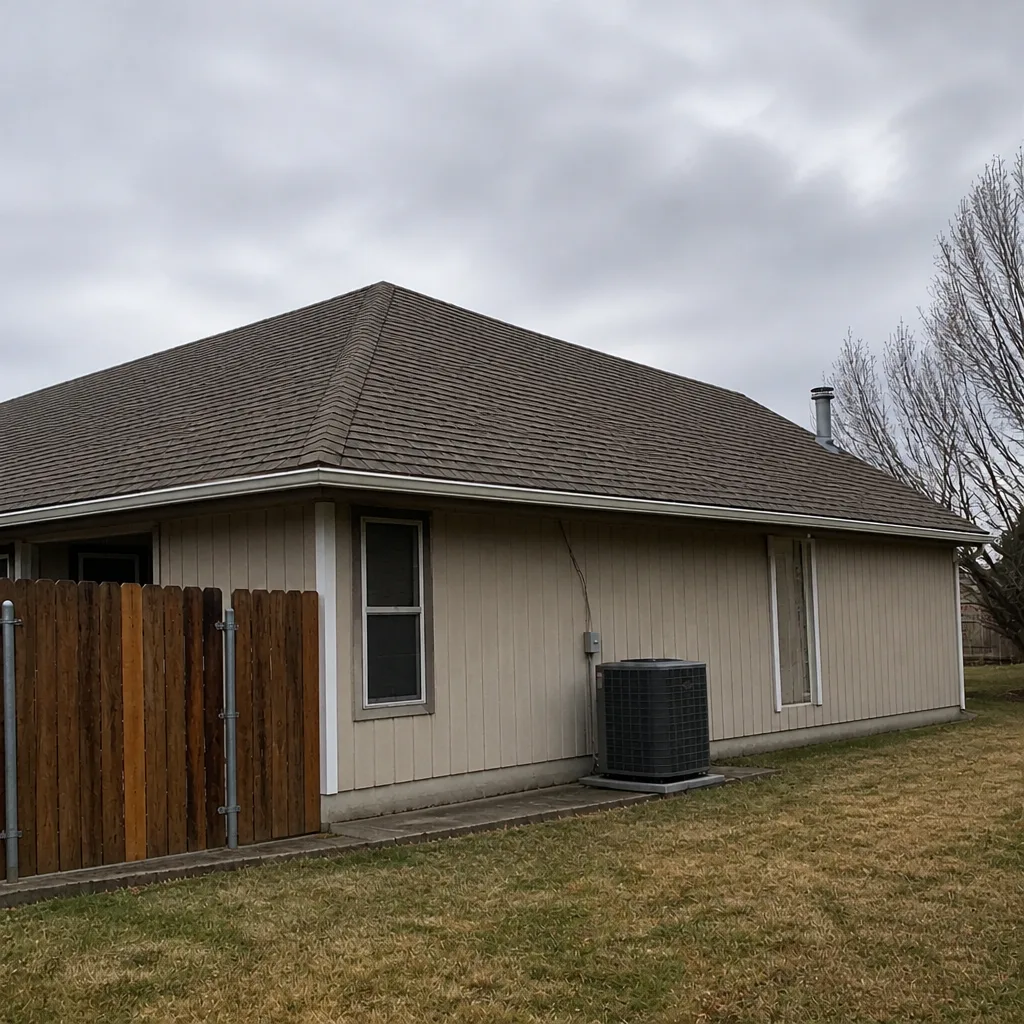 After
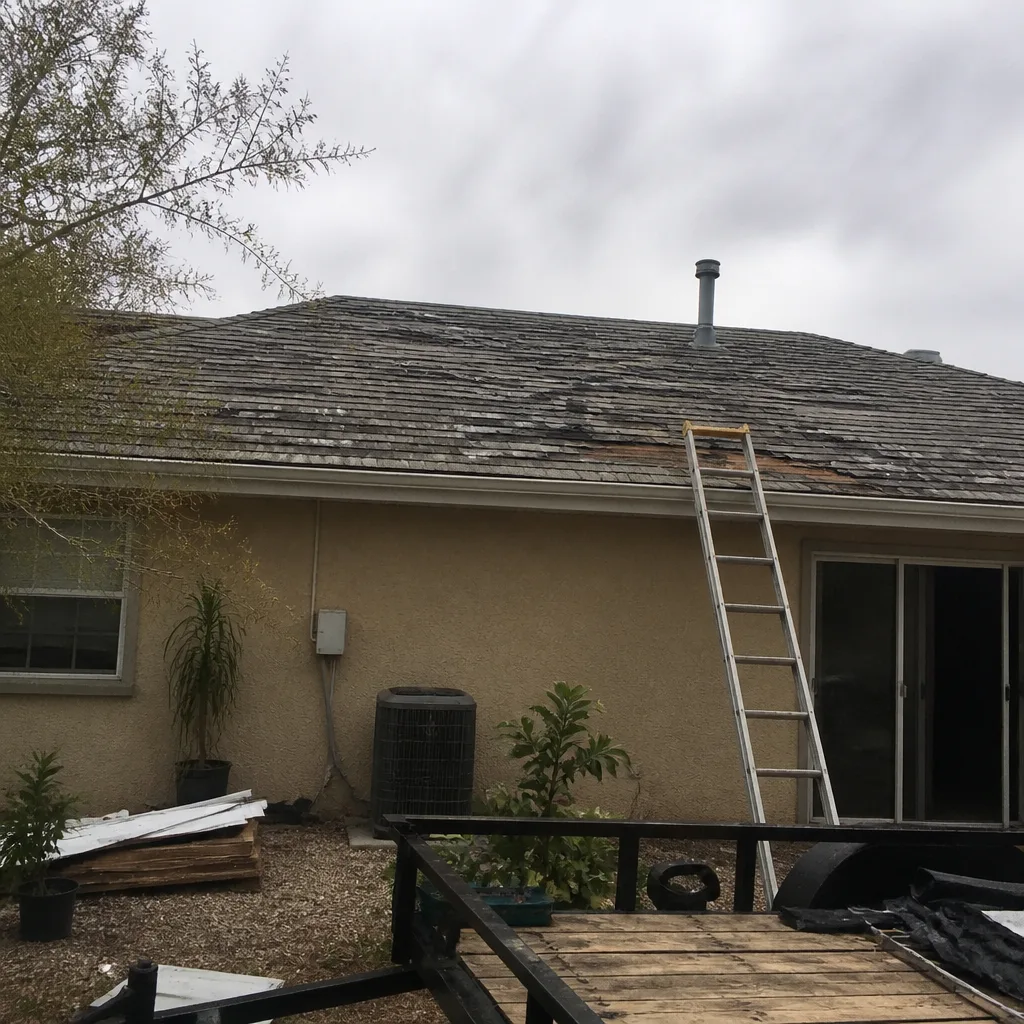 Before
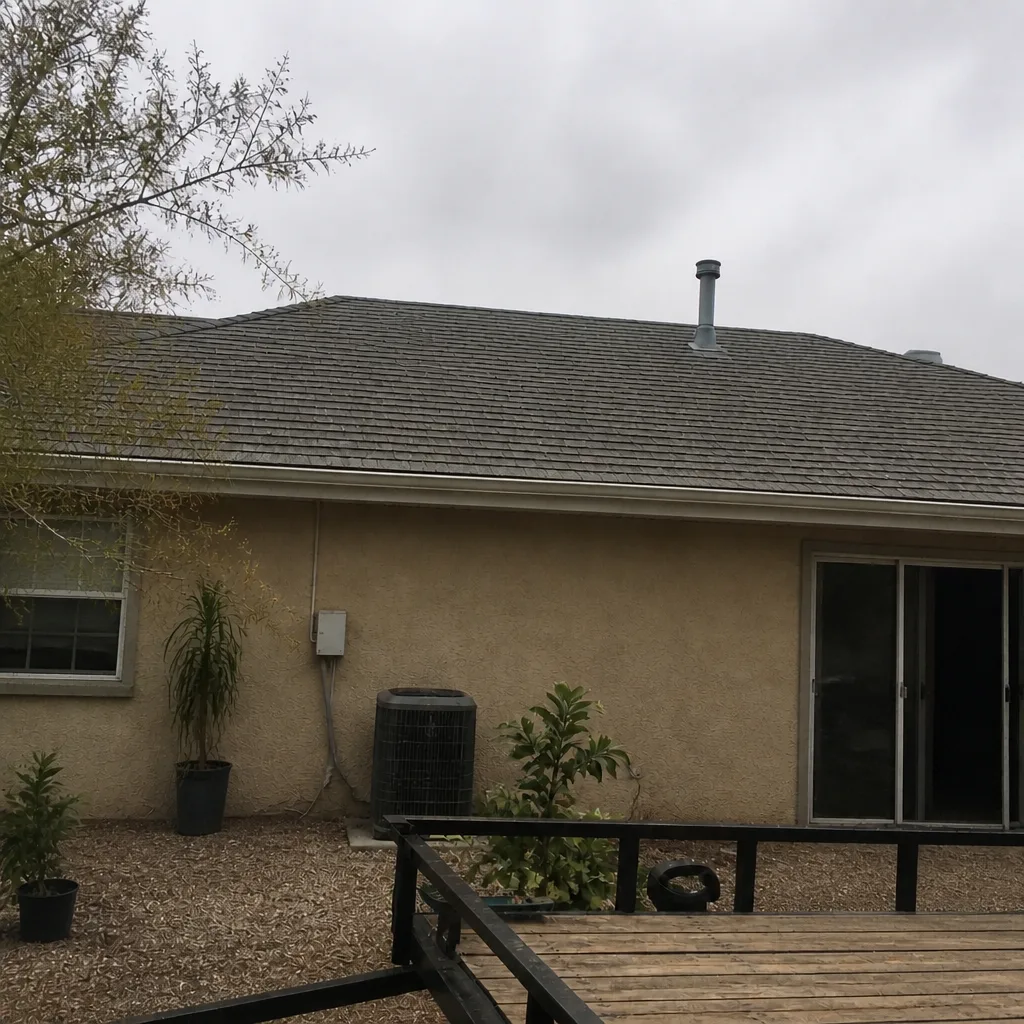 After
When to Call a Professional
Some roof work is a job for a trained professional, full stop. If you see widespread granule loss, curling or cracked shingles across more than one slope, water stains on the ceiling or attic deck, or you’ve just been through a significant hailstorm, call us. Walking a roof safely, especially a steep or aged one, is not a homeowner task, and the deck under a suspect roof can be soft enough to give way. If a storm has caused visible damage, don’t wait for the next rain to find the leak. Shepherd & Sons Roofing Whitney offers free estimates in Whitney, with no trip charge inside our own county. Call (844) 797-9455 and a live person will answer, day or night.
Frequently Asked Questions
A well-installed UV-rated asphalt shingle roof in Whitney typically runs somewhere in the 15 to 25 year range, shorter than the manufacturer’s advertised “30-year” rating because of the high-desert sun load. Metal and tile last considerably longer. Ventilation and shingle choice are the two biggest factors in where your roof lands on that range. Call (844) 797-9455 for a free estimate on what fits your home.
Hail isn’t an every-year event in the Las Vegas valley, but when it comes, Whitney’s open exposure with fewer trees means the ice hits more directly than in denser, tree-lined neighborhoods. After a storm, check your gutters for knocked-loose granules and get a professional look if you see dents or bruising. A free second opinion on any written estimate costs you nothing. Call (844) 797-9455.
Cost in Whitney depends on the roof’s size in squares, the material you choose, and how much decking needs replacing, so the only honest price is a written line-item quote after a real inspection. A bidder who quotes a number over the phone without seeing the deck is guessing. Call (844) 797-9455 and we’ll come out for a free estimate.
With a proper line-item written estimate, the number you agree to is the number you pay, unless the deck reveals something neither of us could see until the shingles came off, and that gets discussed with you before any extra work happens. We show deck photos before we talk money for exactly this reason. Call (844) 797-9455 for a free estimate.
It does. Newer tract homes in Whitney tend to have marginal attic ventilation that bakes the shingles, while older ranch houses often have decking that needs repair before a new roof goes on. Knowing which you have tells you what to have checked first. Call (844) 797-9455 and we’ll take a look.
Yes, and a live person answers the phone day or night after a storm, including nights and weekends. We’ll get out to assess the damage and give you a written estimate you can compare against any other bid. Call (844) 797-9455.
The Bottom Line
Roofing in Whitney is its own thing. The elevation and the 294 sunny days wear shingles faster than the warranty assumes, the occasional Clark County hailstorm hits harder here because there’s less to break its fall, and the mix of tract homes and older ranch houses means two different sets of problems. The roof that lasts is the one built for this climate: a UV-rated product, balanced ventilation, the right nailing, and every detail from drip edge to ridge cap done right. Pick a roofer with a real local address and a license you can look up. That’s the whole rulebook. Call (844) 797-9455 for a free estimate.
Written by the team at Shepherd & Sons Roofing Whitney.