
Last updated November 18, 2026
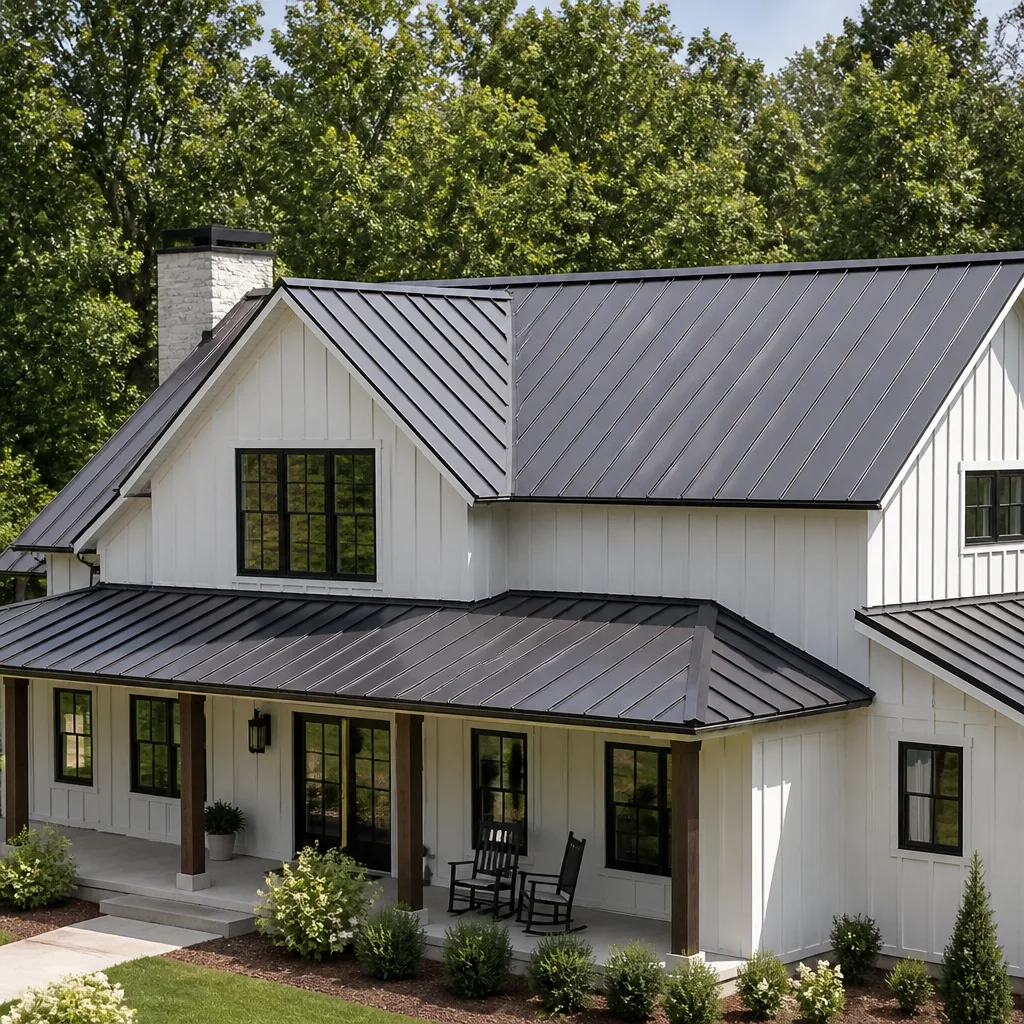 Metal roofing
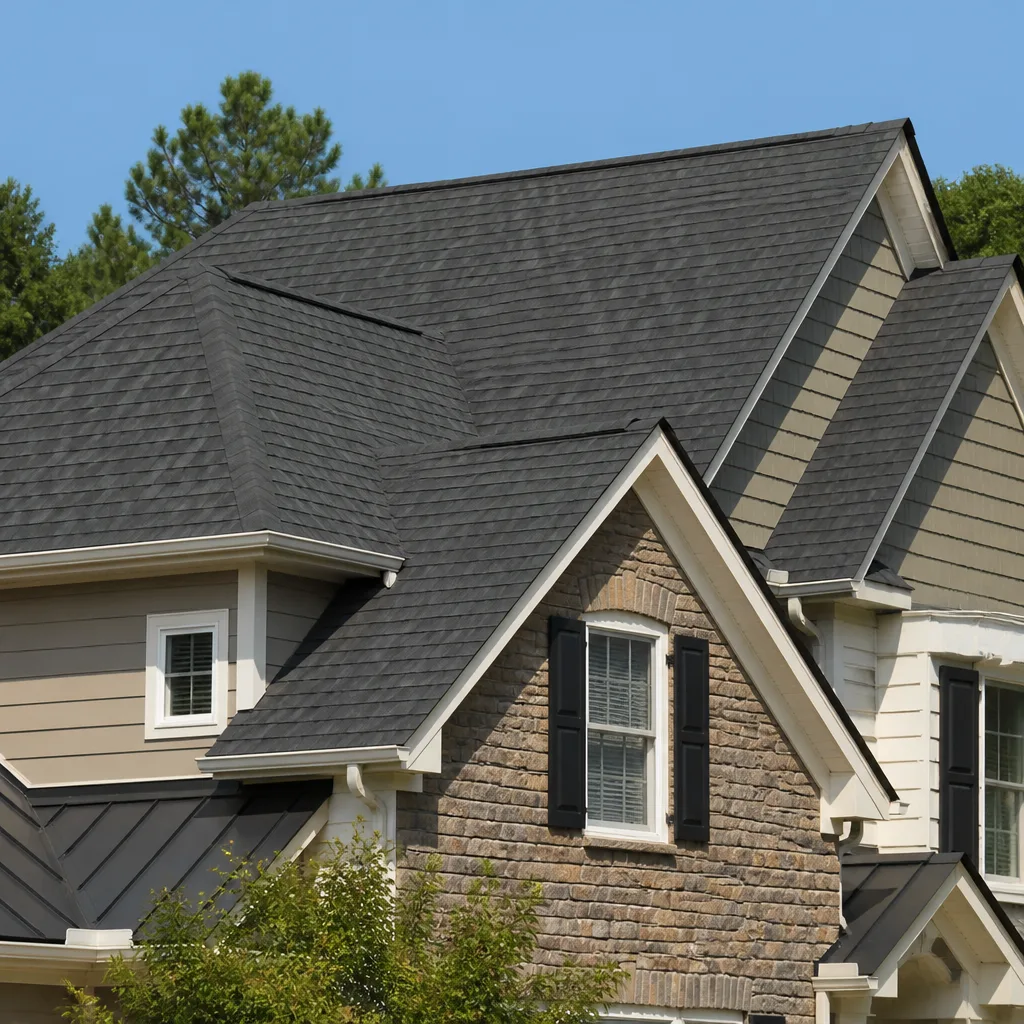 Architectural shingles
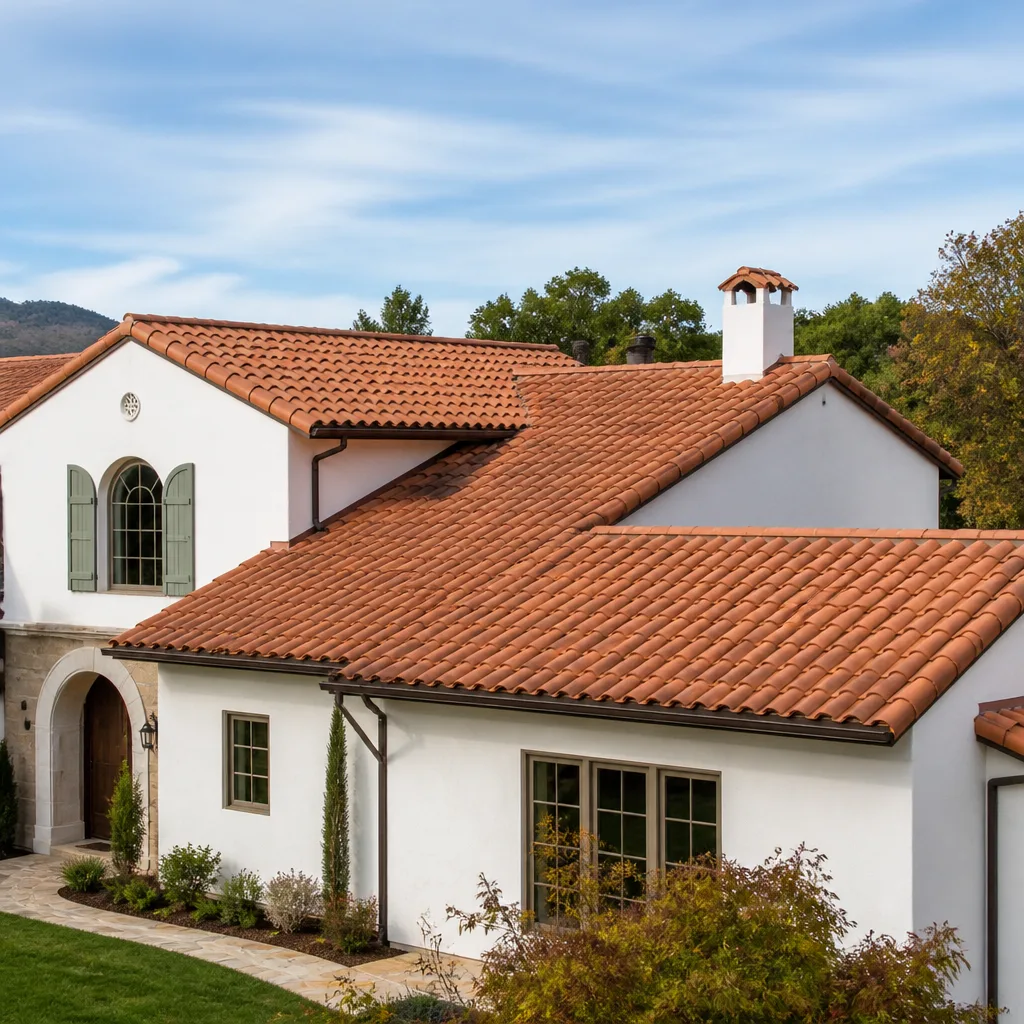 Tile roofing
 GAF
 Owens Corning
 Flat & low-slope
Free roof inspection with deck photos before we talk money - GAF and Owens Corning certified installation
The Complete Metal Roofing Guide for Whitney Homeowners
Whitney sits at an elevation where a metal roof surface can hit 160°F in July and drop below freezing on a January night. That daily swing, close to 130 degrees between afternoon and dawn, is the part of metal roofing that fails first, and it’s the part most guides written for coastal climates never mention. Metal isn’t one product either. It’s six or seven different systems with different fastening methods, different coatings and very different lifespans under Nevada sun. This guide walks Whitney homeowners through which system survives here, what the coatings actually mean, what Lander County expects on a re-roof, and what a real install costs without footnotes.
Quick Answer
Standing-seam metal roofing is the best fit for Whitney’s high-desert climate because the concealed fasteners and floating clips let the panels expand and contract without loosening. Exposed-fastener panels can work here too, but only with high-quality fasteners and honest ventilation, and they won’t outlast standing seam. Expect to pay roughly $14,000 to $32,000 for a typical Whitney home, depending on the panel system, coating and roof complexity.
Styles & brands we work with
- Architectural shingles
- Metal roofing
- Tile roofing
- GAF
- Owens Corning
- Flat & low-slope
Table of Contents
- Why Metal Roofing Makes Sense in Whitney
- The Six Main Metal Roofing Systems
- Exposed-Fastener vs. Standing Seam in High-Desert Heat
- Galvalume, Painted Steel and What the Coating Specs Mean
- Lander County Permits and HOA Considerations
- Attic Ventilation: The Step Most Guides Skip
- What a Metal Roof Really Costs in Whitney
- What Installation Day Actually Looks Like
Why Metal Roofing Makes Sense in Whitney
Whitney’s climate does two things to a roof that asphalt shingles handle poorly: it bakes them and it freezes them. Shingle granules wear off faster under constant UV, and the freeze-thaw cycle pulls at seams and flashing. Metal, properly installed, doesn’t care. It reflects a big chunk of the solar heat that would otherwise cook the attic in August, and it doesn’t crack when the temperature drops thirty degrees overnight.
The other part homeowners here appreciate is fire resistance. Metal roofing carries a Class A fire rating, which matters in a foothill town where dry brush sits close to a lot of properties. It also sheds the occasional snow load without you climbing a ladder with a broom.
What metal doesn’t do is forgive a bad install. A shingle roof installed with sloppy underlayment will still shed water for a while. A metal roof installed without correct expansion allowance will telegraph every mistake within a few years. We’ve seen whisper-quiet panels in Whitney that were installed with the wrong clips and started oil-canning across the pans inside of two summers. The material is only half the job. If you’re comparing options, our Roof Replacement & Installation in Whitney page walks through how we sequence a full re-roof.
The Six Main Metal Roofing Systems
When people say “metal roof” they could mean any of six systems. They are not interchangeable, and the market in Whitney sees a mix of all of them:
- Standing seam. Tall vertical ribs, concealed fasteners underneath, panels that float on clips. The best long-term choice in our climate.
- Exposed-fastener panels. Corrugated or ribbed panels screwed through the face. Cheaper, faster, more maintenance over time.
- Metal shingles. Stamped panels that imitate slate or shakes. Good for HOAs that require a specific look.
- Stone-coated steel. Steel panels with an aggregate coating (Boral makes a well-known version). Looks like tile or shake, holds up to hail, popular where appearances matter.
- Snap-lock panels. A middle ground: concealed fasteners, but snaps together without a crimped seam.
- Metal tile. Heavy-gauge panels stamped to look like Spanish tile. Heavier on the structure and usually higher priced.
The right one for your house depends on three things: budget, whether your neighborhood has a look it expects, and how much roof complexity you have. A simple gable roof with two planes is easy in any system. A hip-and-valley mess with six dormers is where installers start praying. Ask every bidder how they plan to flash around your penetrations. If they can’t tell you, they’ve never done one like it.
Exposed-Fastener vs. Standing Seam in High-Desert Heat
This is where Whitney’s temperature swing decides the argument. Exposed-fastener panels are screwed through the metal face into the deck. Every screw sits inside a hole the metal panel is trying to shrink away from all winter. The panel moves. The fastener doesn’t. Each cycle widens that hole a hair, and after a few dozen cycles water finds it.
That said, plenty of exposed-fastener roofs run fine in Whitney. The difference is in the details:
- Washer quality matters most. Cheap neoprene washers on hardware-store screws harden and crack inside four or five years. Use epoxy-bonded washers rated for UV exposure.
- The nailing or fastening pattern earns the wind rating, not the shingle wrapper. Same with metal. A 6-inch screw pattern where the wind zone demands a tighter one is a wind claim you won’t win when the wind comes.
- Panel thickness matters. Thin 29-gauge panels flex and work screws loose faster than 26 or 24 gauge.
Standing seam sidesteps the whole problem. The fasteners are hidden under the seam and the panel floats on clips that ride along with the metal as it moves. In our experience across roofs on the Whitney side of the valley, standing seam is what we recommend when the budget reaches for it. You can read more about the material tradeoffs on our Metal Roofing in Whitney page. And if you’re mid-repair rather than replacing, Roof Repair in Whitney covers the smaller work.
Galvalume, Painted Steel and What the Coating Specs Mean
Here’s the thing about a painted metal roof under Nevada sun: the paint is doing two jobs at once. It’s shielding the steel from corrosion and it’s reflecting heat. When the coating degrades, the steel starts to go, and a color change is the first sign.
Galvalume (the trade name for the aluminum-zinc coating applied over steel) is the standard substrate underneath almost every good metal roof panel. It’s the base layer that stops rust. On top of it you can have bare Galvalume, a primer only, or a full painted system. Bare Galvalume is bright and reflective and holds up in dry climates, but it’s not much of a look and the color doesn’t last forever.
Full painted systems are where the important specs live. When you look at a spec sheet, these are the numbers that matter:
- PVDF (Kynar) coatings are the top tier. They hold color best under UV and carry long warranties against chalking and fading.
- Polyester coatings are cheaper and fine for lower-visibility roofs, but they fade faster here than they would in a milder climate.
- Coating thickness matters. A thicker PVDF layer gives UV protection over a longer surface. Ask the bidder for the mill certificate if they can’t name the spec.
If you want more than fades after fifteen years, a PVDF (Kynar) coating is worth the extra money. We’ve set panels from several mills over the years, and the coating spec is the biggest predictor of how a metal roof will look in year twelve. Tamko and CertainTeed panels are both common choices for Whitney installs, and we’ve set GAF and Boral as well.
Lander County Permits and HOA Considerations
Any metal re-roof in Whitney needs a building permit from Lander County before the first panel goes up. The county wants to see the structural attachment method, the wind and snow design loads, and the underlayment. It’s a straightforward process when your contractor knows the drill, and a nightmare when they try to slide past it.
Ask the bidder to show you a permit number from a past Whitney job. If they can’t, they’re either working without them or working in a county they don’t know. Both end poorly for you. The permit inspection also covers the decking, and we’ve opened plenty of Whitney roofs that had three layers of shingle on a single layer of deck board nobody ever replaced. Our Shepherd & Sons Roofing Whitney home page has the license number to look us up.
HOA rules matter too. Some Whitney-area developments and HOAs restrict the panel profile, the color, or all-metal roofs entirely. If you’re in a community with architectural review, get the approval in writing before you sign anything. We’ve seen homeowners buy a full metal roof system and then fight the HOA for six months. The roofer’s work was fine. The color was wrong.
Attic Ventilation: The Step Most Guides Skip
A metal roof actually changes how your house vents. The metal panel runs hotter on the surface but stays cooler underneath than asphalt in some conditions, and more important, it changes what your roofer can do with ridge and soffit venting. If you’re upgrading from a shingle roof, the new install has to move the ventilation.
Here’s a quick test of the air path your attic needs:
- Intake at the soffit. Air comes in at the eave. If those vents are blocked by insulation or paint, nothing moves.
- Continuous path upward. Air rises through the attic and out the top.
- Exhaust at the ridge. A ridge vent is the standard exit on a metal roof, and it needs to be installed so a standing seam doesn’t crush it.
Under a Whitney sun, an under-vented metal roof is a moisture trap in winter and a heat trap in summer. We’ve seen condensation dripping onto attic insulation from a roof that was perfectly watertight because no vent had been added. The metal isn’t the problem. The install missed the vent. When you’re pricing a metal roof in Whitney, ask your bidder to show you their ventilation plan in the paperwork, not just describe it on the roof.
What a Metal Roof Really Costs in Whitney
The honest range for a metal roof in Whitney is broad because “metal roof” covers six different products. Here’s what we see, based on the square footage and basic complexity of a typical Whitney home. A roof is measured in squares, so ask any bidder how many they counted before you compare prices.
- Exposed-fastener steel (26-gauge, painted): roughly $8 to $13 per square foot installed.
- Snap-lock metal panels: roughly $11 to $16 per square foot installed.
- Standing seam (24-gauge, PVDF): roughly $15 to $22 per square foot installed.
- Stone-coated steel: roughly $14 to $20 per square foot installed.
- Metal tile: roughly $17 to $25 per square foot installed.
For a roof around 1,800 square feet, that works out to roughly $14,000 at the low end and $32,000 for a top-of-market install with a lot of hips and valleys. Add flashings, gutters and accessories as line items. Any bid that arrives as one dollar figure with no breakdown isn’t a bid, it’s a guess.
Ask the bidder these five questions before signing:
- How many squares did you measure?
- What gauge and mill is the panel?
- What coating system is on it, and what’s the fade/chalk warranty?
- What’s the fastener and clip spec?
- What’s your warranty in writing, and who comes back if something fails?
Every quote from us is itemized, and we don’t change the number once the roof is open unless we discover something nobody could have seen from the ground. We’ll be plain about that when it happens.
What Installation Day Actually Looks Like
Most metal roof installs on a Whitney home take four to six days of active work, weather permitting. Here’s the sequence:
- Tear-off and deck check. Old roofing comes off to the deck. We photograph anything that needs fixing and show it to you before we talk money. A shingle roof with three layers is done. A deck with damaged boards is a surprise you’ll see coming.
- Underlayment. Synthetic underlayment goes down over the deck. This is the water barrier that matters most in a metal roof, because the metal itself is a rain-shedding surface and the underlayment is the backup.
- Flashing and vents. Valley, chimney and penetration flashing go on before the panels. Get this wrong and the whole roof leaks.
- Panel installation. Panels are set, aligned and fastened. On standing seam the clips go down first, then the panels snap, then the seams are crimped.
- Ridge, trim and vents. Ridge cap and ventilation go on last, then the drip edges and gutter connection.
- Final walkthrough. We walk the roof with you and check the fasteners, the seams and the cleanup before we call it done.
Every roofing job we do is backed by our 90-Day Done Right Promise in writing. If we missed something, one call brings Bill back. That’s the whole paperwork.
Common Mistakes to Avoid
- Picking a system before checking the ventilation. A Whitney metal roof installed on an under-vented attic will condense in winter no matter how well it sheds water. Ventilation has to be planned before the panels.
- Comparing bids by dollar per square foot alone. The cheap bid is almost always missing underlayment spec, fastener spec or both. Ask for the itemized breakdown.
- Skipping the Lander County permit. Unpermitted metal roofs on Whitney homes complicate a future sale and can fail at the inspection when the deck wasn’t properly attached. Insist on the permit.
- Buying on color before coating spec. The paint is what protects the steel for the next twenty years. The color you like might be on the cheapest coating on the market.
- Ignoring the wind rating in the fastening pattern. The nailing or fastening pattern earns the wind rating, not the panel brand. We’ve seen very good panels on a bad screw pattern.
- Using the out-of-state bidder who showed up after a hailstorm. Same address since 1996 in Whitney means we’re still here in 2030. Ask the storm chaser where theirs is.
- Hiring without checking the license. Any licensed roofer in Nevada can be looked up in minutes. Do it before signing, not after.
See the difference
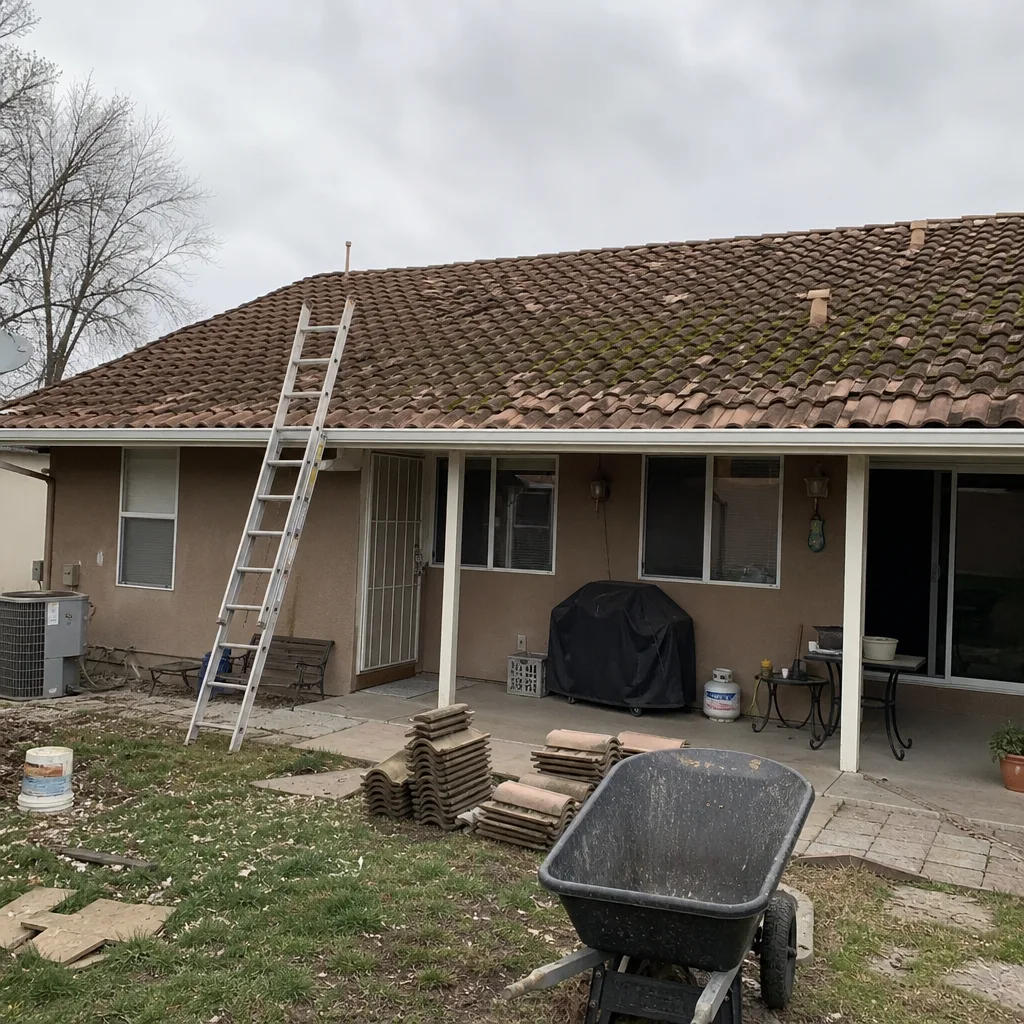 Before
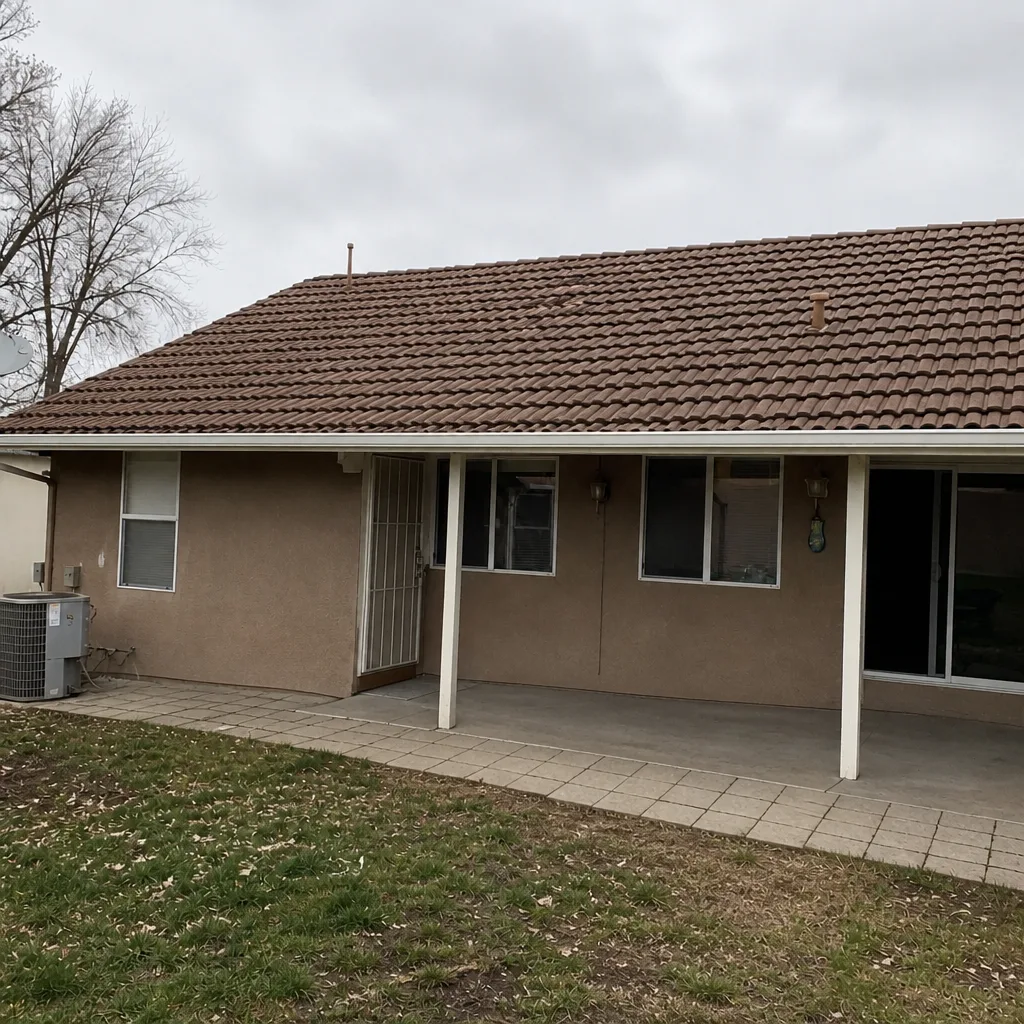 After
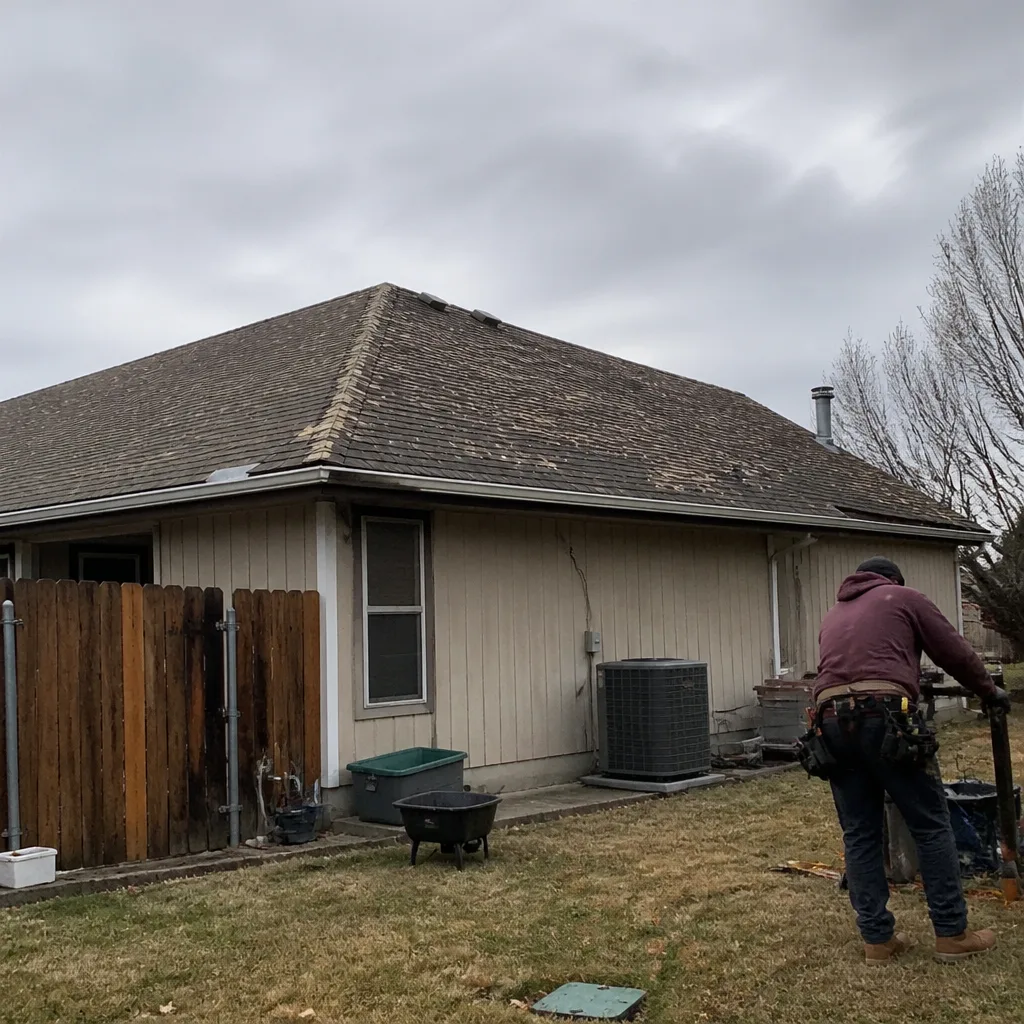 Before
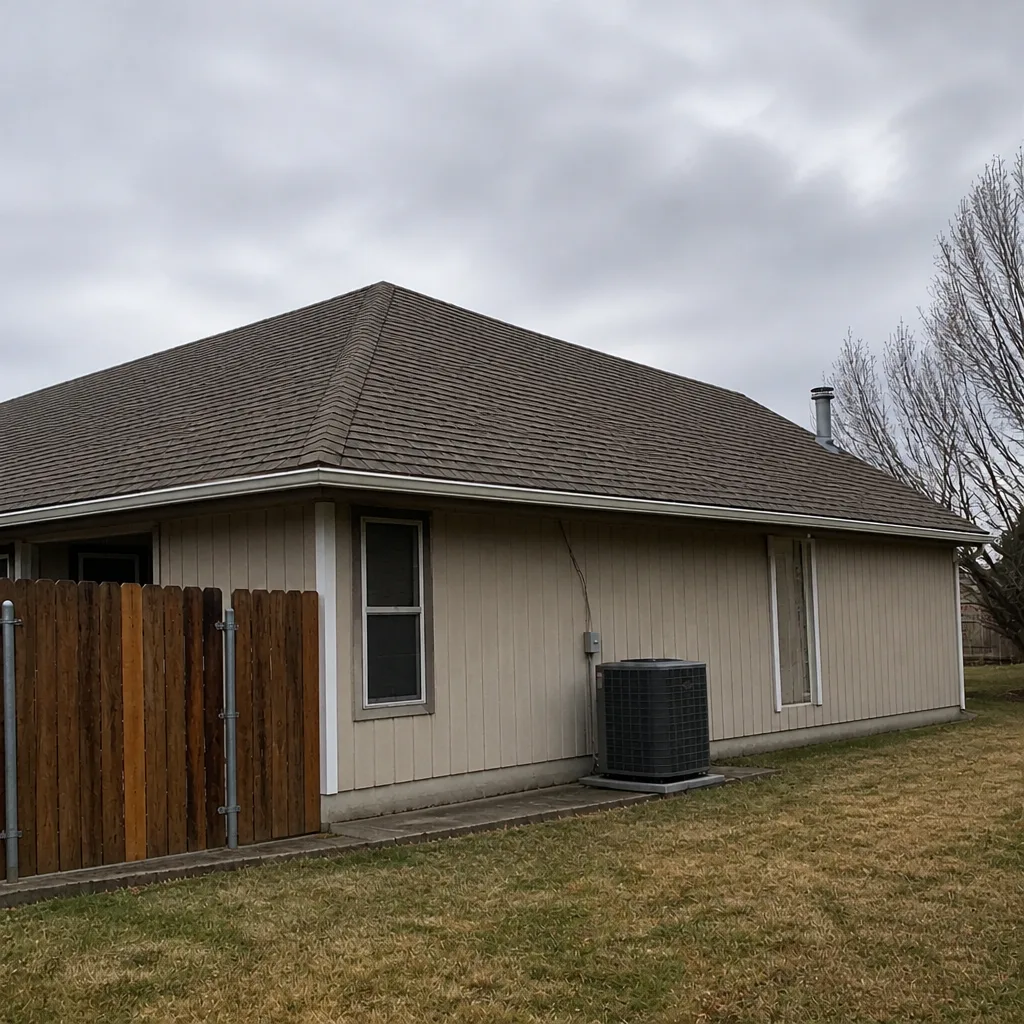 After
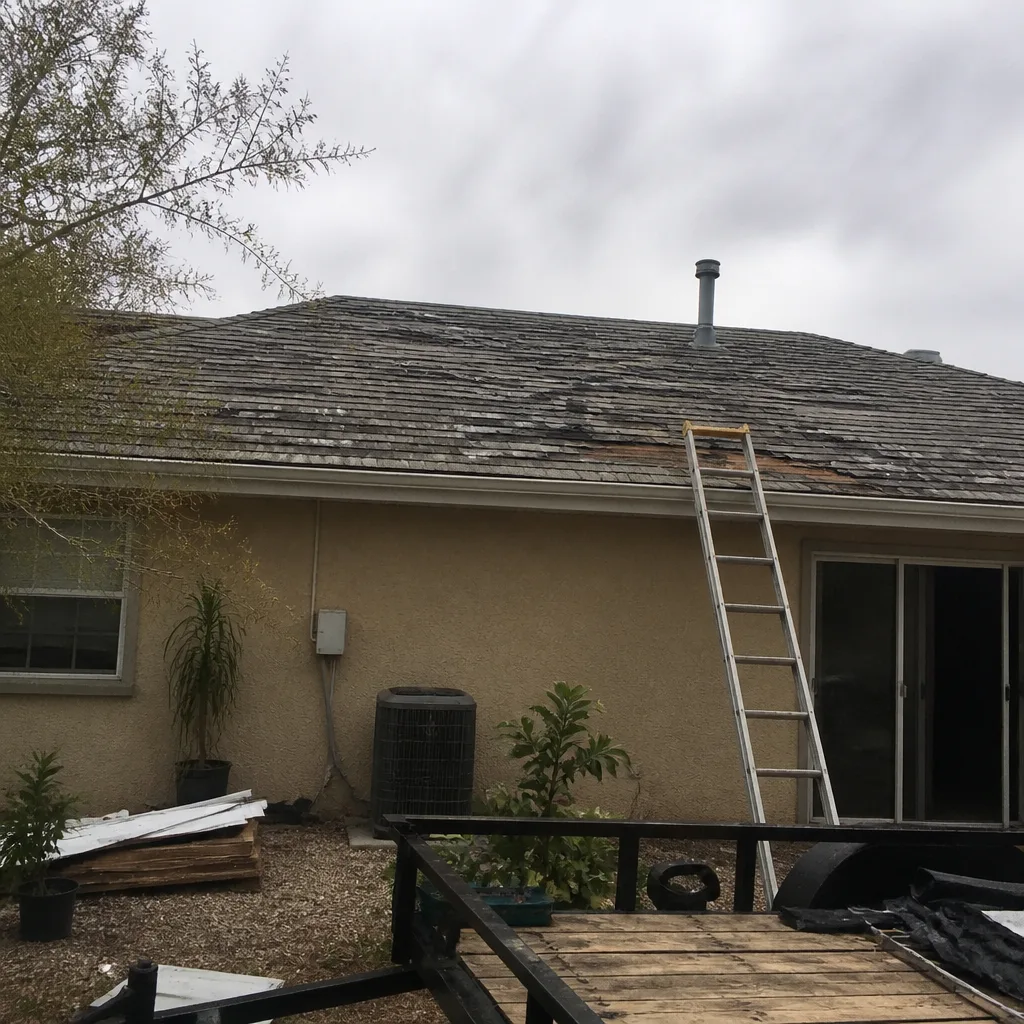 Before
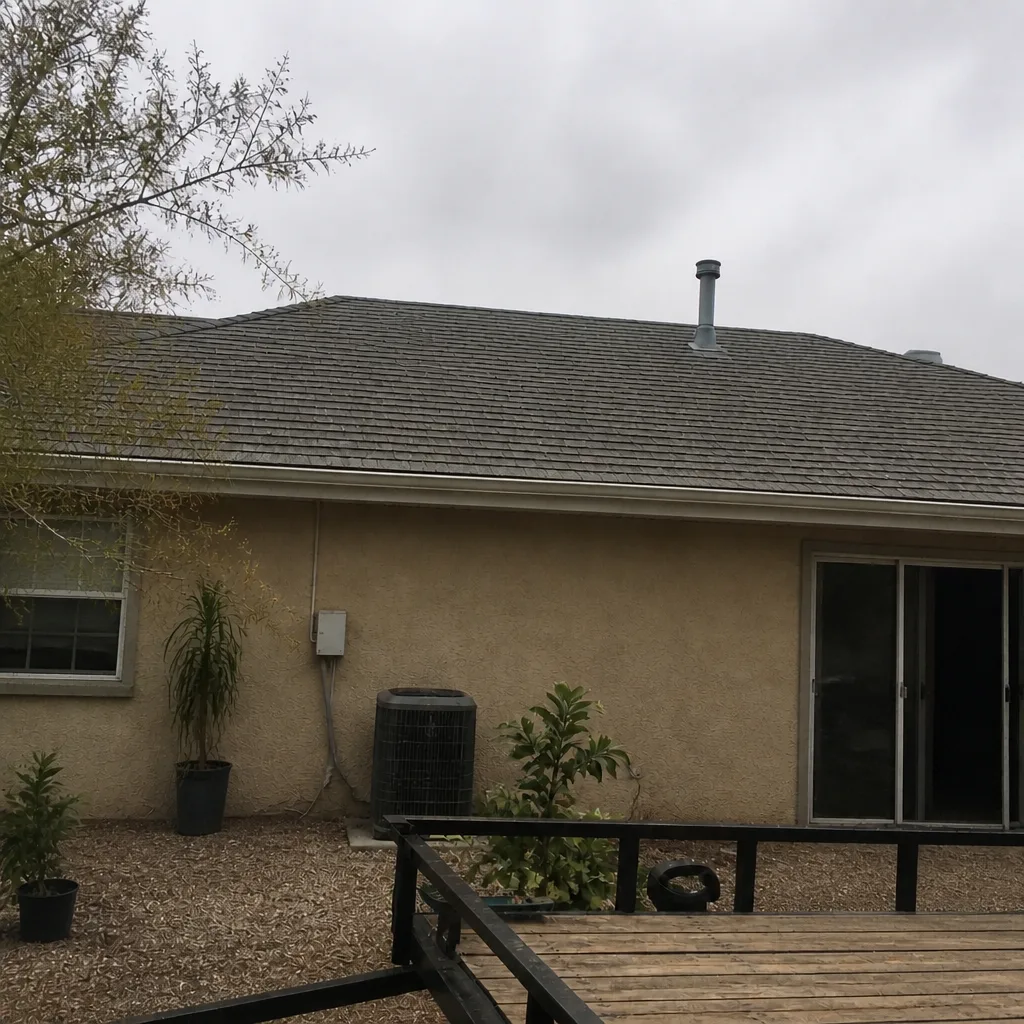 After
When to Call a Professional
Metal roofing is a case where the work involves working at heights with heavy panels, special tools and razor-sharp cut edges. If you’re thinking about a panel-on-top-over-existing install, or working around a roof valley, or handling a standing seam seam, that’s electrical-panel-level risk: bring in someone trained for it. Signs it’s time to call: a panel has lifted at the edge, a screw hole has widened to where the washer no longer seals, or you’re hearing oil-canning across a pan that used to be flat. Those are all signs the roof is telling you something that a trained eye should read in person.
Shepherd & Sons Roofing Whitney offers free estimates throughout Whitney and the surrounding county, no trip charge inside our own county, and a free second opinion on any written estimate you’ve got in hand. Call (844) 797-9455 and a real person will pick up.
Frequently Asked Questions
A typical metal roof in Whitney runs roughly $14,000 to $32,000 depending on the panel system, coating and roof complexity. Exposed-fastener panels sit at the low end, standing seam and metal tile at the high end. Call (844) 797-9455 for an exact quote – estimates are free and itemized.
Yes, for most Whitney homes, because the concealed fasteners and floating clips handle the 130-degree daily temperature swing without working themselves loose over time. Exposed-fastener panels can do fine here when the fasteners and washers are UV-rated, but they require more maintenance over twenty years. Call (844) 797-9455 and we’ll walk through the tradeoff for your specific roof.
Yes. Any metal re-roof on a Whitney home needs a Lander County building permit showing the attachment method, wind and snow loads and underlayment spec. A contractor who tries to skip it is a contractor you don’t want on your roof. Call (844) 797-9455 if you want help understanding the process.
Usually the opposite. Metal roofing carries a Class A fire rating and holds up to hail better than asphalt, and many carriers discount for it. Check with your carrier before buying, and get the discount in writing. Call (844) 797-9455 if you want us to note the fire rating on your quote for your insurer.
A properly installed standing seam roof with a PVDF coating can last 40 to 50 years in Whitney’s conditions. Exposed-fastener panels typically last 20 to 30 years with regular fastener maintenance, and the coating spec is what most determines the look at year fifteen. Call (844) 797-9455 and we’ll match a system to your expected time in the house.
No. We tear off to the deck, inspect, and install over a proper underlayment. Installing metal over old shingles traps a failing layer under the new roof and shortens the life of both. It’s not a shortcut worth taking. Call (844) 797-9455 if a bidder told you it was.
The Bottom Line
Metal roofing works well in Whitney, but only if you pick the right system for this climate and install it with the details this climate demands. Standing seam with a PVDF coating and a proper ventilation plan is the safest choice for most homes here. Exposed-fastener panels can work with UV-rated hardware and honest installation. Get the Lander County permit. Itemize the quote. Ask about the coating spec before you fall in love with a color. And when you get a price, ask whether the roofer is still going to be here in ten years. Our address hasn’t changed since 1996. If you’d like a straight answer on a metal roof for your Whitney home, call (844) 797-9455 for a free estimate with no trip charge and no upsell.
Written by the team at Shepherd & Sons Roofing Whitney.