
Last updated November 18, 2026
 Architectural shingles
 Metal roofing
 Tile roofing
 GAF
 Owens Corning
 Flat & low-slope
Free roof inspection with deck photos before we talk money - GAF and Owens Corning certified installation
DIY vs Professional Roof Repair: What’s Safe to Do Yourself
Bill will tell you straight: he has no problem with a homeowner replacing a couple of cracked ridge caps on a low-slope roof. What he won’t stay quiet about is a 45-year-old climbing a 7/12 pitch with a store-bought safety harness they’ve never worn before. Every summer in rural Nevada, people who are perfectly handy around the house end up in the ER because a job that looked simple on a screen turns out to be a fall risk in real life. This guide draws the line honestly: the repairs that genuinely hold up when you do them, the ones that quietly cost you thousands, and how to know which side of that line you’re standing on in Whitney.
Quick Answer
Safe DIY roof repairs are the ones you can do from a ladder at the eaves or flat on your belly behind a low ridge: cleaning gutters, reattaching a loose downspout, replacing a single exposed nail, sealing a small crack in the mastic, or swapping a cracked vent boot on a low-slope section. Anything that puts you on a slope steeper than about 6/12, anything involving valley flashing, chimney step flashing, or a flat roof membrane, and anything where you can’t see the deck underneath is a job for a licensed roofer. The dividing line isn’t skill. It’s fall height and liability.
Styles & brands we work with
- Architectural shingles
- Metal roofing
- Tile roofing
- GAF
- Owens Corning
- Flat & low-slope
Table of Contents
- The Real Dividing Line: Fall Risk, Not Handiness
- Roof Repairs That Are Genuinely Safe to Do Yourself
- Repairs You Should Never Do Yourself (No Matter What YouTube Says)
- The Pitch Threshold: When Fall Risk Makes Professional Hire a Bargain
- Why DIY Roof Cement Fixes Look Done From the Ground (and Rot Your Deck)
- Nevada Licensing, Your Insurance, and the One Question to Ask Before You Climb
- When We Tell People to Just Do It Themselves
The Real Dividing Line: Fall Risk, Not Handiness
The DIY roofing conversation is usually framed as skill versus no skill. That’s the wrong frame. Plenty of Whitney homeowners can cut a clean caulk bead, set a nail straight, and read a level. Skill isn’t the problem. The problem is that a roof is the only part of your house where a mistake means a fall instead of a callback.
In our experience, the honest dividing line has three parts:
- Can you reach it safely from a ladder or flat on the deck? Eaves, gutters, and low-slope sections are reachable. A 6/12 or steeper pitch is not, unless you do this for a living.
- Can you see the deck and the underlayment? If the repair is cover-over (meaning you’re sealing something without lifting the shingle), it’s usually DIY territory. If the fix requires tucking material under the layers above, it isn’t.
- Will a mistake void your insurance or fall outside Nevada contractor rules? That’s the liability side, and it catches more Whitney homeowners than you’d expect.
Once you apply those three filters, the list of safe DIY repairs shrinks to about six or seven jobs. Everything else is a pro job whether you’re handy or not. We cover the same ground on our Roof Repair in Whitney page if you want the short version.
Roof Repairs That Are Genuinely Safe to Do Yourself
Here’s the non-hedged list. These are the repairs we’re comfortable telling a homeowner to handle. They’re reachable from a ladder, they don’t require lifting shingles, and a small mistake won’t cause a leak or trap water.
- Gutter reattachment and cleaning. If a hanger has pulled or a downspout has separated, that’s a bucket-and-ladder job. Use a stabilizer on the ladder, keep your hips between the rails, and don’t overreach.
- Sealing a small crack in the mastic around a vent or pipe boot on a low-slope section. Clean the surface first. A dab of roof-grade sealant, smoothed with a putty knife, will outlast a caulk-gun blob every time.
- Replacing a single exposed nail. If a nail head has popped above the shingle course, you can tap it flat and cover it with a small sealant patch. That’s it. Don’t try to lift the shingle to re-nail it.
- Swapping a cracked vent boot on a low-slope or flat-access section. If the pipe is reachable from the eaves and the roof is nearly level, a replacement boot slides on and seals. That’s genuinely within reach.
- Clearing debris from valleys and behind chimneys at the low end. Get the pine needles and grit out. Don’t climb into the valley itself to do it.
- Patching a small hole in metal flashing on a low access point. A self-adhering flashing patch, pressed firmly and smoothed, will hold until the roofer gets there.
Notice what’s missing from that list: shingle replacement, underlayment repair, and anything on a slope. Those aren’t DIY, and pretending otherwise gets people hurt.
Repairs You Should Never Do Yourself (No Matter What YouTube Says)
These are the jobs that look simple on a screen and cost people thousands in the end. Some are dangerous. Some just leak slowly and rot your deck. All of them are pro work.
- Valley flashing. Valleys carry more water than any other part of the roof. The material has to be woven or cut to shed water in one direction, and getting it wrong means the leak shows up two rooms away from where you were working.
- Chimney step flashing. Each piece of step flashing has to tuck under the shingle above and over the shingle below, with a specific lap and a specific sealant pattern. One misstep and you get a leak that only shows up during a driving rain from the east.
- Any flat roof membrane. TPO, EPDM, and modified bitumen all require heat-welded or fully adhered seams. A DIY patch with roof cement on a flat roof will look done from the ground and pond water against the deck for years.
- Skylight replacement or reseal. Skylight curbs are notorious for trapped water. Get the flashing wrong and the leak doesn’t show until the ceiling stains appear.
- Anything on a pitch of 6/12 or steeper. Fall height isn’t a hiring decision, it’s a safety decision. We cover the math below.
- Full or partial reroof. Even a small section requires tear-off, ice and water shield, correct nailing patterns, and a final inspection. If you’re considering a full replacement, the honest answer is that it’s a pro job. Start with our Roof Replacement & Installation in Whitney page.
If you’re staring at that list wondering which one you’re about to try, call us at (844) 797-9455 and we’ll tell you straight. A five-minute phone call beats a twelve-foot fall.
The Pitch Threshold: When Fall Risk Makes Professional Hire a Bargain
Roof pitch is measured in rise over run. A 4/12 pitch rises 4 inches for every 12 inches of horizontal run. A 7/12 rises 7 inches over the same 12. Most Whitney-area homes on a suburban lot sit somewhere between 4/12 and 7/12. Older homes and rural properties with steep Victorian or Craftsman gables can go to 9/12 or higher.
Here’s the threshold we use. Below 4/12, most homeowners can walk a roof carefully with proper shoes and a spotter. Between 4/12 and 6/12, it depends on your comfort, your balance, and whether you’ve done it before. Above 6/12, the risk climbs faster than the pitch does.
The financial case is simpler than people think. An ER visit for a fall from a single-story roof runs several thousand dollars after insurance. A fall from a two-story roof, with surgery and rehab, can run into six figures and months of lost income. A shingle repair and flashing tune-up, even on a tricky section, is a fraction of that. When you frame it that way, hiring a roofer for a 7/12 pitch isn’t a splurge. It’s the cheaper option.
If you’d like a second opinion on a bid, our Shepherd & Sons Roofing Whitney home page has the full list of what we offer, including a free second opinion on any written estimate.
Why DIY Roof Cement Fixes Look Done From the Ground (and Rot Your Deck)
This is the mistake we see most often in Whitney, and it’s the one that costs the most. A homeowner notices a small crack or popped shingle, gets a tube of roof cement, and covers the area. From the ground it looks fixed. The problem is what’s happening underneath.
Roof cement is a sealant, not a repair. When you smear it over a shingle, you trap the moisture that was already getting in. The shingle above keeps shedding water, but the moisture that got below it now has nowhere to escape. It sits against the felt and the deck. In Whitney’s climate, with our hot summers and the occasional winter freeze, that trapped moisture cycles between wet and dry for years. The deck swells, the nails work loose, and the rot spreads.
By the time the homeowner notices, the repair has moved from “a tube of cement” to “replace three sheets of sheathing.” That’s the hidden cost of a mistake you can’t see from the driveway.
The honest fix is to find the source. If water is getting in, sealing over it makes the problem worse. A roofer with a moisture meter can tell you in ten minutes whether the deck is wet. Call (844) 797-9455 and we’ll take a look. Estimates are free, and we don’t sell cement patches to people who don’t need them.
Nevada Licensing, Your Insurance, and the One Question to Ask Before You Climb
Nevada handles roofing contractor licensing through the State Contractors Board. What that covers is important to understand: it covers any work performed for compensation. It does not cover a homeowner working on their own primary residence, in most cases.
The rule of thumb: if you’re doing the work yourself on your own home, you generally don’t need a contractor’s license. If you hire someone to do the work, they must be licensed, bonded, and insured. If you’re doing work on a rental, a flip, or property you don’t live in, the rules change and you should call the Contractors Board directly before you pick up a hammer.
Here’s the question almost nobody asks their insurer before they climb a ladder: “Does my policy cover a self-performed repair that later causes damage?” The answer is often “partially” and sometimes “not at all.” Some policies carve out damage caused by homeowner workmanship. Others cover it but deny the workmanship portion of the claim. You need to know which one you have before a $300 DIY job turns into a $15,000 claim your insurer pays half of.
We can’t tell you what your policy says. What we can tell you is that a licensed roofer carries liability insurance on every job, and that’s part of what you’re paying for. Ask any bidder for their license number and their certificate of insurance before they walk on the roof. If they hesitate, that’s your answer.
When We Tell People to Just Do It Themselves
This is the part that surprises people. We turn down work every year. When a Whitney homeowner calls about a gutter that’s pulled loose, or a downspout that separated, or a vent boot that cracked on a low-slope section, we say the same thing: that’s a bucket-and-ladder job. Save your money, we’ll see you when it’s something bigger.
We can do that because we’re not trying to hit a monthly quota. We’ve had the same address since 1996, and the same crew shows up to the same addresses. There’s no storm chaser behind us to feed. So the honest answer is the profitable answer, at least in the long run.
If you’re on the fence, call us and we’ll tell you which side of the line your job falls on. If it’s genuinely DIY, we’ll say so. If it’s not, we’ll tell you that too, and you can decide what to do with the information. A free estimate is free whether we end up working together or not.
Common Mistakes to Avoid
- Wearing sneakers on a pitched roof. Tennis shoes have zero grip on granules, especially in Whitney’s summer heat when the shingles soften. Real roofers wear soft-soled roofing shoes, and even then they’re careful. Don’t assume your “good sneakers” will hold.
- Leaning the ladder against the gutter instead of the wall. Gutter aprons are thin aluminum. They bend, the ladder slides, and you go with it. Lean the ladder against the wall, or use a standoff stabilizer.
- Working alone. Every roofer in Whitney has a spotter for a reason. If you’re on a ladder, someone should be at the base. If you’re on the roof, someone should know you’re up there.
- Covering a leak with cement instead of finding the source. We covered this above. It’s the single most common mistake and the most expensive one to fix later.
- Assuming a new shingle fixes a leak. A shingle replacement that doesn’t address the flashing, the underlayment, or the deck is a cosmetic fix. Water finds another way in.
- Skipping the permit. Clark County and the surrounding jurisdictions require permits for most reroofs and structural roof repairs. Self-performed work is often exempt, but structural work usually isn’t. When in doubt, call the building department.
- Trusting a phone quote. We’ve heard this story from Whitney homeowners on almost every call. The number on the phone is a guess. The number at the door is the real one. Only accept a written, line-item quote, and ask any bidder how many squares they counted before they quote. A roofer who won’t tell you is guessing.
See the difference
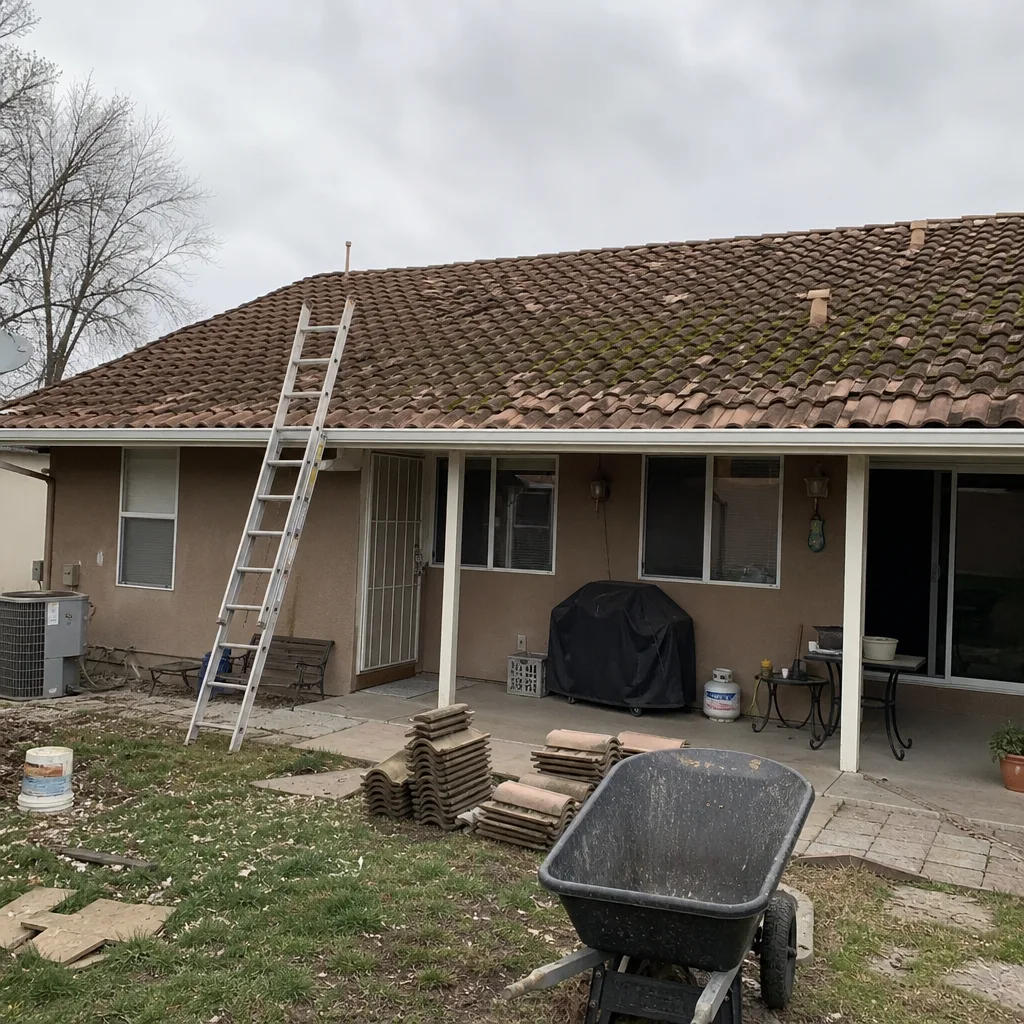 Before
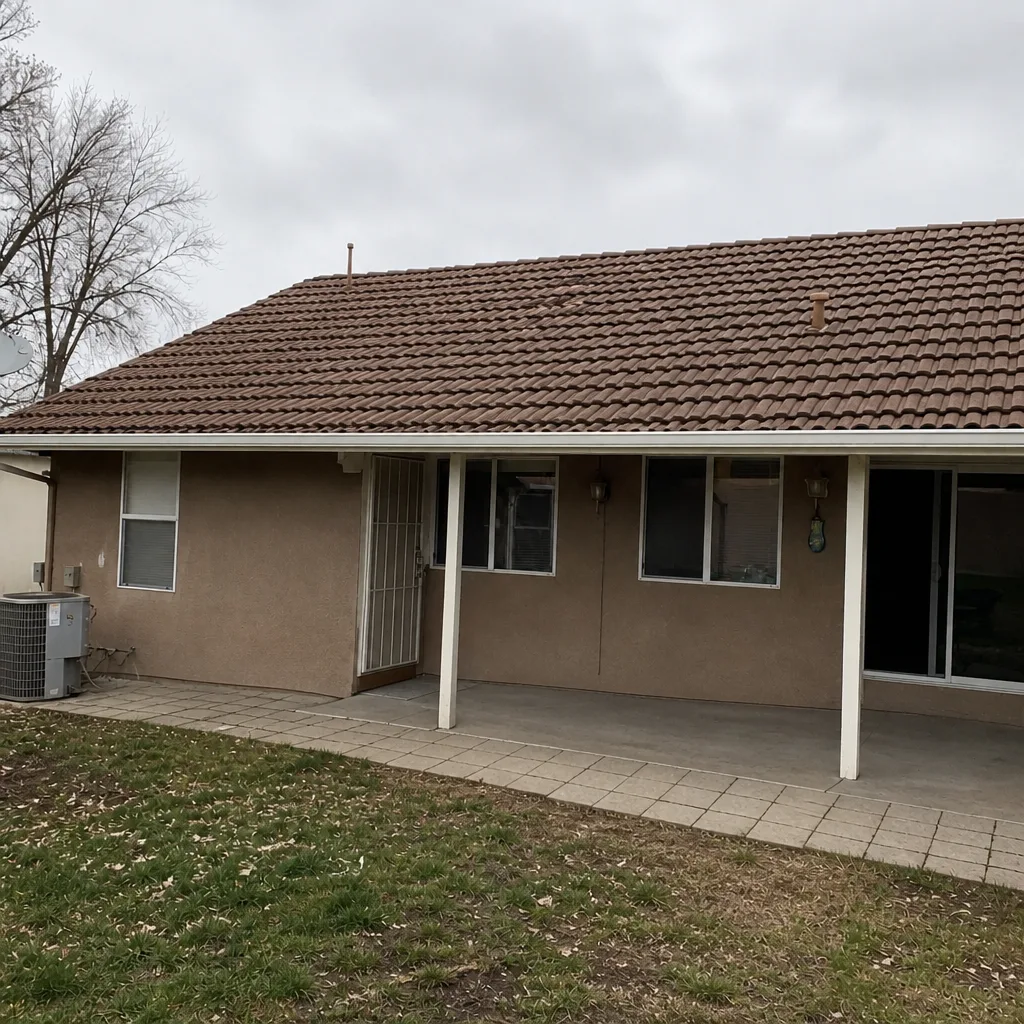 After
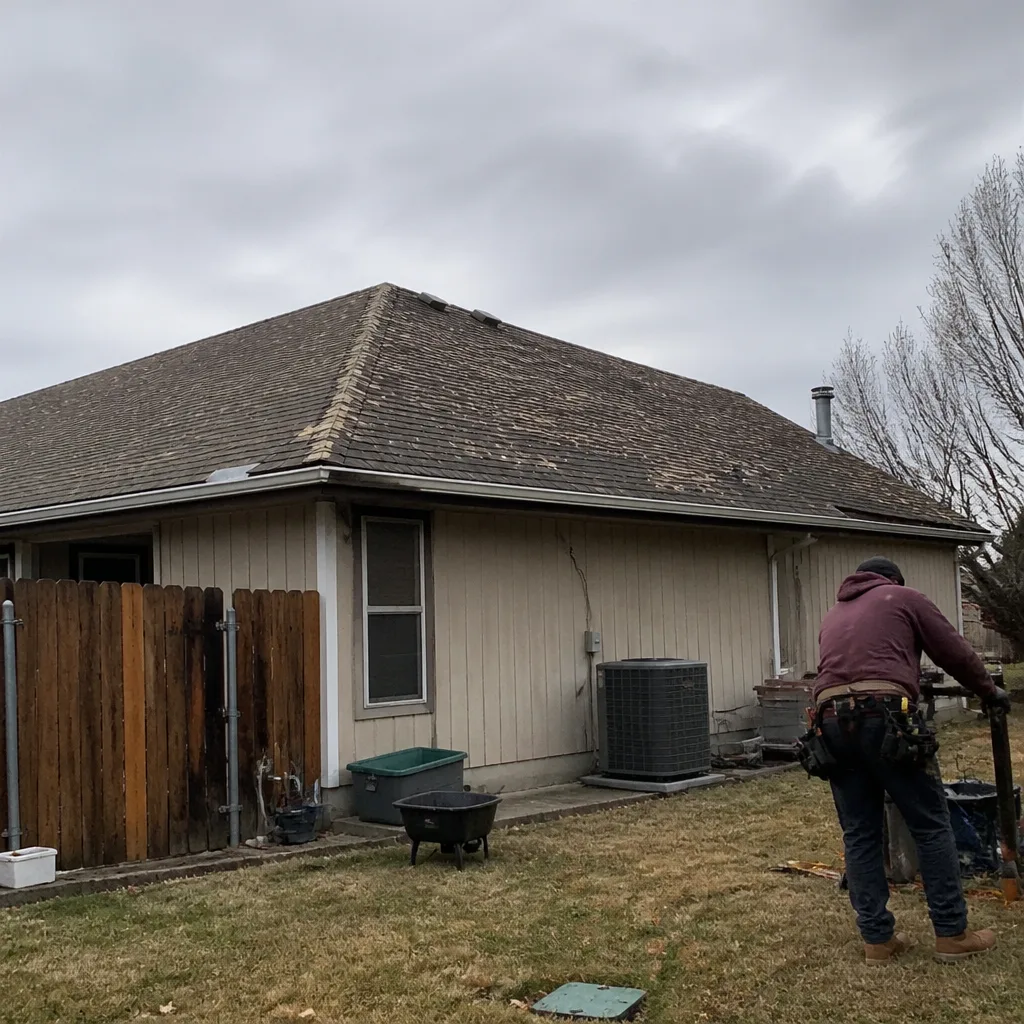 Before
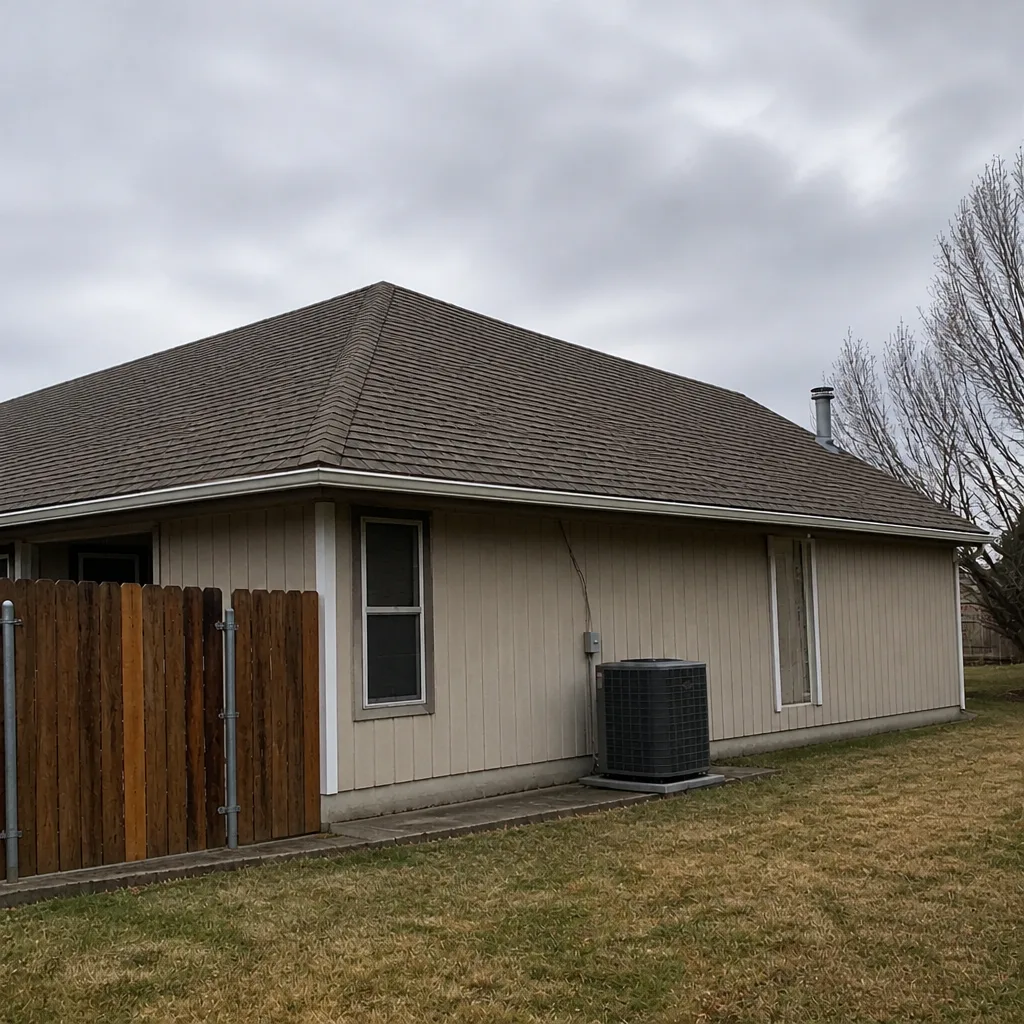 After
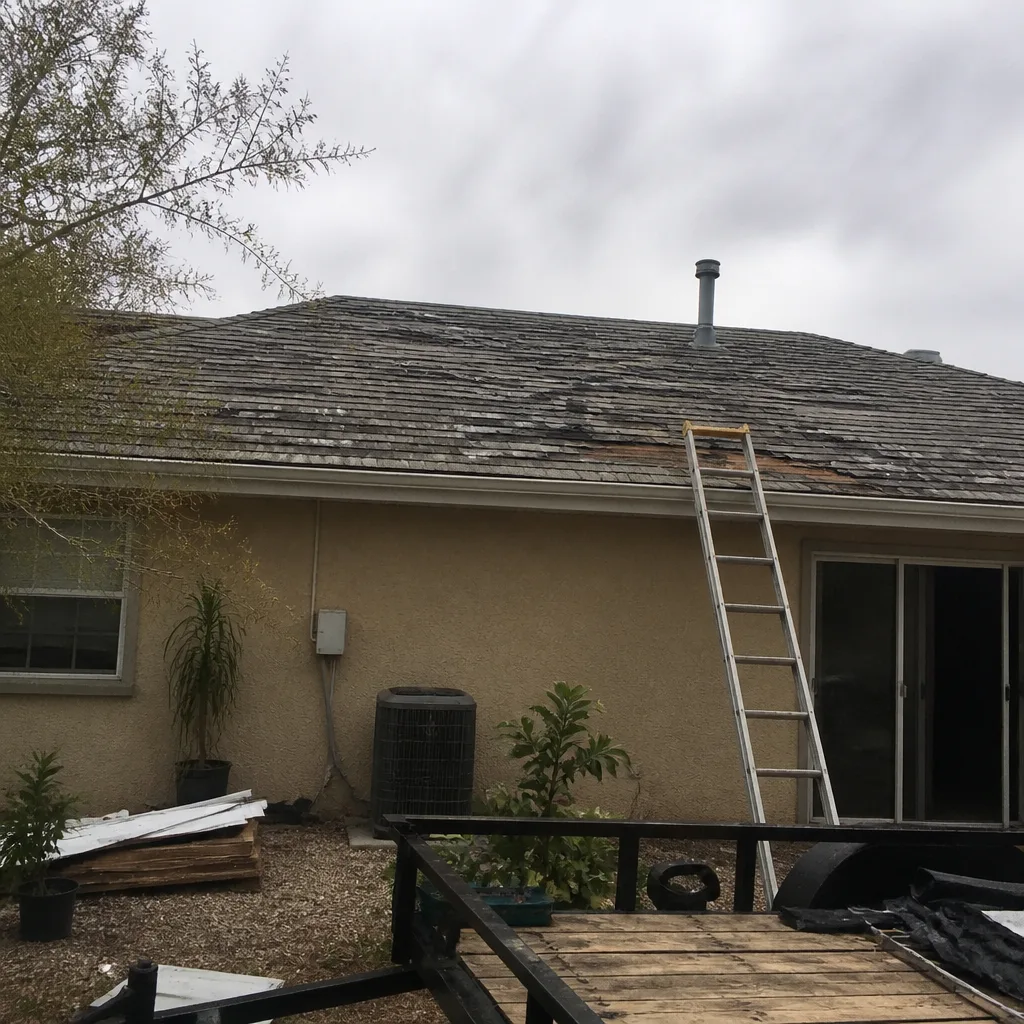 Before
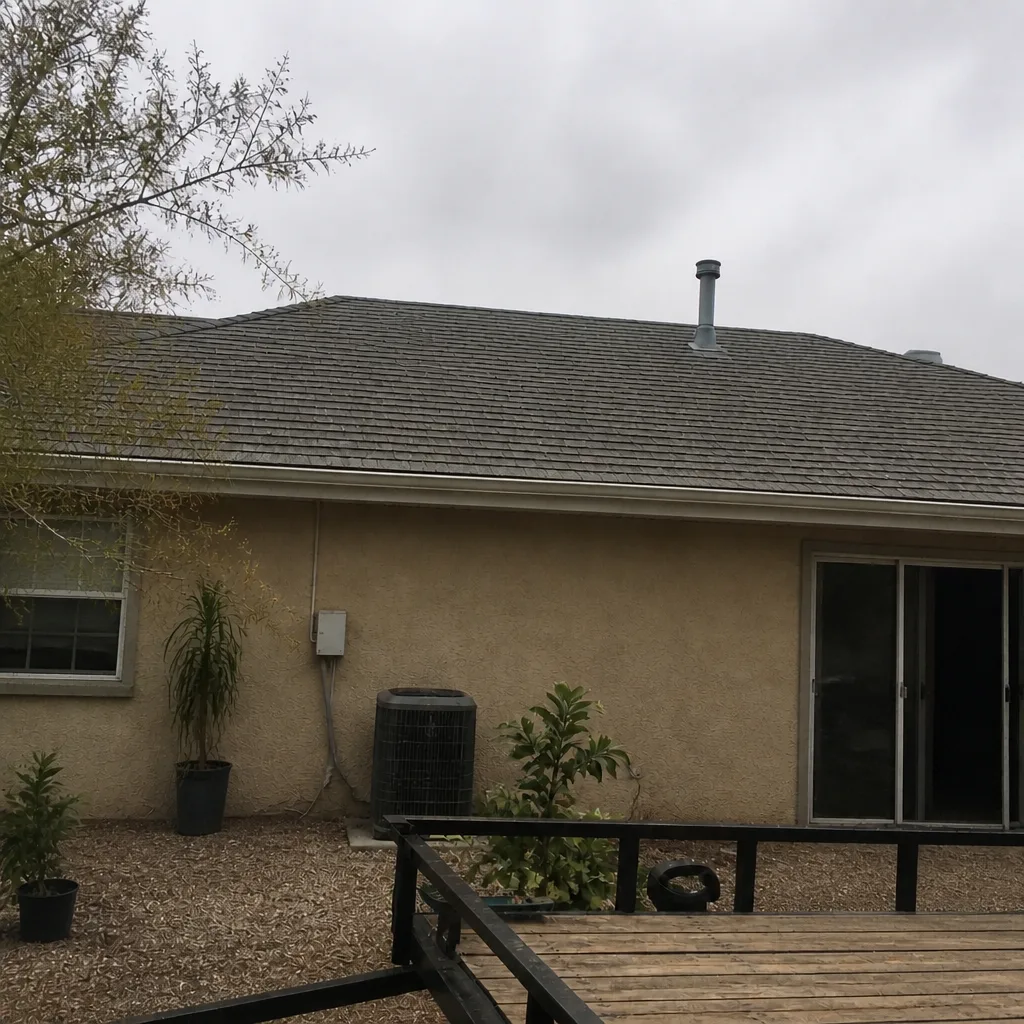 After
When to Call a Professional
Call a roofer when the job is on a slope steeper than you’re comfortable with, when the repair involves valley or chimney flashing, when you’re dealing with a flat roof membrane, when you can’t see the deck, or when a DIY fix doesn’t hold after the next rain. Call when you’re on a second-story roof, when the shingles are lifted, or when the water is coming through the ceiling inside. Call when your insurer asks for documentation, or when you’re making a real estate sale and need a licensed inspection report.
Shepherd & Sons Roofing Whitney offers free estimates in Whitney – call (844) 797-9455. We’ll tell you which side of the line your job is on. We offer a free second opinion on any written estimate, no-hassle upfront pricing, and no trip charge inside our own county. Every job is backed by our written 90-Day Done Right Promise, and our crews install products from CertainTeed, Owens Corning, IKO, and Atlas. If you’re considering a metal system instead of a repair, our Metal Roofing in Whitney page has the details.
Frequently Asked Questions
Yes, but only a narrow set of repairs: gutter reattachment, minor sealant touch-ups on low-slope sections, single exposed nail fixes, vent boot swaps on flat-access roofs, debris clearing at eaves, and small flashing patches on low access. Anything involving a pitched slope, valley flashing, chimney step flashing, or a flat roof membrane is a pro job. If you can reach it from a ladder without leaning your body weight past the rails, it’s probably DIY. If you can’t, it isn’t.
Above 6/12 is where most homeowners should stop. A 6/12 roof rises 6 inches for every 12 inches of horizontal run. That’s a 26.5-degree slope, and it’s the point where a slip turns into a fall instead of a slide. Above 7/12, professional roofers use harnesses and roof jacks. If you don’t own the equipment and haven’t used it before, don’t learn on your own roof. Call (844) 797-9455 and we’ll come take a look.
It depends on your policy. Some insurers cover damage caused by homeowner workmanship; others carve it out. The safe move is to call your agent and ask directly: “Does my policy cover damage caused by a self-performed roof repair?” Get the answer in writing before you climb the ladder. A licensed roofer carries liability insurance on every job, so hiring one shifts that risk off your policy.
Most small repairs in the Whitney area run a few hundred dollars, and full flashing repairs run more. The exact number depends on pitch, access, and how much deck damage is under the shingles. Call (844) 797-9455 for an exact quote. Estimates are free, and we do a free second opinion on any written estimate you’ve already collected.
No. Roof cement seals the surface but traps moisture underneath, and that moisture rots the deck over years. We’ve pulled sheathing off Whitney homes where a cement patch looked fine from the driveway and the deck underneath was soft to the touch. Find the source of the leak before you seal anything.
If they’re doing the work for compensation, yes. Nevada requires roofing contractors to be licensed, bonded, and insured. Ask any bidder for their license number and their certificate of insurance before they walk on the roof. If they hesitate, that tells you what you need to know. Self-performed work on your own primary residence is generally exempt, but check with the Nevada State Contractors Board before you assume your project falls into that category.
The Bottom Line
The safe DIY roofing list in Whitney is short: gutters, small sealant touch-ups, single nail fixes, vent boots on low-slope sections, debris clearing, and small flashing patches on easy-access roofs. Everything else is a pro job, and the reason isn’t skill. It’s fall height and liability. Above a 6/12 pitch, one ER visit costs more than the repair would have. Below that, if you can reach it from a ladder and see what you’re doing, you can probably handle it. When in doubt, call us and we’ll tell you honestly which side of the line you’re on. That’s the whole point of a free estimate.
Shepherd & Sons Roofing Whitney has been the locally owned, owner-operated roofer at the same address since 1996, with a live person answering the phone 24/7 and a written 90-Day Done Right Promise on every job. Call (844) 797-9455 to schedule your free estimate. We’ll show you the deck photos before we talk money.
Written by the team at Shepherd & Sons Roofing Whitney.