
Last updated November 18, 2026
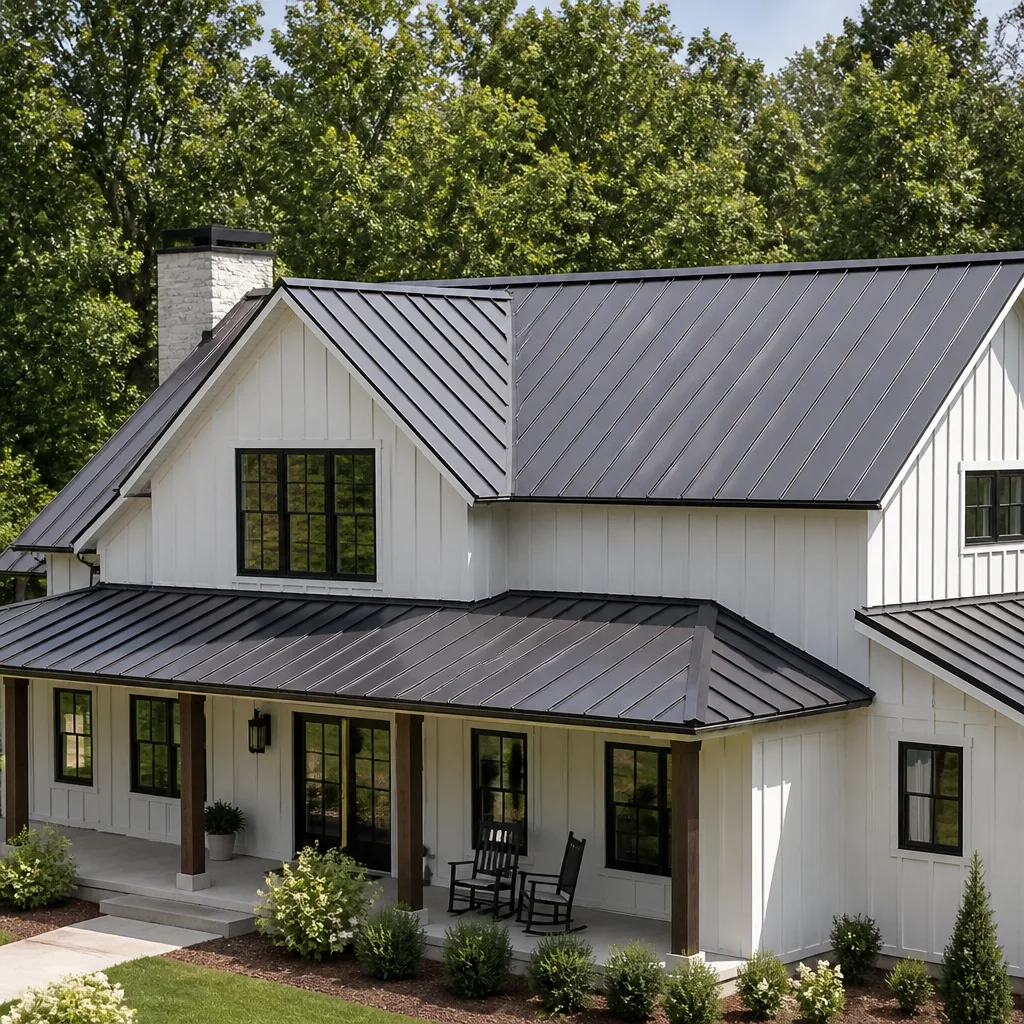 Metal roofing
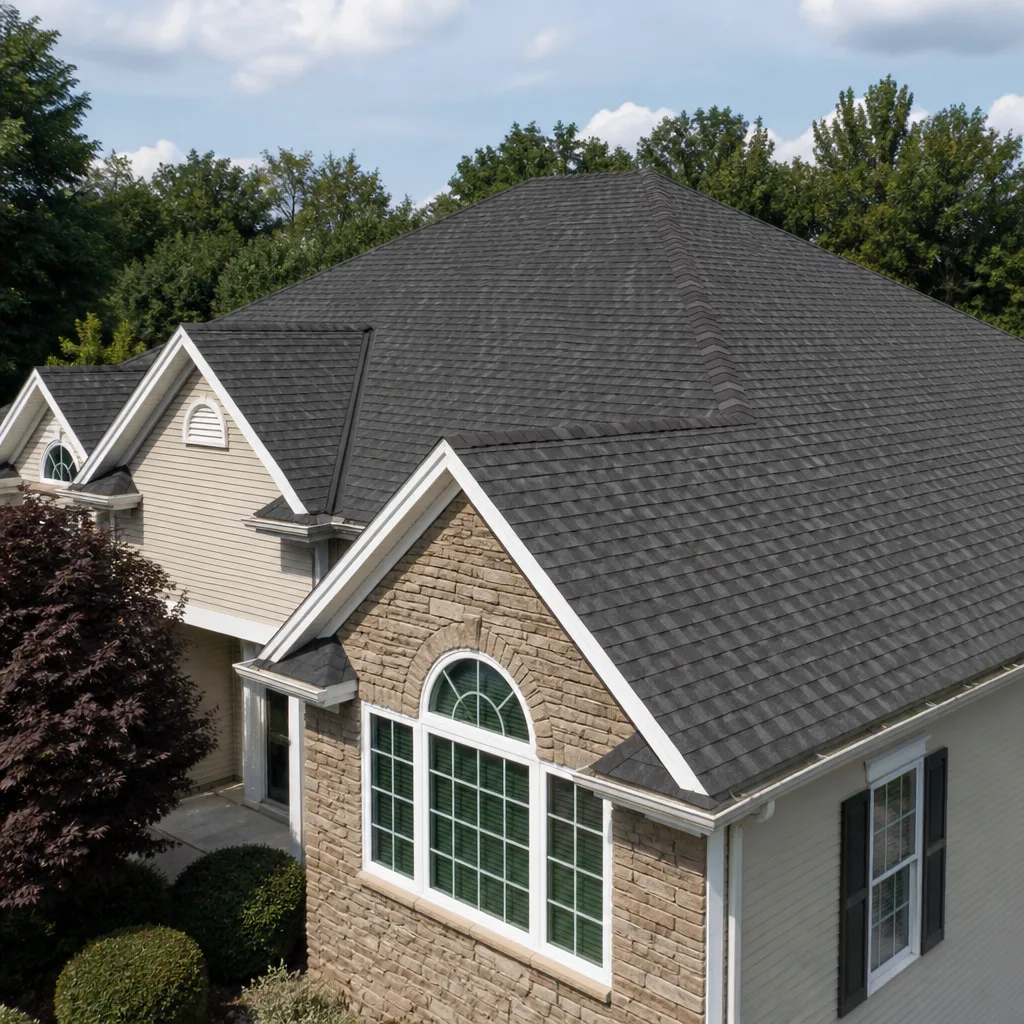
 Architectural shingles
 Tile roofing
 GAF
 Owens Corning
 Flat & low-slope
Free roof inspection with deck photos before we talk money - GAF and Owens Corning certified installation
Specialty Roofing Maintenance Schedule: What to Do and When
A spray foam roof that goes uncoated for ten years doesn’t just age. It starts drinking water into the foam layer itself, and a recoat that would have cost a couple thousand dollars turns into a full tear-off. That single fact separates specialty roofing from ordinary asphalt shingles more than anything else. Foam, metal, and tile each fail on their own clock, for their own reasons, and a maintenance schedule that treats them the same will have you either paying for service you don’t need or missing the one task that keeps the roof alive. This guide lays out what to do and when, how Whitney’s high-desert climate speeds up the damage, and which chores you can honestly handle yourself.
Quick Answer
Specialty roofing maintenance runs on a system-specific calendar, not a generic one. Spray foam roofs need recoating every 5 to 10 years depending on coating type and sun exposure, metal roofs need fastener and sealant checks every 2 to 3 years, and tile roofs need underlayment inspection every 10 to 15 years with ridge and valley checks annually. In Whitney, intense UV and big day-to-night temperature swings push every one of those intervals toward the short end.
Styles & brands we work with
- Architectural shingles
- Metal roofing
- Tile roofing
- GAF
- Owens Corning
- Flat & low-slope
Table of Contents
- Why Specialty Roofs Need Their Own Schedule
- Foam Roof Maintenance: The Recoating Cycle
- Metal Roof Maintenance: Fasteners and Sealant
- Tile Roof Maintenance: Underlayment and Ridge Mortar
- What Whitney’s Climate Accelerates on Each System
- What You Can Do Yourself vs. What Needs a Contractor
- Documenting Maintenance for Warranties and Home Sales
- The Most Neglected Task on Each Roof Type
Why Specialty Roofs Need Their Own Schedule
A shingle roof is mostly a wear item. The granules go, the mat dries out, and eventually you replace it. Specialty systems work differently. They’re assemblies where a top layer protects a structural layer, and the two age at completely different rates. Foam is a coating over a waterproof membrane. Tile is a set of hard pieces over an underlayment that is doing all the actual waterproofing. Metal is panels held down and sealed at penetrations and seams. Each of those protection layers has its own service life, and maintenance is about catching it before it fails.
That’s the core reason a single schedule doesn’t work. If you recoat foam on a shingle timetable, you’re wasting money. If you ignore metal fasteners because “metal lasts forever,” you’ll find out otherwise after a wind event. The material is durable. The fasteners, sealants, and coatings around it aren’t, and those are what actually keep water out.
We’ve watched this play out across the Whitney area for years. Homeowners who ask the right questions up front get decades out of a specialty roof. The ones who assume the material is maintenance-free usually call us after the first real problem, and by then the repair is bigger. Before we go further, it helps to understand the full range of what we install and service: Shepherd & Sons Roofing Whitney home covers the whole picture.
Here’s the practical framing. For each specialty system, ask three questions: what’s the protectant (coating, sealant, underlayment), how fast does it degrade here, and what’s the signal it’s failing? The schedule below answers all three for Whitney.
Foam Roof Maintenance: The Recoating Cycle
Spray polyurethane foam roofs are seamless, insulating, and genuinely excellent in this climate, but the coating on top is the whole ballgame. That coating blocks UV. Without it, the foam breaks down under sunlight and starts taking on water. A foam roof that absorbs water stops being a roof and becomes a saturated sponge you have to remove.
Recoating intervals depend almost entirely on coating type and sun exposure:
- Acrylic coating: 5 to 7 years in full Whitney sun, sometimes shorter on south-facing slopes that bake all day.
- Silicone coating: 7 to 10 years, more UV-stable than acrylic, common on lower-slope commercial-style foam.
- Polyurethane or hybrid coatings: often 10 to 15 years, but they can chalk and dull before they fail, so inspection still matters.
Annual inspection is the rule. You don’t have to recoat every year, but you do have to look every year for the early signs: fading color, a chalky feel, blistering, or foam that feels soft or spongy underfoot. Once water gets in, recoating won’t fix it.
Here’s the sequence we follow on a Whitney foam roof:
- Inspect and probe the surface for soft spots, blisters, and coating wear.
- Clean off dirt and any biological growth so the new coat bonds.
- Repair any damaged foam before coating, not after.
- Apply the recoat in compatible weather and let it cure fully.
- Log the date, product, and coverage so the next cycle is predictable.
If a foam roof has gone too long, repair turns into Roof Replacement & Installation in Whitney. The recoat is always cheaper than the tear-off. That’s the whole argument for keeping to the schedule.
Metal Roof Maintenance: Fasteners and Sealant
Metal panels outlast almost everything else on a roof, but they’re held down and sealed by small components that age faster. Screws back out. Washers dry and crack. Sealant at penetrations and seams shrinks. That’s where metal roofs leak, and it’s why “metal is maintenance-free” is the most expensive myth in roofing.
A sound metal maintenance rhythm looks like this:
- Annual visual check: look for backed-out or missing screws, especially on the windward side and around chimneys and vents.
- Every 2 to 3 years: a hands-on fastener and sealant inspection, tightening or replacing loose screws and renewing dried sealant.
- After any major wind event: a walk of the roof to catch panel lift and popped fasteners before the next storm does more.
- Gutter and debris clearing: twice a year, more if you’re near trees.
Thermal cycling is what wears metal down here. Whitney swings from cold nights to hot afternoons most of the year, and every swing moves the panels a little. Fasteners work loose, sealant cracks, and the small gaps grow. Catching that early is a screw-and-sealant job. Catching it late is a leak into the deck. To see the full range of what we install and service, Metal Roofing in Whitney walks through panel types and where each one is a fit.
One honest caveat: walking a metal roof safely takes the right shoes, the right conditions, and some experience with the panel profile. If your roof is steep or the panels are glazed and slick, that’s a call, not a weekend project.
Tile Roof Maintenance: Underlayment and Ridge Mortar
Tile is the great misread roof. The tiles look indestructible, and they mostly are. But the tile isn’t what keeps water out. The underlayment beneath it does. Tiles shed bulk water and shield the underlayment from sun, and the underlayment quietly ages out underneath. When it goes, water gets in even though the tile looks perfect from the ground.
Maintenance intervals for tile:
- Underlayment inspection: every 10 to 15 years, with replacement typically due by 20 to 25 years depending on material.
- Annual ridge and valley check: mortar at ridge caps and hips cracks and lifts; valleys collect debris and need clearing.
- After any freeze or big temperature swing: a look for cracked or slipped tiles and fresh mortar cracks.
Read the underlayment interval with care. In Whitney’s sun, an underlayment that would last 20 years in a cooler, wetter place may quit sooner. UV does the damage from above, heat does it from below. That’s why an inspection at the 10 to 15 year mark matters here even when the tiles look flawless.
Here’s the sequence for a proper tile inspection:
- Walk the roof carefully and photograph every field, ridge, hip, and valley.
- Check for cracked, chipped, or slipped tiles and note each location.
- Probe the ridge and hip mortar for cracks, separation, and loose caps.
- Clean valleys and any low spots where debris collects.
- Assess underlayment condition where tiles are lifted or missing.
Tile work is heavy and easy to get wrong. Lifting and resetting tiles without breaking them, then re-bedding ridge caps correctly, is a trained job. This is one place where a free second opinion on an estimate pays for itself, because the difference between an inspect-and-reset job and a full underlayment replacement is a big number.
What Whitney’s Climate Accelerates on Each System
Every schedule in this guide bends toward the shorter end here, and the reason is the same for all of them: sun and temperature swings. Whitney sits in a high-desert pattern with intense UV that degrades coatings faster than a coastal roof would see, and big day-to-night temperature swings that work fasteners, sealant, and mortar back and forth year after year. Add occasional hard freezes, and you get stress on every junction, seam, and ridge.
Here’s how that plays out by system:
- Foam: UV degradation is the main enemy. Acrylic coatings fade and chalk faster, and south-facing slopes age quickest. Recoating toward 5 to 7 years, not the top of the range, is the safer bet.
- Metal: thermal cycling backs out fasteners and cracks sealant faster than in milder climates. A 2-year fastener check is wise here, not a “when it leaks” approach.
- Tile: heat and freeze work mortar at ridges and hips, and UV cooks the underlayment from underneath the tile. Ridge checks belong on an annual rhythm, and underlayment inspection by the 10 to 15 year mark.
The takeaway is simple. Build a slightly aggressive Whitney schedule, then adjust for what you actually see at inspection. Cheap to inspect, expensive to ignore.
What You Can Do Yourself vs. What Needs a Contractor
There’s a clean line here, and it’s drawn around risk, not pride. The chores below are safe and genuinely useful for a homeowner to handle. The items on the second list are where a trained pro belongs, and for real reasons.
Tasks you can responsibly do yourself:
- Clear leaves and debris from gutters and valleys twice a year.
- Keep tree limbs trimmed back from the roof surface and off the panels and tiles.
- A ground-level visual check with binoculars after any storm, photographing anything odd.
- Note and date anything that looks off: slipped tile, missing screw, faded coating, cracked ridge mortar.
- Keep receipts, manufacturer names, and dates in one folder or a cloud folder.
Tasks that call for a contractor:
- Any walking on a steep or tile or metal roof. The fall risk is real, and a broken tile or panel adds to the repair.
- Fastener and sealant work on metal. Wrong screw, wrong sealant, wrong torque, and the leak gets worse.
- Foam recoating. Prep and product compatibility decide how long the new coat lasts.
- Ridge and hip mortar on tile. This is heavy, ladder-and-scaffold work.
- Anything that involves getting onto the roof after a storm, on snow, ice, or a wet surface.
If you’re not sure which side a task falls on, that’s the task to ask about. A free second opinion on an existing written estimate is the low-cost way to know before you commit. For repairs themselves, our Roof Repair in Whitney page covers what we handle.
Documenting Maintenance for Warranties and Home Sales
Maintenance you can’t prove is maintenance that doesn’t help you. That’s the part nobody warns you about. A foam recoat that was performed on time but never documented is hard to lean on in a warranty claim. A metal fastener inspection logged with photos is worth its weight when you sell. Sellers in Whitney routinely lose negotiating dollars because they can’t show a service history, and buyers treat that silence as a red flag.
Keep it simple and you’ll actually do it:
- Create one folder (paper or cloud) for every roof document: receipts, invoices, photos, product names, dates.
- Note who did the work, what product was used, and the coverage or quantity.
- Photograph the roof before and after each service, including any spots you flagged.
- Record the date you inspected, even if you only looked with binoculars.
- File the warranty paperwork with the maintenance record, not in a drawer somewhere.
One caution on the home-sale side: don’t write broad statements to a buyer or their inspector like “roof has no issues.” Statements you can’t back up can come back at you. Describe what was done and when. Leave the diagnosis to whoever is doing the inspection, and keep the photos as the record.
That’s the honest version. Good records protect you in a warranty claim and put you in a stronger negotiating spot at a sale. Sloppy records protect nobody. For the products themselves, we install systems from CertainTeed, Owens Corning, Atlas, and others, and every product has its own care guide. Keep that guide with the maintenance log and you’re set.
The Most Neglected Task on Each Roof Type
After years of service calls around Whitney, one task stands out for each system as the thing that gets skipped and turns into the biggest repair.
- Foam: the coating inspection itself. Homeowners wait for a visible drip, but a foam roof that looks fine from the ground can have coating that’s already failing. By the time it drips, water is in the foam.
- Metal: tightening and replacing fasteners. Loose screws are boring, invisible, and the usual culprit. The fix is quick if it’s caught, and a leak into the deck if it isn’t.
- Tile: the ridge and hip mortar check. Mortar cracks are slow and easy to ignore until a ridge cap lifts. Then it’s a heavier repair than a simple re-bed.
Every one of those is a cheap catch and an expensive miss. The pattern is consistent: the small component gets neglected and the structural layer pays the price. Build the annual inspection into your year, do it before storm season, and you’ll catch most of these while they’re still small.
Common Mistakes to Avoid
- Waiting for a leak to schedule maintenance. Every specialty system here gives warning signs well before water gets in. A leak means the harm is already done.
- Assuming “metal is maintenance-free.” Fasteners and sealant are the components that age, and thermal cycling works them every year in Whitney.
- Recoating foam without cleaning or repair first. A new coat over dirt or a soft spot won’t bond and won’t last. Prep is half the job.
- Reading the tile underlayment interval too generously. UV here cooks it faster than the label suggests. Plan the inspection by the 10 to 15 year mark, not later.
- Skipping the fasteners because it’s “only screws.” Popped screws and dried sealant are the leading cause of metal leaks, and catching them early is a same-visit fix.
- Not keeping records. Unlogged maintenance can’t support a warranty claim or a home sale, and sellers lose real money on the silence.
- Going up on the roof in bad conditions. Snow, ice, or a wet metal panel is where homeowners get hurt. Save the check for a dry, safe day, or call.
See the difference
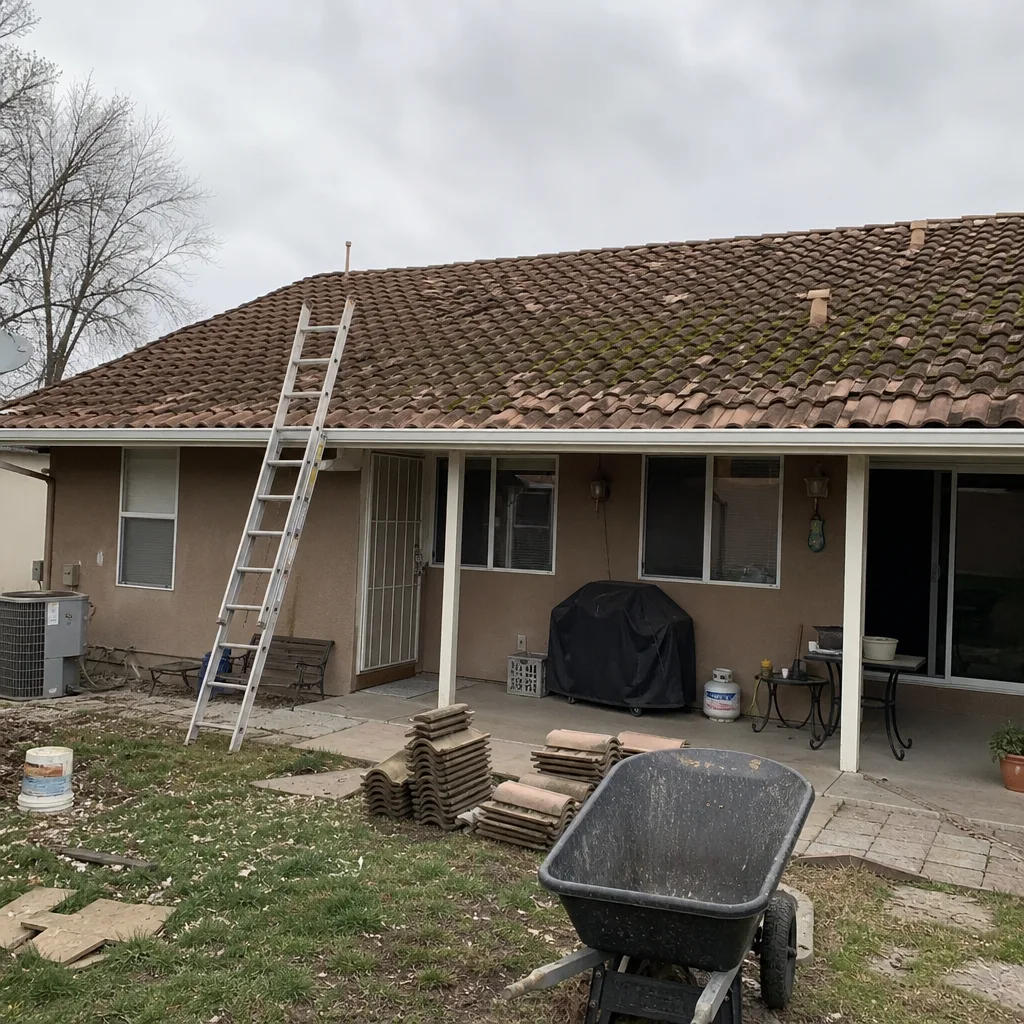 Before
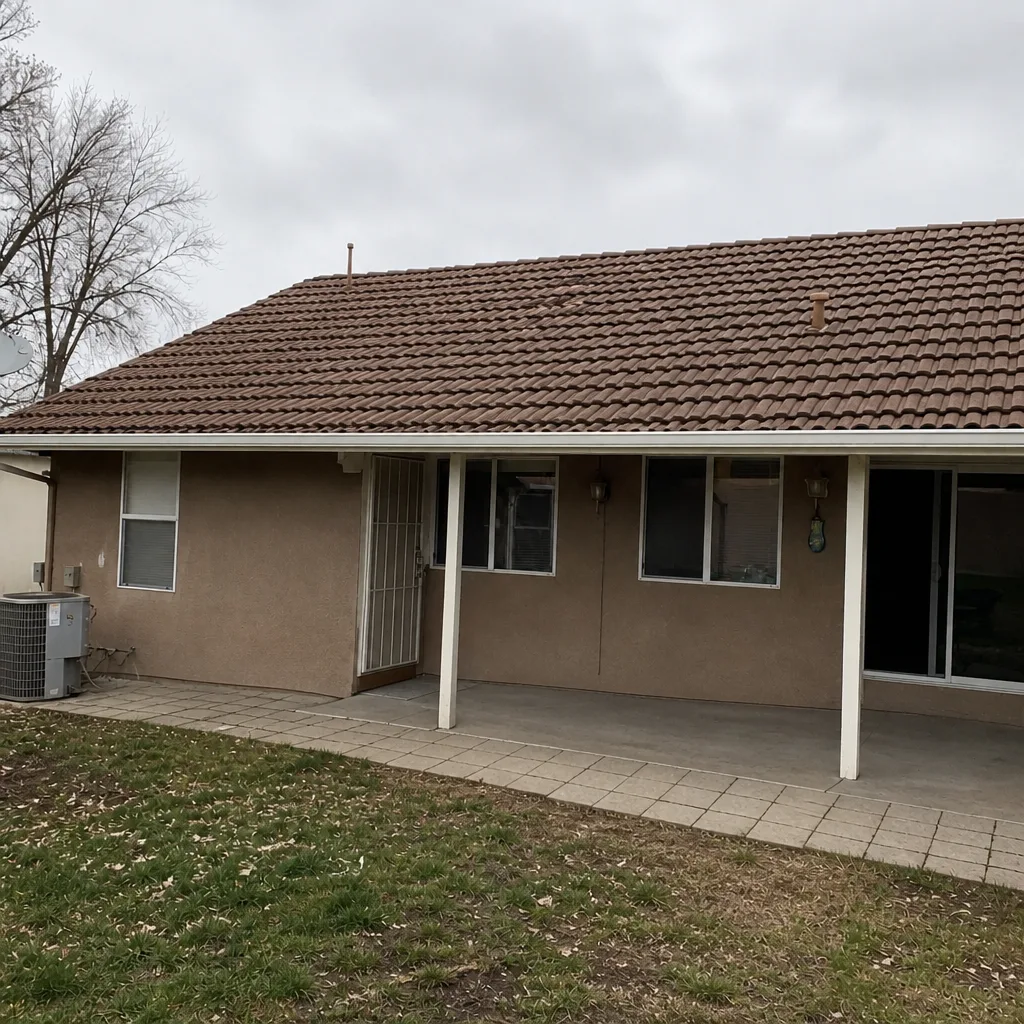 After
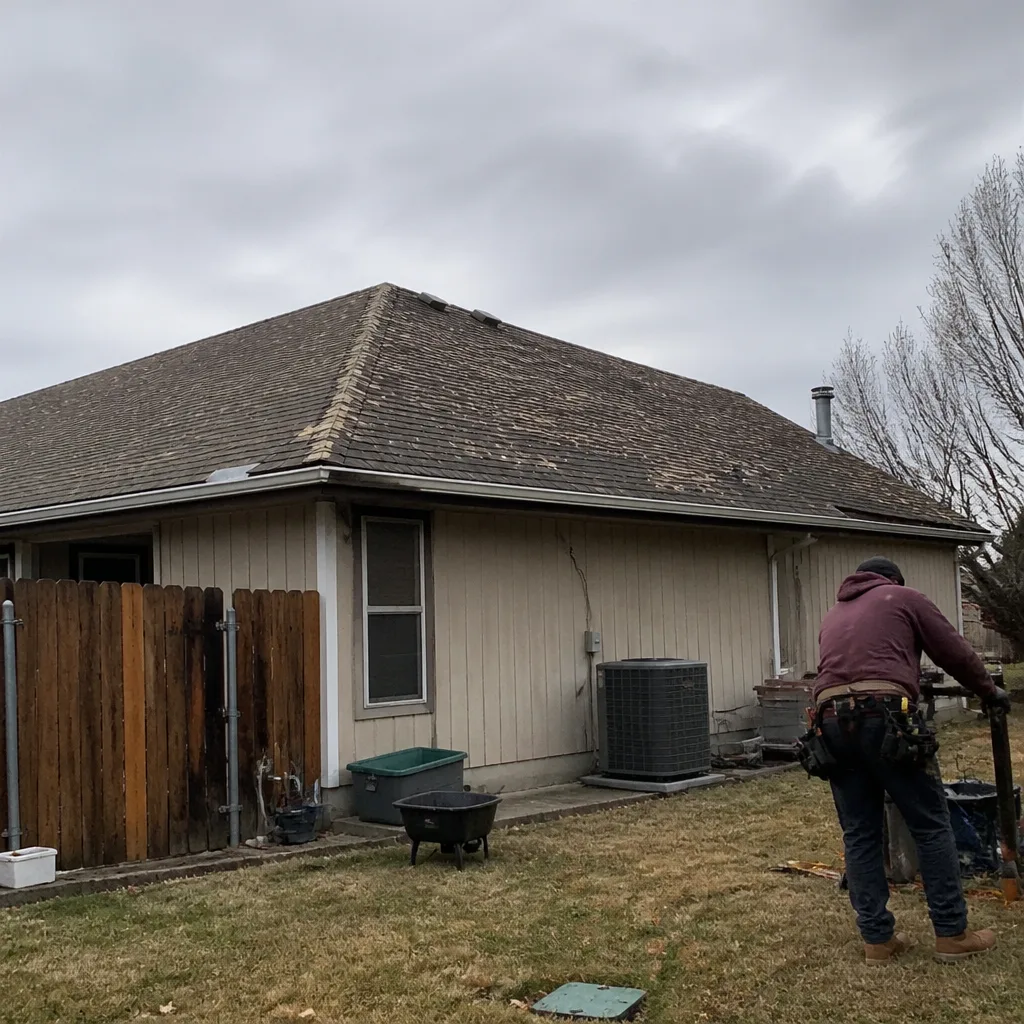 Before
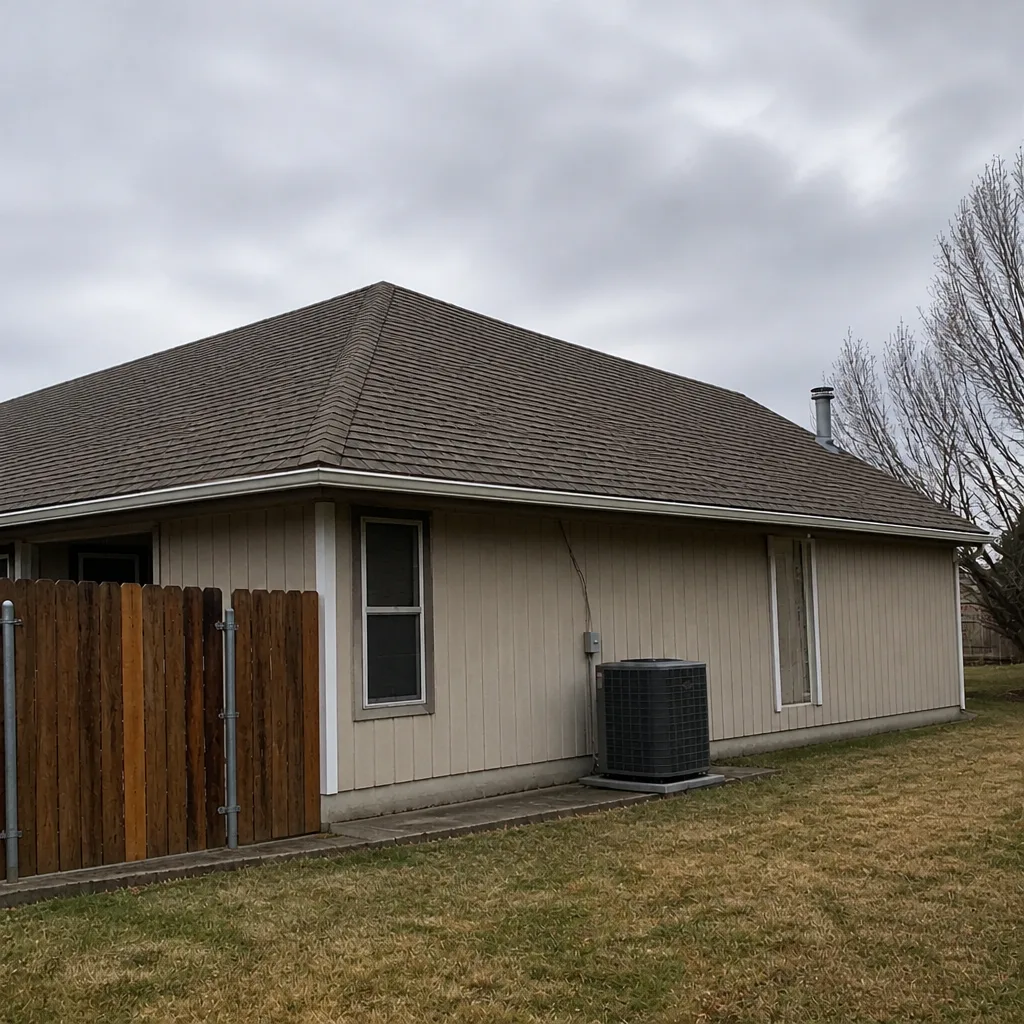 After
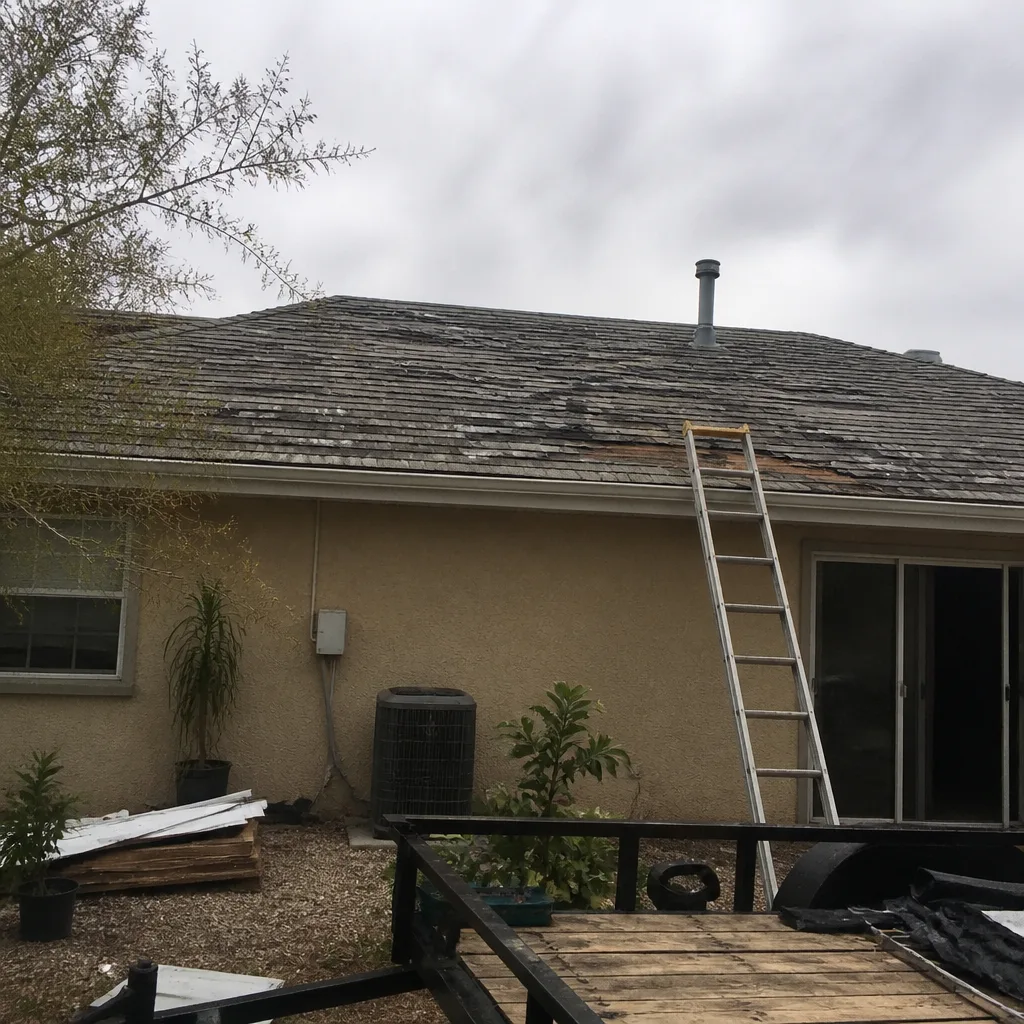 Before
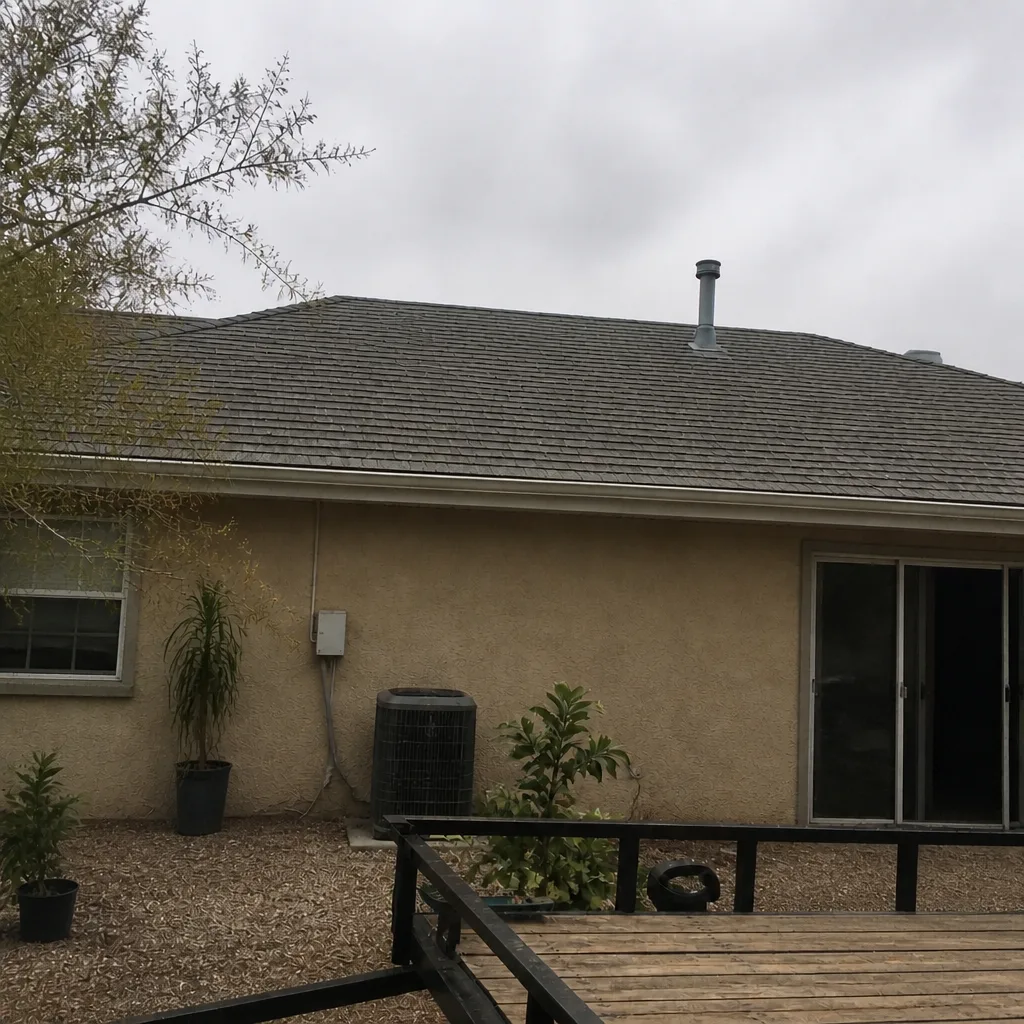 After
When to Call a Professional
Call when water is already getting in; when you see a soft or spongy spot on a foam roof; when screws or panels are lifting on metal; when ridge caps are loose or mortar is badly cracked on tile; or when any inspection is beyond a safe, ground-level look. Those are the scenarios where the delay costs more than the visit. If you’re not sure, call and describe what you see. Estimated pricing is free, and a second opinion on any written estimate is there for the taking. In our own county there’s no trip charge, so knowing the number before anyone touches your roof is easy. Call (844) 797-9455 and a live person will pick up.
Frequently Asked Questions
Every 5 to 10 years, depending on coating type and sun exposure. Acrylic coatings usually need recoating around 5 to 7 years in full Whitney sun, silicone around 7 to 10, and some hybrid or polyurethane coatings can stretch to 10 to 15. Inspect annually regardless, and call for an exact recoat quote – estimates are free.
No. Metal panels last a long time, but the screws and sealant around them don’t. Plan a fastener and sealant inspection every 2 to 3 years, with a visual check annually and after any major wind. Call (844) 797-9455 if you’re seeing backed-out screws or lifting panels.
You usually can’t tell from the ground, and the tile looks fine even when the underlayment is failing. The reliable signal is age and inspection: plan an examination by the 10 to 15 year mark, and sooner in Whitney’s sun. A roofer can probe the underlayment where tiles are lifted. Call for a free estimate if it’s been a while.
Yes. Big day-to-night swings work fasteners, sealant, and ridge mortar loose over time, and UV degrades foam coatings faster than in milder climates. That’s why the maintenance intervals for metal and tile skew toward the short end here.
Gutter and valley clearing, trimming tree limbs, ground-level visual checks with binoculars, and keeping records. Anything that requires walking the roof, especially tile or metal, or working with foam coating or ridge mortar, calls for a contractor.
It matters for two things: it can support a warranty claim if a product fails early, and it strengthens your position at a home sale when a buyer wants proof of care. Keep dates, products, photos, and invoices in one file, and describe what was done rather than making broad statements about the roof’s condition.
The Bottom Line
Specialty roofs don’t fail on the material. They fail on the protectant around it: the foam coating, the metal fastener and sealant, the tile underlayment and ridge mortar. Build the schedule around each one on its own clock, tighten the intervals for Whitney’s sun and temperature swings, do the safe chores yourself, and call for the rest. Keep the records. It’s the rare maintenance plan that saves you money twice: on the repair you avoid now, and on the negotiated price you defend later. If you’d like a trained eye on the roof this year, we’re glad to help.
Schedule Your Free Roof Inspection
Call (844) 797-9455 for a free estimate and a straightforward walk-through of your foam, metal, or tile roof. A live person answers around the clock, including nights and weekends after a storm, and we’ll show you the deck photos before we talk money. You get a free second opinion on any written estimate, no trip charge inside our own county, and the written 90-Day Done Right Promise backs the work. Right now you can take $40 off any repair over $200, and a 10% senior and veteran discount is always available. Same address since 1996, same name on the truck, same person on the roof.
Written by the team at Shepherd & Sons Roofing Whitney.